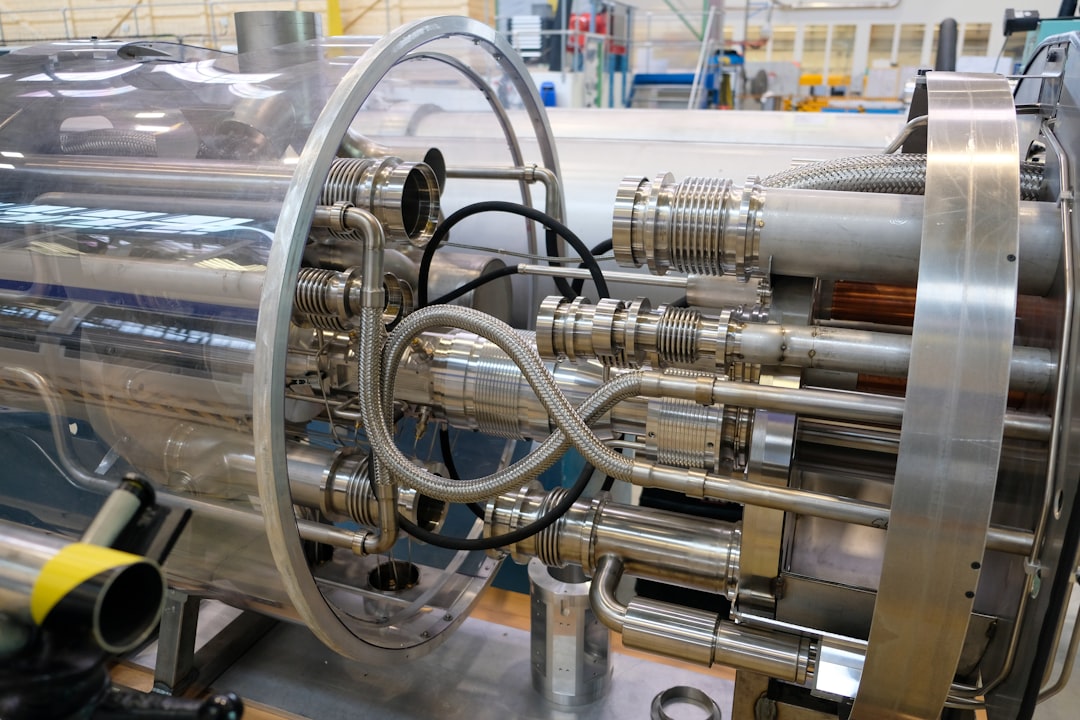
The journey of particle accelerator experiments is a fascinating tale that stretches back to the early 20th century. You might be surprised to learn that the first particle accelerators were developed in the 1930s, with the invention of the cyclotron by Ernest O. Lawrence. This groundbreaking device allowed scientists to accelerate charged particles to high energies, opening up new avenues for research in nuclear physics. As you delve into this history, you will find that these early experiments laid the groundwork for a multitude of discoveries, including the identification of new particles and insights into atomic structure. As the decades progressed, advancements in technology led to the development of more sophisticated accelerators. The invention of the synchrotron in the 1940s marked a significant leap forward, enabling researchers to achieve even higher energy levels. You can appreciate how these innovations not only expanded our understanding of fundamental physics but also paved the way for large-scale projects like CERN’s Large Hadron Collider (LHC). The evolution of particle accelerators reflects humanity’s relentless pursuit of knowledge and the desire to unlock the mysteries of the universe.
Key Takeaways
- Particle accelerator experiments have a rich history dating back to the early 20th century, with key discoveries such as the existence of subatomic particles and the development of new technologies.
- The basics of particle accelerator technology involve the use of electromagnetic fields to accelerate charged particles to high speeds and collide them to study their interactions.
- Particle accelerator experiments play a crucial role in advancing our understanding of fundamental physics, including the study of the fundamental forces and particles that make up the universe.
- There are different types of particle accelerator experiments, including colliders, fixed-target experiments, and synchrotron radiation experiments, each with its own unique capabilities and applications.
- Particle accelerator experiments have led to numerous discoveries and breakthroughs, such as the discovery of the Higgs boson and the development of medical imaging and cancer treatment technologies.
The Basics of Particle Accelerator Technology
At its core, particle accelerator technology is designed to propel charged particles, such as protons or electrons, to incredibly high speeds. You may find it intriguing that these accelerators utilize electric fields to accelerate particles and magnetic fields to steer them along their designated paths. The basic principle involves creating a vacuum environment to minimize interference from air molecules, allowing particles to travel unimpeded.
Understanding these fundamentals can help you appreciate the complexity and precision required in designing and operating these machines. There are two primary types of particle accelerators: linear accelerators (linacs) and circular accelerators. In a linear accelerator, particles are accelerated in a straight line, while circular accelerators use magnetic fields to bend the particles’ paths into a circular motion.
Each type has its advantages and applications, depending on the specific goals of the experiment. As you explore further, you will discover how advancements in technology have led to more compact designs and increased efficiency, making particle accelerators more accessible for various research fields.
The Role of Particle Accelerator Experiments in Physics

Particle accelerator experiments play a pivotal role in advancing our understanding of fundamental physics. You might be surprised to learn that these experiments allow scientists to probe the very building blocks of matter, investigating the interactions between subatomic particles. By smashing particles together at high energies, researchers can recreate conditions similar to those just after the Big Bang, providing insights into the origins of the universe and the fundamental forces that govern it.
Moreover, these experiments have been instrumental in confirming or challenging existing theories in physics. For instance, the discovery of the Higgs boson at CERN’s LHC in 2012 was a monumental achievement that validated the Standard Model of particle physics. As you reflect on this, consider how such breakthroughs not only deepen our understanding of the universe but also inspire future generations of scientists to explore uncharted territories in physics.
The Different Types of Particle Accelerator Experiments
| Experiment Type | Description | Example |
|---|---|---|
| Fixed Target Experiments | Accelerator beam directed at a stationary target | Study of particle interactions at high energies |
| Collider Experiments | Two beams of particles collide at high energies | Discovery of new particles such as the Higgs boson |
| Neutrino Experiments | Study of neutrino properties and interactions | Observation of neutrino oscillations |
| Fixed Field Experiments | Particles accelerated in a fixed magnetic field | Measurement of particle properties and decays |
As you delve deeper into particle accelerator experiments, you’ll encounter various types tailored for specific research objectives. One prominent category is high-energy collisions, where particles are accelerated to near-light speeds and collided to study the resulting interactions. These experiments often focus on discovering new particles or exploring fundamental forces.
You may find it fascinating that such collisions can produce exotic states of matter, like quark-gluon plasma, which existed just moments after the Big Bang. Another type of experiment involves fixed-target setups, where accelerated particles are directed at stationary targets. This approach allows researchers to study how particles interact with matter and can lead to discoveries about nuclear structure and reactions.
Additionally, there are specialized accelerators designed for medical applications, such as proton therapy for cancer treatment. Each type of experiment serves a unique purpose, contributing to our collective knowledge across various scientific disciplines.
The Discoveries and Breakthroughs Made Through Particle Accelerator Experiments
The impact of particle accelerator experiments on scientific discovery cannot be overstated. You may be amazed to learn that many fundamental particles were first identified through accelerator experiments, including quarks and neutrinos. These discoveries have reshaped our understanding of matter and energy, leading to significant advancements in theoretical physics.
For instance, the detection of neutrinos at Fermilab in the 1970s provided crucial evidence for theories about particle interactions and helped refine our understanding of weak nuclear forces. Moreover, breakthroughs in particle physics have far-reaching implications beyond theoretical frameworks. The technologies developed for particle accelerators have led to innovations in various fields, including materials science and medical imaging.
As you consider these advancements, think about how they have transformed not only our understanding of the universe but also practical applications that enhance everyday life.
The Challenges and Limitations of Particle Accelerator Experiments
Despite their remarkable contributions, particle accelerator experiments face numerous challenges and limitations. One significant hurdle is the immense cost associated with building and maintaining these facilities. You may find it surprising that projects like the LHC require billions of dollars in funding, which can be a barrier to entry for many research institutions.
The precision required in aligning particle beams is extraordinary, and even minor misalignments can lead to significant losses in experimental data.
As you reflect on these challenges, consider how they highlight the dedication and ingenuity of scientists who continually strive to push the boundaries of what is possible in particle physics.
The Future of Particle Accelerator Experiments
Looking ahead, the future of particle accelerator experiments is both exciting and uncertain. You may be intrigued by ongoing discussions about next-generation accelerators that promise even greater capabilities. Concepts like plasma wakefield acceleration aim to create more compact accelerators capable of achieving high energies with reduced costs and space requirements.
As you explore these innovations, think about how they could revolutionize research in particle physics and beyond. Moreover, there is a growing emphasis on international collaboration in developing new accelerator technologies. You might find it inspiring that scientists from around the world are coming together to share knowledge and resources in pursuit of common goals.
This collaborative spirit not only enhances research capabilities but also fosters a sense of global community among physicists dedicated to unraveling the mysteries of the universe.
The Impact of Particle Accelerator Experiments on Technology and Medicine
The influence of particle accelerator experiments extends far beyond theoretical physics; it has significantly impacted technology and medicine as well. You may be surprised to learn that many medical imaging techniques, such as positron emission tomography (PET) scans, rely on principles developed through particle accelerator research. These advancements have revolutionized diagnostics and treatment planning in healthcare, improving patient outcomes.
In addition to imaging technologies, particle accelerators have also paved the way for innovative cancer treatments like proton therapy. This targeted approach minimizes damage to surrounding healthy tissue while effectively treating tumors. As you consider these applications, reflect on how breakthroughs in fundamental research can lead to tangible benefits for society as a whole.
The Collaborative Nature of Particle Accelerator Experiments
Collaboration is at the heart of particle accelerator experiments, as they often involve large teams of scientists from diverse backgrounds working together toward common objectives. You might find it fascinating that major projects like CERN’s LHC bring together thousands of researchers from around the globe, each contributing their expertise to tackle complex scientific questions. This collaborative environment fosters innovation and encourages knowledge sharing among physicists.
Moreover, partnerships extend beyond academia; industry collaborations play a crucial role in developing advanced technologies for accelerators. You may appreciate how these alliances not only enhance research capabilities but also drive technological advancements that benefit various sectors. The collaborative nature of particle accelerator experiments exemplifies how collective efforts can lead to groundbreaking discoveries that would be impossible for individuals or small teams to achieve alone.
The Ethical Considerations of Particle Accelerator Experiments
As with any scientific endeavor, ethical considerations surrounding particle accelerator experiments are paramount. You may ponder questions about safety protocols and environmental impacts associated with operating large-scale facilities. Ensuring that experiments are conducted responsibly is essential for maintaining public trust in scientific research.
Additionally, there are ethical dilemmas related to funding and resource allocation within the scientific community. You might consider how prioritizing certain projects over others can shape research directions and influence which questions receive attention. Engaging in open discussions about these ethical considerations is vital for fostering transparency and accountability within the field.
The Public Perception and Misconceptions of Particle Accelerator Experiments
Public perception plays a significant role in shaping support for particle accelerator experiments. You may be aware that misconceptions often arise regarding the purpose and safety of these facilities. Some individuals may associate particle accelerators with dangerous experiments or fear potential catastrophic outcomes from high-energy collisions.
Addressing these misconceptions through effective communication is crucial for fostering public understanding and support for scientific research. Moreover, outreach efforts aimed at educating the public about the benefits of particle accelerator experiments can help demystify complex concepts in physics. You might find it encouraging that many scientists actively engage with communities through public lectures and educational programs designed to inspire curiosity about science.
By bridging the gap between researchers and the public, we can cultivate a more informed society that appreciates the value of scientific exploration. In conclusion, particle accelerator experiments represent a remarkable intersection of history, technology, collaboration, and ethical considerations within the realm of physics. As you reflect on their profound impact on our understanding of the universe and their contributions to technology and medicine, consider how these endeavors continue to shape our world today and into the future.
Particle accelerator experiments have been at the forefront of scientific discovery, providing insights into the fundamental particles and forces that constitute our universe. These experiments often involve high-energy collisions that can recreate conditions similar to those just after the Big Bang, allowing scientists to explore the building blocks of matter. For those interested in delving deeper into the fascinating world of particle physics and related experiments, a related article can be found on My Cosmic Ventures. This resource offers a comprehensive overview of the latest advancements and findings in the field, making it an excellent starting point for enthusiasts and researchers alike.
FAQs
What is a particle accelerator?
A particle accelerator is a machine that uses electromagnetic fields to propel charged particles to high speeds and energies. These particles are then used for various experiments in physics, chemistry, and other scientific fields.
What are the main types of particle accelerators?
The main types of particle accelerators are linear accelerators (linacs), cyclotrons, synchrotrons, and storage rings. Each type has its own specific design and purpose.
What are particle accelerator experiments used for?
Particle accelerator experiments are used to study the fundamental particles and forces that make up the universe. They are also used in medical applications, such as cancer treatment, and in industrial processes, such as material analysis and modification.
What are some of the key discoveries made through particle accelerator experiments?
Particle accelerator experiments have led to the discovery of new particles, such as the Higgs boson, and have provided evidence for the existence of quarks and other fundamental particles. They have also contributed to our understanding of the early universe and the fundamental forces of nature.
How do particle accelerator experiments contribute to scientific research?
Particle accelerator experiments contribute to scientific research by providing insights into the fundamental building blocks of matter and the forces that govern their interactions. This knowledge has wide-ranging implications for our understanding of the universe and for the development of new technologies.