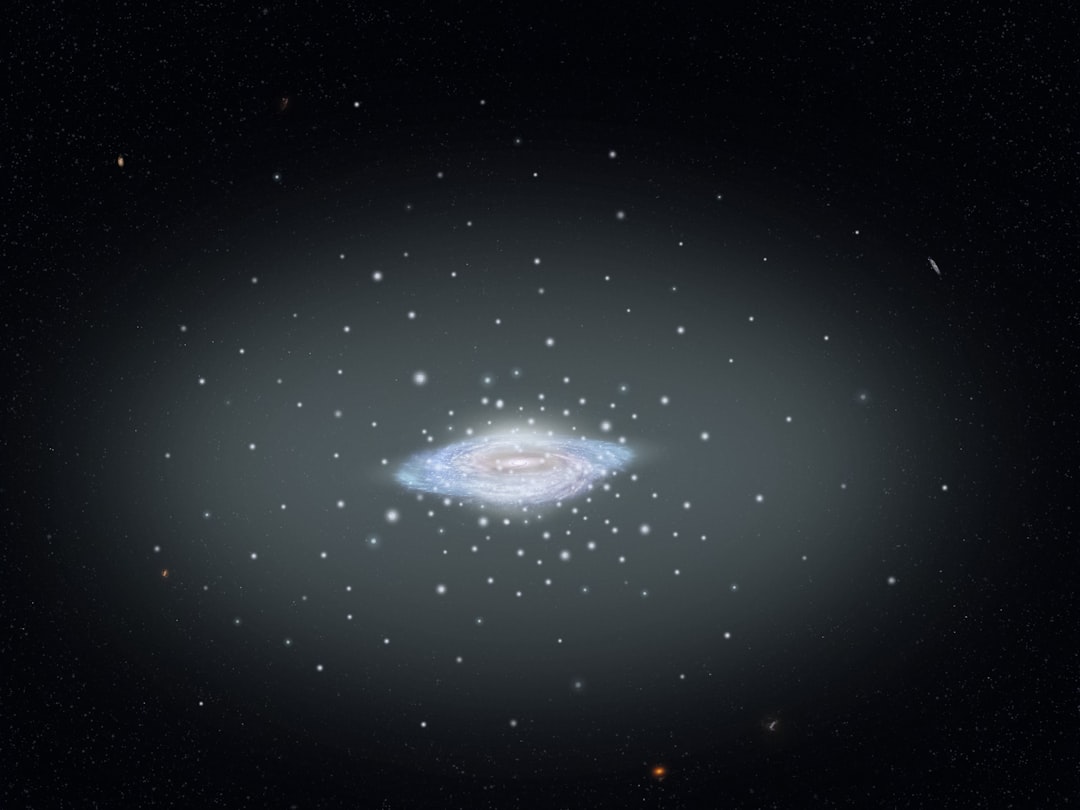
The cosmological constant, often denoted by the Greek letter Lambda (Λ), is a fundamental concept in cosmology that has intrigued scientists and philosophers alike for decades. It represents a form of energy density that fills space homogeneously, influencing the expansion of the universe. As you delve into the intricacies of this concept, you will discover how it plays a pivotal role in our understanding of cosmic dynamics and the fate of the universe.
The cosmological constant is not merely a theoretical construct; it has profound implications for the nature of space, time, and the very fabric of reality itself.
As you explore this topic, you will encounter a rich tapestry of scientific inquiry that spans over a century, revealing how our understanding of the cosmos has evolved.
The cosmological constant serves as a bridge between classical physics and modern cosmology, inviting you to ponder the fundamental questions about existence and the universe’s ultimate fate.
Key Takeaways
- The cosmological constant is a term in the equations of general relativity that represents the energy density of space.
- Einstein initially introduced the cosmological constant to achieve a static universe, but later called it his “biggest blunder” when the universe was found to be expanding.
- In modern cosmology, the cosmological constant is associated with dark energy, which is driving the accelerated expansion of the universe.
- The enigma of the cosmological constant lies in the stark discrepancy between its predicted value from quantum field theory and its observed value from cosmological measurements.
- Future research in cosmology aims to further understand the nature of dark energy and its implications for the ultimate fate of the universe.
Historical Background and Discovery
The journey to uncover the cosmological constant began in the early 20th century, during a time when our understanding of the universe was rapidly changing. Before this period, the prevailing view was that the universe was static and unchanging. However, with the advent of Einstein’s theory of general relativity in 1915, everything changed.
You will find that Einstein’s equations suggested that gravity could influence the curvature of space-time, leading to dynamic models of the universe rather than static ones. In 1917, Einstein introduced the cosmological constant as a means to maintain a stable universe. He added this term to his equations to counteract gravitational attraction, allowing for a static solution.
This decision was not merely mathematical; it reflected Einstein’s philosophical commitment to a universe that was eternal and unchanging. However, as observational evidence began to mount, particularly with Edwin Hubble’s discovery of the expanding universe in 1929, Einstein famously referred to the cosmological constant as his “greatest blunder.” This shift marked a significant turning point in cosmology, as it opened the door to new theories about the universe’s structure and evolution.
Einstein’s Contribution and Initial Interpretation
Einstein’s introduction of the cosmological constant was a bold move that showcased his innovative thinking. By incorporating this term into his equations, he aimed to create a model that would align with contemporary beliefs about a static universe. However, as you explore Einstein’s motivations, it becomes clear that his vision was not merely about mathematics; it was also deeply rooted in his philosophical views on existence and the cosmos.
Initially, Einstein interpreted the cosmological constant as a necessary adjustment to maintain equilibrium in a universe that he believed should not change. He envisioned it as a force that countered gravity, allowing for a balance between expansion and contraction. Yet, as observational evidence began to contradict this static view, Einstein’s perspective shifted dramatically.
The realization that the universe was expanding led him to abandon the cosmological constant altogether, viewing it as an unnecessary complication in his equations. This decision not only reshaped his own understanding but also laid the groundwork for future explorations into cosmic dynamics.
The Cosmological Constant in Modern Cosmology
| Concept | Description |
|---|---|
| Cosmological Constant | A constant term that Einstein added to his equations of general relativity to allow for a static universe. |
| Modern Cosmology | The study of the large-scale properties of the universe, its origins, evolution, and eventual fate. |
| Dark Energy | The modern interpretation of the cosmological constant, representing a mysterious force causing the universe’s expansion to accelerate. |
| Observational Evidence | Measurements of distant supernovae and the cosmic microwave background radiation support the existence of dark energy and a non-zero cosmological constant. |
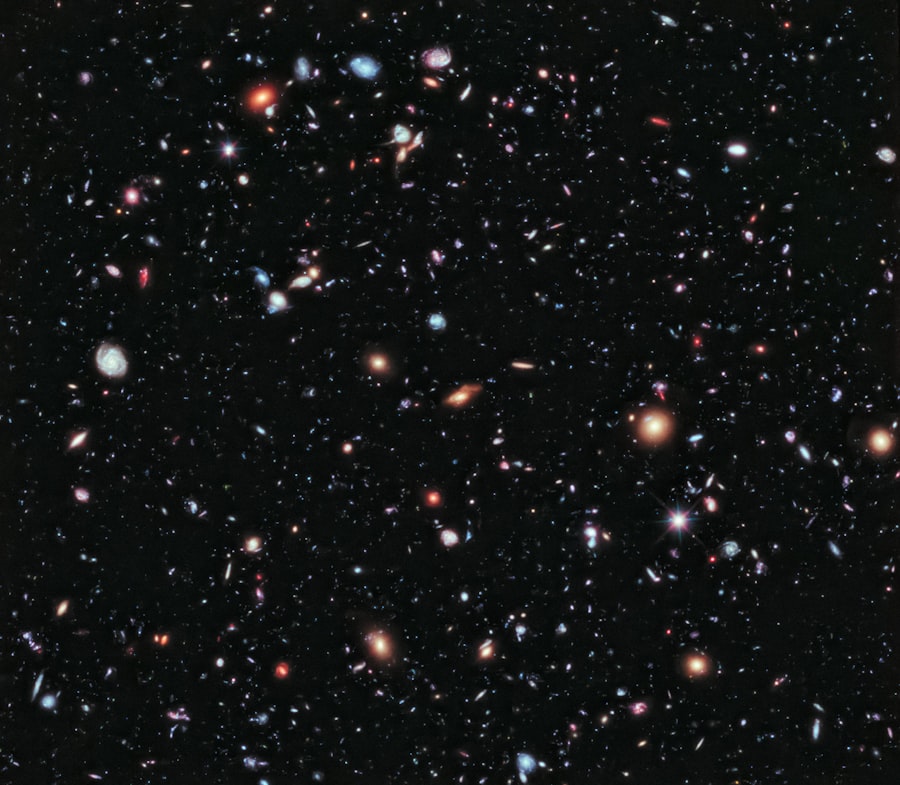
In contemporary cosmology, the cosmological constant has regained prominence due to its association with dark energy. As you navigate through modern theories, you will find that Λ is now understood as a crucial component of our universe’s energy budget. It accounts for approximately 68% of the total energy density of the cosmos, influencing its expansion rate and overall structure.
The resurgence of interest in the cosmological constant can be traced back to observations made in the late 1990s when two independent teams of astronomers discovered that distant supernovae were dimmer than expected. This unexpected dimming suggested that the expansion of the universe was accelerating rather than slowing down due to gravitational attraction. As you delve deeper into these findings, you will see how they prompted scientists to reconsider the role of Λ in their models, leading to a paradigm shift in our understanding of cosmic evolution.
The Enigma of the Cosmological Constant
Despite its significance in modern cosmology, the cosmological constant remains an enigma. One of the most perplexing aspects is its value; theoretical predictions based on quantum field theory suggest that it should be vastly larger than what is observed. This discrepancy between theory and observation is known as the “cosmological constant problem.” As you explore this issue further, you will encounter various attempts by physicists to reconcile these differences and understand why our universe appears to have such a small value for Λ.
The implications of this enigma extend beyond mere numbers; they challenge our understanding of fundamental physics. You may find yourself pondering questions about the nature of vacuum energy and its relationship with gravity. Why does our universe exhibit such a delicate balance between expansion and contraction?
The quest for answers has led researchers down various paths, from string theory to modifications of general relativity, each offering unique insights into this cosmic mystery.
Attempts to Understand and Explain the Cosmological Constant
In response to the challenges posed by the cosmological constant problem, scientists have proposed numerous theories and models aimed at explaining its value and behavior. One prominent approach involves exploring modifications to general relativity itself. You may encounter ideas such as scalar-tensor theories or extra dimensions that attempt to provide alternative frameworks for understanding gravity and cosmic expansion.
Another avenue of exploration involves examining quantum field theory and its implications for vacuum energy. Researchers have sought to understand how quantum fluctuations contribute to the energy density of empty space and how this might relate to Λ. As you delve into these theories, you will discover a rich landscape of ideas that reflect humanity’s relentless pursuit of knowledge about the cosmos.
Theoretical Implications and Challenges
The theoretical implications of the cosmological constant extend far beyond its numerical value; they challenge our understanding of fundamental physics and raise profound questions about the nature of reality itself. For instance, if Λ is indeed a manifestation of dark energy, what does this mean for our understanding of gravity? You may find yourself grappling with concepts such as modified gravity theories or alternative explanations for cosmic acceleration.
Moreover, these challenges have led physicists to reconsider long-held assumptions about the universe’s fate.
Will galaxies drift apart indefinitely, leading to a cold and desolate universe?
As you ponder these questions, you will appreciate how deeply interconnected theoretical physics and cosmology are in shaping our understanding of existence.
Observational Constraints and Measurements
To make sense of the cosmological constant and its implications, astronomers have turned to observational data for guidance. You will find that various methods have been employed to measure Λ and its effects on cosmic expansion. Observations of distant supernovae have played a crucial role in this endeavor, providing insights into how light from these explosive events can reveal information about cosmic distances and expansion rates.
Additionally, measurements from cosmic microwave background radiation have offered valuable constraints on Λ by providing a snapshot of the early universe’s conditions. As you explore these observational techniques, you will gain an appreciation for how empirical data informs theoretical models and shapes our understanding of cosmic phenomena.
The Mystery of Dark Energy
Dark energy is perhaps one of the most profound mysteries in modern astrophysics, intricately linked to the cosmological constant. As you delve into this topic, you will discover that dark energy is thought to be responsible for driving the accelerated expansion of the universe. However, its exact nature remains elusive; it could be a property of space itself or an entirely new form of energy yet to be understood.
The quest to unravel this mystery has led scientists down various paths, from exploring quintessence—a dynamic form of dark energy—to investigating modifications to general relativity that could account for cosmic acceleration without invoking Λ. Each approach offers unique insights but also raises new questions about our understanding of fundamental forces and their interplay in shaping cosmic evolution.
Future Directions and Research in Cosmology
As you look toward the future of cosmology, it becomes evident that research surrounding the cosmological constant and dark energy is far from over. Ongoing observational campaigns aim to refine measurements of Λ and explore its implications further. You may encounter exciting projects such as large-scale galaxy surveys or next-generation telescopes designed to probe deeper into cosmic history.
Moreover, theoretical physicists continue to explore innovative ideas that could shed light on dark energy’s nature and behavior. Whether through advancements in quantum field theory or novel approaches to gravity, these efforts reflect humanity’s enduring curiosity about the cosmos and our place within it.
Conclusion and Implications for our Understanding of the Universe
In conclusion, your exploration of the cosmological constant reveals not only its significance in modern cosmology but also its profound implications for our understanding of existence itself. From Einstein’s initial introduction to contemporary debates surrounding dark energy, this concept serves as a lens through which we can examine fundamental questions about reality. As you reflect on your journey through this topic, consider how the cosmological constant challenges us to think critically about our place in an ever-expanding universe.
It invites you to ponder not only what we know but also what remains unknown—a reminder that in our quest for knowledge, there are still mysteries waiting to be unraveled among the stars.
The cosmological constant, often denoted by the Greek letter Lambda (Λ), plays a crucial role in our understanding of the universe’s expansion. It was originally introduced by Albert Einstein in his field equations of General Relativity as a means to allow for a static universe. However, with the discovery of the universe’s accelerated expansion, the cosmological constant has gained renewed significance as it is associated with dark energy, a mysterious force driving this acceleration. For a deeper exploration of the implications of the cosmological constant and its role in modern cosmology, you can read a related article on My Cosmic Ventures. This article delves into the historical context and the ongoing research surrounding this enigmatic component of our universe.
FAQs
What is the cosmological constant?
The cosmological constant is a term in the equations of general relativity proposed by Albert Einstein. It represents a constant energy density filling space homogeneously.
What is the significance of the cosmological constant?
The cosmological constant is significant in cosmology as it is thought to be responsible for the observed accelerated expansion of the universe.
How does the cosmological constant affect the universe?
The cosmological constant is believed to exert a repulsive force that counteracts the attractive force of gravity, leading to the observed accelerated expansion of the universe.
What are the implications of the cosmological constant for our understanding of the universe?
The existence of the cosmological constant challenges our understanding of the fundamental forces and energy content of the universe. It also has implications for the ultimate fate of the universe.
Is the cosmological constant a confirmed phenomenon?
The existence of the cosmological constant as a physical phenomenon is supported by observational evidence, including measurements of the cosmic microwave background radiation and the large-scale structure of the universe.
What are some current areas of research related to the cosmological constant?
Current research on the cosmological constant includes efforts to understand its origin, its implications for theories of fundamental physics, and its role in shaping the future evolution of the universe.