The multiverse theory posits that our universe exists as one of many—potentially infinite—universes operating concurrently. This concept challenges conventional single-universe models and has become a significant area of theoretical physics research. The idea has gained traction across scientific, philosophical, and cultural domains, generating extensive scholarly discourse.
This theory derives from rigorous scientific investigation rather than speculation. It emerges from established fields including quantum mechanics and cosmology, with implications extending beyond our observable universe. The multiverse hypothesis is supported by several theoretical frameworks in physics, though it remains subject to ongoing scientific debate and criticism.
Examining this concept requires engagement with complex theoretical constructs and addresses fundamental questions about cosmic structure, existence, and the nature of reality.
Key Takeaways
- The multiverse concept suggests the existence of multiple, parallel universes branching from different quantum events.
- Branching universe statistics provide a theoretical framework to analyze probabilities across these parallel universes.
- Quantum mechanics plays a key role in explaining how universes branch and evolve within the multiverse.
- Multiverse theory has significant implications for cosmology, potentially explaining fine-tuning and cosmic anomalies.
- Despite some experimental efforts, the multiverse remains controversial with ongoing debates and future research needed.
Theoretical Framework of Branching Universe Statistics
To grasp the multiverse concept fully, it is essential to familiarize yourself with the theoretical frameworks that underpin it. One such framework is the idea of branching universe statistics, which posits that every quantum event can lead to multiple outcomes, each resulting in a different branch of reality. This perspective is rooted in the many-worlds interpretation of quantum mechanics, which suggests that all possible outcomes of a quantum event actually occur, each in its own distinct universe.
As you contemplate this idea, consider how every decision you make could create a new branch of reality where different choices were made. Branching universe statistics provide a mathematical foundation for understanding how these multiple realities might coexist. By applying principles from probability theory and quantum mechanics, scientists can model the branching process and explore the implications of an ever-expanding multiverse.
This framework not only enhances your understanding of quantum phenomena but also raises intriguing questions about determinism and free will. If every possible outcome exists in some universe, what does that mean for your choices and experiences? The exploration of branching universe statistics invites you to reflect on the nature of reality itself.
Understanding the Concept of Multiverse
As you dive deeper into the concept of the multiverse, it becomes clear that it encompasses a variety of interpretations and models. One popular version is the cosmological multiverse, which arises from inflationary theory. According to this model, rapid expansion during the early moments of the universe could lead to regions of space-time that stop inflating at different times, resulting in “bubble” universes with varying physical properties.
Each bubble could have its own laws of physics, constants, and even dimensions, creating a diverse landscape of universes. Another interpretation is the string theory multiverse, which suggests that different configurations of string theory can yield distinct universes with unique characteristics. This perspective emphasizes the role of fundamental particles and their interactions in shaping the fabric of reality.
As you consider these various models, you may find yourself pondering profound questions about existence: What defines a universe? Are there universes where life exists in forms entirely different from what you know? The multiverse concept challenges your understanding of reality and encourages you to think beyond conventional boundaries.
Branching Universe Statistics in Quantum Mechanics
Branching universe statistics play a crucial role in understanding quantum mechanics and its implications for the multiverse. In quantum mechanics, particles exist in a state of superposition until they are observed or measured, at which point they “collapse” into a specific state. The many-worlds interpretation posits that instead of collapsing into one outcome, all possible outcomes occur simultaneously in separate branches of reality.
This radical idea suggests that every time a quantum event takes place—such as an electron’s spin being measured—new universes are created. As you explore this interpretation further, consider how it reshapes your understanding of causality and determinism. In a branching universe framework, events are not predetermined; rather, they unfold in a multitude of ways across different realities.
This perspective can be both liberating and unsettling, as it implies that every choice you make could lead to an entirely different life path in another universe. The implications for your understanding of free will are profound: if every decision spawns new realities, how do you define your identity within this vast multiverse?
Implications of Multiverse Theory in Cosmology
| Metric | Description | Value | Unit |
|---|---|---|---|
| Number of Branches per Second | Estimated rate at which new universe branches form | 10^43 | branches/second |
| Total Branches Since Big Bang | Estimated total number of universe branches since the Big Bang | 10^120 | branches |
| Branching Probability | Probability of a quantum event causing a universe branch | 1 | unitless (certainty) |
| Average Branch Divergence | Average difference in state between two branches after branching | 10^-34 | Joules (energy difference) |
| Branch Stability Duration | Average time a branch remains stable before further branching | 10^-9 | seconds |
| Observable Branches | Number of branches theoretically observable from a single point | 10^60 | branches |
The implications of multiverse theory extend far beyond theoretical musings; they have significant consequences for cosmology and our understanding of the universe’s origins and structure. If multiple universes exist, it raises questions about the fine-tuning problem—the observation that certain physical constants appear to be precisely calibrated to allow for life as we know it. In a multiverse scenario, this fine-tuning could be explained by the existence of countless universes with varying constants; we simply happen to reside in one where conditions are favorable for life.
Moreover, multiverse theory challenges traditional cosmological models by suggesting that our observable universe is just a small fraction of a much larger reality.
If other universes exist with different laws of physics or dimensions, what might they reveal about the fundamental nature of reality?
The exploration of these questions can lead to profound insights about existence itself.
Experimental Evidence for Multiverse Theory
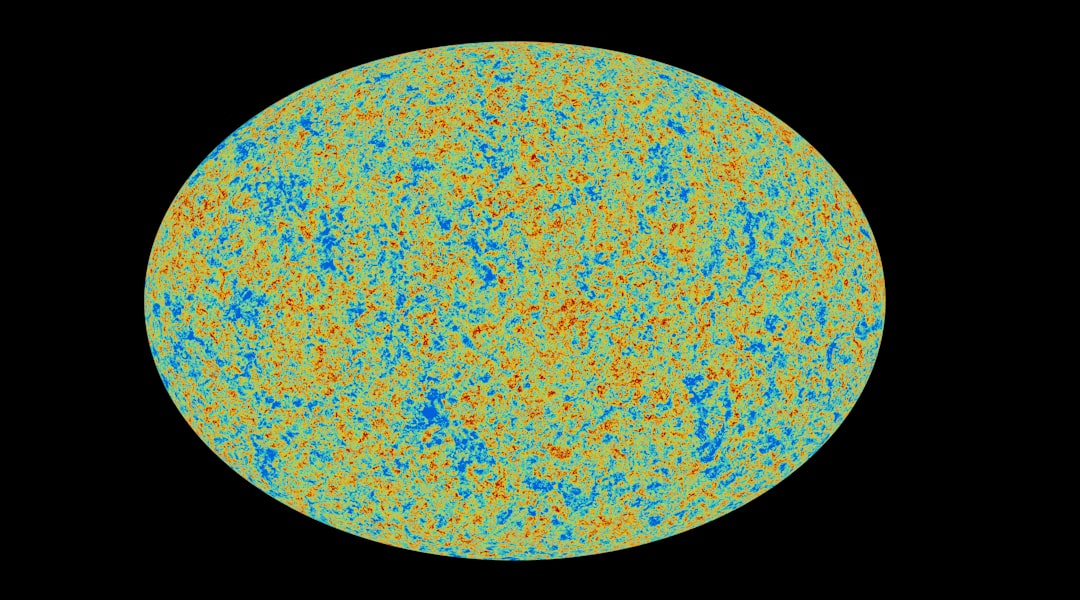
While multiverse theory remains largely theoretical, some scientists are actively seeking experimental evidence to support or refute its claims. One avenue of investigation involves studying cosmic microwave background radiation—the afterglow of the Big Bang—which may contain signatures or anomalies indicative of interactions between our universe and others.
Additionally, advancements in particle physics may provide insights into the multiverse hypothesis. Experiments conducted at particle accelerators like CERN aim to probe fundamental particles and their interactions at unprecedented energy levels. If evidence emerges that supports branching universe statistics or reveals unexpected phenomena consistent with multiverse predictions, it could lend credence to this ambitious theory.
As you follow these developments, consider how scientific inquiry continues to push the boundaries of human understanding and challenges preconceived notions about reality.
Criticisms and Debates Surrounding Multiverse Theory
Despite its allure, multiverse theory is not without its critics and controversies. One major criticism revolves around its lack of falsifiability; many argue that if multiple universes exist beyond our observable reach, they cannot be tested or measured using current scientific methods. This raises questions about whether multiverse theory qualifies as a legitimate scientific hypothesis or merely a philosophical speculation.
As you engage with these debates, consider how scientific progress often hinges on the ability to test ideas through empirical evidence. Another point of contention lies in the implications for scientific explanation itself. Some critics argue that invoking a multiverse to explain fine-tuning or other phenomena may lead to an infinite regress—if our universe is just one among many, what explains the existence of those other universes?
This line of reasoning challenges you to think critically about the nature of scientific inquiry and whether it should seek explanations within our observable universe or embrace broader metaphysical considerations.
Future Directions in Multiverse Research
As research into multiverse theory continues to evolve, several exciting directions lie ahead for scientists and theorists alike. One promising avenue involves further exploration of quantum mechanics and its implications for branching universes. As experimental techniques improve and our understanding of quantum phenomena deepens, new insights may emerge that either bolster or challenge existing multiverse models.
Additionally, interdisciplinary collaboration between physicists, cosmologists, and philosophers may yield fresh perspectives on fundamental questions surrounding existence and reality. By integrating insights from various fields, researchers can develop more comprehensive frameworks for understanding the multiverse and its implications for human experience. In conclusion, as you navigate through the complexities of multiverse theory, remember that this journey is not just about scientific inquiry; it is also an exploration of profound philosophical questions about existence itself.
Whether you find yourself captivated by the possibilities or skeptical of their implications, engaging with these ideas can enrich your understanding of reality and inspire further curiosity about the cosmos we inhabit.
In exploring the fascinating concept of branching universe statistics, one can gain deeper insights by reading the related article on cosmic theories and their implications. This article delves into the various interpretations of quantum mechanics and how they relate to the multiverse hypothesis. For more information, you can check out the article [here](https://www.mycosmicventures.com/sample-page/).
WATCH THIS! 🚨 You Can’t Cheat Death (Quantum Immortality Debunked)
FAQs
What is the branching universe theory?
The branching universe theory is a concept in quantum mechanics and cosmology that suggests the universe splits into multiple, parallel branches or universes whenever a quantum event with multiple possible outcomes occurs. Each branch represents a different outcome, creating a multiverse of parallel realities.
How does branching universe statistics relate to quantum mechanics?
Branching universe statistics involves analyzing the probabilities and distributions of different outcomes across the multiple branches of the universe. It applies statistical methods to understand how likely certain events or states are within the framework of the many-worlds interpretation of quantum mechanics.
What is the significance of branching universe statistics?
Branching universe statistics helps scientists and theorists quantify and predict the behavior of systems in a multiverse context. It provides a mathematical framework to study how different branches evolve and how probabilities are assigned to various outcomes in a branching universe scenario.
Are branching universes the same as parallel universes?
Branching universes are a type of parallel universe concept. While parallel universes can refer to any alternate realities existing alongside our own, branching universes specifically arise from quantum events causing the universe to split into multiple branches, each representing different outcomes.
Is there experimental evidence supporting branching universe statistics?
Currently, there is no direct experimental evidence confirming the existence of branching universes or the statistical framework describing them. The theory is primarily a conceptual interpretation of quantum mechanics, and its predictions often overlap with those of other interpretations, making empirical verification challenging.
How does branching universe statistics differ from classical probability?
Classical probability deals with uncertainty due to lack of knowledge about a system, whereas branching universe statistics considers all possible outcomes as real and existing in separate branches. Instead of probabilities representing ignorance, they reflect the measure or weight of different branches in the multiverse.
What fields study branching universe statistics?
Branching universe statistics is studied primarily in theoretical physics, particularly in quantum mechanics, cosmology, and the philosophy of science. Researchers in these fields explore the mathematical foundations and implications of the many-worlds interpretation and related multiverse theories.
Can branching universe statistics explain the measurement problem in quantum mechanics?
Yes, the branching universe framework offers a solution to the measurement problem by positing that all possible measurement outcomes occur in separate branches. This removes the need for wavefunction collapse, as each outcome is realized in its own branch, and branching universe statistics helps describe the distribution of these outcomes.