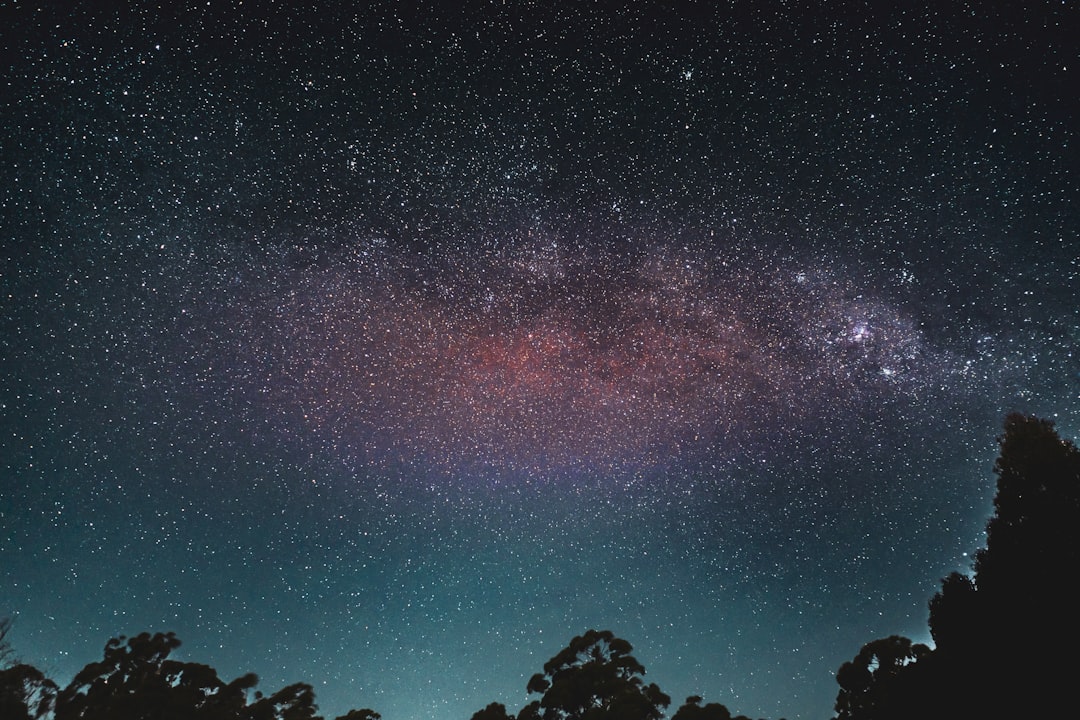
Distant galaxies have long captivated the imagination of astronomers and the general public alike. These celestial bodies, often billions of light-years away, serve as windows into the early universe, allowing scientists to study the formation and evolution of cosmic structures. The light from these galaxies takes eons to reach Earth, meaning that when astronomers observe them, they are essentially looking back in time.
This unique perspective not only enhances our understanding of the universe’s history but also raises profound questions about its future. The study of distant galaxies is not merely an academic pursuit; it is a quest to understand the very fabric of existence. Each galaxy, with its myriad stars, planets, and potential for life, tells a story of cosmic evolution.
As researchers delve deeper into the mysteries of these far-off realms, they uncover insights that challenge existing theories and inspire new lines of inquiry. The exploration of distant galaxies is a testament to humanity’s enduring curiosity and desire to comprehend the universe in which we reside.
Key Takeaways
- Distant galaxies provide crucial insights into the early universe and cosmic evolution.
- Advanced telescopes and techniques are essential for observing and studying faraway galaxies.
- Understanding distant galaxies helps in the search for extraterrestrial life beyond our solar system.
- Studying these galaxies poses significant challenges due to their vast distances and faint signals.
- Research on distant galaxies has profound implications for cosmology and humanity’s place in the universe.
The Scale of the Universe: Understanding Distance in Space
To grasp the significance of distant galaxies, one must first appreciate the vastness of the universe itself. The scale is mind-boggling; distances are measured in light-years, with one light-year equating to approximately 5.88 trillion miles. This immense scale can be difficult to conceptualize, as it dwarfs any terrestrial measurements.
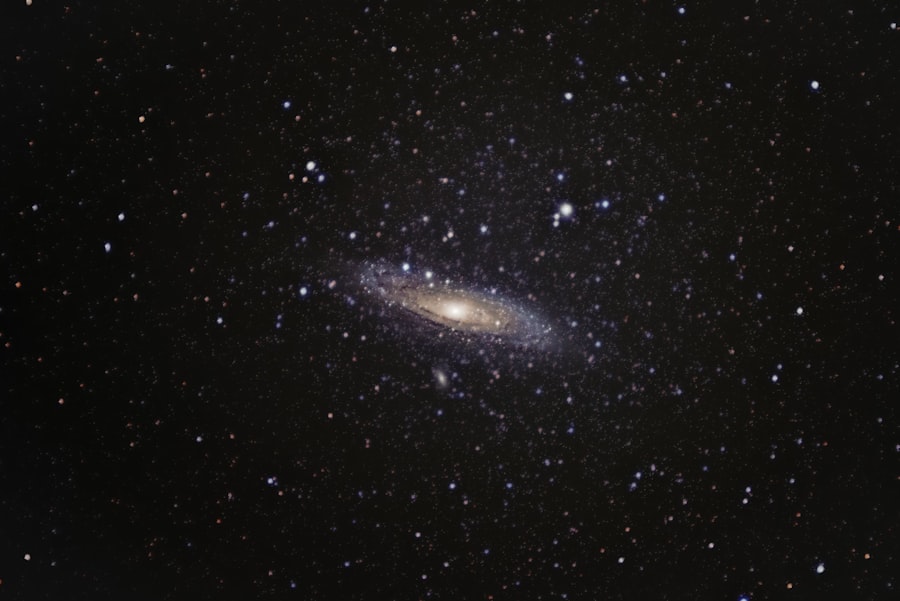
For instance, the nearest galaxy to Earth, Andromeda, is about 2.537 million light-years away, a distance that underscores the isolation of our own Milky Way in the cosmic expanse.
The sheer size of space means that even the most advanced telescopes can only capture a fraction of what exists beyond our immediate cosmic neighborhood.
As researchers develop new methods for measuring distances—such as using redshift and standard candles—they gain a clearer picture of how galaxies are distributed throughout the universe. This knowledge not only informs our understanding of cosmic structure but also helps scientists piece together the timeline of the universe’s evolution.
Observing Distant Galaxies: Tools and Techniques
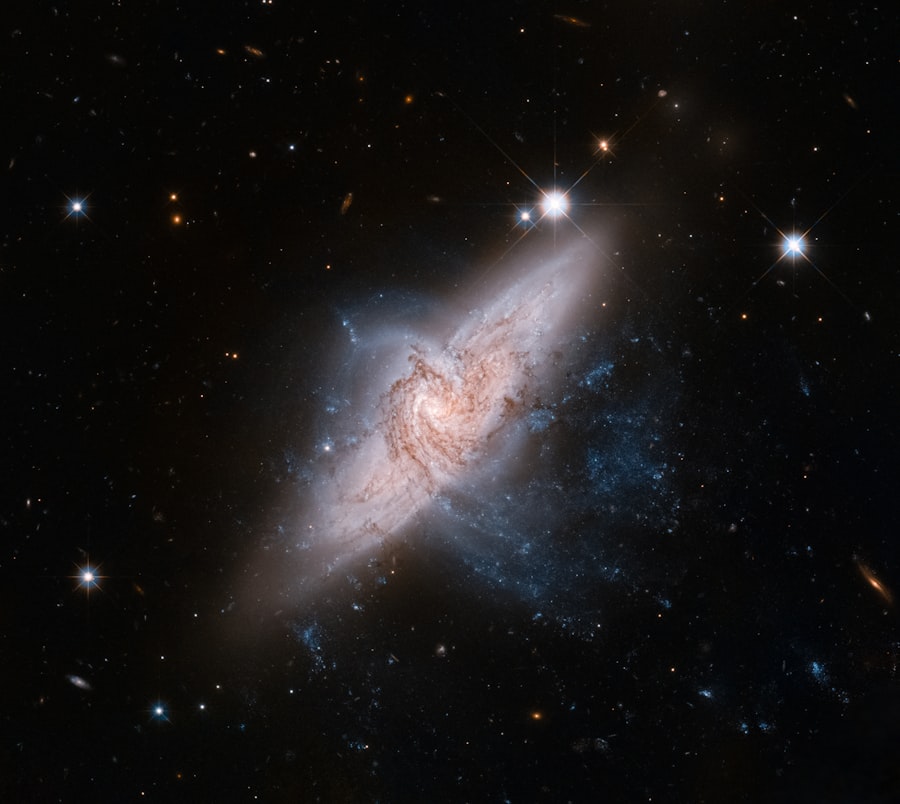
The observation of distant galaxies relies heavily on advanced technology and innovative techniques. Telescopes equipped with powerful optics and sensitive detectors are essential for capturing faint light from these remote celestial objects. Instruments like the Hubble Space Telescope have revolutionized our ability to observe distant galaxies, providing stunning images and invaluable data that have reshaped our understanding of cosmic phenomena.
In addition to optical telescopes, astronomers employ radio telescopes and infrared observatories to study distant galaxies across different wavelengths. Each method offers unique insights; for example, radio waves can penetrate dust clouds that obscure optical observations, revealing hidden structures within galaxies. Furthermore, techniques such as gravitational lensing—where massive objects bend light from more distant sources—allow researchers to study galaxies that would otherwise remain undetectable.
These diverse tools and techniques enable scientists to piece together a more comprehensive picture of distant galaxies and their characteristics.
The Formation and Evolution of Distant Galaxies
The formation and evolution of distant galaxies are complex processes shaped by various factors, including gravity, dark matter, and cosmic radiation. In the early universe, small fluctuations in density led to the clumping of matter, eventually forming stars and galaxies. As these structures evolved over billions of years, they underwent numerous transformations influenced by their environment and interactions with other galaxies.
Researchers have identified several key stages in galaxy evolution, from initial formation through mergers and interactions with neighboring galaxies. Distant galaxies often exhibit signs of rapid star formation, indicating that they are in a formative phase. By studying these galaxies, scientists can gain insights into how galaxies evolve over time and how they contribute to the overall structure of the universe.
This understanding is crucial for piecing together the history of cosmic evolution and the role that different types of galaxies play in shaping the universe.
The Search for Extraterrestrial Life in Distant Galaxies
| Metric | Description | Value/Estimate | Impact on Reachability |
|---|---|---|---|
| Hubble Constant (H₀) | Rate of expansion of the universe | ~70 km/s/Mpc | Determines how fast galaxies move away, affecting reachability |
| Cosmic Event Horizon | Maximum distance from which light emitted now can ever reach us | ~16 billion light-years | Galaxies beyond this horizon are unreachable in the future |
| Redshift (z) | Measure of how much the wavelength of light is stretched by expansion | z > 1.5 for distant galaxies | Higher redshift means faster recession velocity, limiting reachability |
| Dark Energy Density | Energy causing accelerated expansion of the universe | ~70% of total energy density | Accelerates expansion, pushing galaxies beyond reach |
| Recession Velocity | Speed at which galaxies move away due to expansion | Can exceed speed of light at great distances | Superluminal recession makes communication or travel impossible |
| Age of Universe | Time since Big Bang | ~13.8 billion years | Limits how far light has traveled, affecting observable universe |
The quest for extraterrestrial life has expanded beyond our solar system to encompass distant galaxies. As astronomers discover exoplanets within habitable zones around stars in these galaxies, the possibility of finding life beyond Earth becomes increasingly plausible. The search for biosignatures—indicators of life—on these distant worlds is a burgeoning field that combines astronomy with astrobiology.
Astrobiologists theorize that if life exists elsewhere in the universe, it may take forms vastly different from those on Earth. This diversity could be influenced by a variety of factors, including planetary conditions, stellar environments, and chemical compositions. By studying distant galaxies and their potential habitable planets, scientists hope to uncover clues about life’s resilience and adaptability in various cosmic settings.
The implications of discovering extraterrestrial life would be profound, challenging humanity’s understanding of its place in the universe.
The Role of Distant Galaxies in Cosmological Studies
Distant galaxies play a pivotal role in cosmological studies, serving as essential markers for understanding the universe’s expansion and evolution. By analyzing the light emitted from these galaxies, astronomers can measure redshift—a phenomenon where light stretches as objects move away from us—providing insights into the rate at which the universe is expanding. This information is crucial for refining models of cosmic evolution and understanding fundamental questions about dark energy and dark matter.
Moreover, distant galaxies serve as laboratories for testing theories about gravity and the fundamental forces governing the universe. Observations of galaxy clusters and their interactions can reveal information about the distribution of dark matter, which remains one of the most enigmatic components of cosmology. By studying how distant galaxies behave under various conditions, researchers can refine their models and enhance our understanding of the underlying principles that govern cosmic phenomena.
Challenges and Limitations in Studying Distant Galaxies
Despite significant advancements in technology and methodology, studying distant galaxies presents numerous challenges and limitations. One primary obstacle is the faintness of light emitted by these remote objects; many are so dim that they require long exposure times for detection. This necessitates highly sensitive instruments capable of capturing minute details without being overwhelmed by background noise from other celestial sources.
Additionally, atmospheric interference can hinder observations from ground-based telescopes, leading astronomers to rely on space-based observatories like Hubble or the upcoming James Webb Space Telescope. However, even these advanced instruments have limitations; they cannot observe all wavelengths or penetrate certain cosmic phenomena effectively. As a result, researchers must continually innovate and develop new technologies to overcome these challenges while striving to expand our understanding of distant galaxies.
Theoretical Models of Distant Galaxies
Theoretical models play a crucial role in interpreting observations of distant galaxies and predicting their behavior over time. These models incorporate various physical principles, including gravity, thermodynamics, and nuclear physics, to simulate galaxy formation and evolution under different conditions. By comparing model predictions with observational data, astronomers can refine their understanding of how galaxies develop and interact.
One prominent model is the Lambda Cold Dark Matter (ΛCDM) model, which posits that dark energy drives the accelerated expansion of the universe while cold dark matter provides the gravitational scaffolding for galaxy formation. This model has been successful in explaining many observed phenomena but continues to be tested against new data from distant galaxies. As researchers gather more information about these celestial bodies, they may uncover discrepancies that prompt revisions or entirely new models to explain their behavior.
The Future of Distant Galaxy Research
The future of distant galaxy research holds immense promise as technology continues to advance at an unprecedented pace. Upcoming telescopes like the James Webb Space Telescope are set to revolutionize our understanding by providing unprecedented detail about distant galaxies’ structures and compositions. With enhanced capabilities for observing infrared wavelengths, these instruments will allow astronomers to peer deeper into space than ever before.
Moreover, collaborative efforts among international research teams will likely yield new insights into galaxy formation and evolution. As data-sharing initiatives become more prevalent, researchers will be able to analyze vast datasets collectively, leading to more comprehensive studies that transcend individual limitations. The future landscape of distant galaxy research promises exciting discoveries that could reshape our understanding of the cosmos.
Implications of Distant Galaxies for Humanity
The study of distant galaxies extends beyond scientific inquiry; it has profound implications for humanity’s understanding of its place in the universe. As researchers uncover more about these celestial bodies, they challenge long-held beliefs about existence and our role within it. Discovering extraterrestrial life or understanding the fundamental forces shaping cosmic structures could fundamentally alter humanity’s perspective on life itself.
Furthermore, insights gained from studying distant galaxies may inform philosophical discussions about existence, purpose, and our responsibilities as stewards of Earth. As humanity grapples with pressing issues such as climate change and resource depletion, understanding our place within a vast cosmos may inspire a renewed sense of responsibility toward our planet and its inhabitants.
The Mysteries and Wonders of Distant Galaxies
In conclusion, distant galaxies represent some of the most profound mysteries within our universe. They offer glimpses into cosmic history while posing questions that challenge our understanding of existence itself. Through advanced observational techniques and theoretical models, researchers continue to unravel these enigmas, revealing insights that reshape our comprehension of cosmic evolution.
As humanity stands on the brink of new discoveries in this field, it is essential to recognize both the challenges and opportunities that lie ahead. The exploration of distant galaxies not only enhances scientific knowledge but also inspires wonder and curiosity about our place in an ever-expanding universe. Ultimately, it is this quest for understanding that drives humanity forward into the unknown realms beyond our own galaxy.
The exploration of distant galaxies presents significant challenges, making them seemingly unreachable in the foreseeable future. For a deeper understanding of the complexities involved in intergalactic travel and the limitations of our current technology, you can read more in this insightful article on cosmic exploration. Check it out here: My Cosmic Ventures.
WATCH THIS! 🧠 The Universe Is A Brain. And It’s Having A Stroke.
FAQs
What does it mean that distant galaxies are unreachable in the future?
It means that due to the accelerated expansion of the universe, some galaxies are moving away from us faster than the speed of light, making it impossible for signals or spacecraft to ever reach them.
Why are galaxies moving away from us?
Galaxies are moving away from us because the universe is expanding. This expansion causes space itself to stretch, increasing the distance between galaxies over time.
What causes the accelerated expansion of the universe?
The accelerated expansion is attributed to a mysterious form of energy called dark energy, which makes up about 68% of the total energy in the universe and drives galaxies apart at an increasing rate.
How does the speed of light limit our ability to reach distant galaxies?
Since nothing can travel faster than the speed of light, if a galaxy is receding from us faster than light due to cosmic expansion, we cannot send signals or travel there, as the distance between us grows too quickly.
Will all galaxies become unreachable in the future?
Not all galaxies will become unreachable immediately, but over billions of years, more and more galaxies will cross the cosmic horizon and become inaccessible due to the universe’s expansion.
What is the cosmic horizon?
The cosmic horizon is the boundary beyond which objects recede from us faster than the speed of light due to the expansion of the universe, making them unobservable and unreachable.
Does this mean the universe is shrinking or disappearing?
No, the universe is not shrinking or disappearing; it is expanding. The increasing distances between galaxies mean that some will move beyond our observational and travel limits, but the universe itself continues to grow.
Can future technology overcome the problem of unreachable galaxies?
Based on current physics, no technology can overcome the speed of light limit or the expansion of space, so distant galaxies moving beyond the cosmic horizon will remain unreachable.
How does this affect our understanding of the universe?
It implies that the observable universe will become smaller over time, limiting the amount of information and cosmic structures accessible to future observers.
Is this phenomenon related to the Big Bang?
Yes, the expansion of the universe began with the Big Bang, and the current accelerated expansion is a continuation of that process influenced by dark energy.