
Galaxy isolation refers to the phenomenon where galaxies exist in relative solitude, far removed from the gravitational influence of other galaxies. This isolation can occur in various cosmic environments, such as in the outskirts of galaxy clusters or in vast cosmic voids. The study of isolated galaxies provides astronomers with a unique opportunity to understand the intrinsic properties of galaxies without the complicating factors introduced by interactions with neighboring galaxies.
By examining these solitary systems, researchers can gain insights into the processes that govern galaxy formation and evolution, as well as the broader dynamics of the universe. The significance of galaxy isolation extends beyond mere curiosity; it has profound implications for our understanding of cosmic evolution. Isolated galaxies serve as natural laboratories for studying stellar populations, gas dynamics, and the role of dark matter.
They offer a glimpse into the early universe, where conditions were markedly different from those observed today. As scientists continue to explore these isolated systems, they uncover the intricate tapestry of cosmic history and the fundamental forces that shape the universe.
Key Takeaways
- Galaxy isolation significantly influences stellar evolution and the formation of planetary systems.
- Dark matter plays a crucial role in maintaining galaxy isolation and shaping their structure.
- Isolation affects black hole formation and the likelihood of galaxy mergers in these environments.
- The long-term evolution of gas and dust in isolated galaxies differs from those in denser cosmic regions.
- Studying isolated galaxies provides insights into the cosmic web and has implications for the search for extraterrestrial life.
The Impact of Galaxy Isolation on Stellar Evolution
The isolation of a galaxy profoundly influences its stellar evolution. In isolated environments, stars form under different conditions compared to those in denser regions where interactions with other galaxies are common. The absence of gravitational perturbations from neighboring galaxies allows for a more stable environment, which can lead to a distinct star formation history.
In these isolated galaxies, star formation may proceed at a more uniform rate, resulting in a well-defined sequence of stellar populations. Moreover, the lack of external influences means that isolated galaxies can retain their gas and dust for longer periods. This retention is crucial for ongoing star formation, as it provides the necessary materials for new stars to emerge.
Consequently, isolated galaxies may exhibit a higher proportion of younger stars compared to their more interactive counterparts. The study of these stellar populations can reveal important information about the initial conditions of star formation and the subsequent evolution of galaxies over cosmic time.
The Role of Dark Matter in Galaxy Isolation
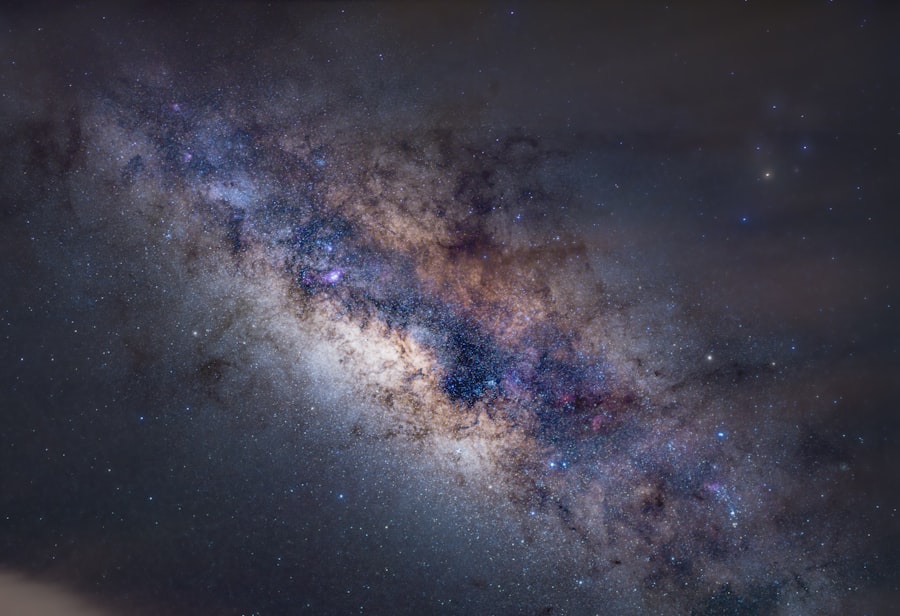
Dark matter plays a pivotal role in the dynamics and structure of isolated galaxies. It is believed that dark matter constitutes a significant portion of the total mass in the universe, influencing the gravitational forces that govern galaxy formation and evolution. In isolated galaxies, dark matter halos provide the necessary gravitational framework for stars and gas to coalesce into a cohesive structure.
These halos can be particularly massive, allowing isolated galaxies to maintain their integrity despite being far from other galactic influences. The interaction between dark matter and baryonic matter—composed of stars, gas, and dust—shapes the overall morphology and behavior of isolated galaxies. The distribution of dark matter affects how gas cools and condenses to form stars, ultimately influencing the galaxy’s star formation rate and chemical evolution.
Understanding the role of dark matter in these isolated systems is essential for constructing accurate models of galaxy formation and for deciphering the complex interplay between different components of the universe.
The Effect of Galaxy Isolation on Black Hole Formation
Galaxy isolation also has significant implications for black hole formation. In denser environments, interactions between galaxies can lead to mergers that trigger rapid accretion onto supermassive black holes at their centers. However, in isolated galaxies, such interactions are rare, which can result in a different evolutionary pathway for black holes.
The absence of frequent mergers means that black holes in isolated galaxies may grow at a slower pace compared to those in more crowded environments. Additionally, the dynamics within isolated galaxies can influence the mechanisms by which black holes acquire mass. In these solitary systems, gas inflows may be less chaotic, allowing for a more gradual accumulation of material onto black holes.
This slower growth can lead to a different population of black holes with distinct properties compared to those found in interacting galaxies. As researchers delve deeper into the study of isolated galaxies, they uncover valuable insights into the diverse pathways through which black holes evolve across the cosmos.
The Potential for Galaxy Mergers in Isolated Environments
| Metric | Description | Estimated Value / Range | Timeframe |
|---|---|---|---|
| Galaxy Isolation Duration | Time period a galaxy remains gravitationally isolated from major interactions | 1 to 10 billion years | Long term future |
| Star Formation Rate (SFR) | Rate of new star formation in isolated galaxies | 0.001 to 1 solar masses per year | Next few billion years |
| Gas Depletion Timescale | Time for galaxy to consume or lose its cold gas reservoir | 5 to 20 billion years | Long term future |
| Galaxy Merger Probability | Likelihood of isolated galaxy undergoing a major merger | Less than 10% | Next 10 billion years |
| Dark Energy Impact | Effect of accelerated expansion on galaxy isolation | Increasing isolation due to cosmic expansion | Next 100 billion years |
| Stellar Population Aging | Average age of stars in isolated galaxies over time | Up to 10 billion years older than current | Next 10 billion years |
| Intergalactic Medium Density | Density of gas between isolated galaxies | Decreasing over time due to expansion | Long term future |
While isolation typically implies a lack of interaction with other galaxies, it does not entirely preclude the possibility of mergers. Over cosmological timescales, even isolated galaxies can experience gravitational influences that may lead to eventual encounters with other galactic structures. These mergers can have profound effects on both participating galaxies, potentially triggering bursts of star formation and altering their morphological characteristics.
The potential for mergers in isolated environments raises intriguing questions about the long-term evolution of these galaxies. As they drift through space, they may eventually encounter other isolated systems or remnants from past cosmic events. Such interactions could reshape their stellar populations and influence their future trajectories within the cosmic web.
Understanding these dynamics is crucial for predicting how isolated galaxies might evolve over billions of years and how they fit into the larger framework of cosmic evolution.
The Influence of Galaxy Isolation on the Formation of Planetary Systems
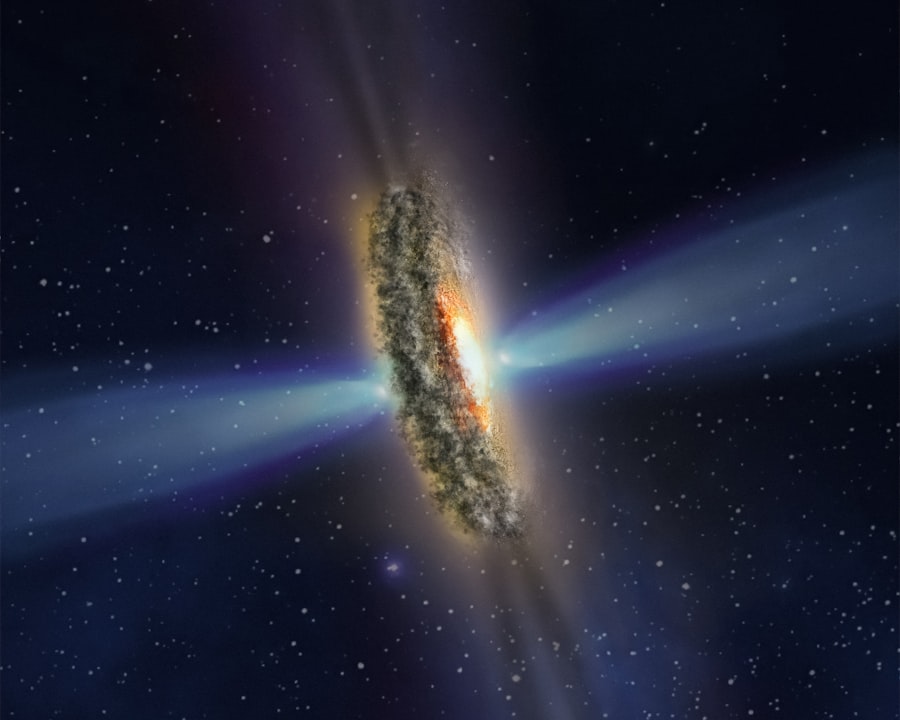
The conditions present in isolated galaxies also play a significant role in the formation of planetary systems. The availability of gas and dust is essential for creating protoplanetary disks around young stars, which are the building blocks for planets. In isolated environments, where gas retention is often higher due to reduced interactions with other galaxies, there may be an abundance of material available for planet formation.
Furthermore, the stability of isolated galaxies allows for a more orderly process of planetary system development. Without frequent disturbances from nearby galactic neighbors, protoplanetary disks can evolve more predictably, leading to a higher likelihood of forming stable planetary orbits. This stability may result in planetary systems that are less prone to disruptions, potentially fostering environments conducive to life as we know it.
The Long-Term Evolution of Gas and Dust in Isolated Galaxies
The long-term evolution of gas and dust within isolated galaxies is a critical aspect of their overall development. In these solitary systems, gas can remain relatively undisturbed for extended periods, allowing it to cool and condense into stars more efficiently. This process contributes to a sustained star formation activity that can last for billions of years.
However, as time progresses, the availability of gas may diminish due to star formation processes and feedback mechanisms from massive stars. Supernovae and stellar winds can expel gas from the galaxy or heat it up, making it less conducive to further star formation. Understanding how gas and dust evolve over time in isolated galaxies is essential for predicting their future trajectories and assessing their potential for continued star formation.
The Relationship Between Galaxy Isolation and the Cosmic Web
Galaxy isolation is intricately linked to the larger structure known as the cosmic web—a vast network of filaments composed of dark matter and baryonic matter that shapes the distribution of galaxies throughout the universe.
The relationship between isolation and the cosmic web has significant implications for understanding galaxy formation and evolution on a grand scale.
Isolated galaxies provide valuable insights into how cosmic structures evolve over time and how they interact with their surroundings. By studying these solitary systems within the context of the cosmic web, astronomers can develop more comprehensive models that account for both local and large-scale processes shaping the universe.
The Future of Observing and Studying Isolated Galaxies
As technology advances, astronomers are poised to enhance their observational capabilities regarding isolated galaxies significantly. Next-generation telescopes equipped with advanced imaging techniques will allow researchers to probe deeper into space than ever before, uncovering previously hidden populations of isolated systems. These observations will provide critical data on their properties, star formation rates, and interactions with dark matter.
Moreover, ongoing surveys aimed at cataloging isolated galaxies will contribute to a more comprehensive understanding of their distribution across different cosmic environments. By compiling extensive datasets on these solitary systems, scientists can refine their models and predictions regarding galaxy evolution and interactions within the cosmic web.
The Implications of Galaxy Isolation for the Search for Extraterrestrial Life
The study of galaxy isolation carries profound implications for humanity’s quest to understand extraterrestrial life. Isolated galaxies may harbor unique conditions conducive to life due to their stable environments and prolonged periods of star formation. The potential for diverse planetary systems within these solitary realms raises intriguing questions about habitability beyond our own galaxy.
Furthermore, understanding how isolation affects stellar evolution and planetary system development can inform astrobiological models that seek to identify potential biosignatures on distant exoplanets. By examining how life might arise in various galactic contexts—including isolated environments—scientists can broaden their search parameters when looking for signs of life beyond Earth.
The Importance of Understanding the Long-Term Future of Galaxy Isolation
In conclusion, galaxy isolation is a multifaceted phenomenon that offers invaluable insights into cosmic evolution and stellar dynamics. By studying isolated galaxies, astronomers can unravel fundamental questions about star formation, black hole growth, dark matter interactions, and planetary system development. As technology advances and observational capabilities improve, researchers will continue to deepen their understanding of these solitary systems within the broader context of the universe.
The implications extend beyond academic curiosity; they touch upon humanity’s quest to understand our place in the cosmos and search for extraterrestrial life. By comprehending how isolation shapes galactic evolution over time, scientists can better appreciate the intricate tapestry that constitutes our universe—a tapestry woven from both solitary threads and interconnected structures within the cosmic web. Understanding galaxy isolation is not merely an exploration of distant realms; it is an exploration into our own origins and potential futures among the stars.
As we explore the long-term future of galaxy isolation, it’s essential to consider the implications of cosmic expansion and the eventual fate of our universe. A related article that delves into these themes is available at this link. It provides insights into how galaxies may drift apart over billions of years, shaping the cosmic landscape and influencing the evolution of galactic structures.
WATCH THIS! 🧠 The Universe Is A Brain. And It’s Having A Stroke.
FAQs
What does galaxy isolation mean in the context of the long-term future?
Galaxy isolation refers to the state in which a galaxy becomes gravitationally separated from other galaxies or galaxy groups, often due to the expansion of the universe. Over extremely long timescales, galaxies can drift apart, leading to isolated systems with little or no interaction with others.
Why will galaxies become isolated in the long-term future?
The accelerated expansion of the universe, driven by dark energy, causes galaxies outside of local gravitationally bound groups to move away from each other at increasing speeds. Eventually, distant galaxies will recede beyond the cosmic horizon, making them effectively unreachable and isolated.
What happens to galaxy clusters in the long-term future?
Galaxy clusters that are gravitationally bound will remain intact despite cosmic expansion. However, over trillions of years, interactions and mergers within these clusters may lead to the formation of a single massive galaxy, while the cluster itself becomes isolated from other structures.
How does galaxy isolation affect the visibility of other galaxies?
As galaxies become isolated due to cosmic expansion, light from distant galaxies will be redshifted and eventually no longer reach observers. This means that in the far future, observers in isolated galaxies will see fewer or no other galaxies, making the universe appear emptier.
What is the significance of galaxy isolation for the long-term evolution of the universe?
Galaxy isolation marks a phase where large-scale structures become separated, limiting interactions such as galaxy collisions and star formation triggered by such events. This isolation influences the thermal and dynamic evolution of galaxies and the observable universe.
Will isolated galaxies continue to form new stars?
Over very long timescales, star formation in isolated galaxies will decline as the available gas is consumed or expelled. Without new material from interactions or mergers, star formation rates will decrease, leading to aging stellar populations.
How far into the future does galaxy isolation become significant?
Galaxy isolation becomes significant on timescales of tens to hundreds of billions of years, as cosmic expansion increasingly separates galaxies beyond gravitational influence and observational reach.
Can isolated galaxies still interact with dark matter or dark energy?
Yes, isolated galaxies remain embedded in dark matter halos and are influenced by dark energy, which drives the accelerated expansion of the universe. These components continue to affect the galaxy’s dynamics and evolution even in isolation.