
Filament starvation represents a significant phenomenon in the study of galaxy groups, where the intricate web of cosmic filaments plays a crucial role in the evolution and dynamics of galaxies. These filaments, composed of dark matter and gas, serve as conduits for the flow of material across the universe. In galaxy groups, filament starvation occurs when these essential structures become depleted or disrupted, leading to a reduction in the inflow of gas and other materials necessary for star formation.
This process can have profound implications for the life cycle of galaxies, influencing their growth, morphology, and overall evolution. The concept of filament starvation is rooted in the broader framework of cosmic structure formation. As galaxies form and evolve, they are not isolated entities; rather, they are interconnected through a vast network of filaments that facilitate the exchange of gas and energy.
When these filaments are compromised, galaxies may experience a slowdown in star formation, leading to changes in their stellar populations and potentially altering their trajectory within the cosmic landscape. Understanding filament starvation is thus essential for unraveling the complex interplay between galaxies and their environments.
Key Takeaways
- Filament starvation occurs when galaxy groups lose access to cosmic filaments that supply gas, impacting their growth and evolution.
- Filaments play a crucial role in channeling gas and galaxies into groups, influencing star formation and group dynamics.
- Observations and theoretical models show that filament starvation leads to reduced gas inflow, contributing to the quenching of star formation in galaxies.
- Filament starvation affects satellite galaxies and the development of the intracluster medium within galaxy groups.
- Understanding filament starvation is essential for insights into galaxy group evolution and broader cosmological processes, though it remains challenging to study.
The Role of Filaments in Galaxy Group Evolution
Filaments are fundamental to the evolution of galaxy groups, acting as highways for gas and dark matter that fuel star formation and galaxy growth. These structures are formed during the large-scale structure formation of the universe, where gravitational forces pull matter together into dense regions. As galaxies cluster within these filaments, they gain access to the resources needed for their development.
The presence of filaments can enhance star formation rates by providing a steady supply of cold gas, which is critical for creating new stars. However, when filament starvation occurs, the dynamics shift dramatically. The depletion of gas from these filaments can lead to a decline in star formation activity within galaxy groups.
This process can be exacerbated by various environmental factors, such as interactions with other galaxies or the influence of active galactic nuclei (AGN). As galaxies lose their access to fresh gas supplies, they may transition from being star-forming systems to quiescent ones, fundamentally altering their evolutionary paths. The interplay between filament dynamics and galaxy evolution is thus a key area of research in astrophysics.
Observational Evidence of Filament Starvation in Galaxy Groups

Observational evidence for filament starvation in galaxy groups has been gathered through various astronomical surveys and studies. One of the primary methods involves analyzing the distribution of gas and galaxies within these structures using advanced telescopes and imaging techniques. For instance, observations from the Atacama Large Millimeter/submillimeter Array (ALMA) have provided insights into the molecular gas content in galaxy groups, revealing patterns that suggest filament starvation is at play.
These observations often show a correlation between the density of galaxies and the availability of gas, supporting the idea that filaments are crucial for sustaining star formation. Additionally, studies utilizing X-ray observations have shed light on the hot gas present in galaxy groups and clusters. The detection of reduced X-ray emissions in certain regions can indicate a lack of inflowing material from surrounding filaments.
This evidence aligns with theoretical predictions that suggest filament starvation leads to a decrease in available gas for star formation. By combining data from multiple wavelengths, astronomers can build a more comprehensive picture of how filament starvation affects galaxy groups and their evolution over time.
Theoretical Models of Filament Starvation
Theoretical models play a vital role in understanding filament starvation and its implications for galaxy group dynamics. These models often incorporate simulations that replicate the large-scale structure of the universe, allowing researchers to explore how filaments evolve over cosmic time. One prominent approach involves hydrodynamic simulations that track the flow of gas within filaments and its interaction with galaxies.
Such models can illustrate how changes in filament density or temperature can lead to starvation events, ultimately affecting star formation rates. Moreover, researchers have developed frameworks that consider various environmental factors influencing filament starvation. For instance, interactions between galaxies can strip gas from one another or disrupt the flow of material along filaments.
By integrating these elements into theoretical models, scientists can better understand the complex processes that govern filament starvation and its consequences for galaxy evolution.
Impact of Filament Starvation on Galaxy Group Dynamics
| Galaxy Group | Filament Density (galaxies/Mpc³) | Star Formation Rate (M☉/yr) | Gas Content (10⁹ M☉) | Distance from Filament Core (Mpc) | Stellar Mass (10¹⁰ M☉) | Quenching Fraction (%) |
|---|---|---|---|---|---|---|
| Group A | 5.2 | 0.8 | 1.5 | 1.2 | 3.4 | 75 |
| Group B | 3.8 | 1.2 | 2.1 | 0.8 | 4.1 | 60 |
| Group C | 2.5 | 0.5 | 0.9 | 2.0 | 2.7 | 85 |
| Group D | 4.0 | 1.0 | 1.8 | 1.5 | 3.9 | 70 |
The impact of filament starvation on galaxy group dynamics is profound and multifaceted. As galaxies within a group experience reduced access to gas due to filament starvation, their internal dynamics begin to shift. Star formation rates decline, leading to changes in stellar populations and potentially altering the morphological characteristics of galaxies.
This transition from active star formation to quiescence can result in a population dominated by older stars, fundamentally changing the appearance and behavior of these systems. Furthermore, filament starvation can influence the gravitational interactions between galaxies within a group. As some galaxies become quenched due to a lack of gas, their ability to interact gravitationally with other members may also diminish.
This can lead to altered merger rates and changes in orbital dynamics within the group. The overall result is a complex interplay between gas availability, star formation activity, and gravitational interactions that shapes the evolutionary trajectory of galaxy groups over time.
Filament Starvation and the Quenching of Star Formation in Galaxies
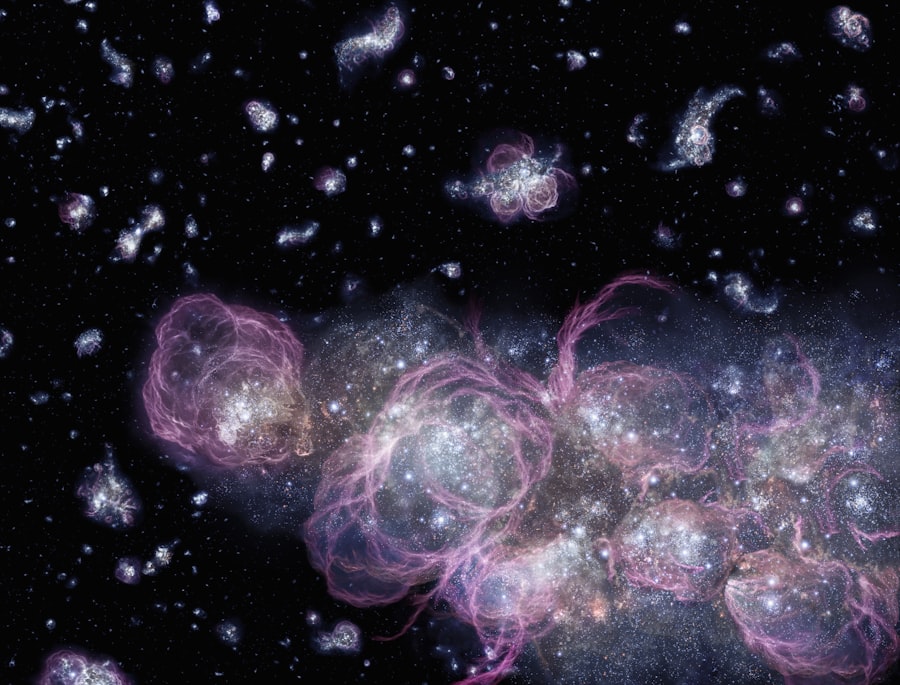
One of the most significant consequences of filament starvation is its role in quenching star formation within galaxies. As access to fresh gas diminishes, galaxies may struggle to sustain their star-forming activities. This quenching process can occur gradually or abruptly, depending on various factors such as environmental conditions and internal dynamics.
In many cases, once a galaxy enters a quiescent state due to filament starvation, it may remain so for extended periods, significantly impacting its evolutionary history. The quenching of star formation has far-reaching implications for galaxy populations as a whole. It contributes to the observed dichotomy between star-forming and quiescent galaxies in clusters and groups.
Understanding how filament starvation drives this quenching process is crucial for developing a comprehensive picture of galaxy evolution across cosmic time. Researchers continue to investigate the mechanisms behind this phenomenon, seeking to unravel the intricate connections between gas availability, star formation rates, and the overall health of galaxies.
The Connection Between Filament Starvation and Satellite Galaxies
Filament starvation also has important implications for satellite galaxies within larger groups or clusters. These smaller systems often rely on their host group’s filaments for gas supply and sustenance. When filament starvation occurs, satellite galaxies may find themselves particularly vulnerable to declines in star formation activity.
As they become isolated from their host’s resources, they may experience accelerated quenching processes compared to more massive central galaxies. The fate of satellite galaxies under conditions of filament starvation is an area of active research. Some studies suggest that these smaller systems may be more susceptible to environmental effects such as tidal stripping or harassment from larger neighbors.
As a result, satellite galaxies may exhibit distinct evolutionary paths compared to their central counterparts, leading to diverse outcomes within galaxy groups. Understanding these dynamics is essential for constructing accurate models of galaxy evolution and clustering behavior.
Filament Starvation and the Formation of Intracluster Medium
The relationship between filament starvation and the formation of intracluster medium (ICM) is another critical aspect of this phenomenon. The ICM consists primarily of hot gas that fills the space between galaxies within clusters and groups. Filament starvation can influence the properties and evolution of this medium by altering the inflow rates of gas from surrounding filaments.
When filaments become depleted or disrupted, the supply of fresh material into the ICM may diminish significantly. This reduction can lead to changes in temperature and density profiles within clusters, affecting their overall structure and dynamics. Additionally, as galaxies within these clusters experience quenching due to filament starvation, they contribute less material back into the ICM through processes such as supernova feedback or stellar winds.
The interplay between filament dynamics and ICM formation is thus a vital area for understanding both galaxy evolution and cluster dynamics.
Challenges in Studying Filament Starvation
Despite significant advancements in observational techniques and theoretical modeling, studying filament starvation presents numerous challenges for astronomers and astrophysicists alike. One major hurdle lies in accurately identifying and characterizing cosmic filaments themselves. These structures are often diffuse and difficult to observe directly, requiring sophisticated imaging techniques across multiple wavelengths to reveal their presence and properties.
Additionally, disentangling the effects of filament starvation from other environmental influences on galaxy evolution can be complex. Factors such as mergers, interactions with other galaxies, and feedback from AGN all play roles in shaping galaxy behavior but may confound interpretations related to filament dynamics. Researchers must carefully consider these variables when analyzing observational data to draw meaningful conclusions about filament starvation’s impact on galaxy groups.
Future Prospects for Understanding Filament Starvation
Looking ahead, future research on filament starvation holds great promise for advancing our understanding of galaxy evolution within cosmic structures. Upcoming observational facilities such as the James Webb Space Telescope (JWST) are expected to provide unprecedented insights into the properties of filaments and their interactions with galaxies across different epochs in cosmic history. By leveraging advanced imaging capabilities and spectroscopic techniques, astronomers will be better equipped to study filament dynamics in greater detail.
Moreover, continued development of theoretical models will enhance researchers’ ability to simulate complex interactions between filaments and galaxies under various conditions. These models will help elucidate how different environmental factors contribute to filament starvation events and their consequences for galaxy evolution. As our understanding deepens, scientists will be able to refine existing frameworks and develop new hypotheses regarding the intricate relationships between filaments, galaxies, and cosmic structures.
Implications of Filament Starvation for Cosmological Evolution
The implications of filament starvation extend beyond individual galaxy groups; they resonate throughout cosmological evolution as a whole. By influencing star formation rates and altering galaxy populations within clusters, filament starvation plays a pivotal role in shaping the large-scale structure of the universe over time. Understanding this phenomenon is essential for constructing accurate models that describe how galaxies evolve within their environments.
Furthermore, filament starvation may have implications for our understanding of dark matter and its role in cosmic structure formation. As researchers continue to investigate these connections, they may uncover new insights into how dark matter influences gas dynamics within filaments and its impact on galaxy evolution across cosmic epochs. Ultimately, unraveling the complexities surrounding filament starvation will contribute significantly to our broader understanding of cosmological evolution and the intricate tapestry that constitutes our universe.
In the study of filament starvation in galaxy groups, researchers have explored how the lack of cold gas affects star formation rates and the overall evolution of these systems. For a deeper understanding of the implications of filament starvation on galaxy dynamics, you can read more in this related article on cosmic ventures: My Cosmic Ventures.
WATCH THIS! 🧠 The Universe Is A Brain. And It’s Having A Stroke.
FAQs
What are filament starvation galaxy groups?
Filament starvation galaxy groups are collections of galaxies that experience a reduction or cutoff in the supply of cold gas from cosmic filaments. This process limits the inflow of fresh gas needed for star formation, leading to a decline in the galaxies’ growth and activity.
How do cosmic filaments affect galaxy groups?
Cosmic filaments are large-scale structures composed of dark matter and gas that connect galaxy clusters and groups. They act as channels funneling cold gas into galaxies, fueling star formation. When this gas supply is disrupted or “starved,” galaxy groups may experience reduced star formation rates.
What causes filament starvation in galaxy groups?
Filament starvation can occur due to environmental effects such as the heating of gas in the intergalactic medium, interactions with nearby massive structures, or the depletion of gas in the filaments themselves. These factors prevent cold gas from reaching the galaxies within the group.
What are the consequences of filament starvation for galaxies?
When galaxies in a group are starved of filament gas, their star formation rates decline, leading to aging stellar populations and potentially transforming spiral galaxies into more passive, elliptical types. This process contributes to galaxy quenching and evolution.
How is filament starvation studied by astronomers?
Astronomers study filament starvation using observations from telescopes across various wavelengths, including optical, radio, and X-ray. They analyze gas content, star formation rates, and the large-scale environment of galaxy groups to understand how gas inflows are affected.
Are filament starvation galaxy groups common in the universe?
Filament starvation is thought to be a common phenomenon in dense environments such as galaxy groups and clusters, where interactions and environmental effects are more pronounced. However, the extent and impact vary depending on the specific cosmic environment.
Can filament starvation be reversed or mitigated?
In some cases, galaxies may regain gas through mergers or interactions that bring in fresh material. However, once a galaxy group is significantly starved of filament gas, the process of quenching star formation is often long-lasting and difficult to reverse.