
In the vast expanse of the universe, galaxy clusters stand as monumental structures, serving as the largest gravitationally bound systems known to exist. These colossal formations are not merely collections of galaxies; they are intricate ecosystems that provide profound insights into the nature of the cosmos. As researchers delve deeper into the mysteries of galaxy clusters, they uncover the fundamental processes that govern the universe’s evolution.
The study of these clusters is pivotal, as they hold clues to the formation of galaxies, the behavior of dark matter, and the overall dynamics of cosmic structures. Galaxy clusters are not only significant for their sheer size and mass but also for their role in the broader context of cosmology. They serve as laboratories for understanding the fundamental forces at play in the universe.
By examining these clusters, scientists can glean information about the early universe, the distribution of dark matter, and the intricate web of cosmic evolution. As such, galaxy clusters are essential to unraveling the mysteries of the universe and understanding humanity’s place within it.
Key Takeaways
- Galaxy clusters are massive structures consisting of hundreds to thousands of galaxies bound by gravity.
- They form and evolve through the merging of smaller groups and the influence of dark matter.
- Dark matter plays a crucial role in the structure and dynamics of galaxy clusters.
- Observing galaxy clusters helps scientists understand cosmology and astrophysical processes.
- Future research on galaxy clusters will deepen our knowledge of the universe’s formation and evolution.
What are Galaxy Clusters?
Galaxy clusters are vast groupings of galaxies that are bound together by gravity. Typically, a galaxy cluster can contain anywhere from a few dozen to thousands of galaxies, along with hot gas and dark matter. These clusters can span millions of light-years across and are often categorized into two main types: rich clusters, which contain a large number of galaxies and significant amounts of hot gas, and poor clusters, which have fewer galaxies and less hot gas.
The diversity in their composition and structure makes galaxy clusters a fascinating subject for astrophysical research. The galaxies within a cluster are not uniformly distributed; instead, they exhibit a hierarchical arrangement influenced by gravitational interactions. The central region of a cluster often hosts a dominant galaxy, known as the “central galaxy,” which is typically larger and more luminous than its companions.
Surrounding this central galaxy are numerous smaller galaxies that orbit it, creating a dynamic environment where interactions and mergers can occur. This complex interplay among galaxies within a cluster is crucial for understanding their evolution and the mechanisms that drive galaxy formation.
Formation and Evolution of Galaxy Clusters
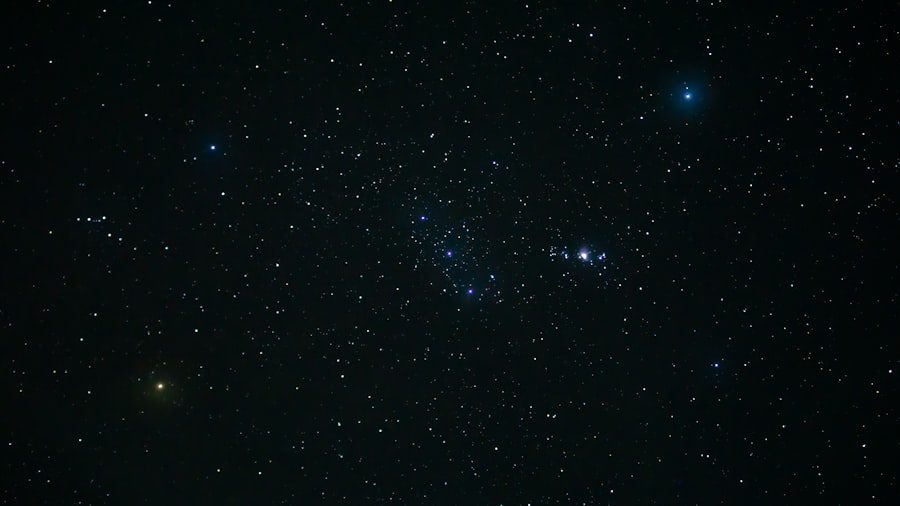
The formation of galaxy clusters is a process that unfolds over billions of years, beginning with small density fluctuations in the early universe. These fluctuations, remnants from the Big Bang, served as seeds for gravitational attraction, leading to the gradual accumulation of matter. As regions of higher density attracted more gas and dark matter, they began to collapse under their own gravity, forming protoclusters.
Over time, these protoclusters evolved into fully-fledged galaxy clusters through a series of mergers and accretion events. The evolution of galaxy clusters is marked by a series of dynamic processes. As galaxies merge and interact within a cluster, they can trigger bursts of star formation or lead to the stripping of gas from smaller galaxies.
Additionally, the hot gas present in clusters plays a crucial role in their evolution. This gas can cool and condense to form new stars or heat up due to gravitational interactions, influencing the overall energy balance within the cluster. Understanding these processes is essential for piecing together the history of galaxy clusters and their role in shaping the universe.
The Structure of Galaxy Clusters
The structure of galaxy clusters is complex and multifaceted, characterized by various components that interact with one another. At the core lies the central galaxy, surrounded by a halo of dark matter that exerts gravitational influence over the entire cluster. This dark matter halo is crucial for maintaining the stability of the cluster and preventing galaxies from escaping its gravitational pull.
The distribution of galaxies within a cluster is not uniform; instead, it often follows a specific pattern influenced by gravitational dynamics. Galaxies tend to be more densely packed towards the center, gradually becoming sparser at greater distances.
This arrangement reflects the gravitational potential well created by the cluster’s mass distribution. Additionally, clusters can exhibit substructure—smaller groups or filaments of galaxies that have not yet fully merged with the main cluster—providing further insight into their evolutionary history.
The Role of Dark Matter in Galaxy Clusters
| Metric | Description | Value / Range | Unit |
|---|---|---|---|
| Number of Galaxy Clusters | Total identified galaxy clusters in the observable universe | ~10,000 | clusters |
| Average Cluster Mass | Typical mass of a galaxy cluster | 1014 – 1015 | solar masses |
| Intercluster Distance | Average distance between neighboring galaxy clusters | 50 – 100 | megaparsecs (Mpc) |
| Expansion Rate Effect | Rate at which cosmic expansion isolates clusters | ~70 | km/s/Mpc (Hubble constant) |
| Isolation Timescale | Estimated time for clusters to become gravitationally isolated | ~100 billion | years |
| Dark Energy Influence | Effect of dark energy accelerating isolation | Dominant since ~5 billion years ago | time period |
| Galaxy Cluster Velocity Dispersion | Typical velocity spread of galaxies within a cluster | 500 – 1000 | km/s |
| Number of Galaxies per Cluster | Average number of galaxies contained in a cluster | 100 – 1000 | galaxies |
Dark matter plays an indispensable role in the formation and stability of galaxy clusters. Although it cannot be observed directly, its presence is inferred through gravitational effects on visible matter. In fact, dark matter constitutes a significant portion of a cluster’s total mass, often outstripping the mass contributed by galaxies and hot gas combined.
This unseen component is crucial for understanding how clusters form and evolve over time. The gravitational influence of dark matter helps to bind galaxies together within a cluster while also shaping their orbits. As galaxies move through the cluster’s gravitational field, they experience tidal forces that can lead to interactions and mergers.
Furthermore, dark matter affects the dynamics of the intracluster medium by influencing its temperature and density distribution. By studying dark matter’s role in galaxy clusters, researchers can gain insights into its properties and distribution throughout the universe.
Interactions and Dynamics within Galaxy Clusters

The interactions among galaxies within a cluster are complex and varied, leading to a rich tapestry of dynamical processes. Galaxies can collide and merge, resulting in significant changes to their structure and star formation activity. These interactions can trigger bursts of star formation as gas is compressed during collisions or lead to the stripping of gas from smaller galaxies as they pass through denser regions of the intracluster medium.
Moreover, these dynamical processes are not limited to individual galaxies; they extend to the entire cluster environment. The movement of galaxies through the intracluster medium generates shock waves that can heat up the gas and influence its distribution. This interplay between galaxies and their surrounding medium is essential for understanding how clusters evolve over time and how they contribute to cosmic structure formation.
The Importance of Galaxy Clusters in Cosmology
Galaxy clusters serve as vital tools for cosmologists seeking to understand the universe’s evolution and structure. They act as cosmic laboratories where researchers can test theories about dark matter, dark energy, and gravity on large scales. By studying clusters’ properties—such as their mass distribution, temperature profiles, and galaxy populations—scientists can infer critical information about the universe’s expansion history and its overall composition.
Additionally, galaxy clusters provide insights into fundamental questions about cosmic evolution. For instance, they help researchers understand how structures formed in the early universe and how they have evolved over billions of years. The study of clusters also sheds light on phenomena such as gravitational lensing, where massive clusters bend light from distant objects, allowing astronomers to probe regions beyond our observable universe.
Studying Galaxy Clusters: Observational Techniques
The study of galaxy clusters relies on various observational techniques that leverage different wavelengths of light to gather comprehensive data about these massive structures. Optical observations allow astronomers to identify individual galaxies within a cluster and analyze their properties, such as luminosity and redshift. However, optical data alone cannot provide a complete picture; thus, other methods are employed.
X-ray observations are particularly valuable for studying the hot gas in galaxy clusters. The intracluster medium emits X-rays due to its high temperature, allowing researchers to map its distribution and study its thermal properties. Additionally, radio observations can reveal information about cosmic rays and magnetic fields within clusters.
By combining data from multiple wavelengths—optical, X-ray, radio—scientists can construct detailed models that enhance our understanding of galaxy clusters’ dynamics and evolution.
Galaxy Clusters as Laboratories for Astrophysical Processes
Galaxy clusters serve as unique laboratories for investigating various astrophysical processes that occur on cosmic scales. The interactions between galaxies within these clusters provide insights into star formation rates, galactic mergers, and feedback mechanisms that regulate star formation activity. By studying these processes in detail, researchers can refine their models of galaxy evolution and better understand how different factors influence galactic development.
Moreover, galaxy clusters offer opportunities to explore fundamental questions about dark matter and dark energy. The gravitational effects observed in these massive structures allow scientists to test theories regarding their nature and distribution throughout the universe. As researchers continue to investigate these cosmic laboratories, they uncover new phenomena that challenge existing paradigms and inspire further inquiry into the workings of our universe.
The Future of Galaxy Cluster Research
The future of galaxy cluster research promises exciting developments as new technologies and observational techniques emerge. Upcoming telescopes equipped with advanced capabilities will enable astronomers to probe deeper into the universe’s history and gather more detailed data about galaxy clusters than ever before. These advancements will facilitate studies on previously unexplored aspects of cluster dynamics, such as their role in cosmic reionization or their interactions with surrounding large-scale structures.
As researchers continue to refine their models and theories based on new findings, they will contribute to a more comprehensive understanding of how these colossal structures fit into the broader narrative of cosmic evolution.
The Significance of Galaxy Clusters in Understanding the Universe
In conclusion, galaxy clusters represent some of the most significant structures in our universe, offering invaluable insights into its formation and evolution. Their intricate dynamics reveal essential information about dark matter, galaxy interactions, and cosmic processes that shape our understanding of astrophysics. As researchers continue to explore these colossal formations through advanced observational techniques and collaborative efforts, they will undoubtedly uncover new mysteries that deepen humanity’s comprehension of the cosmos.
The significance of galaxy clusters extends beyond mere academic interest; they serve as key indicators for understanding fundamental questions about our universe’s origins and fate. By studying these massive structures, scientists not only enhance our knowledge but also inspire future generations to explore the wonders of space and our place within it. As we look toward an ever-expanding horizon in astrophysical research, galaxy clusters will remain at the forefront—illuminating pathways toward understanding one of nature’s most profound enigmas: the universe itself.
Recent studies have highlighted the fascinating phenomenon of galaxy clusters becoming isolated islands in the vast expanse of the universe. This shift in understanding emphasizes how these clusters, once thought to be interconnected, are now seen as separate entities drifting through cosmic space. For more insights on this topic, you can read the related article on cosmic exploration at My Cosmic Ventures.
WATCH THIS! 🧠 The Universe Is A Brain. And It’s Having A Stroke.
FAQs
What are galaxy clusters?
Galaxy clusters are large groupings of galaxies bound together by gravity. They contain hundreds to thousands of galaxies, along with hot gas and dark matter.
Why are galaxy clusters becoming isolated islands?
Galaxy clusters are becoming isolated islands due to the accelerated expansion of the universe. As space expands, clusters move away from each other, eventually becoming gravitationally isolated.
What causes the accelerated expansion of the universe?
The accelerated expansion is driven by dark energy, a mysterious form of energy that makes up about 68% of the universe and causes space to expand at an increasing rate.
How does this isolation affect the future of galaxy clusters?
Over billions of years, galaxy clusters will become increasingly isolated, with fewer interactions or mergers between clusters. This isolation limits the exchange of matter and energy between clusters.
Will galaxies within clusters still interact?
Yes, galaxies within a cluster will continue to interact and merge due to their mutual gravitational attraction, even as the clusters themselves become isolated from one another.
How does this phenomenon impact our understanding of the universe?
The isolation of galaxy clusters helps astronomers study the effects of dark energy and the large-scale structure of the universe, providing insights into cosmic evolution and the ultimate fate of the cosmos.
Is this isolation a recent development?
No, the process has been ongoing since the universe began accelerating in its expansion roughly 5 billion years ago, but its effects will become more pronounced over the next tens of billions of years.
Can we observe galaxy clusters becoming isolated?
While we cannot observe the full process in real-time due to its vast timescale, astronomers use observations and simulations to understand and predict how galaxy clusters will become isolated islands in the future.