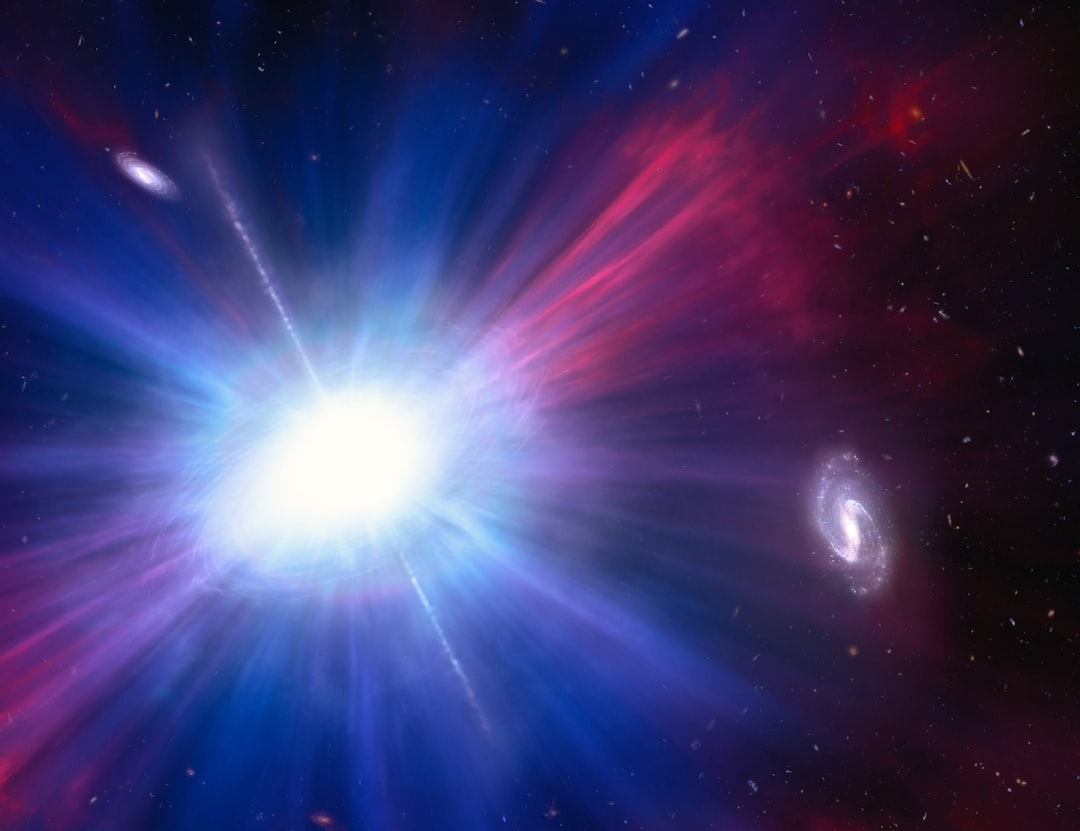
The Cosmic Bell Test represents a groundbreaking intersection of quantum mechanics and cosmology, pushing the boundaries of human understanding regarding the nature of reality. This innovative experiment seeks to explore the phenomenon of quantum entanglement on a cosmic scale, utilizing distant celestial objects to test the principles laid out by physicist John Bell in the 1960s. Bell’s theorem posits that if quantum mechanics is correct, then particles can be entangled in such a way that the measurement of one particle instantaneously influences another, regardless of the distance separating them.
The Cosmic Bell Test aims to validate these principles by employing light from distant stars and quasars, thereby expanding the scope of entanglement beyond terrestrial confines. The significance of this experiment lies not only in its potential to confirm or refute fundamental aspects of quantum theory but also in its implications for our understanding of the universe. By examining entangled particles that have traveled vast distances across space and time, researchers hope to uncover insights into the very fabric of reality itself.
The Cosmic Bell Test serves as a bridge between abstract theoretical concepts and observable phenomena, inviting both scientists and enthusiasts alike to ponder the mysteries of existence.
Key Takeaways
- The Cosmic Bell Test uses distant starlight and quasars to close loopholes in testing quantum entanglement.
- Entanglement challenges classical ideas of locality and realism, showing particles can be instantaneously connected.
- By incorporating cosmic sources, the experiment pushes the origin of measurement settings billions of years into the past.
- Results support quantum mechanics predictions, reinforcing the non-local nature of reality.
- The experiment opens new avenues for quantum technologies and international scientific collaboration.
Understanding the concept of entanglement
Entanglement is one of the most perplexing and fascinating phenomena in quantum mechanics. When two particles become entangled, their properties become interlinked in such a way that the state of one particle cannot be described independently of the state of the other, even when they are separated by great distances. This interconnectedness defies classical intuitions about locality and separability, leading to what Einstein famously referred to as “spooky action at a distance.” The implications of entanglement challenge conventional notions of causality and suggest that information can be shared instantaneously across vast expanses of space.
In practical terms, entangled particles exhibit correlations that can be measured and quantified. When one particle is observed, its state will instantaneously determine the state of its entangled partner, regardless of how far apart they are. This phenomenon has been experimentally verified numerous times in laboratory settings, but the Cosmic Bell Test takes it a step further by examining entanglement on a cosmic scale.
By utilizing light from distant stars and quasars, researchers aim to eliminate any local hidden variable theories that could potentially explain away the observed correlations, thereby reinforcing the non-local nature of quantum mechanics.
The role of starlight in the Cosmic Bell Test
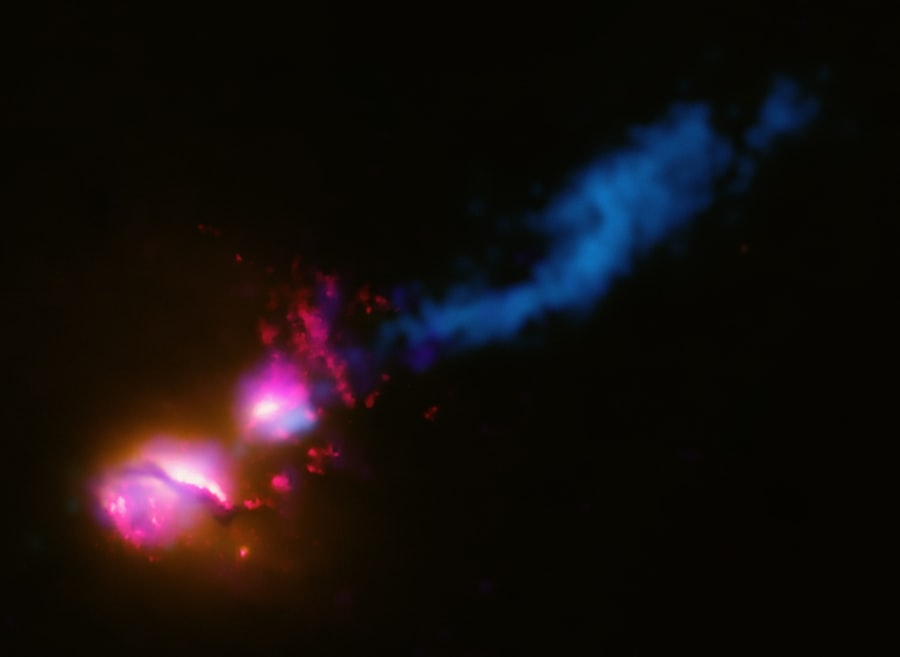
Starlight plays a pivotal role in the Cosmic Bell Test, serving as a source of entangled photons that are crucial for conducting the experiment. By harnessing light emitted from distant stars, researchers can create pairs of entangled photons that have traveled billions of years through space before reaching Earth. This approach not only allows for a unique testing environment but also provides an opportunity to explore how quantum mechanics operates over cosmological distances.
The use of starlight effectively removes any local influences that could interfere with the results, ensuring that the experiment adheres to the stringent requirements set forth by Bell’s theorem. Moreover, starlight embodies a connection between quantum mechanics and the vast universe, highlighting the interplay between microscopic phenomena and macroscopic realities. As photons from distant stars are captured and analyzed, they carry with them information about their origins and the conditions under which they were emitted.
This aspect adds an additional layer of complexity to the experiment, as researchers must consider not only the quantum properties of the photons but also their historical context within the cosmos. The integration of starlight into the Cosmic Bell Test exemplifies how fundamental physics can be explored through astronomical observations.
Exploring the significance of quasars in the experiment
Quasars, some of the most luminous and distant objects in the universe, hold particular significance in the Cosmic Bell Test due to their unique properties.
The light from quasars has traveled for billions of years before reaching Earth, making them ideal candidates for testing quantum entanglement over vast distances.
By utilizing quasars as sources of entangled photons, researchers can investigate whether quantum correlations persist even when separated by extreme cosmic distances. The choice of quasars also allows scientists to explore questions related to cosmic time and space. Since quasars are located at varying distances from Earth, they provide a natural laboratory for examining how entanglement behaves across different epochs in cosmic history.
This aspect is particularly intriguing because it raises questions about whether quantum mechanics operates uniformly throughout the universe or if there are variations based on distance or time. By incorporating quasars into the Cosmic Bell Test, researchers aim to deepen their understanding of both quantum mechanics and cosmology, potentially revealing new insights into the fundamental nature of reality.
How the Cosmic Bell Test challenges our understanding of reality
| Metric | Description | Value | Unit | Source/Reference |
|---|---|---|---|---|
| Experiment Name | Cosmic Bell Test using Starlight from Quasars | – | – | Handsteiner et al., Phys. Rev. Lett. 118, 060401 (2017) |
| Quasar Redshift Range | Redshift values of quasars used to generate random measurement settings | 0.96 to 3.91 | z (dimensionless) | Handsteiner et al., 2017 |
| Lookback Time | Time since light left the quasars used in the experiment | 7.8 to 12.2 | Billion years | Cosmological calculations based on redshift |
| Bell Inequality Violation | Measured violation of Bell’s inequality in the experiment | 7.31 | Standard deviations | Handsteiner et al., 2017 |
| Measurement Setting Independence | Time before experiment that local hidden variables could have influenced settings | 7.8 to 12.2 | Billion years ago | Based on quasar light emission time |
| Photon Detection Rate | Rate of detected photons from quasars used for random setting generation | ~1000 | Photons per second | Experimental setup data |
| Distance to Quasars | Comoving distance to quasars used in the test | 6.5 to 12.5 | Billion light years | Cosmological distance calculations |
| Purpose | Test of local realism and closing the freedom-of-choice loophole | – | – | Quantum foundations research |
The Cosmic Bell Test poses profound challenges to conventional understandings of reality by questioning the very nature of causality and locality. If the results confirm Bell’s theorem, it would imply that entangled particles can influence each other instantaneously across vast distances, defying classical intuitions about how information should propagate through space. This non-locality suggests that our traditional notions of separateness may be fundamentally flawed, leading to a reevaluation of how individuals perceive their relationship with the universe.
Furthermore, the implications extend beyond mere philosophical musings; they touch upon foundational questions about determinism and randomness in quantum mechanics. If entangled particles exhibit correlations that cannot be explained by local hidden variables, it raises questions about whether reality is inherently probabilistic or if there exists an underlying order that remains hidden from observation. The Cosmic Bell Test thus serves as a catalyst for deeper inquiry into these existential questions, inviting scientists and philosophers alike to reconsider what it means to understand reality itself.
The implications of the experiment for quantum mechanics
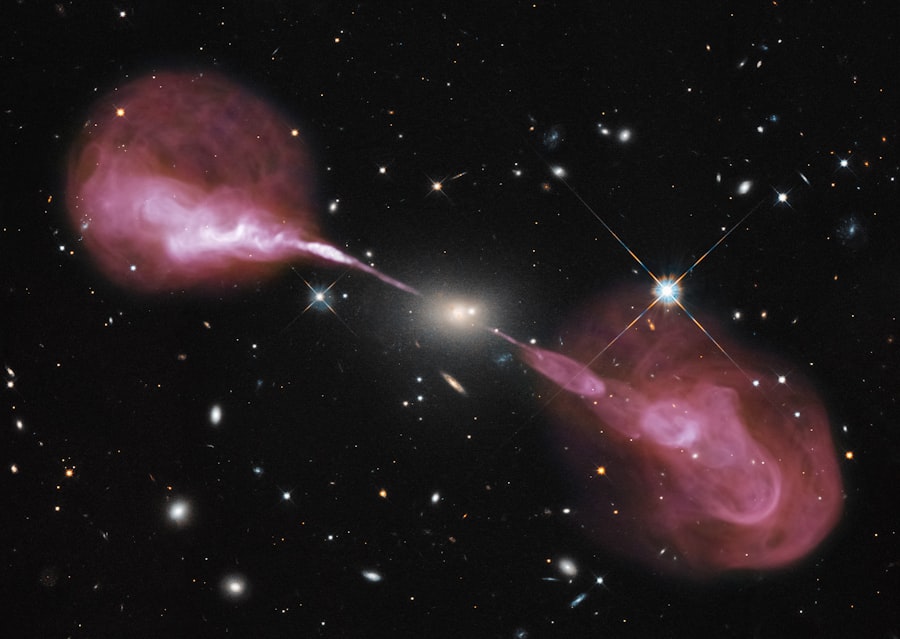
The implications of the Cosmic Bell Test for quantum mechanics are profound and far-reaching. Should the experiment yield results consistent with Bell’s theorem, it would provide robust evidence supporting the non-locality inherent in quantum mechanics. This confirmation would reinforce existing theories while simultaneously challenging alternative interpretations that attempt to reconcile quantum phenomena with classical intuitions.
The results could lead to a paradigm shift in how physicists approach quantum theory, prompting new avenues for research and exploration. Moreover, validating entanglement on a cosmic scale could have significant ramifications for our understanding of quantum information theory and quantum computing. If entangled particles can maintain their correlations over vast distances and timescales, it opens up possibilities for developing new technologies that leverage these properties for secure communication and advanced computational capabilities.
The Cosmic Bell Test thus not only seeks to affirm theoretical principles but also holds promise for practical applications that could revolutionize various fields.
The potential applications of the Cosmic Bell Test in technology
The potential applications stemming from insights gained through the Cosmic Bell Test are vast and varied. One immediate area of interest lies in quantum communication technologies, particularly in developing secure communication channels based on quantum key distribution (QKD). By utilizing entangled photons generated through cosmic sources, researchers could create communication systems that are theoretically immune to eavesdropping due to the fundamental principles governing quantum mechanics.
This advancement could revolutionize data security across numerous sectors, including finance, healthcare, and national security. Additionally, advancements in quantum computing may also benefit from findings related to entanglement on a cosmic scale. As researchers continue to explore how entangled particles interact over vast distances, they may uncover new methods for enhancing qubit performance and coherence times in quantum processors.
Such improvements could lead to more powerful and efficient quantum computers capable of solving complex problems beyond the reach of classical computing systems. The implications extend beyond mere technological advancements; they could reshape entire industries and redefine how society approaches computation and information processing.
The collaboration between researchers and the international community in conducting the experiment
The Cosmic Bell Test exemplifies a remarkable collaboration among researchers from diverse fields and institutions across the globe. Scientists specializing in quantum physics, astronomy, and engineering have come together to design and execute this ambitious experiment, pooling their expertise to tackle one of science’s most profound questions. This interdisciplinary approach not only enhances the quality of research but also fosters an environment where innovative ideas can flourish.
International cooperation is essential for conducting such an expansive experiment that relies on observations from various locations around the world. By sharing resources, data, and insights, researchers can ensure that their findings are robust and reproducible. This collaborative spirit reflects a broader trend within scientific communities toward open dialogue and shared goals, emphasizing that some questions about reality transcend national boundaries and require collective efforts to address.
The experimental setup and methodology of the Cosmic Bell Test
The experimental setup for the Cosmic Bell Test is intricate and meticulously designed to ensure accurate measurements while adhering to Bell’s theorem’s stringent requirements. Researchers utilize telescopes equipped with advanced detectors capable of capturing light from distant stars and quasars. These telescopes are strategically positioned around the globe to maximize coverage and minimize potential local influences on measurements.
Once starlight is collected, it is directed toward specialized equipment designed to generate pairs of entangled photons through processes such as spontaneous parametric down-conversion or four-wave mixing. These photons are then subjected to various measurements aimed at determining their polarization states or other properties relevant to testing Bell’s inequalities. By analyzing correlations between measurements taken on these entangled photons across different locations and times, researchers can assess whether their results align with predictions made by quantum mechanics or if alternative explanations might hold true.
The results and findings of the experiment
As researchers continue to conduct the Cosmic Bell Test, preliminary results have already begun to emerge, offering tantalizing insights into the nature of entanglement on a cosmic scale. Initial findings suggest strong correlations between measurements taken on entangled photons originating from distant quasars, lending credence to predictions made by quantum mechanics while challenging local hidden variable theories. These results not only reinforce existing theoretical frameworks but also pave the way for further exploration into how entanglement operates across vast distances.
However, it is essential to approach these findings with caution; scientific inquiry thrives on rigorous scrutiny and replication. As additional data is collected and analyzed, researchers remain committed to ensuring that their conclusions withstand critical examination from peers within the scientific community. The ongoing nature of this research underscores its significance; each new piece of evidence contributes to a larger puzzle regarding our understanding of reality itself.
Future directions and potential advancements in quantum physics as a result of the Cosmic Bell Test
The future directions stemming from insights gained through the Cosmic Bell Test are both exciting and promising for advancements in quantum physics. As researchers continue to refine their methodologies and expand their experimental setups, they may uncover new phenomena related to entanglement that challenge existing theories or lead to novel interpretations within quantum mechanics. This ongoing exploration could yield breakthroughs that reshape foundational concepts within physics while inspiring future generations of scientists.
Moreover, as technology continues to evolve alongside these discoveries, there exists immense potential for practical applications arising from enhanced understanding of quantum phenomena.
In conclusion, the Cosmic Bell Test stands at an exciting crossroads where theoretical inquiry meets empirical investigation within both quantum mechanics and cosmology.
As researchers delve deeper into this ambitious experiment’s complexities—unraveling mysteries surrounding entanglement while exploring its implications for technology—they contribute not only toward advancing scientific knowledge but also toward reshaping humanity’s understanding of reality itself.
The cosmic bell test is a fascinating area of research that explores the fundamental nature of reality through the lens of quantum mechanics and cosmic phenomena. A related article that delves deeper into these concepts, including the implications of starlight and quasars, can be found on My Cosmic Ventures. For more insights, you can read the article [here](https://www.mycosmicventures.com/).
WATCH THIS! Quantum Physics Just PROVED We’re Living in a Simulation!
FAQs
What is the Cosmic Bell Test?
The Cosmic Bell Test is an experimental approach designed to test the principles of quantum mechanics, specifically Bell’s theorem, by using cosmic sources such as starlight or quasars to determine measurement settings. This method aims to close certain loopholes in previous Bell tests by ensuring that the choice of measurement settings is causally disconnected from the particles being measured.
Why are starlight and quasars used in the Cosmic Bell Test?
Starlight and quasars are used as random number generators to set measurement parameters because their light has traveled vast distances over billions of years. This ensures that any local hidden variables influencing the experiment would have had to be set in motion long before the experiment, thereby strengthening the test against local realism.
What is Bell’s theorem?
Bell’s theorem is a fundamental result in quantum physics that shows no local hidden variable theory can reproduce all the predictions of quantum mechanics. It provides inequalities (Bell inequalities) that, if violated in experiments, demonstrate the nonlocal nature of quantum entanglement.
What does the Cosmic Bell Test tell us about reality?
The Cosmic Bell Test provides strong evidence against local realism—the idea that physical properties exist prior to and independent of measurement and that no influence can travel faster than light. By using cosmic sources to determine measurement settings, the test further closes loopholes and supports the quantum mechanical view of reality.
How does the Cosmic Bell Test improve upon previous Bell tests?
Previous Bell tests could be vulnerable to the “freedom-of-choice” loophole, where the choice of measurement settings might be influenced by hidden variables. By using distant cosmic sources whose light was emitted billions of years ago, the Cosmic Bell Test ensures that the measurement settings are independent of any local hidden variables affecting the experiment.
What are the implications of the Cosmic Bell Test for quantum physics?
The results of the Cosmic Bell Test reinforce the nonlocal nature of quantum entanglement and support the validity of quantum mechanics over local hidden variable theories. This has profound implications for our understanding of the fundamental nature of reality and for the development of quantum technologies.
Can the Cosmic Bell Test completely rule out all hidden variable theories?
While the Cosmic Bell Test significantly reduces the possibility of local hidden variable explanations by pushing the freedom-of-choice loophole back billions of years, it cannot absolutely rule out all conceivable hidden variable theories, especially those involving superdeterminism or other exotic scenarios.
What role do quasars play compared to stars in these experiments?
Quasars are extremely luminous and distant active galactic nuclei, emitting light that has traveled for billions of years. Using quasars allows the Cosmic Bell Test to push the independence of measurement settings even further back in time compared to using relatively closer stars, thereby strengthening the test against local hidden variables.
Is the Cosmic Bell Test related to quantum entanglement?
Yes, the Cosmic Bell Test is designed to test the phenomenon of quantum entanglement by verifying whether entangled particles violate Bell inequalities under measurement settings determined by cosmic sources.
Where can I learn more about the Cosmic Bell Test and its findings?
Scientific journals, physics research institutions, and reputable science news outlets often publish detailed articles and papers on the Cosmic Bell Test. Key papers are available on preprint servers like arXiv, and summaries can be found in popular science media.