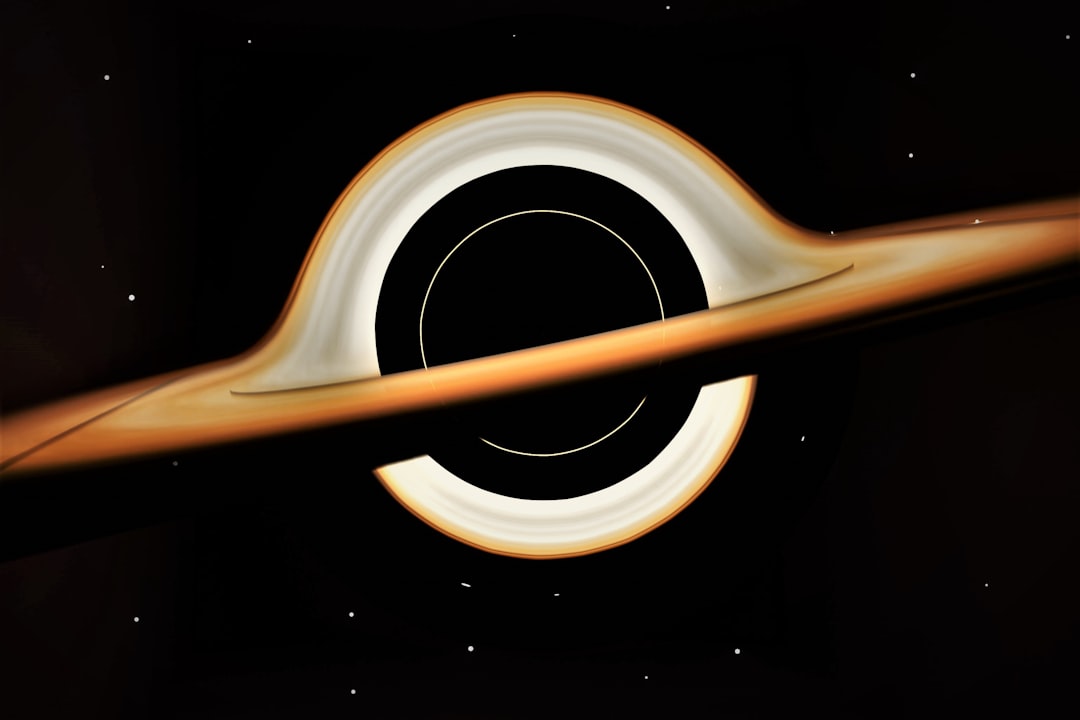
The universe is a vast and enigmatic expanse, filled with phenomena that challenge the limits of human understanding. Among these, black holes stand out as some of the most intriguing and perplexing objects in astrophysics. Black hole universe stress test observations represent a critical frontier in the study of these cosmic giants, providing insights into their behavior and the fundamental laws of physics.
These observations are not merely academic exercises; they are essential for unraveling the mysteries of the universe, including the nature of gravity, the fabric of space-time, and the origins of cosmic structures. As scientists delve deeper into the intricacies of black holes, they employ advanced observational techniques and theoretical models to simulate extreme conditions. These stress tests allow researchers to explore how black holes interact with their surroundings and respond to various stimuli, such as gravitational waves or accretion processes.
By pushing the boundaries of what is known, these observations can lead to groundbreaking discoveries that reshape our understanding of the cosmos.
Key Takeaways
- Black hole universe stress tests provide critical insights into the behavior of black holes under extreme conditions.
- Observatories and gravitational wave detectors play a key role in capturing data on black hole interactions.
- These observations help deepen our understanding of space-time and the fundamental nature of the universe.
- Studying black holes sheds light on their connection to dark matter and the formation of galaxies.
- Future stress test observations aim to uncover new knowledge about the early universe and the potential for extraterrestrial life.
The Role of Observatories in Studying Black Holes
Observatories play a pivotal role in the study of black holes, serving as the primary platforms for gathering data and conducting research. Ground-based telescopes and space-based observatories work in tandem to capture a wide spectrum of electromagnetic radiation emitted by black holes and their accretion disks. Instruments like the Event Horizon Telescope have made headlines by capturing the first-ever image of a black hole’s event horizon, providing a tangible glimpse into these otherwise invisible entities.
In addition to visual observations, observatories are equipped with sophisticated instruments that can detect gravitational waves—ripples in space-time caused by massive cosmic events, such as black hole mergers. These observations have opened a new window into the universe, allowing scientists to study black holes in ways that were previously unimaginable. The collaboration between various observatories worldwide enhances the depth and breadth of research, enabling a more comprehensive understanding of black holes and their role in the cosmos.
Understanding the Behavior of Black Holes under Stress
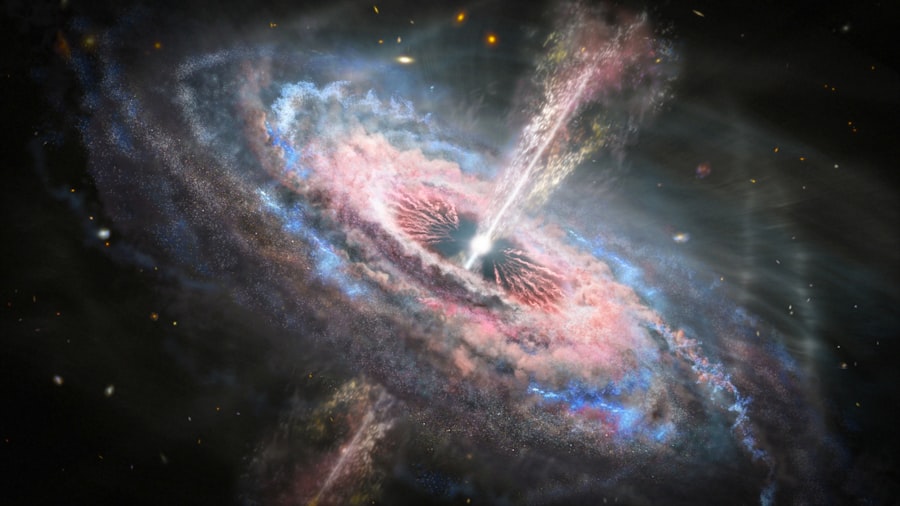
Black holes are often described as cosmic vacuum cleaners, but their behavior under stress reveals a more complex nature. When subjected to extreme conditions, such as those created during collisions or mergers with other massive objects, black holes exhibit fascinating phenomena. For instance, during a merger, two black holes can emit powerful bursts of energy in the form of gravitational waves, which can be detected by observatories on Earth.
These events provide valuable data that help scientists refine their models of black hole dynamics. Moreover, studying how black holes respond to external forces can shed light on their internal structure and the physics governing them. Theoretical models suggest that black holes may not be entirely smooth; instead, they could possess intricate features that influence their interactions with surrounding matter.
By observing how black holes behave under stress, researchers can gain insights into their formation, evolution, and ultimate fate within the universe.
The Impact of Gravitational Waves on Black Hole Observations
| Metric | Description | Value / Range | Impact on Black Hole Observations |
|---|---|---|---|
| Gravitational Wave Frequency | Frequency range of detected waves from black hole mergers | 10 Hz – 1 kHz | Determines the size and mass of merging black holes |
| Signal-to-Noise Ratio (SNR) | Strength of gravitational wave signal relative to background noise | 8 – 30+ | Higher SNR improves confidence in black hole detection |
| Black Hole Mass Estimates | Mass of black holes involved in mergers | 5 – 80 solar masses | Helps classify black hole types and formation scenarios |
| Spin Parameter | Dimensionless spin of black holes before merger | 0 – 0.99 | Influences gravitational waveforms and merger dynamics |
| Merger Rate | Estimated number of black hole mergers per cubic gigaparsec per year | 10 – 100 Gpc⁻³ yr⁻¹ | Provides insight into black hole population and evolution |
| Distance to Source | Luminosity distance of black hole merger events | 100 Mpc – 5 Gpc | Enables study of black holes across cosmic time |
| Waveform Modeling Accuracy | Precision of theoretical models matching observed signals | Within 1% mismatch | Critical for extracting physical parameters from data |
The detection of gravitational waves has revolutionized astrophysics, particularly in the study of black holes. These ripples in space-time carry information about some of the most violent events in the universe, such as black hole mergers and neutron star collisions. The first detection of gravitational waves by LIGO in 2015 marked a significant milestone, confirming a prediction made by Albert Einstein over a century earlier.
Since then, numerous events have been cataloged, providing a wealth of data for researchers. Gravitational waves offer a unique perspective on black holes that complements traditional electromagnetic observations. While telescopes capture light emitted from surrounding matter, gravitational waves provide direct evidence of the black holes themselves and their interactions.
This dual approach allows scientists to build a more complete picture of these enigmatic objects and their role in cosmic evolution. As gravitational wave astronomy continues to advance, it promises to unveil new aspects of black hole behavior and contribute to our understanding of fundamental physics.
What Black Hole Universe Stress Test Observations Can Teach Us About the Nature of Space and Time
Black hole universe stress test observations have profound implications for our understanding of space and time. The extreme environments surrounding black holes challenge existing theories of physics, particularly general relativity. As researchers conduct stress tests on black holes, they explore scenarios that push the limits of our current knowledge, such as what happens at the event horizon or how information is preserved when matter crosses this boundary.
These observations may also provide insights into the nature of time itself. Near a black hole, time behaves differently due to intense gravitational fields—a phenomenon known as time dilation. By studying how time is affected in these extreme environments, scientists can gain a deeper understanding of its fundamental properties and how it interacts with gravity.
Such revelations could lead to new theories that bridge gaps between quantum mechanics and general relativity, ultimately reshaping our comprehension of the universe.
The Connection Between Black Holes and Dark Matter
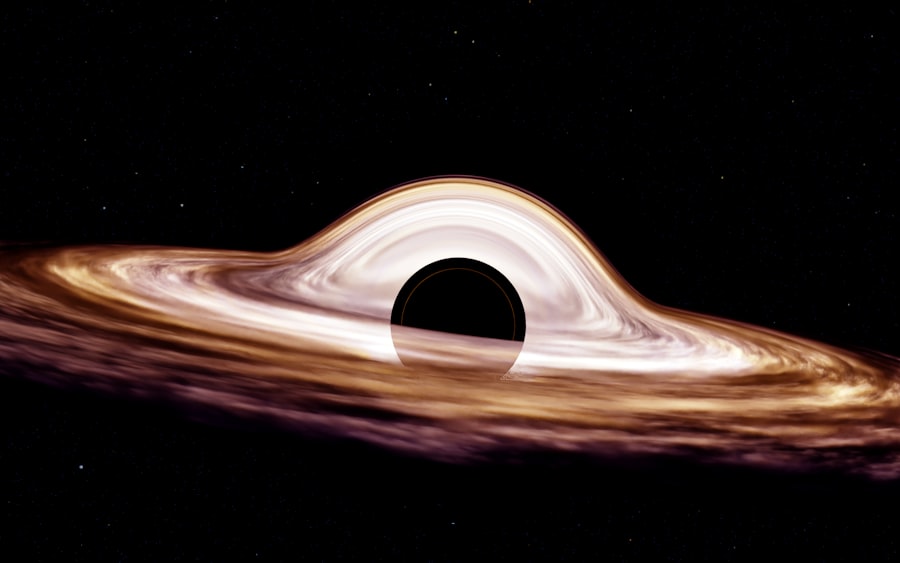
The relationship between black holes and dark matter is an area of active research that continues to intrigue scientists. Dark matter is believed to make up a significant portion of the universe’s mass, yet it remains elusive and undetectable through conventional means. Some theories propose that supermassive black holes at the centers of galaxies could play a role in dark matter dynamics, influencing its distribution and behavior.
Observations from black hole universe stress tests may provide clues about this connection. For instance, studying how supermassive black holes interact with their galactic environments could reveal insights into dark matter’s influence on galaxy formation and evolution. Additionally, understanding how black holes might capture or interact with dark matter particles could lead to breakthroughs in both astrophysics and particle physics.
How Black Hole Universe Stress Test Observations Inform Our Understanding of the Early Universe
Black hole universe stress test observations also hold significant implications for understanding the early universe. The formation and growth of black holes are believed to be closely linked to the evolution of galaxies and cosmic structures shortly after the Big Bang. By examining how black holes behaved during these formative periods, researchers can gain insights into the conditions that prevailed in the early universe.
For example, studying primordial black holes—hypothetical black holes formed soon after the Big Bang—could provide valuable information about the density fluctuations that led to galaxy formation. Additionally, understanding how supermassive black holes grew over time can shed light on the processes that shaped the cosmos as we know it today. These observations not only enhance our knowledge of black holes but also contribute to a broader understanding of cosmic history.
The Role of Supermassive Black Holes in Galaxy Formation
Supermassive black holes (SMBHs) are thought to reside at the centers of most galaxies, playing a crucial role in their formation and evolution. The relationship between SMBHs and their host galaxies is complex; they influence star formation rates, regulate gas dynamics, and even affect galaxy morphology through feedback mechanisms. Black hole universe stress test observations help elucidate this intricate interplay.
By studying how SMBHs interact with their surrounding environments during periods of intense activity—such as when they consume large amounts of gas—scientists can better understand their impact on galaxy evolution. These observations reveal how energy released during accretion processes can drive powerful outflows that shape star formation across vast regions. Ultimately, this research highlights the central role that supermassive black holes play in shaping not only individual galaxies but also the large-scale structure of the universe.
Black Hole Universe Stress Test Observations and the Search for Extraterrestrial Life
The implications of black hole universe stress test observations extend beyond theoretical physics; they also intersect with astrobiology and the search for extraterrestrial life. Understanding how black holes influence their environments can provide insights into habitability conditions on planets orbiting stars within affected galaxies. For instance, feedback from supermassive black holes may regulate star formation rates and impact planetary systems’ stability.
Moreover, studying extreme environments around black holes may inform scientists about potential life forms that could exist under such conditions. While life as we know it may not thrive near a black hole’s event horizon, exploring these extreme scenarios expands our understanding of life’s potential adaptability across different environments in the universe.
The Future of Black Hole Universe Stress Test Observations: What We Hope to Discover
As technology advances and observational techniques improve, the future of black hole universe stress test observations looks promising. Upcoming missions like NASA’s James Webb Space Telescope and next-generation gravitational wave detectors will enhance our ability to study these enigmatic objects in unprecedented detail. Researchers hope to uncover new phenomena related to black hole mergers, accretion processes, and even potential signatures of primordial black holes.
As scientists continue to push the boundaries of knowledge through innovative observational strategies, they remain optimistic about uncovering answers to some of humanity’s most profound questions about existence and our place in the cosmos.
The Ongoing Importance of Black Hole Universe Stress Test Observations
In conclusion, black hole universe stress test observations represent a vital area of research that holds immense potential for advancing our understanding of the cosmos. Through collaborative efforts among observatories worldwide and innovative observational techniques, scientists are uncovering new insights into the behavior of black holes under extreme conditions. These observations not only deepen our comprehension of fundamental physics but also illuminate connections between black holes, dark matter, galaxy formation, and even the potential for extraterrestrial life.
As researchers continue to explore this fascinating frontier, they remain committed to unraveling the mysteries surrounding black holes and their role in shaping the universe. The ongoing importance of these observations cannot be overstated; they serve as a testament to humanity’s quest for knowledge and our desire to understand the intricate tapestry that constitutes our reality.
Recent observations of black holes have prompted a fascinating discussion about the universe’s stress test, shedding light on the extreme conditions surrounding these enigmatic entities. For a deeper dive into the implications of these findings, you can explore a related article on cosmic phenomena at My Cosmic Ventures. This resource provides valuable insights into the ongoing research and theories that seek to unravel the mysteries of black holes and their impact on the fabric of the universe.
WATCH THIS 🛑 The Impossible Proof: Our Universe Is a Black Hole’s Interior
FAQs
What is a black hole universe stress test?
A black hole universe stress test refers to scientific observations and simulations designed to understand how black holes influence the structure and evolution of the universe. It involves studying the effects of black holes on surrounding matter, spacetime, and cosmic phenomena.
Why are black holes important for understanding the universe?
Black holes play a crucial role in astrophysics as they affect galaxy formation, star evolution, and the distribution of matter in the universe. Their extreme gravitational fields provide insights into the nature of gravity, spacetime, and fundamental physics.
What kind of observations are used in black hole universe stress tests?
Observations include data from telescopes detecting electromagnetic radiation (such as X-rays and radio waves), gravitational wave detectors, and simulations based on general relativity. Instruments like the Event Horizon Telescope and LIGO contribute valuable data.
How do scientists conduct stress tests on black holes?
Scientists use computer simulations to model black hole interactions with their environment under various conditions. They also analyze observational data to test theoretical predictions about black hole behavior and their impact on cosmic structures.
What have we learned from black hole universe stress test observations?
These observations have confirmed predictions of general relativity, revealed the dynamics of black hole mergers, and improved understanding of how black holes influence galaxy evolution and cosmic matter distribution.
Can black hole stress tests help in detecting new physics?
Yes, by comparing observations with theoretical models, scientists can identify discrepancies that may indicate new physics beyond current theories, such as quantum gravity effects or modifications to general relativity.
Are black hole universe stress tests ongoing?
Yes, ongoing observations and improved technology continue to refine our understanding of black holes and their role in the universe, with future missions and detectors planned to enhance data collection.
What challenges do researchers face in black hole universe stress tests?
Challenges include the difficulty of observing black holes directly, the complexity of modeling extreme gravitational environments, and the need for high-precision instruments to detect subtle effects.