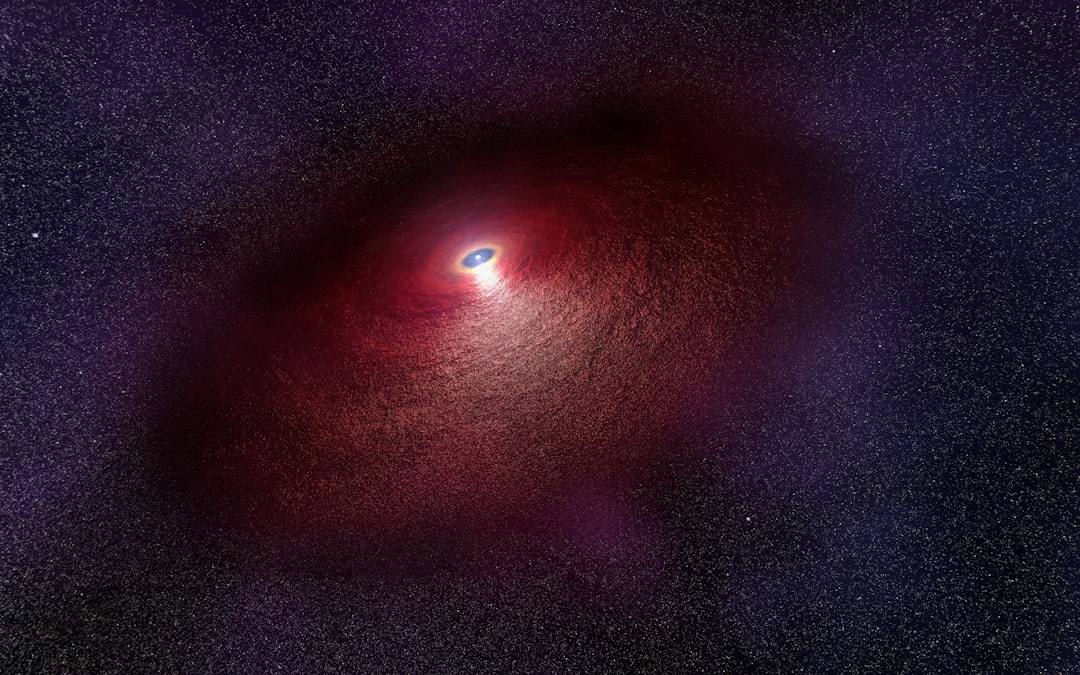
Black hole cosmology represents a fascinating intersection of astrophysics and theoretical physics, where the enigmatic nature of black holes provides profound insights into the structure and evolution of the universe. These celestial objects, formed from the remnants of massive stars, possess gravitational fields so intense that not even light can escape their grasp. As such, they serve as critical tools for understanding fundamental questions about the cosmos, including the nature of gravity, the behavior of matter under extreme conditions, and the dynamics of cosmic evolution.
The study of black holes has evolved significantly over the past few decades, transitioning from purely theoretical constructs to entities that can be observed and measured, thereby enriching our comprehension of the universe. The significance of black holes extends beyond their immediate physical properties; they are pivotal in shaping the large-scale structure of the universe. Their influence can be seen in galaxy formation and evolution, as well as in the dynamics of cosmic expansion.
As researchers delve deeper into black hole cosmology, they uncover a wealth of information that challenges existing paradigms and prompts new theories. This article aims to explore the theoretical framework underpinning black hole cosmology, examine its predictions, and discuss how observational evidence, particularly through gravitational waves, has transformed our understanding of these mysterious entities.
Key Takeaways
- Black hole cosmology offers a novel theoretical framework linking black holes to the large-scale structure and evolution of the universe.
- Gravitational wave observations provide a promising method to test and potentially falsify predictions made by black hole cosmology models.
- Black hole mergers serve as valuable probes for understanding cosmological parameters and the dynamics of the early universe.
- Feedback mechanisms from black holes significantly impact cosmological models, influencing galaxy formation and evolution.
- Despite challenges in observational testing, future advancements in technology and data analysis hold strong potential for validating black hole cosmology theories.
Theoretical Framework of Black Hole Cosmology
The theoretical framework of black hole cosmology is rooted in Einstein’s general theory of relativity, which describes gravity as the curvature of spacetime caused by mass. This revolutionary perspective allows for the prediction of black holes as solutions to the equations governing gravitational interactions. The Schwarzschild solution, for instance, describes a non-rotating black hole, while the Kerr solution extends this to include rotating black holes.
These models provide a foundation for understanding how black holes interact with their surroundings and influence cosmic structures. In addition to general relativity, quantum mechanics plays a crucial role in black hole cosmology. The interplay between these two fundamental theories gives rise to intriguing phenomena such as Hawking radiation, which suggests that black holes can emit radiation and potentially evaporate over time.
This concept challenges traditional notions of black holes as eternal entities and introduces a dynamic aspect to their existence. Theoretical physicists continue to explore these intersections, seeking a unified framework that reconciles general relativity with quantum mechanics, thereby deepening our understanding of black holes and their role in the cosmos.
Falsifiable Predictions in Black Hole Cosmology
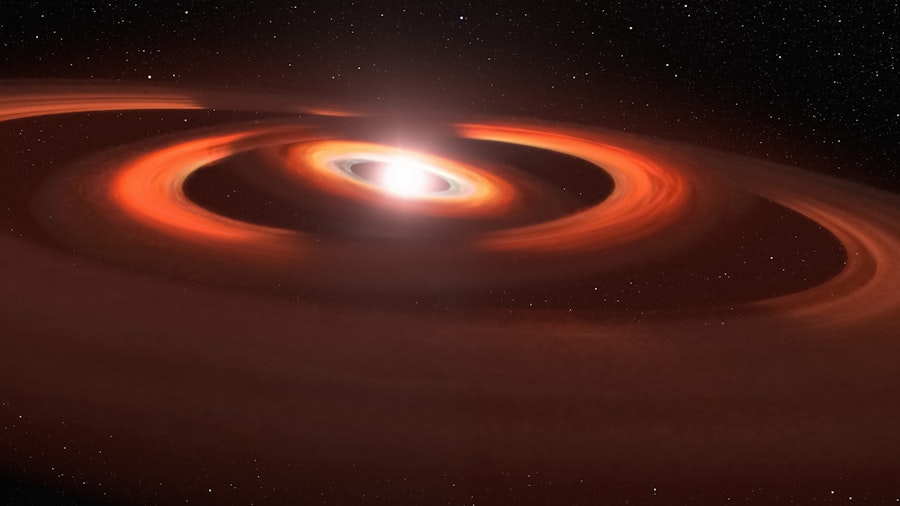
A hallmark of any robust scientific theory is its ability to make falsifiable predictions. In black hole cosmology, several predictions have emerged that can be tested through observation and experimentation. One such prediction is the existence of gravitational waves generated by the merger of binary black holes.
According to general relativity, when two black holes spiral towards each other and eventually collide, they produce ripples in spacetime that propagate outward at the speed of light. The detection of these gravitational waves serves as a critical test for the validity of black hole cosmology. Another significant prediction involves the behavior of matter near the event horizon of a black hole.
Theoretical models suggest that as matter approaches this boundary, it experiences extreme gravitational forces that can lead to phenomena such as time dilation and spaghettification. Observations of high-energy emissions from accretion disks surrounding black holes provide indirect evidence supporting these predictions. By examining the characteristics of these emissions, scientists can infer properties about the black holes themselves and validate aspects of their theoretical models.
Testing Black Hole Cosmology through Gravitational Wave Observations
| Metric | Description | Typical Value / Range | Relevance to Black Hole Cosmology |
|---|---|---|---|
| Gravitational Wave Frequency | Frequency of waves emitted during black hole mergers | 10 Hz – 1 kHz | Helps determine black hole masses and spins |
| Chirp Mass | Combination of masses influencing waveform evolution | 5 – 60 solar masses | Key parameter for testing cosmological models |
| Luminosity Distance | Distance inferred from gravitational wave amplitude | 100 Mpc – several Gpc | Used to probe expansion rate of the universe |
| Redshift (z) | Cosmological redshift of the source | 0.01 – 2 | Connects gravitational wave sources to cosmic history |
| Spin Parameter (a*) | Dimensionless spin of black holes | 0 – 0.99 | Influences merger dynamics and waveform shape |
| Merger Rate Density | Number of black hole mergers per volume per time | 10 – 100 Gpc⁻³ yr⁻¹ | Constrains formation channels and cosmological evolution |
| Signal-to-Noise Ratio (SNR) | Measure of detection confidence | 8 – 100+ | Determines quality of parameter estimation |
The advent of gravitational wave astronomy has revolutionized the field of astrophysics, providing a new avenue for testing black hole cosmology. The landmark detection of gravitational waves by LIGO (Laser Interferometer Gravitational-Wave Observatory) in 2015 marked a significant milestone in this endeavor. The observed waves were attributed to the merger of two black holes, confirming predictions made by general relativity and opening up a new realm for exploring cosmic phenomena.
Gravitational wave observations allow researchers to probe the properties of black holes with unprecedented precision. By analyzing the frequency and amplitude of detected waves, scientists can extract information about the masses and spins of merging black holes. This data not only supports existing theoretical frameworks but also raises new questions about the formation and evolution of these objects.
As more events are detected, researchers can refine their models and gain deeper insights into the population of black holes in the universe.
Observational Evidence for Black Hole Cosmology
Observational evidence for black hole cosmology has accumulated over decades, bolstered by advancements in technology and methodology. One of the most compelling pieces of evidence comes from observations of supermassive black holes at the centers of galaxies. The motion of stars and gas around these central masses provides indirect evidence for their existence, as their gravitational influence can be measured even when they are not directly visible.
Additionally, high-energy phenomena such as quasars—extremely luminous active galactic nuclei powered by accreting supermassive black holes—offer further support for black hole cosmology.
As astronomers continue to gather data from various wavelengths, including radio, optical, and X-ray observations, they build a more comprehensive picture of how black holes interact with their environments and contribute to cosmic evolution.
Black Hole Mergers as Probes of Cosmology
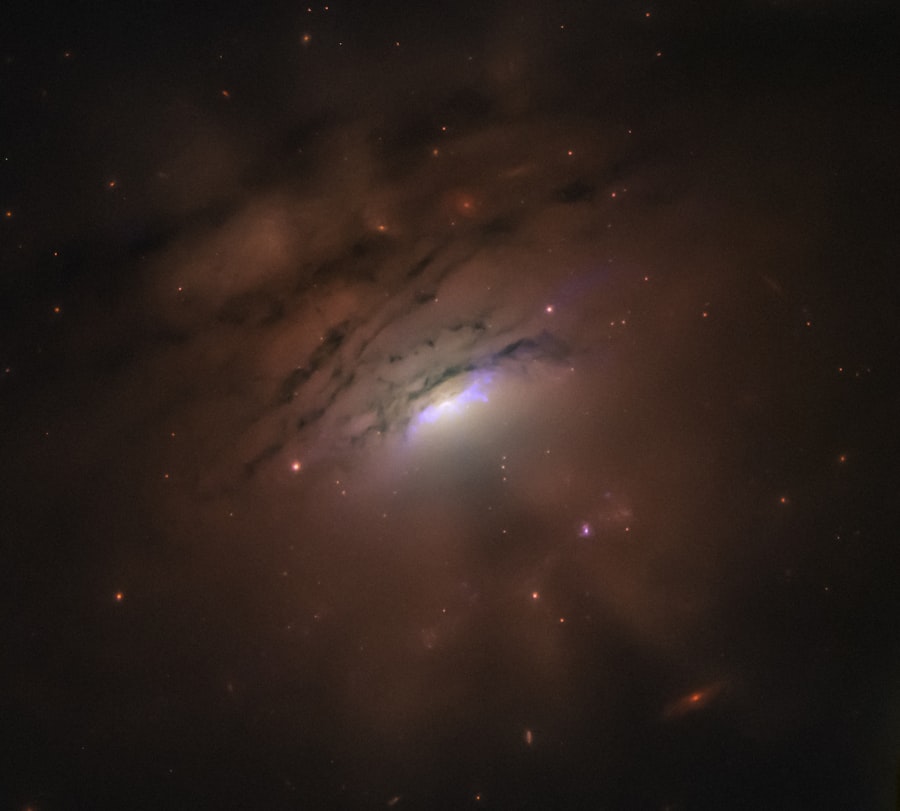
Black hole mergers serve as powerful probes for understanding cosmological principles and testing fundamental theories. Each merger event carries unique signatures that can reveal information about the nature of gravity, spacetime, and even dark matter. By studying these events, researchers can gain insights into the formation rates and distribution of black holes across different epochs in cosmic history.
Moreover, analyzing the properties of gravitational waves emitted during mergers allows scientists to investigate potential deviations from general relativity. Any discrepancies between observed waveforms and theoretical predictions could indicate new physics beyond current models. This capability positions black hole mergers as not only significant astrophysical events but also as critical experiments that could reshape our understanding of fundamental forces in nature.
Black Hole Feedback and its Implications for Cosmological Models
The phenomenon known as black hole feedback plays a crucial role in shaping galaxy formation and evolution, with profound implications for cosmological models. When matter falls into a black hole, it releases vast amounts of energy in the form of radiation and powerful jets that can influence star formation rates in surrounding regions. This feedback mechanism can regulate the growth of galaxies and impact their overall structure.
Understanding how black hole feedback operates is essential for developing accurate models of galaxy evolution. Observations suggest that supermassive black holes are often found at the centers of massive galaxies, indicating a co-evolutionary relationship between galaxies and their central black holes. By incorporating feedback processes into cosmological simulations, researchers can better predict how galaxies evolve over time and how they respond to various environmental factors.
The Role of Black Holes in Early Universe Cosmology
Black holes may have played a pivotal role in shaping the early universe, influencing cosmic structures shortly after the Big Bang. Theoretical models propose that primordial black holes could have formed from density fluctuations in the early universe, potentially contributing to dark matter or serving as seeds for galaxy formation. These early black holes would have had significant implications for cosmic evolution during critical epochs.
Investigating the role of black holes in early universe cosmology poses unique challenges due to limited observational data from that era. However, advancements in simulations and theoretical frameworks allow researchers to explore various scenarios regarding primordial black holes’ formation and evolution. Understanding their potential contributions to cosmic structure formation could provide valuable insights into the fundamental processes that shaped our universe.
Challenges and Limitations in Testing Black Hole Cosmology
Despite significant advancements in understanding black hole cosmology, several challenges remain in testing its predictions rigorously. One major limitation is the difficulty in directly observing black holes due to their nature; they do not emit light or radiation detectable by conventional means. Instead, researchers rely on indirect methods to infer their presence and properties, which can introduce uncertainties into measurements.
Additionally, many aspects of black hole physics remain poorly understood or are subject to ongoing debate within the scientific community. For instance, questions surrounding information loss paradoxes and singularities challenge existing theoretical frameworks and complicate efforts to develop a unified theory encompassing both general relativity and quantum mechanics. Addressing these challenges requires innovative approaches and interdisciplinary collaboration among physicists and astronomers.
Future Prospects for Testing Black Hole Cosmology
The future prospects for testing black hole cosmology are promising, driven by technological advancements and innovative observational techniques. Upcoming missions such as the James Webb Space Telescope (JWST) will provide unprecedented insights into high-redshift galaxies and their central supermassive black holes, allowing researchers to probe cosmic evolution during critical epochs. Furthermore, continued advancements in gravitational wave astronomy will enable scientists to detect more merger events with greater sensitivity and precision.
As more data becomes available, researchers will refine their models and explore new avenues for understanding fundamental questions about gravity, spacetime, and cosmic evolution.
Implications of Testing Black Hole Cosmology
Testing black hole cosmology holds profound implications for our understanding of the universe’s fundamental nature.
Ultimately, advancing knowledge in this field not only enhances our comprehension of black holes but also contributes to broader questions about dark matter, dark energy, and the universe’s fate.
As scientists push the boundaries of exploration in black hole cosmology, they pave the way for future discoveries that may reshape our understanding of reality itself.
In the realm of black hole cosmology, the exploration of falsifiable predictions is crucial for advancing our understanding of these enigmatic entities. A related article that delves into this topic can be found on My Cosmic Ventures, where it discusses the implications of various theoretical models and their testable predictions. For more insights, you can read the article [here](https://www.mycosmicventures.com/).
WATCH THIS 🛑 The Impossible Proof: Our Universe Is a Black Hole’s Interior
FAQs
What is black hole cosmology?
Black hole cosmology is a theoretical framework that suggests our universe might be inside a black hole existing within a larger parent universe. It explores the idea that black holes could give rise to new universes, potentially explaining certain cosmological observations.
What does it mean for black hole cosmology to have falsifiable predictions?
Falsifiable predictions are testable hypotheses that can be proven wrong through observation or experiment. For black hole cosmology, this means the theory makes specific predictions about observable phenomena that can be checked against data, allowing scientists to confirm or refute the model.
What kind of predictions does black hole cosmology make?
Black hole cosmology may predict features such as specific patterns in the cosmic microwave background radiation, particular distributions of matter and energy, or unique signatures in gravitational waves. These predictions differ from those of standard cosmological models and can be tested with current or future observations.
How can scientists test the predictions of black hole cosmology?
Scientists can test these predictions by analyzing astronomical data from telescopes, satellites, and gravitational wave detectors. For example, they might look for anomalies in cosmic background radiation or unusual gravitational wave signals that align with the theory’s expectations.
Why is falsifiability important in cosmology?
Falsifiability is crucial because it allows scientific theories to be objectively evaluated. A theory that makes falsifiable predictions can be rigorously tested and either supported or disproven, which advances our understanding of the universe.
Are there any current observations supporting black hole cosmology?
As of now, black hole cosmology remains a speculative theory. While it offers intriguing ideas, there is no definitive observational evidence confirming it. Ongoing and future experiments may provide data to support or challenge the theory.
How does black hole cosmology differ from the standard Big Bang model?
The standard Big Bang model describes the universe as originating from a singularity and expanding over time. Black hole cosmology proposes that our universe is the interior of a black hole formed in another universe, offering a different explanation for the origin and structure of the cosmos.
Can black hole cosmology explain dark matter or dark energy?
Some versions of black hole cosmology attempt to provide explanations for dark matter and dark energy phenomena by linking them to properties of black holes or the parent universe. However, these explanations are still theoretical and require further investigation.
What challenges does black hole cosmology face?
Challenges include developing precise mathematical models, making clear and testable predictions, and obtaining observational evidence that distinguishes it from other cosmological theories. Additionally, integrating it with established physics remains a complex task.
Where can I learn more about black hole cosmology and its predictions?
You can explore scientific journals, cosmology textbooks, and reputable online resources such as university websites or publications from space agencies. Attending lectures or courses on theoretical physics and cosmology can also provide deeper insights.