
In the vast expanse of the universe, the digital cosmos has emerged as a transformative force, reshaping humanity’s understanding of the celestial realm. The integration of digital technology into astronomy has not only enhanced observational capabilities but has also revolutionized the way scientists analyze and interpret cosmic phenomena. As telescopes and satellites become increasingly sophisticated, they generate an unprecedented volume of data, allowing researchers to explore the universe with a level of detail that was once unimaginable.
This digital revolution has opened new frontiers in astrophysics, enabling a deeper comprehension of the cosmos and its myriad mysteries. The digital cosmos represents a convergence of technology and science, where algorithms and computational power play a pivotal role in unraveling the complexities of the universe. From the early days of stargazing to the current era of high-resolution imaging and data analytics, the journey has been marked by significant milestones.
As humanity stands on the brink of a new age in space exploration, it becomes essential to examine how digital technology has evolved and its implications for future discoveries in astronomy.
Key Takeaways
- Digital technology has revolutionized astronomy, enhancing observation and data analysis of the universe.
- Virtual reality and simulations allow immersive exploration and modeling of cosmic phenomena.
- Big data and artificial intelligence are critical tools for managing vast astronomical datasets and uncovering new insights.
- Digital cosmology uses computer models to deepen understanding of the universe’s origins and structure.
- Ethical considerations are essential as digital technology increasingly shapes space exploration and cosmological research.
The Evolution of Digital Technology in Astronomy
The evolution of digital technology in astronomy can be traced back to the mid-20th century when electronic detectors began to replace traditional photographic plates. This shift marked a significant turning point, as electronic sensors allowed for more efficient data collection and analysis. The introduction of charge-coupled devices (CCDs) in the 1980s further revolutionized observational astronomy, providing astronomers with enhanced sensitivity and resolution.
These advancements enabled researchers to capture faint celestial objects that were previously beyond reach, expanding the catalog of known astronomical phenomena. As digital technology continued to advance, so did the capabilities of telescopes and observatories. The development of large-scale survey projects, such as the Sloan Digital Sky Survey (SDSS), exemplified how digital tools could be harnessed to map vast regions of the sky.
These surveys not only provided a wealth of data but also fostered collaboration among scientists worldwide, leading to groundbreaking discoveries about the structure and evolution of the universe. The evolution of digital technology in astronomy has thus been characterized by a continuous quest for greater precision and understanding, paving the way for future explorations.
The Role of Digital Imaging in Observing the Universe
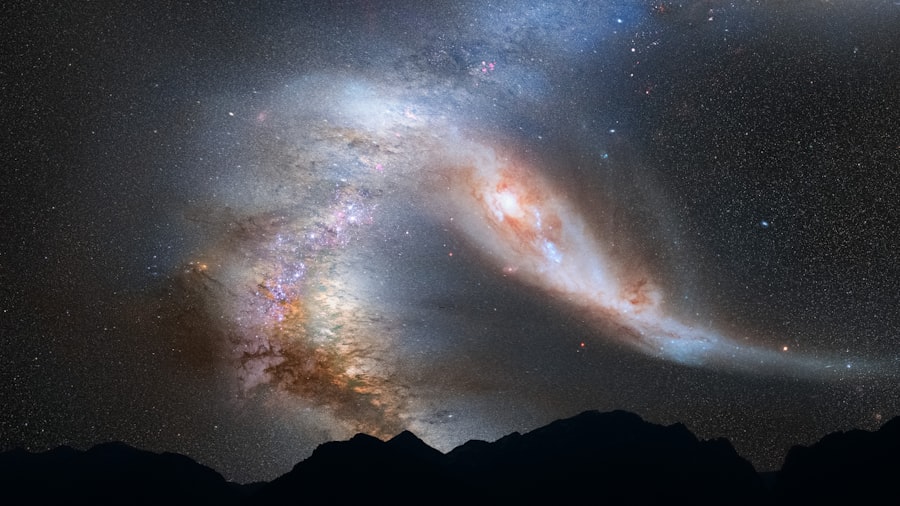
Digital imaging has become an indispensable tool in modern astronomy, allowing scientists to capture and analyze images of celestial objects with remarkable clarity. The transition from film-based photography to digital imaging systems has significantly improved the quality of astronomical observations. High-resolution images obtained from ground-based and space-based telescopes enable astronomers to study distant galaxies, nebulae, and other cosmic phenomena in unprecedented detail.
Moreover, digital imaging techniques have facilitated the development of advanced methods for analyzing astronomical data. Image processing algorithms can enhance features that are otherwise difficult to discern, revealing intricate structures within celestial bodies. For instance, techniques such as adaptive optics correct for atmospheric distortions, resulting in sharper images that provide insights into the dynamics of stars and galaxies.
As digital imaging continues to evolve, it promises to unlock even more secrets of the universe, allowing astronomers to probe deeper into its mysteries.
Exploring the Universe through Virtual Reality
| Metric | Description | Value | Unit |
|---|---|---|---|
| Immersive Experience Duration | Average time users spend exploring the universe in VR | 45 | minutes |
| Resolution | Visual clarity of VR universe simulations | 2160 x 2160 | pixels per eye |
| Field of View | Angular extent of the observable universe in VR | 110 | degrees |
| Number of Celestial Objects | Count of stars, planets, and galaxies modeled | 10,000+ | objects |
| Latency | Time delay between user action and VR response | 20 | milliseconds |
| User Engagement Rate | Percentage of users returning for multiple sessions | 65 | percent |
| Educational Impact | Improvement in user knowledge after VR sessions | 30 | percent increase |
Virtual reality (VR) has emerged as a groundbreaking tool for exploring the universe, offering immersive experiences that transcend traditional observational methods. By creating three-dimensional simulations of celestial environments, VR allows users to navigate through space and interact with astronomical phenomena in ways that were previously unimaginable. This innovative approach not only enhances public engagement with astronomy but also serves as a valuable educational resource for students and researchers alike.
In addition to its educational applications, VR is proving to be a powerful tool for scientists conducting research in astrophysics. Researchers can visualize complex data sets in a three-dimensional context, enabling them to identify patterns and relationships that may not be apparent through conventional analysis. As VR technology continues to advance, it holds the potential to revolutionize how astronomers study the universe, providing new insights into its structure and behavior.
Big Data and the Study of the Cosmos
The advent of big data has transformed the landscape of astronomical research, enabling scientists to analyze vast quantities of information generated by modern telescopes and observatories. With each observation, terabytes of data are collected, encompassing everything from spectral information to high-resolution images. This deluge of data presents both opportunities and challenges for astronomers, who must develop sophisticated algorithms and computational techniques to extract meaningful insights from it.
Big data analytics has led to significant breakthroughs in various areas of astrophysics, including galaxy formation, dark matter distribution, and cosmic microwave background radiation studies. By leveraging machine learning algorithms and statistical models, researchers can identify trends and correlations within massive datasets that would be impossible to discern through manual analysis. As big data continues to play an increasingly central role in astronomy, it promises to deepen humanity’s understanding of the cosmos while also posing new questions about data management and interpretation.
Simulating the Universe: How Digital Technology is Advancing Astrophysics
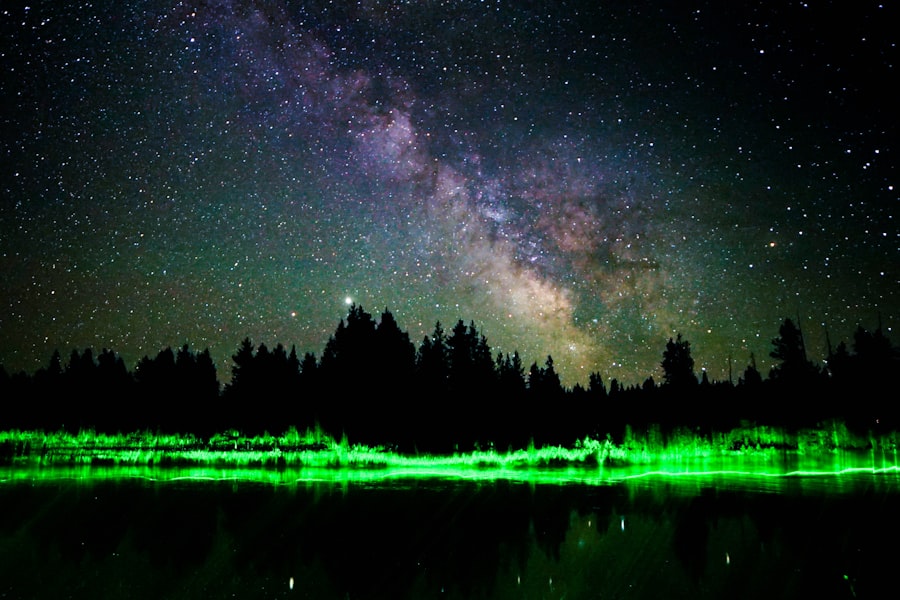
Simulations have become an essential component of modern astrophysics, allowing scientists to model complex cosmic processes and test theoretical predictions against observational data. Advanced computational techniques enable researchers to create detailed simulations of phenomena such as galaxy formation, supernova explosions, and black hole mergers. These simulations provide valuable insights into the underlying physics governing these processes and help bridge the gap between theory and observation.
The use of digital technology in simulations has also facilitated collaborative research efforts across institutions worldwide. By sharing simulation codes and datasets, scientists can work together to refine models and validate findings. This collaborative approach has led to significant advancements in understanding fundamental questions about the universe’s origins and evolution.
As computational power continues to grow, so too will the complexity and accuracy of these simulations, further enhancing our grasp of cosmic phenomena.
The Impact of Artificial Intelligence on Understanding the Universe
Artificial intelligence (AI) is making waves in various fields, including astronomy, where it is being harnessed to analyze data at an unprecedented scale. Machine learning algorithms can sift through vast datasets generated by telescopes, identifying patterns and anomalies that may indicate new celestial objects or phenomena. This capability not only accelerates the pace of discovery but also enhances the efficiency of data analysis processes.
By predicting optimal observing conditions or identifying regions of interest in the sky, AI can help astronomers allocate resources more effectively. As AI technology continues to evolve, its integration into astronomical research promises to yield new insights into the universe while also raising questions about reliance on automated systems for scientific discovery.
Digital Cosmology: Using Computer Models to Understand the Universe
Digital cosmology represents a burgeoning field that employs computer models to simulate cosmic evolution on large scales. By incorporating physical laws and observational data into these models, researchers can explore scenarios ranging from the formation of galaxies to the behavior of dark energy. These simulations provide a framework for testing hypotheses about the universe’s structure and dynamics.
The insights gained from digital cosmology have profound implications for our understanding of fundamental questions about existence itself. For instance, simulations can help elucidate how galaxies form and evolve over billions of years or how cosmic structures influence one another through gravitational interactions. As computational techniques advance and more observational data becomes available, digital cosmology will continue to refine our understanding of the universe’s history and future.
The Future of Digital Technology in Space Exploration
The future of digital technology in space exploration holds immense promise as humanity seeks to venture further into the cosmos. Innovations such as autonomous spacecraft equipped with advanced sensors and AI-driven navigation systems are set to revolutionize how missions are conducted beyond Earth’s orbit. These technologies will enable spacecraft to make real-time decisions based on environmental conditions, enhancing mission success rates while reducing reliance on ground control.
Moreover, advancements in communication technologies will facilitate faster data transmission from distant missions back to Earth. This capability will allow scientists to receive near-instantaneous updates on findings from missions exploring Mars or distant exoplanets. As digital technology continues to evolve, it will undoubtedly play a crucial role in shaping humanity’s journey into space, unlocking new opportunities for discovery and exploration.
Ethical Considerations in Digital Cosmology
As digital cosmology advances, it brings forth ethical considerations that must be addressed by researchers and policymakers alike. The vast amounts of data generated by astronomical observations raise questions about privacy, ownership, and accessibility. Ensuring that this data is shared equitably among researchers while protecting sensitive information is paramount for fostering collaboration within the scientific community.
Researchers must remain vigilant about how AI systems are trained and deployed to ensure that they do not inadvertently perpetuate biases or misinterpretations within scientific findings. Addressing these ethical considerations will be essential for maintaining public trust in scientific research while promoting responsible practices within the field.
The Promise and Challenges of the Digital Cosmos
The digital cosmos represents a remarkable intersection of technology and science that has transformed humanity’s understanding of the universe. From advanced imaging techniques to big data analytics and AI-driven research methodologies, digital technology has opened new avenues for exploration and discovery in astronomy. However, with these advancements come challenges that must be navigated carefully—ethical considerations surrounding data usage, algorithmic bias, and equitable access must be addressed as researchers continue their quest for knowledge.
As humanity stands on the threshold of a new era in space exploration fueled by digital innovation, it is essential to embrace both the promise and challenges that lie ahead. The journey into the digital cosmos is not merely about uncovering celestial secrets; it is also about fostering collaboration among scientists worldwide while ensuring responsible practices guide future discoveries. In this ever-evolving landscape, one thing remains clear: the digital cosmos holds boundless potential for expanding our understanding of existence itself.
The digital nature of the cosmos has become a fascinating topic of discussion, particularly in how it influences our understanding of reality and existence. For a deeper exploration of this concept, you can read the article on cosmic ventures that delves into the intersection of technology and the universe. Check it out here: Digital Nature of the Cosmos.
WATCH THIS! The Universe Has a Resolution Limit (And We’ve Hit It)
FAQs
What does the term “digital nature of the cosmos” mean?
The “digital nature of the cosmos” refers to the idea that the universe operates in discrete, quantized units rather than continuous values, similar to how digital information is processed in bits. This concept suggests that at a fundamental level, physical reality may be composed of finite, countable elements.
Is the universe truly digital or analog?
Current scientific understanding does not definitively classify the universe as purely digital or analog. Quantum mechanics introduces quantization in certain properties, implying a digital aspect, while other phenomena appear continuous. The debate remains open, with ongoing research exploring whether the cosmos is fundamentally digital.
How does quantum mechanics relate to the digital nature of the cosmos?
Quantum mechanics shows that many physical quantities, such as energy levels and spin, are quantized, meaning they exist in discrete values. This quantization supports the idea that the universe has a digital aspect at microscopic scales, contrasting with classical physics’ continuous models.
What role does information theory play in understanding the cosmos?
Information theory provides a framework for describing physical systems in terms of information content and processing. Concepts like entropy and quantum information suggest that the universe’s fundamental processes can be understood as information exchanges, reinforcing the digital perspective of cosmic phenomena.
Are there any scientific theories that propose a digital universe?
Yes, theories such as digital physics and cellular automata models propose that the universe operates like a computational system with discrete states. Researchers like John Archibald Wheeler have also suggested “it from bit,” implying that information underlies physical reality.
What implications does the digital nature of the cosmos have for physics?
If the cosmos is digital, it could lead to new approaches in unifying quantum mechanics and general relativity, improve simulations of physical systems, and influence the development of quantum computing. It may also reshape our understanding of space, time, and matter at the most fundamental level.
Can the digital nature of the cosmos be experimentally tested?
Testing the digital nature of the cosmos is challenging due to the extremely small scales involved. However, experiments in quantum gravity, high-energy physics, and cosmology aim to detect signatures of spacetime discreteness or information-based phenomena that could support or refute digital universe models.
How does the concept of the digital cosmos affect philosophical views about reality?
The idea that the universe is digital raises questions about the nature of reality, consciousness, and existence. It suggests that reality might be fundamentally informational, influencing philosophical discussions on determinism, free will, and the relationship between mind and matter.