
The universe, vast and enigmatic, has long captivated the minds of astronomers and scientists alike. As humanity’s quest for knowledge continues, one fundamental aspect of this exploration is the resolution limit of the universe. This concept refers to the smallest detail that can be discerned in astronomical observations, a boundary that shapes our understanding of celestial phenomena.
The resolution limit is not merely a technical challenge; it embodies the intersection of human curiosity and the inherent constraints of the physical world. As researchers strive to peer deeper into the cosmos, they grapple with the implications of this limit, which serves as both a barrier and a catalyst for innovation. Understanding the resolution limit is crucial for interpreting the data collected from telescopes and other observational instruments.
It influences how astronomers perceive distant galaxies, stars, and other cosmic entities. The quest to push beyond this limit has driven technological advancements and theoretical explorations, revealing not only the intricacies of the universe but also the limitations imposed by the laws of physics. As humanity stands on the brink of new discoveries, the resolution limit remains a pivotal concept that shapes both current research and future aspirations in the field of astronomy.
Key Takeaways
- The universe has a fundamental resolution limit that restricts the detail we can observe in astronomical phenomena.
- This resolution limit affects the clarity and precision of data collected from telescopes and other observational tools.
- Both theoretical physics and practical technology impose constraints on how much we can improve observational resolution.
- Advances in technology are crucial for pushing beyond current resolution limits and enhancing our cosmic understanding.
- Recognizing and embracing the resolution limit is essential for accurately interpreting the universe and guiding future research.
Understanding the concept of resolution in the context of the universe
Resolution, in astronomical terms, refers to the ability to distinguish between two closely spaced objects in the sky. It is a measure of detail that can be observed through telescopes and other instruments, determining how finely one can resolve features in celestial bodies. The resolution limit is influenced by various factors, including the wavelength of light being observed and the size of the telescope’s aperture.
In essence, it defines how much information can be extracted from light that has traveled vast distances across space. The concept of resolution is not limited to visual observations; it extends to other forms of electromagnetic radiation, such as radio waves and X-rays. Each type of radiation has its own resolution characteristics, which can affect how astronomers interpret data from different sources.
For instance, radio telescopes may have lower resolution compared to optical telescopes due to longer wavelengths, yet they provide unique insights into cosmic phenomena like pulsars and quasars. Understanding these nuances is essential for astronomers as they seek to piece together a comprehensive picture of the universe.
The impact of the resolution limit on astronomical observations
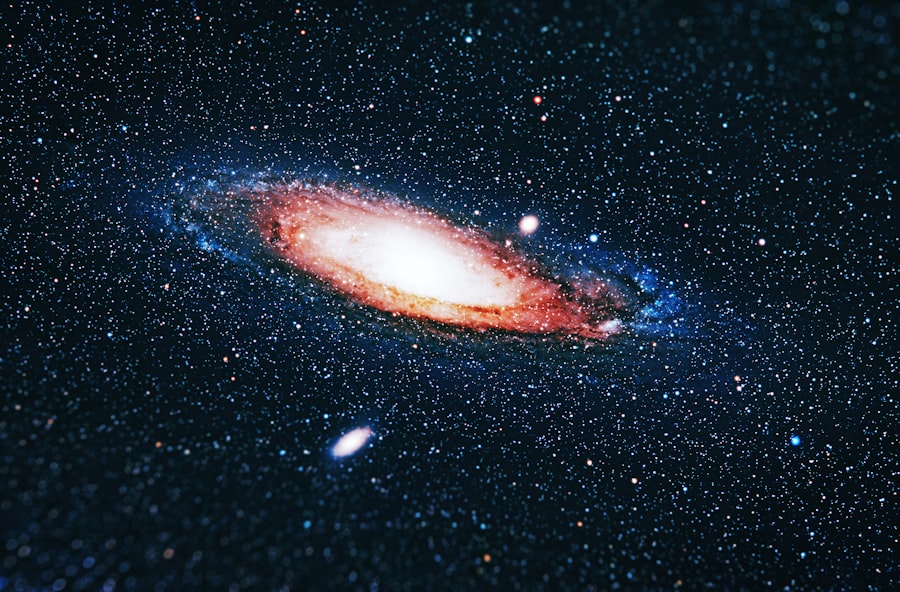
The resolution limit profoundly impacts astronomical observations by dictating what can be seen and understood about celestial objects. When two stars are closely aligned in the sky, for example, a telescope with insufficient resolution may not be able to distinguish them as separate entities. This limitation can lead to misinterpretations or oversimplifications of complex astronomical phenomena.
As a result, many discoveries hinge on advancements in resolution capabilities, which can reveal previously hidden details about star formation, galaxy interactions, and even the presence of exoplanets. Moreover, the resolution limit can affect the study of cosmic events such as supernovae or black hole mergers. These events often occur over vast distances and can be incredibly faint, making it challenging to capture their nuances without high-resolution instruments.
The inability to resolve fine details can hinder scientists’ understanding of these phenomena, leading to gaps in knowledge about their origins and implications for cosmic evolution. Thus, overcoming the resolution limit is not just a technical endeavor; it is essential for advancing our comprehension of the universe’s intricate tapestry.
Theoretical constraints on the resolution limit
| Constraint | Description | Typical Limit | Relevant Field |
|---|---|---|---|
| Diffraction Limit | Minimum resolvable detail due to wave nature of light or other waves | ~λ/2 (half the wavelength) | Optics, Microscopy |
| Heisenberg Uncertainty Principle | Limits simultaneous precision of position and momentum measurements | Δx·Δp ≥ ħ/2 | Quantum Mechanics |
| Rayleigh Criterion | Minimum angular separation to distinguish two point sources | θ = 1.22 λ/D (D = aperture diameter) | Astronomy, Imaging |
| Nyquist Sampling Limit | Minimum sampling frequency to avoid aliasing in digital imaging | Sampling frequency ≥ 2 × highest frequency component | Signal Processing, Imaging |
| Signal-to-Noise Ratio (SNR) | Limits resolution by noise in measurement system | Varies; higher SNR improves resolution | All measurement systems |
| Material and Fabrication Limits | Physical constraints on device size and precision | Nanometer scale for current technology | Nanotechnology, Lithography |
Theoretical constraints play a significant role in defining the resolution limit within astronomy. One fundamental principle is dictated by diffraction, which occurs when light waves encounter an obstacle or aperture. According to Rayleigh’s criterion, two point sources are resolvable if they are separated by an angle greater than a certain threshold determined by their wavelengths and the diameter of the observing aperture.
This principle establishes a hard limit on how finely one can resolve details in astronomical observations. Additionally, quantum mechanics introduces further complexities to the resolution limit. The Heisenberg Uncertainty Principle suggests that there are inherent limitations in simultaneously measuring certain pairs of properties, such as position and momentum.
This principle implies that as one attempts to achieve higher resolution in spatial measurements, uncertainties in other measurements may increase. Consequently, these theoretical constraints highlight that while pushing for greater resolution is desirable, it is also bounded by fundamental physical laws that govern our universe.
Practical limitations in overcoming the resolution limit
While theoretical frameworks provide insight into the nature of resolution limits, practical limitations also pose significant challenges for astronomers. One major hurdle is the atmospheric interference that affects ground-based observations. Earth’s atmosphere distorts incoming light from celestial objects due to turbulence and varying densities, leading to blurring effects that compromise resolution.
This phenomenon is particularly pronounced for optical telescopes, which must contend with atmospheric conditions that can change rapidly.
Building larger telescopes with improved apertures requires substantial investment and time, often leading to lengthy delays in research progress.
Additionally, even with advanced technology, there are limits to how much data can be processed and analyzed effectively. As astronomers strive to overcome these practical limitations, they must navigate a complex landscape of funding, engineering challenges, and scientific collaboration.
The role of technology in pushing the resolution limit
Technology plays a pivotal role in advancing our understanding of the universe by pushing the boundaries of resolution limits. Innovations in telescope design have led to significant improvements in observational capabilities. For instance, adaptive optics systems have been developed to counteract atmospheric distortions by adjusting mirrors in real-time based on incoming data.
This technology allows ground-based telescopes to achieve resolutions previously thought possible only with space-based instruments. Furthermore, advancements in imaging techniques have revolutionized how astronomers capture and analyze data. Techniques such as interferometry enable multiple telescopes to work together as a single larger instrument, effectively increasing their collective resolution.
This method has been instrumental in studying distant galaxies and other celestial phenomena with unprecedented detail. As technology continues to evolve, it holds promise for further breakthroughs that could redefine our understanding of cosmic structures and events.
Implications of the resolution limit for our understanding of the universe
The implications of the resolution limit extend far beyond technical challenges; they fundamentally shape humanity’s understanding of the universe itself. As astronomers grapple with these limits, they are often confronted with questions about what lies beyond their current observational capabilities. The inability to resolve certain features may lead to incomplete or inaccurate models of cosmic evolution, influencing theories about galaxy formation or dark matter distribution.
Moreover, as new technologies emerge that push these boundaries further, they open up new avenues for exploration and discovery. The potential to observe previously unseen details could lead to groundbreaking revelations about stellar life cycles or the dynamics of black holes. Each advancement not only enhances our knowledge but also raises new questions about the nature of reality itself—prompting scientists to reconsider existing paradigms and explore uncharted territories within astrophysics.
Current efforts to improve resolution in astronomical observations
Current efforts aimed at improving resolution in astronomical observations are diverse and multifaceted. One prominent initiative involves deploying space-based telescopes that operate above Earth’s atmosphere, where they are free from atmospheric distortions. The Hubble Space Telescope has been a cornerstone of this endeavor since its launch in 1990, providing stunning images and invaluable data that have reshaped our understanding of various cosmic phenomena.
In addition to space-based observatories, ground-based facilities are also undergoing significant upgrades to enhance their capabilities. Projects like the Extremely Large Telescope (ELT) aim to create telescopes with apertures exceeding 39 meters—an unprecedented size that promises to revolutionize our ability to observe distant galaxies and exoplanets with remarkable clarity. These ongoing efforts reflect a concerted commitment within the scientific community to push beyond existing limitations and unlock new insights into the cosmos.
The potential for future breakthroughs in overcoming the resolution limit
The future holds immense potential for breakthroughs that could redefine our understanding of resolution limits in astronomy. Emerging technologies such as quantum imaging and advanced computational techniques may offer novel approaches to enhancing observational capabilities. Quantum sensors could enable astronomers to detect faint signals with unprecedented precision, while machine learning algorithms could streamline data analysis processes—allowing researchers to extract meaningful insights from vast datasets more efficiently.
Moreover, international collaborations among research institutions are likely to yield innovative solutions for overcoming existing challenges related to resolution limits.
As these collaborative efforts continue to grow, they may pave the way for transformative discoveries that expand humanity’s knowledge of the universe.
The significance of the resolution limit in shaping our view of the universe
The significance of the resolution limit extends beyond technical considerations; it fundamentally shapes humanity’s view of the universe itself. As astronomers strive to push these boundaries further, they confront profound philosophical questions about existence and our place within the cosmos. Each advancement in observational capabilities not only enhances scientific understanding but also invites contemplation about what lies beyond our current knowledge.
Furthermore, as new discoveries emerge from efforts to overcome resolution limits—whether through improved technology or innovative methodologies—they challenge existing paradigms and inspire fresh perspectives on cosmic phenomena. The interplay between observation and interpretation underscores how deeply intertwined science is with human curiosity and imagination—a reminder that while we seek answers about our universe, we are also engaged in an ongoing dialogue with its mysteries.
Embracing the cosmic constraint of the resolution limit
In conclusion, embracing the cosmic constraint of the resolution limit is essential for advancing humanity’s understanding of the universe. This limit serves as both a challenge and an opportunity—prompting scientists to innovate while reminding them of the inherent complexities within nature itself. As researchers continue their quest for knowledge amidst these constraints, they contribute not only to scientific progress but also to a deeper appreciation for the wonders that lie beyond our reach.
The journey toward overcoming resolution limits reflects humanity’s enduring spirit of exploration—a testament to our desire to unravel cosmic mysteries despite inherent challenges. As technology evolves and collaborative efforts flourish, there remains hope for future breakthroughs that will expand our horizons even further. Ultimately, acknowledging and embracing these limitations allows scientists to navigate uncharted territories while fostering a sense of wonder about what lies beyond—an ever-expanding frontier waiting to be explored.
The question of whether the universe has a resolution limit is a fascinating topic that intersects with various fields of physics and cosmology. For those interested in exploring this concept further, you might find the article on cosmic exploration particularly insightful. It delves into the fundamental limits of observation and measurement in the universe. You can read more about it in this related article.
WATCH THIS! The Universe Has a Resolution Limit (And We’ve Hit It)
FAQs
What does “resolution limit” mean in the context of the universe?
The resolution limit of the universe refers to the smallest scale or detail that can be meaningfully observed or measured within the fabric of space and time. It is analogous to the resolution of a camera, which determines how fine the details in an image can be.
Is there a known smallest scale in the universe?
Yes, the Planck length, approximately 1.6 x 10^-35 meters, is often considered the smallest meaningful length scale in physics. Below this scale, classical concepts of space and time cease to be valid according to current theories.
Why is the Planck length considered a fundamental limit?
The Planck length arises from combining fundamental constants (the speed of light, Planck’s constant, and gravitational constant) and represents a scale at which quantum effects of gravity become significant. It is thought to be the scale where a theory of quantum gravity is needed.
Does the universe have a maximum resolution for observation?
In practice, yes. Due to quantum mechanics and the nature of spacetime, there is a fundamental limit to how precisely positions and events can be measured. This limit is related to the Planck scale and the uncertainty principles in physics.
Can we observe structures smaller than the Planck length?
Currently, no. The Planck length is considered the smallest meaningful unit of length, and existing physical theories do not allow for the observation or definition of structures smaller than this scale.
How does the resolution limit affect our understanding of the universe?
The resolution limit implies that space and time may be quantized or discrete at the smallest scales, influencing theories of quantum gravity and the nature of spacetime. It sets a fundamental boundary for measurements and observations in physics.
Is the resolution limit the same as the observable universe’s size?
No. The resolution limit refers to the smallest scale of measurement, while the observable universe’s size refers to the largest scale we can see, limited by the speed of light and the age of the universe.
Are there any experiments that test the universe’s resolution limit?
Experiments in high-energy physics, such as those conducted in particle accelerators, probe very small scales but have not yet reached the Planck scale. Research in quantum gravity and cosmology aims to understand these limits better.
Does the resolution limit imply the universe is digital or pixelated?
Not necessarily. While some theories suggest spacetime might be discrete at the smallest scales, this is still a topic of research and debate. The resolution limit indicates a fundamental scale but does not conclusively prove the universe is digital.