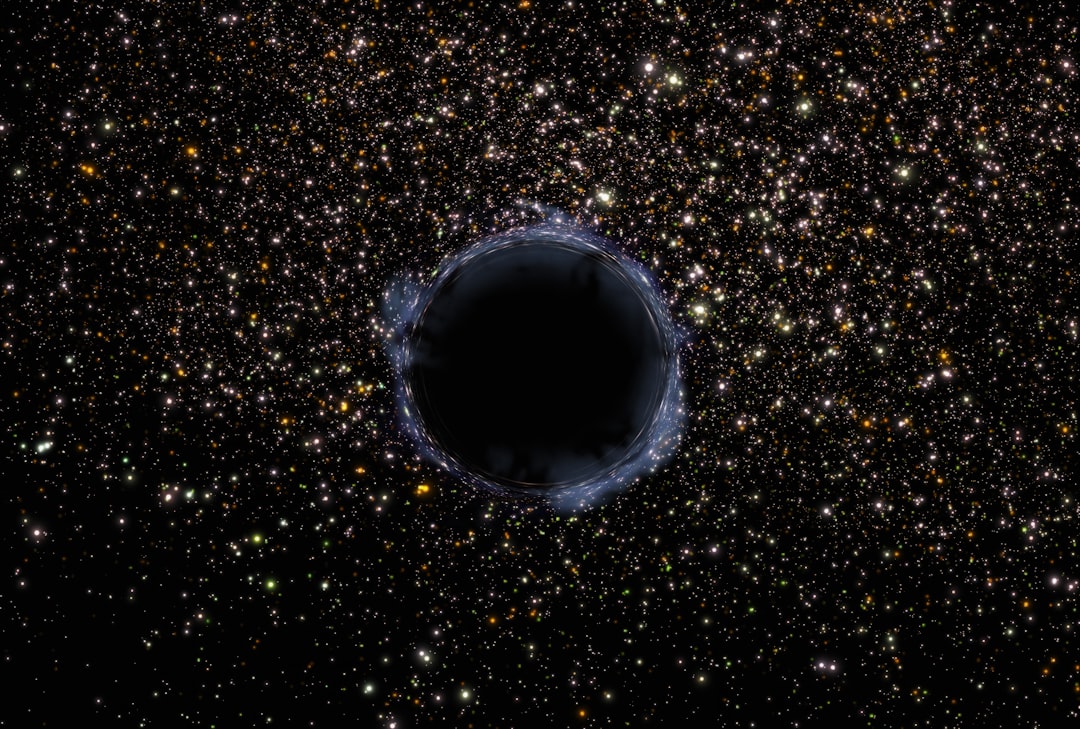
Black holes have long captivated the imagination of scientists and the general public alike. These enigmatic cosmic entities, formed from the remnants of massive stars that have undergone gravitational collapse, possess gravitational fields so intense that nothing, not even light, can escape their grasp. The concept of a black hole challenges the very fabric of our understanding of physics, raising profound questions about the nature of space, time, and the universe itself.
As researchers delve deeper into the mysteries surrounding black holes, they uncover not only the fundamental principles governing these phenomena but also their implications for the broader cosmos. The allure of black holes lies not only in their mysterious nature but also in their potential to unlock secrets about the universe. They serve as natural laboratories for testing the limits of our current theories, particularly general relativity and quantum mechanics.
As scientists continue to explore these cosmic giants, they are not only piecing together the puzzle of black hole formation and behavior but also grappling with the philosophical implications of their existence. The study of black holes is a journey into the unknown, where each discovery leads to new questions and challenges our understanding of reality.
Key Takeaways
- Black holes are key cosmic objects studied through general relativity, but this theory faces challenges in fully explaining their nature.
- Alternative gravity theories and quantum mechanics offer new insights into black hole behavior beyond classical general relativity.
- Hawking radiation and black hole thermodynamics reveal quantum effects that challenge traditional views of black holes.
- Observations of black holes provide critical tests for general relativity and help explore potential new physics.
- Future research combines interdisciplinary methods to deepen understanding and explore implications for astrophysics and cosmology.
General Relativity and Black Hole Physics
At the heart of black hole physics lies Albert Einstein’s theory of general relativity, which revolutionized our understanding of gravity. According to this theory, massive objects warp the fabric of spacetime around them, creating what we perceive as gravitational attraction. Black holes represent an extreme manifestation of this phenomenon, where the curvature of spacetime becomes so pronounced that it creates a region from which nothing can escape.
The mathematical framework provided by general relativity allows physicists to describe the properties and behaviors of black holes, including their event horizons and singularities. General relativity predicts several key features of black holes, such as their mass, charge, and angular momentum. These characteristics define different types of black holes, including stellar black holes, supermassive black holes found at the centers of galaxies, and rotating Kerr black holes.
The equations governing these entities reveal a wealth of information about their structure and dynamics. However, while general relativity has been remarkably successful in describing many aspects of black holes, it also raises questions about the nature of singularities—points where gravitational forces become infinite and current physical laws break down.
Challenges with General Relativity in Exploring Black Holes
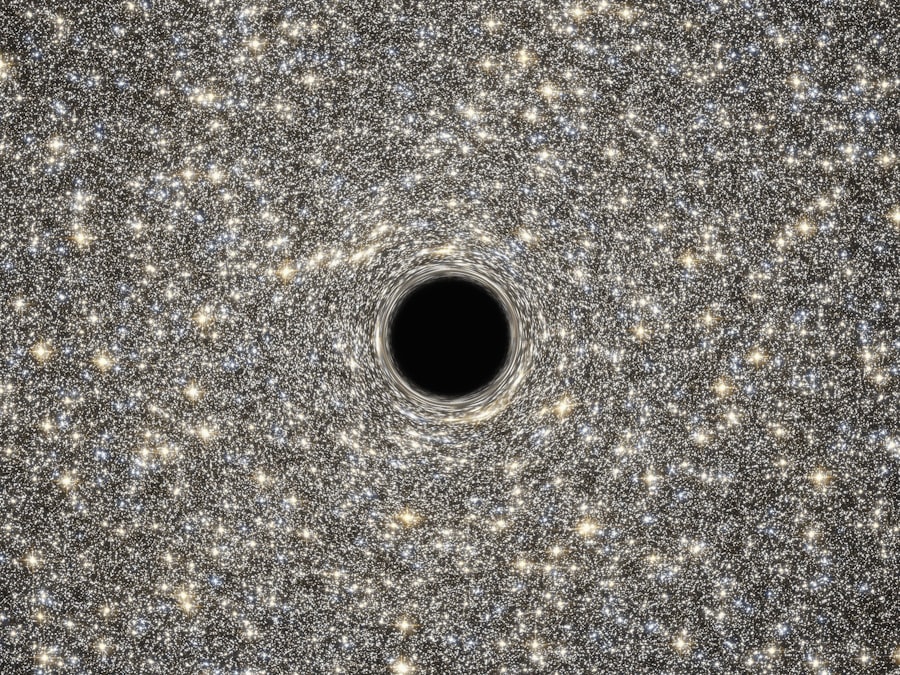
Despite its successes, general relativity faces significant challenges when it comes to fully understanding black holes. One major issue is the presence of singularities at the core of black holes, where density becomes infinite and the laws of physics as we know them cease to function. This raises profound questions about what happens at these points and whether our current understanding of spacetime is adequate to describe such extreme conditions.
Another challenge lies in the observational limitations associated with studying black holes. Since they do not emit light or any form of electromagnetic radiation, detecting them directly is impossible.
Instead, astronomers rely on indirect methods, such as observing the effects of a black hole’s gravity on nearby stars or gas clouds. This reliance on indirect evidence complicates efforts to test general relativity in extreme environments and raises questions about the accuracy of our models. As researchers strive to gather more data on black holes, they must confront these challenges head-on while seeking new ways to probe the mysteries that lie within.
Alternative Theories of Gravity
| Theory | Key Concept | Mathematical Framework | Predictions/Implications | Experimental Status |
|---|---|---|---|---|
| Modified Newtonian Dynamics (MOND) | Modification of Newton’s laws at low accelerations | Empirical modification of Newton’s second law | Explains galaxy rotation curves without dark matter | Partially successful; challenges in galaxy clusters and cosmology |
| f(R) Gravity | Generalizes Einstein-Hilbert action by replacing Ricci scalar R with a function f(R) | Metric or Palatini formalism with modified action integral | Can explain cosmic acceleration without dark energy | Consistent with some cosmological observations; constraints from solar system tests |
| Brans-Dicke Theory | Scalar-tensor theory introducing a varying gravitational constant | Scalar field coupled to curvature with parameter ω | Predicts deviations from GR in weak-field regime | Strong constraints on ω from solar system experiments |
| Tensor-Vector-Scalar Gravity (TeVeS) | Relativistic theory to reproduce MOND behavior | Combination of tensor, vector, and scalar fields | Explains galaxy rotation curves and lensing without dark matter | Mixed results; some tension with cosmological data |
| Massive Gravity | Graviton has a small nonzero mass | Modifies Einstein’s equations with mass terms | Potentially explains cosmic acceleration | Ongoing research; theoretical challenges like vDVZ discontinuity addressed |
In light of the limitations posed by general relativity, scientists have explored alternative theories of gravity that may provide a more complete understanding of black holes. One such theory is modified gravity, which seeks to extend or modify Einstein’s equations to account for phenomena that general relativity cannot adequately explain. These modifications could potentially resolve issues related to singularities and offer insights into the behavior of matter and energy in extreme gravitational fields.
Another promising avenue is the study of quantum gravity, which aims to unify general relativity with quantum mechanics. Approaches such as string theory and loop quantum gravity propose frameworks that could reconcile the two seemingly incompatible theories. By incorporating quantum principles into our understanding of gravity, researchers hope to gain new insights into black hole formation and behavior while addressing fundamental questions about spacetime itself.
These alternative theories not only challenge established paradigms but also inspire innovative research that could reshape our understanding of the universe.
Quantum Mechanics and Black Hole Physics
Quantum mechanics plays a crucial role in understanding black holes, particularly when considering their thermodynamic properties and information paradoxes. At its core, quantum mechanics introduces concepts such as superposition and entanglement that challenge classical notions of reality. When applied to black holes, these principles raise intriguing questions about what happens to information that falls into a black hole—a dilemma famously articulated by physicist Stephen Hawking.
The intersection of quantum mechanics and black hole physics has led to groundbreaking insights into the nature of entropy and temperature associated with these cosmic giants. Hawking’s work demonstrated that black holes are not entirely black; instead, they emit radiation due to quantum effects near their event horizons. This revelation has profound implications for our understanding of thermodynamics in extreme environments and suggests that black holes may eventually evaporate over time.
The interplay between quantum mechanics and black hole physics continues to be a vibrant area of research, pushing scientists to rethink fundamental concepts about reality.
Hawking Radiation and Black Hole Thermodynamics
Hawking radiation represents a pivotal concept in black hole thermodynamics, bridging the gap between quantum mechanics and general relativity. Proposed by Stephen Hawking in 1974, this phenomenon suggests that black holes can emit particles due to quantum fluctuations near their event horizons. As a result, black holes are not entirely isolated entities; they can lose mass over time through this radiation process.
This groundbreaking idea has profound implications for our understanding of black hole life cycles and their ultimate fate. The thermodynamic properties associated with Hawking radiation have led to intriguing discussions about entropy and information loss in black holes. According to thermodynamic principles, black holes possess entropy proportional to their surface area rather than their volume—a counterintuitive notion that challenges classical thermodynamics.
This relationship has sparked debates about whether information that falls into a black hole is lost forever or if it can be recovered in some form as the black hole evaporates. The quest to resolve these questions continues to drive research in both theoretical physics and cosmology.
Observational Evidence for Black Holes
The quest for observational evidence supporting the existence of black holes has yielded remarkable discoveries over recent decades. One landmark achievement was the first direct image of a black hole’s event horizon captured by the Event Horizon Telescope (EHT) in 2019. This groundbreaking image revealed the shadow cast by the supermassive black hole at the center of the galaxy M87, providing compelling visual evidence for their existence and confirming predictions made by general relativity.
In addition to direct imaging efforts, astronomers have gathered substantial indirect evidence for black holes through various observational techniques. For instance, monitoring the motion of stars orbiting invisible objects has allowed researchers to infer the presence of supermassive black holes at galactic centers. Furthermore, gravitational wave detections from colliding black holes have opened a new window into understanding these cosmic phenomena.
Each piece of observational evidence strengthens the case for black holes while simultaneously raising new questions about their formation, evolution, and role in shaping galaxies.
Testing General Relativity with Black Hole Observations
The study of black holes provides a unique opportunity to test general relativity under extreme conditions where its predictions can be scrutinized rigorously. Observations such as gravitational waves from merging black holes offer a natural laboratory for examining Einstein’s equations in action. By analyzing these events, scientists can compare theoretical predictions with empirical data, providing insights into both general relativity’s validity and potential deviations from its framework.
Moreover, ongoing observations of stars orbiting supermassive black holes allow researchers to probe spacetime curvature in unprecedented detail. These observations can reveal whether general relativity holds true in strong gravitational fields or if alternative theories may better explain certain phenomena. As technology advances and observational capabilities improve, scientists are poised to gather even more precise data that could either reinforce or challenge our current understanding of gravity.
Future Directions in Black Hole Physics
The future of black hole physics promises exciting developments as researchers continue to push the boundaries of knowledge in this field. One area ripe for exploration is the study of primordial black holes—hypothetical small black holes formed shortly after the Big Bang. Investigating these objects could provide insights into early universe conditions and shed light on dark matter candidates.
Additionally, advancements in observational technology will enable scientists to probe previously inaccessible regions around black holes with greater precision. Upcoming missions like NASA’s James Webb Space Telescope are expected to enhance our understanding of accretion disks and relativistic jets associated with supermassive black holes. As interdisciplinary collaborations flourish between astrophysics, theoretical physics, and computational modeling, new avenues for research will emerge, leading to deeper insights into the nature of these cosmic enigmas.
Interdisciplinary Approaches to Black Hole Research
The complexity of black hole research necessitates interdisciplinary approaches that draw from various fields within physics and beyond. Collaborations between astrophysicists, theoretical physicists, mathematicians, and computer scientists are essential for tackling the multifaceted challenges posed by these enigmatic objects. By combining expertise from different domains, researchers can develop innovative models and simulations that enhance our understanding of black hole dynamics.
Moreover, interdisciplinary approaches extend beyond traditional physics disciplines; they also encompass philosophy and information theory as scientists grapple with fundamental questions about reality and information loss associated with black holes. Engaging with diverse perspectives fosters a richer dialogue around these topics and encourages creative solutions to longstanding problems in theoretical physics.
Implications of Beyond General Relativity for Astrophysics and Cosmology
Exploring theories beyond general relativity holds profound implications for astrophysics and cosmology as a whole. If alternative theories can successfully address issues related to singularities or information loss in black holes, they may lead to a paradigm shift in our understanding of gravity itself. Such advancements could reshape our comprehension of cosmic evolution, dark matter interactions, and even the fundamental structure of spacetime.
Furthermore, insights gained from studying black holes may inform broader questions about the universe’s fate and its ultimate destiny. As researchers continue to investigate these cosmic giants through both observational data and theoretical frameworks, they inch closer to unraveling some of the most profound mysteries surrounding existence itself—questions that have intrigued humanity for centuries. In conclusion, the study of black holes represents one of the most exciting frontiers in modern physics.
As scientists navigate this complex landscape—challenging established paradigms while exploring new theories—they contribute not only to our understanding of these enigmatic objects but also to fundamental questions about reality itself. The journey into the depths of black hole physics promises continued discoveries that will shape our comprehension of the universe for generations to come.
Recent advancements in black hole physics have sparked interest in theories that extend beyond general relativity. One such exploration can be found in the article discussing the implications of quantum gravity on black hole formation and behavior. For a deeper understanding of these concepts, you can read more in this related article: Exploring Black Holes Beyond General Relativity. This piece delves into the potential modifications to our current understanding of black holes and the exciting possibilities that lie ahead in theoretical physics.
WATCH THIS! The Paradox That Broke Physics: Quantum vs. Black Holes
FAQs
What is black hole physics beyond general relativity?
Black hole physics beyond general relativity refers to the study of black holes using theories and models that extend or modify Einstein’s theory of general relativity. These approaches aim to address limitations of general relativity, especially in extreme conditions like those near black hole singularities or at quantum scales.
Why do scientists study black holes beyond general relativity?
Scientists study black holes beyond general relativity to better understand phenomena that general relativity cannot fully explain, such as quantum effects near singularities, the nature of spacetime at very small scales, and to reconcile gravity with quantum mechanics. This research may lead to a more complete theory of gravity.
What are some alternative theories to general relativity used in black hole physics?
Some alternative theories include string theory, loop quantum gravity, modified gravity theories (like f(R) gravity), and quantum gravity approaches. These theories propose different mechanisms for gravity and spacetime structure, which can alter black hole properties and behavior.
How do these alternative theories affect our understanding of black holes?
Alternative theories can predict different black hole characteristics, such as modified event horizons, changes in Hawking radiation, or the resolution of singularities. They may also provide insights into black hole entropy, information paradoxes, and the ultimate fate of matter falling into black holes.
What is the significance of studying black holes in the context of quantum gravity?
Studying black holes in quantum gravity frameworks is significant because black holes represent extreme environments where both gravitational and quantum effects are important. Understanding these can help unify general relativity and quantum mechanics, potentially leading to a theory of quantum gravity.
Are there any experimental observations that support black hole physics beyond general relativity?
Currently, most experimental evidence supports general relativity, but observations such as gravitational waves, black hole shadow imaging, and high-energy astrophysical phenomena provide opportunities to test predictions of alternative theories. Future observations may reveal deviations indicating new physics.
What challenges exist in studying black hole physics beyond general relativity?
Challenges include the mathematical complexity of alternative theories, lack of direct experimental data at relevant scales, and difficulties in making testable predictions. Additionally, integrating quantum mechanics with gravity remains a fundamental theoretical challenge.
How does black hole physics beyond general relativity relate to the information paradox?
Black hole physics beyond general relativity seeks to resolve the information paradox—the question of whether information that falls into a black hole is lost forever—by proposing mechanisms that preserve information, such as quantum corrections to black hole evaporation or new spacetime structures.
Can black hole physics beyond general relativity explain dark matter or dark energy?
Some modified gravity theories studied in black hole physics also aim to explain dark matter or dark energy phenomena by altering gravitational behavior at large scales. However, these connections remain speculative and are an active area of research.
Where can I learn more about black hole physics beyond general relativity?
You can learn more through scientific journals, textbooks on quantum gravity and modified gravity theories, lectures from physics departments, and reputable science websites. Key topics include quantum gravity, string theory, loop quantum gravity, and recent research articles on black hole thermodynamics and information theory.