
The human fascination with time is an enduring one, often manifesting as a desire to manipulate it, to traverse its flow, or even to escape its relentless march. The concept of time travel, a staple of science fiction, captures this yearning, but it is the more esoteric notion of “negative time” that offers a peculiar counterpoint, a pathway to exploring timeless realities without physically venturing anywhere. This exploration delves into the paradoxical nature of negative time, not as a temporal anomaly to be conquered, but as a conceptual tool for understanding existence outside the conventional arrow of time. It asks us to consider what it means to exist, or to comprehend existence, in a state that precedes or transcends the linear progression we experience daily.
Understanding the Conventional Arrow of Time
To truly grasp the paradox of negative time, one must first establish a firm understanding of what is meant by the conventional arrow of time. This is the unidirectional flow we perceive, from past to future, marked by cause and effect, entropy’s increase, and the irreversible unfolding of events. Our very consciousness is built upon this framework, our memories anchoring us to what has been, our anticipation shaping what we believe will be. This temporal linearity is so deeply ingrained in our perception and our scientific models that questioning it can feel like questioning the fundamental fabric of reality itself.
The Irreversibility of Physical Processes
At the heart of our understanding of time’s arrow lies the second law of thermodynamics. This law states that in any closed system, entropy, or disorder, always increases or remains constant; it never decreases. This principle underpins many everyday observations: a shattered glass will not spontaneously reassemble itself, a dropped egg will not leap back into its shell, and heat will always flow from a hotter object to a colder one, never the reverse. These are not just observations; they are reflections of a fundamental asymmetry in the universe, an asymmetry that defines the directionality of time. This increase in entropy can be seen as the universe’s inexorable march towards a state of maximum disorder, a one-way journey from order to chaos.
Psychological and Biological Rhythms
Beyond the physical laws, our subjective experience of time is also intrinsically linked to a linear progression. Our biological clocks govern our sleep-wake cycles, our aging processes, and the very development of life itself, all of which are inherently temporal. Our minds process information sequentially, forming narratives and understanding causality through a temporal sequence of events. Memory, the faculty that allows us to recall the past, and anticipation, the ability to project into the future, are both predicated on the existence of a flowing temporal stream. Without this perceived flow, our sense of self, our ability to learn, and our very capacity for conscious experience would be profoundly altered, if not entirely impossible. This subjective experience, while not a physical law, is a powerful testament to the pervasive influence of temporal linearity on our existence.
In exploring the intriguing concept of negative time and its implications on time travel, one can delve deeper into the philosophical and scientific discussions surrounding this topic. A related article that provides further insights is available at My Cosmic Ventures, where various theories and perspectives on the nature of time are examined. This resource offers a comprehensive look at how negative time could potentially reshape our understanding of the universe and the fabric of reality itself.
The Conceptual Framework of Negative Time

The idea of “negative time” is not about reversing the flow of a clock or traveling backward in a temporal dimension in the way science fiction often portrays. Instead, it is a conceptual exploration of states or realities that exist outside or independent of this conventional arrow of time. It is a thought experiment, a philosophical probe, and a potential avenue for understanding phenomena that appear to defy temporal logic as we know it. It is about looking at the universe from a vantage point where time, as a linear progression, simply does not apply.
Causality Reimagined: Pre-causal States
In a framework of negative time, the traditional understanding of causality – that an effect must follow its cause – might be inverted or become irrelevant. This doesn’t mean that effects precede causes in a literal sense of temporal reversal, but rather that the relationship between events might not be bound by a sequential ordering. Imagine a scenario where an outcome could be conceived of as existing before its apparent “cause,” not in a temporal sense, but in a logical or informational one. This could be akin to a potentiality that exists prior to its manifestation, a state of being that is not contingent on a preceding event in the way we typically understand. This challenges our fundamental notions of how events are linked and how reality unfolds, pushing the boundaries of our logical frameworks.
Timelessness as a Fundamental Property
Some interpretations of negative time suggest that timelessness might be a more fundamental state of reality than temporal flow. The temporal arrow we perceive could be an emergent property of certain complex systems, a localized phenomenon within a vaster, timeless existence. This is reminiscent of certain philosophical and spiritual traditions that speak of an eternal present or a reality beyond the confines of time. From this perspective, the universe, in its deepest essence, might not be progressing but simply is. Our experience of time, then, becomes a way our consciousness navigates and interprets this static, timeless reality. This perspective offers a profound shift in how we view existence, moving from a narrative of becoming to one of eternal being.
Exploring Timeless Realities Without Physical Travel
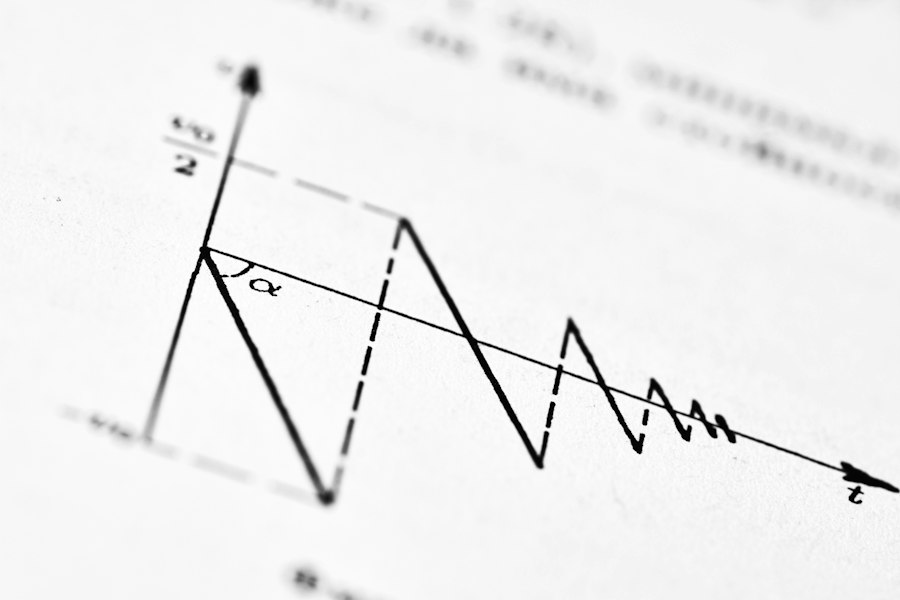
The true power of the negative time concept lies in its ability to unlock contemplation of timeless realities without requiring impossible feats of temporal manipulation. It is a mental exercise, a philosophical inquiry that can lead to novel insights into the nature of consciousness, perception, and the universe itself. It encourages us to think about existence in ways that transcend our everyday temporal experience.
Consciousness Beyond the Temporal Stream
If time is not a fundamental constant but an emergent property, then consciousness might also exist in a form that is not bound by it. Perhaps consciousness, at its most basic level, is a timeless awareness, and our individual experiences of time are a product of our biological and cognitive structures. This opens up the possibility of exploring what consciousness might be like in a state of pure awareness, unburdened by memory, anticipation, or the sequential processing of information. It invites us to consider the possibility of a unified consciousness that exists outside of individual temporal experiences, a collective awareness that is ever-present and unchanging. This perspective could shed light on phenomena such as déjà vu, precognition, or even shared experiences that seem to defy conventional temporal explanations.
The Universe as a Static Block
One of the most provocative implications of negating time’s arrow is the concept of the “block universe.” In this model, all of spacetime, past, present, and future, exists simultaneously and eternally. Our perception of time’s flow is merely our consciousness traversing this pre-existing block. If we can conceptualize this block, even without physically traveling through it, we can begin to appreciate the interconnectedness of all events. The “future” is not something that is yet to happen, but something that already exists, much like the past. This philosophical stance challenges our notions of free will and determinism, suggesting that our actions, while experienced as choices, might be predetermined within this static structure. However, it also offers a comforting perspective of cosmic order, where everything that has happened, is happening, and will happen, exists in a grand, unified tapestry.
Paradoxes and Conceptual Challenges
The notion of negative time is inherently paradoxical, challenging our deeply ingrained logical structures and our understanding of cause and effect. These paradoxes, however, are not necessarily obstacles but rather signposts, guiding us toward a more nuanced comprehension of reality. They force us to confront the limitations of our current models and to explore new conceptual territories.
The Nature of “Before” and “After”
In a timeless reality, the very concepts of “before” and “after” lose their conventional meaning. If everything exists simultaneously, then there is no temporal sequence to define these terms. This leads to a fundamental challenge: how do we describe or understand relationships between events if they are not ordered in time? This is where the paradoxes truly emerge. For instance, if an effect could be conceived of as influencing its “cause” (in a non-temporal sense), what does that imply for the origin and nature of events? This forces us to move beyond linear narratives and to consider cyclical, interconnected, or even non-causal relationships between phenomena. It is a conceptual hurdle that requires a significant reorientation of our thinking.
The Problem of Observation and Measurement
Our methods of scientific observation and measurement are intrinsically tied to the passage of time. We measure rates of change, observe processes unfolding, and infer properties based on temporal dynamics. In a timeless reality, these methods would need to be fundamentally re-evaluated. How does one observe or measure something that does not change in time, or where the very concept of “change” is rendered moot? This might suggest that our current scientific tools, while powerful for understanding the temporal universe, might be insufficient for probing the nature of timeless realities. It implies a need for new conceptual frameworks and perhaps even entirely new forms of inquiry, ones that are not dependent on temporal progression for their efficacy.
In exploring the fascinating concept of negative time and its implications on time travel, one might find it intriguing to read a related article that delves deeper into the theoretical aspects of this subject. This article discusses how negative time could potentially alter our understanding of causality and the universe. For a more comprehensive look at these ideas, you can check out this insightful piece on mycosmicventures.com.
Implications for Philosophy, Physics, and Spirituality
| Concept | Description | Example | Implications |
|---|---|---|---|
| Negative Time | Time values represented as negative numbers, often indicating moments before a defined zero point. | t = -5 seconds (5 seconds before event start) | Used in physics and simulations to denote pre-event conditions without implying time travel. |
| No Time Travel | The principle that time moves forward linearly and backward movement in time is not possible. | Standard chronological progression: t = 0, 1, 2, 3… | Ensures causality and prevents paradoxes in physical theories and models. |
| Metric: Time Coordinate Range | Range of time values allowed in a system without implying time travel. | -10 seconds to +100 seconds | Allows negative time values as reference but maintains forward progression in events. |
| Metric: Causality Preservation | Ensures cause precedes effect despite negative time values. | Event A at t = -3s causes Event B at t = 0s | Prevents paradoxes and maintains logical consistency. |
| Metric: Time Measurement | Use of negative time in measurement without implying reversal of time flow. | Stopwatch starting at t = -5s to calibrate delay | Facilitates synchronization and calibration in experiments. |
The contemplation of negative time and timeless realities, even as a thought experiment, has far-reaching implications across various disciplines. It pushes the boundaries of our understanding in physics, offers new avenues for philosophical inquiry, and resonates with many spiritual traditions that speak of existence beyond temporal constraints.
Reinterpreting Physical Theories
While mainstream physics operates within the framework of a temporal universe, certain speculative theories and interpretations of quantum mechanics flirt with concepts that could be seen as extensions of this exploration. For instance, some quantum entanglement phenomena appear to defy classical notions of causality and locality, suggesting a deeper interconnectedness that might be better understood through a timeless lens. While not directly addressing “negative time” as a temporal dimension, these ideas hint at a reality where temporal relationships are more fluid or less fundamental than we assume. Further research in areas like quantum gravity and the nature of time itself could potentially offer empirical avenues for exploring these conceptual landscapes.
Philosophical Repercussions on Existence and Free Will
From a philosophical standpoint, the concept of negative time compels a re-examination of fundamental questions about existence, consciousness, and determinism. If timeless realities are conceivable, what does it mean to “be”? Does our linear experience of time create the illusion of free will, or is it a genuine capacity within a larger, static framework? Exploring these questions can lead to a richer understanding of our place in the cosmos and the nature of our own agency. It challenges us to move beyond anthropocentric views of time and to consider the possibility of existence in forms radically different from our own. This philosophical exploration is not about finding definitive answers but about expanding the scope of our questions.
Spiritual Parallels and the Eternal Present
Many spiritual and mystical traditions across the globe speak of an “eternal present” or a state of being that transcends the limitations of time. These traditions often describe experiences of unity, timelessness, and a profound sense of peace that arises from surrendering to this fundamental reality. The concept of negative time can serve as a bridge, offering a conceptual framework that resonates with these spiritual insights. It allows for a more intellectual engagement with ideas that have historically been approached through faith or direct experience, potentially fostering dialogue between scientific and spiritual ways of knowing. This convergence highlights the universality of humanity’s quest to understand existence beyond the constraints of our perceived temporal reality.
Physicists Just Measured a Negative Second.
FAQs
1. Can negative time be used for time travel?
No, negative time does not allow for time travel. Negative time is a theoretical concept that involves events occurring before a designated starting point, but it does not provide a means for traveling to the past or future.
2. How is negative time different from time travel?
Negative time refers to events occurring before a reference point, while time travel involves physically moving between different points in time. Negative time is a mathematical concept used in certain theories, whereas time travel is a popular science fiction concept.
3. Is negative time a widely accepted concept in physics?
Negative time is not a widely accepted concept in mainstream physics. It is often used in theoretical discussions and certain mathematical models, but it does not have empirical evidence to support its existence in the physical world.
4. Can negative time have any practical applications?
While negative time is primarily a theoretical concept, it has been used in some mathematical and scientific models to explore certain phenomena. However, it does not have direct practical applications in everyday life or technology.
5. How does negative time impact our understanding of causality?
Negative time challenges our traditional understanding of causality, as events occurring before a reference point could potentially influence events that happen afterward. This concept raises philosophical questions about the nature of time and the directionality of cause and effect.