
The concept of the thermodynamic cost of knowledge delves into the intricate relationship between information, energy, and the laws of thermodynamics. In an age where data is generated at an unprecedented rate, understanding the energy implications of knowledge acquisition and processing has become increasingly vital. Knowledge, often perceived as an abstract entity, is deeply rooted in physical principles that govern energy transfer and transformation.
This intersection of thermodynamics and information theory reveals that every bit of knowledge comes with a cost, not just in terms of resources but also in energy expenditure. As society continues to evolve into a more information-driven landscape, the implications of this thermodynamic cost become more pronounced. The pursuit of knowledge, while essential for progress, is not without its consequences.
The energy required to store, process, and transmit information can have significant environmental impacts. Thus, exploring the thermodynamic cost of knowledge is crucial for developing sustainable practices in technology and information management. This article aims to unravel the complexities surrounding this topic, shedding light on how knowledge interacts with thermodynamic principles and what it means for the future.
Key Takeaways
- Knowledge acquisition and processing have inherent thermodynamic costs linked to energy consumption and entropy changes.
- Information and entropy are fundamentally connected, with information reducing uncertainty but increasing thermodynamic costs.
- Data storage, transmission, and computing, especially in AI, require significant energy, impacting overall sustainability.
- The second law of thermodynamics imposes limits on knowledge processing, ensuring some energy dissipation is unavoidable.
- Ethical and strategic considerations are essential to minimize energy use and environmental impact in future information technologies.
The Relationship Between Information and Entropy
At the heart of the relationship between information and entropy lies the concept that information can be viewed as a measure of uncertainty or disorder within a system. In thermodynamics, entropy is a fundamental quantity that describes the degree of disorder in a physical system. As information is gathered and processed, it can lead to a reduction in uncertainty, effectively decreasing entropy in a localized context.
However, this process often requires energy input, which can increase the overall entropy of the universe. The interplay between information and entropy is further illustrated by the notion that acquiring knowledge necessitates energy expenditure. For instance, when data is collected and analyzed, systems must work against the natural tendency toward disorder.
This requires energy to maintain order and structure within the system. Consequently, while information can reduce entropy locally, it contributes to an increase in global entropy due to the energy consumed in the process. This duality highlights the intricate balance between knowledge acquisition and thermodynamic principles.
The Role of Information Processing in Thermodynamics

Information processing plays a pivotal role in thermodynamics, particularly in how systems manage energy and entropy.
The efficiency of these processes directly impacts the thermodynamic cost associated with knowledge.
For example, more efficient algorithms can minimize energy consumption while maximizing information output, thereby reducing the overall thermodynamic burden. Moreover, the physical realization of information processing—whether through silicon-based computers or quantum systems—also influences energy dynamics. Each technology has its own thermodynamic characteristics that dictate how efficiently it can process information.
As researchers explore new paradigms in computing, such as quantum computing or neuromorphic systems, they are not only seeking to enhance computational power but also to address the energy costs associated with these processes. Understanding these dynamics is essential for developing technologies that align with sustainable practices.
The Limits of Knowledge and the Second Law of Thermodynamics
| Concept | Description | Related Metric | Typical Value / Range | Implication |
|---|---|---|---|---|
| Second Law of Thermodynamics | Entropy of an isolated system never decreases | Entropy (S) | Increases over time (J/K) | Irreversibility of natural processes |
| Entropy | Measure of disorder or randomness in a system | Entropy Change (ΔS) | Positive for spontaneous processes | Limits predictability and knowledge of system states |
| Information Theory | Relation between entropy and information content | Shannon Entropy (H) | Measured in bits | Quantifies uncertainty and limits of knowledge |
| Thermodynamic Equilibrium | State of maximum entropy and minimal free energy | Free Energy (G) | G = 0 at equilibrium (J) | No net change; knowledge of system state is stable but limited |
| Measurement Limitations | Uncertainty in observing microscopic states | Heisenberg Uncertainty Principle (Δx·Δp) | ≥ ħ/2 (J·s) | Fundamental limit to knowledge of system details |
| Arrow of Time | Directionality imposed by entropy increase | Time’s irreversibility | Always forward in macroscopic systems | Limits ability to reverse processes or fully reconstruct past states |
The Second Law of Thermodynamics states that in any isolated system, entropy will tend to increase over time. This principle imposes fundamental limits on knowledge acquisition and processing. As systems strive to gather and utilize information, they inevitably encounter constraints imposed by thermodynamic laws.
The pursuit of knowledge cannot escape the reality that energy must be expended to maintain order and reduce uncertainty. These limitations manifest in various ways across different fields. For instance, in computational theory, there are inherent bounds on how efficiently information can be processed due to thermodynamic constraints.
This means that no matter how advanced technology becomes, there will always be a threshold beyond which knowledge acquisition becomes increasingly costly in terms of energy. Recognizing these limits is crucial for researchers and practitioners alike as they navigate the complexities of information management in a world driven by data.
The Energy Cost of Data Storage and Transmission
Data storage and transmission are integral components of modern information systems, yet they come with significant energy costs.
Cooling systems, for instance, are essential for preventing overheating in data centers, further contributing to energy consumption.
Transmission of data across networks also incurs substantial energy costs. The infrastructure required for data transfer—such as routers, switches, and communication lines—demands continuous power to function effectively. As global data traffic continues to surge, understanding and mitigating these energy costs becomes increasingly important.
Strategies such as optimizing network protocols or employing more efficient hardware can help reduce the overall energy footprint associated with data storage and transmission.
The Impact of Information Technology on Energy Consumption
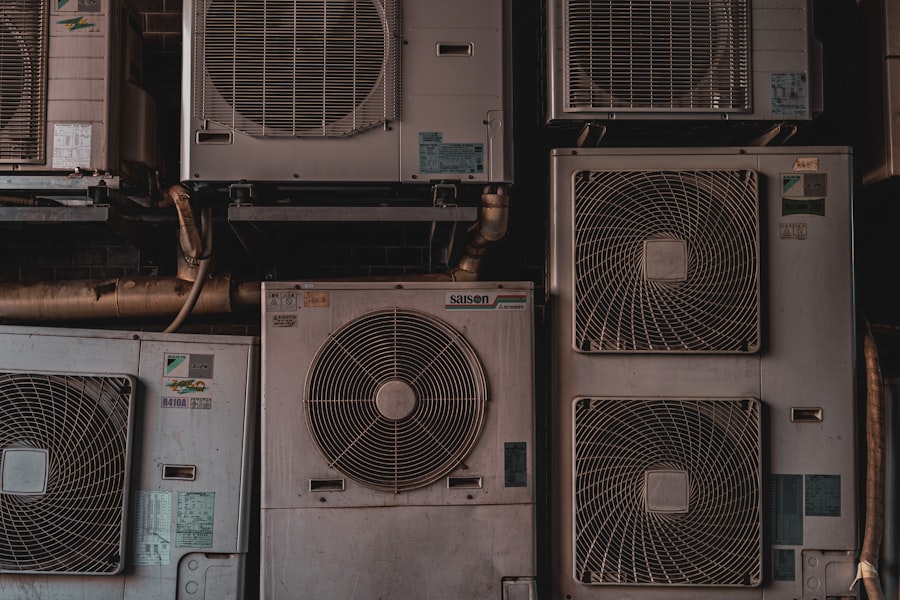
The rapid advancement of information technology has transformed how society interacts with knowledge; however, it has also led to increased energy consumption on a global scale. The proliferation of devices connected to the internet—smartphones, tablets, IoT devices—has created an insatiable demand for data processing and transmission capabilities. This surge in connectivity has significant implications for energy use across various sectors.
As organizations strive to harness big data analytics and artificial intelligence, they often overlook the underlying energy costs associated with these technologies. Data centers that power cloud computing services consume vast amounts of electricity, contributing to greenhouse gas emissions and environmental degradation. Therefore, it is imperative for stakeholders to recognize the environmental impact of their technological choices and seek ways to implement more sustainable practices within their operations.
The Thermodynamic Cost of Computing and Artificial Intelligence
Computing technologies have revolutionized many aspects of life; however, they are not without their thermodynamic costs. The computational power required for tasks such as machine learning and artificial intelligence (AI) can be staggering. Training complex models often necessitates extensive processing power over prolonged periods, leading to significant energy consumption.
As AI continues to evolve and permeate various industries—from healthcare to finance—the need for efficient computing becomes paramount. Researchers are actively exploring ways to optimize algorithms and hardware architectures to minimize energy usage while maximizing performance. Innovations such as specialized processors designed for AI tasks or techniques that reduce redundancy in data processing are critical steps toward addressing the thermodynamic costs associated with advanced computing technologies.
The Connection Between Knowledge and Sustainability
The relationship between knowledge and sustainability is increasingly recognized as a vital area of inquiry in contemporary discourse. As societies grapple with pressing environmental challenges—climate change, resource depletion—the need for sustainable practices becomes more urgent. Knowledge plays a crucial role in informing decision-making processes that promote sustainability; however, it is essential to consider the thermodynamic costs associated with acquiring and utilizing this knowledge.
Sustainable practices must account for both the benefits derived from knowledge and the energy costs incurred during its acquisition and application. By fostering a culture of sustainability within research and development initiatives, organizations can work toward minimizing their environmental impact while still advancing knowledge frontiers. This holistic approach ensures that progress does not come at the expense of ecological integrity.
Strategies for Minimizing the Thermodynamic Cost of Knowledge
To address the thermodynamic cost of knowledge effectively, various strategies can be employed across different sectors. One approach involves enhancing energy efficiency in data centers through advanced cooling technologies or optimizing server utilization rates. By ensuring that resources are used judiciously, organizations can significantly reduce their overall energy consumption.
Another strategy focuses on developing more efficient algorithms that require less computational power while still delivering accurate results. Researchers are increasingly exploring machine learning techniques that prioritize efficiency without sacrificing performance. Additionally, promoting awareness about sustainable practices among stakeholders can foster a culture that values both knowledge acquisition and environmental responsibility.
The Ethical Implications of the Thermodynamic Cost of Knowledge
The ethical implications surrounding the thermodynamic cost of knowledge are profound and multifaceted. As organizations strive for innovation and progress, they must grapple with the environmental consequences of their actions. The pursuit of knowledge should not come at the expense of ecological sustainability; thus, ethical considerations must guide decision-making processes.
Moreover, disparities in access to technology can exacerbate existing inequalities within society. Those with limited resources may struggle to access information technologies that drive progress while facing higher barriers due to their environmental impact. Addressing these ethical dilemmas requires a commitment to equitable access to knowledge resources while promoting sustainable practices across all sectors.
Future Directions in Understanding the Thermodynamic Cost of Knowledge
As society continues to advance technologically, understanding the thermodynamic cost of knowledge will remain a critical area of research and inquiry. Future directions may include exploring novel computing paradigms that prioritize energy efficiency alongside performance gains. Quantum computing holds promise in this regard; however, its practical implementation will require careful consideration of its thermodynamic implications.
Additionally, interdisciplinary collaboration between fields such as computer science, physics, and environmental studies will be essential for developing comprehensive frameworks that address both knowledge acquisition and sustainability challenges. By fostering dialogue among diverse stakeholders—researchers, policymakers, industry leaders—society can work toward innovative solutions that balance progress with ecological responsibility. In conclusion, grappling with the thermodynamic cost of knowledge is essential for navigating an increasingly complex world driven by information technology.
By recognizing the interplay between knowledge acquisition and energy consumption, stakeholders can make informed decisions that promote sustainability while advancing human understanding.
The concept of the thermodynamic cost of knowing is intricately linked to the broader implications of information theory and its physical underpinnings. For a deeper exploration of these themes, you can refer to a related article on this topic at My Cosmic Ventures, which delves into the intersection of knowledge, entropy, and thermodynamics.
WATCH THIS! Scientists Say The Universe Is A Quantum Computer (And We Are The Output)
FAQs
What is the thermodynamic cost of knowing?
The thermodynamic cost of knowing refers to the amount of energy or entropy change associated with acquiring, processing, or storing information. It is based on the principle that information processing is fundamentally linked to physical processes that obey the laws of thermodynamics.
How is information related to thermodynamics?
Information is physically embodied in systems, and manipulating information involves physical changes that consume energy and produce entropy. According to Landauer’s principle, erasing one bit of information requires a minimum amount of energy dissipation as heat, connecting information theory with thermodynamics.
What is Landauer’s principle?
Landauer’s principle states that any logically irreversible operation, such as erasing a bit of information, must dissipate a minimum amount of energy as heat to the environment. This minimum energy is proportional to the temperature of the system and the natural logarithm of 2, linking information erasure to thermodynamic cost.
Why does acquiring knowledge have a thermodynamic cost?
Acquiring knowledge involves measurement, data storage, and processing, all of which require physical operations. These operations consume energy and increase entropy in the environment, meaning that gaining information is not free from a thermodynamic perspective.
Can the thermodynamic cost of knowing be minimized?
Yes, the thermodynamic cost can be minimized by designing information processing systems that operate close to thermodynamic reversibility, reducing energy dissipation. However, completely eliminating the cost is impossible due to the fundamental physical limits imposed by thermodynamics.
What are the practical implications of the thermodynamic cost of knowing?
Understanding the thermodynamic cost of information processing is important for developing energy-efficient computing technologies, optimizing data storage, and understanding the physical limits of computation and measurement in both classical and quantum systems.
Does the thermodynamic cost apply to all forms of information?
Yes, the thermodynamic cost applies to all physical representations of information, whether classical bits or quantum bits (qubits). The specific cost depends on the physical implementation and the nature of the information processing operations involved.
How does this concept relate to Maxwell’s demon?
Maxwell’s demon is a thought experiment that challenges the second law of thermodynamics by hypothetically acquiring information to decrease entropy. The thermodynamic cost of knowing resolves this paradox by showing that the demon’s information processing incurs an energy cost that preserves the second law.