
The notion of the universe as a program has captivated the minds of scientists, philosophers, and futurists alike. This idea posits that the cosmos operates much like a sophisticated computer program, governed by a set of rules and algorithms that dictate the behavior of matter and energy. As humanity delves deeper into the mysteries of existence, this perspective offers a compelling framework for understanding the complexities of reality.
The implications of viewing the universe through this lens are profound, suggesting that everything from the smallest particles to the grandest galaxies may be part of an intricate design, akin to lines of code in a vast digital landscape. In recent years, advancements in technology and theoretical physics have provided fertile ground for this concept to flourish. As researchers explore the fundamental nature of reality, they increasingly draw parallels between the laws of physics and computational processes.
This intersection of science and technology invites a re-examination of age-old questions about existence, purpose, and the nature of consciousness itself. By considering the universe as a program, one can begin to unravel the intricate tapestry of life and the cosmos, potentially leading to groundbreaking insights about the very fabric of reality.
Key Takeaways
- The universe as a program concept suggests reality operates like computer code.
- Theoretical foundations draw from physics, information theory, and computational models.
- Evidence includes digital-like patterns and quantum phenomena resembling computational processes.
- Challenges involve philosophical debates and limitations in proving the hypothesis.
- Implications span consciousness, ethics, technology, and ongoing scientific exploration.
Theoretical basis for the idea of the universe as a program
The theoretical underpinnings of the universe as a program can be traced back to various scientific disciplines, including physics, computer science, and information theory. At its core, this concept is rooted in the idea that information is fundamental to the structure of reality. Quantum mechanics, for instance, reveals that particles exist in states defined by probabilities rather than fixed positions, suggesting that information plays a crucial role in determining physical outcomes.
This probabilistic nature aligns with how computer programs operate, where algorithms process data to produce results based on predefined rules. Moreover, theories such as digital physics propose that the universe is fundamentally informational in nature. Proponents argue that space and time may not be continuous entities but rather discrete units akin to pixels in a digital image.
This perspective aligns with advancements in quantum computing and simulations, where complex systems can be modeled through computational frameworks. By viewing the universe as a program, researchers can explore how these discrete units interact and evolve over time, potentially leading to a deeper understanding of both physical laws and the nature of existence itself.
Comparing the universe to computer programs
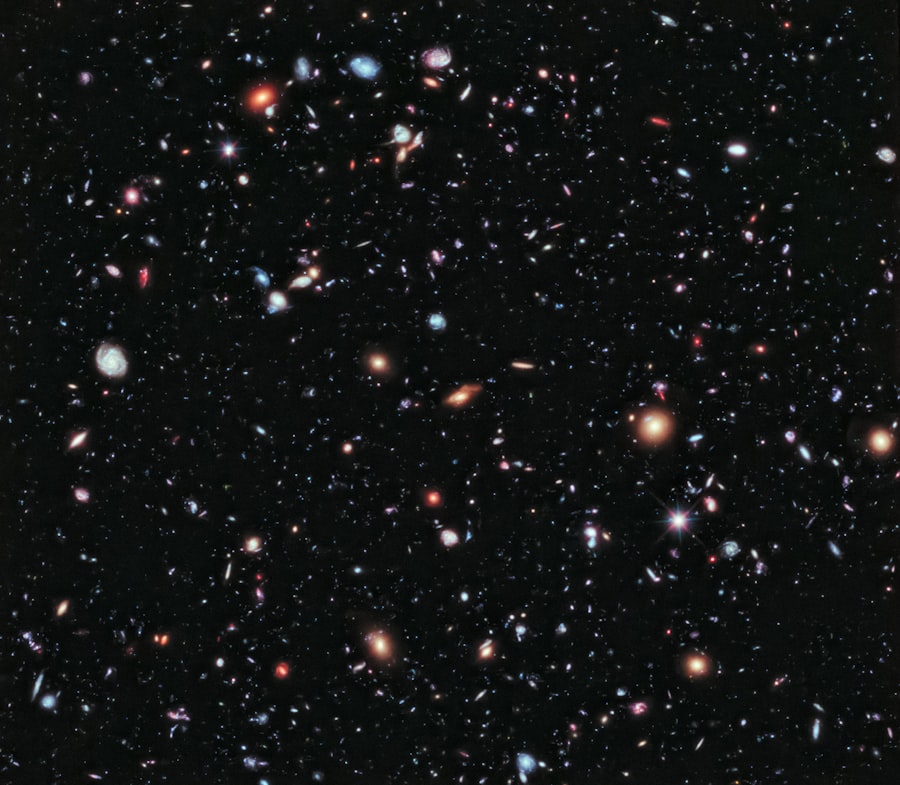
Drawing comparisons between the universe and computer programs reveals intriguing similarities that merit further exploration. Just as a computer program operates according to specific algorithms and rules, the universe appears to function within a framework defined by physical laws. These laws govern everything from the motion of celestial bodies to the behavior of subatomic particles, suggesting an underlying order that mirrors computational processes.
In this sense, one could argue that the universe is akin to an elaborate simulation, where each element interacts according to predetermined instructions. Furthermore, just as programmers can create complex simulations that mimic real-world phenomena, it is conceivable that the universe itself is a product of an advanced intelligence or natural processes that resemble programming. The concept of emergent behavior in computer science—where simple rules lead to complex outcomes—parallels how simple physical laws can give rise to intricate structures in nature.
This comparison invites contemplation about the potential for higher-order intelligence or consciousness behind the design of the universe, raising questions about purpose and intention in creation.
Evidence supporting the idea of the universe as a program
| Evidence/Metric | Description | Implication for Universe as a Program |
|---|---|---|
| Mathematical Structure of Physical Laws | Physical laws can be expressed as precise mathematical equations. | Suggests the universe operates on a set of coded rules similar to a program. |
| Quantum Computation Analogies | Quantum processes resemble computational operations and information processing. | Indicates the universe may process information like a computational system. |
| Pixelation of Space-Time (Planck Scale) | Space-time appears quantized at the Planck length, implying discrete units. | Supports the idea of a digital, grid-like structure akin to pixels in a program. |
| Simulation Hypothesis Arguments | Philosophical and scientific arguments propose we might be in a simulated reality. | Posits the universe could be a sophisticated simulation or program. |
| Algorithmic Information Theory | Complexity of the universe can be described by algorithmic compressibility. | Suggests the universe’s complexity arises from underlying algorithms. |
| Fine-Tuning of Physical Constants | Physical constants are precisely set to allow life and structure. | Could imply intentional programming or design parameters. |
| Emergence of Complexity from Simple Rules | Complex phenomena arise from simple underlying rules (e.g., cellular automata). | Supports the concept of the universe running on simple code producing complexity. |
While the idea of the universe as a program may seem abstract, there are several lines of evidence that lend credence to this perspective. One compelling argument comes from advancements in quantum mechanics, particularly the phenomenon known as wave-particle duality. This principle suggests that particles can exist in multiple states simultaneously until observed, akin to how data in a computer program can exist in various forms until processed.
Such behavior raises questions about the role of observation and measurement in shaping reality, hinting at an underlying informational structure. Additionally, developments in cosmology have revealed that the universe exhibits properties reminiscent of computational systems. The discovery of cosmic microwave background radiation and its uniformity across vast distances suggests a finely-tuned system operating under specific parameters.
This uniformity can be likened to how computer programs maintain consistency across different executions. Furthermore, researchers have identified patterns within chaotic systems that resemble algorithmic processes, reinforcing the notion that underlying rules govern even seemingly random events in nature.
Challenges and criticisms of the concept
Despite its intriguing implications, the concept of the universe as a program is not without its challenges and criticisms. One significant concern revolves around the question of determinism versus free will. If the universe operates like a program with predetermined rules, it raises philosophical dilemmas regarding human agency and autonomy.
Critics argue that such a deterministic view undermines individual choice and responsibility, leading to existential questions about purpose and meaning in life. Moreover, skeptics point out that while parallels can be drawn between computational processes and physical laws, this does not necessarily imply that reality is fundamentally programmed. The complexity of natural phenomena may arise from emergent properties rather than explicit coding or design.
Additionally, some argue that attributing a programmed nature to the universe risks oversimplifying its intricacies and reducing profound existential questions to mere algorithms. As such, ongoing debates continue to challenge proponents of this theory to refine their arguments and address these philosophical concerns.
The implications of the universe as a program
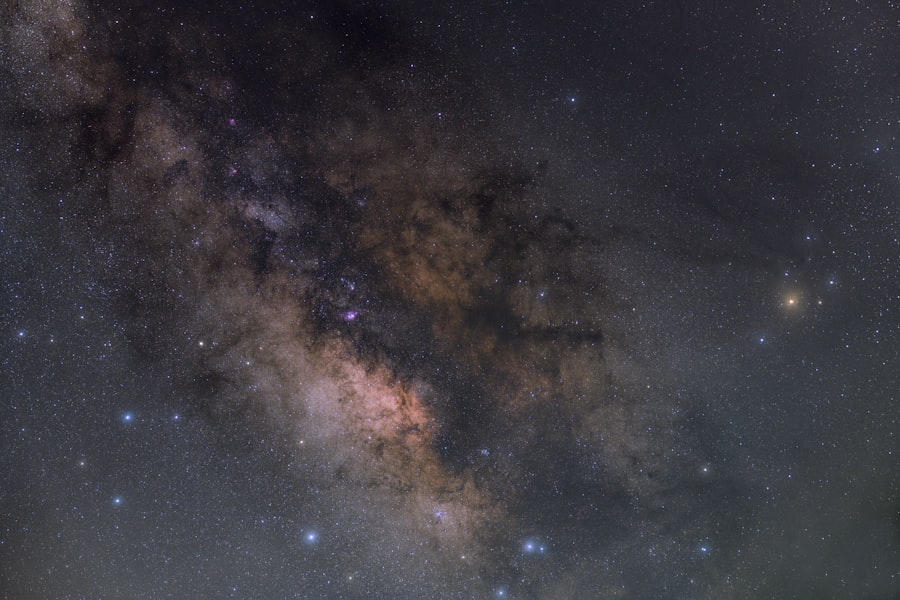
The implications of viewing the universe as a program extend far beyond theoretical musings; they touch upon fundamental aspects of existence itself. If reality operates according to computational principles, it opens up new avenues for understanding consciousness, creativity, and even spirituality. This perspective suggests that human beings may possess an innate capacity to interact with or influence the underlying code of reality through thought and intention.
Such ideas resonate with various spiritual traditions that emphasize the interconnectedness of all things and the power of consciousness in shaping experience. Furthermore, recognizing the universe as a program could revolutionize scientific inquiry and technological development. It may inspire new approaches to problem-solving by encouraging researchers to think in terms of algorithms and simulations rather than traditional methodologies.
This shift could lead to breakthroughs in fields ranging from artificial intelligence to quantum computing, ultimately enhancing humanity’s ability to navigate complex challenges and explore uncharted territories.
The role of consciousness in a programmed universe
In contemplating a programmed universe, one cannot overlook the pivotal role consciousness may play within this framework. If reality is indeed structured like a sophisticated program, then consciousness could be viewed as an integral component—perhaps even a key driver—of its unfolding narrative. This perspective aligns with theories suggesting that consciousness is not merely an epiphenomenon but rather an active participant in shaping reality itself.
The interplay between consciousness and reality raises profound questions about perception and existence. If individuals possess the ability to influence their experiences through conscious thought, it implies a level of agency within an otherwise deterministic framework. This notion resonates with various philosophical traditions that emphasize mindfulness and intentionality as pathways to personal transformation and understanding.
By exploring this relationship further, researchers may uncover deeper insights into both consciousness and the nature of reality itself.
Philosophical and ethical considerations
The philosophical implications of viewing the universe as a program extend into ethical considerations as well. If reality operates according to predetermined rules akin to a computer program, it raises questions about moral responsibility and accountability. Are individuals merely players within a grand simulation devoid of true agency?
Or do they possess the capacity to transcend these limitations through conscious choice? Such inquiries challenge conventional notions of morality and ethics, prompting deeper reflections on human behavior and societal structures. Moreover, if consciousness plays an active role in shaping reality within this programmed framework, it invites discussions about ethical stewardship over one’s thoughts and actions.
The idea that individuals can influence their experiences through intention underscores the importance of cultivating awareness and responsibility in decision-making processes. This perspective encourages individuals to consider not only their personal impact but also their interconnectedness with others and the broader cosmos.
Scientific and technological implications
The scientific implications of viewing the universe as a program are vast and multifaceted. This perspective could inspire innovative approaches to research across various disciplines, from physics to biology and beyond. By framing scientific inquiry within computational paradigms, researchers may develop new methodologies for modeling complex systems and understanding emergent phenomena.
Such advancements could lead to breakthroughs in fields like climate science, neuroscience, and artificial intelligence. Technologically, embracing this concept may catalyze advancements in simulation technologies and virtual realities. As humanity continues to push boundaries in computing power and algorithmic design, it becomes increasingly feasible to create sophisticated simulations that mimic aspects of reality.
These developments could revolutionize education, entertainment, and even scientific experimentation by allowing individuals to explore complex systems in immersive environments.
The search for answers: ongoing research and exploration
As interest in the concept of the universe as a program grows, ongoing research seeks to explore its validity further. Scientists are investigating fundamental questions about information theory, quantum mechanics, and cosmology while examining how these fields intersect with computational principles. Collaborative efforts across disciplines are fostering innovative approaches to understanding reality’s complexities through interdisciplinary lenses.
Moreover, advancements in technology are enabling researchers to conduct experiments that probe deeper into these questions. Quantum computing holds promise for simulating complex systems at unprecedented scales while providing insights into fundamental principles governing reality. As researchers continue their quest for knowledge, they remain open to new discoveries that may reshape our understanding of existence itself.
the future of the universe as a program theory
In conclusion, the concept of viewing the universe as a program presents an intriguing framework for understanding reality’s complexities. While challenges and criticisms persist, ongoing research continues to explore its theoretical foundations and implications across various fields. As humanity grapples with profound questions about existence, consciousness, and morality within this context, it becomes increasingly clear that this perspective offers valuable insights into both individual experience and collective understanding.
The future holds promise for further exploration into this captivating theory as scientists push boundaries in their quest for knowledge. Whether or not one subscribes fully to this perspective, engaging with its ideas encourages deeper reflections on existence itself—inviting individuals to consider their place within an intricate tapestry woven by both natural laws and conscious intention. Ultimately, embracing curiosity about these concepts may lead humanity toward new horizons in understanding both themselves and their relationship with the cosmos at large.
The intriguing question of whether the universe is running on a program has sparked numerous discussions and theories in the realm of science and philosophy. For those interested in exploring this concept further, a related article can be found at mycosmicventures.
com/sample-page/’>this link, which delves into the implications of a simulated reality and the potential evidence supporting such a hypothesis.
WATCH THIS! Scientists Say The Universe Is A Quantum Computer (And We Are The Output)
FAQs
What does it mean to say the universe is running on a program?
The idea suggests that the universe operates like a computer simulation or follows a set of computational rules, similar to how software runs on a computer. This concept explores whether physical laws and the behavior of matter can be described as algorithms or code.
Is there scientific evidence that the universe is a simulation or runs on a program?
Currently, there is no direct scientific evidence proving the universe is a simulation or runs on a program. The hypothesis remains speculative and philosophical, though some physicists and computer scientists explore it through theoretical models and thought experiments.
Who proposed the idea that the universe might be a simulation?
Philosopher Nick Bostrom popularized the simulation hypothesis in 2003, suggesting that advanced civilizations might run simulations of their ancestors, and we could be living in one of those simulations.
How do physics and computer science relate to the idea of the universe running on a program?
Physics studies the fundamental laws governing the universe, while computer science studies algorithms and computation. Some researchers investigate whether physical laws can be represented as computational processes, implying the universe might function like a vast information processor.
What are some arguments against the universe being a program or simulation?
Critics argue that the simulation hypothesis is unfalsifiable, meaning it cannot be tested or disproven scientifically. Others point out that the complexity and randomness observed in the universe may not be easily replicated by a program.
Does quantum mechanics support or contradict the idea of the universe running on a program?
Quantum mechanics introduces probabilistic and non-deterministic elements to physical processes, which some interpret as challenging a strictly programmed universe. However, others suggest quantum phenomena could be part of the computational rules of a simulated reality.
What implications would it have if the universe is running on a program?
If true, it could change our understanding of reality, consciousness, and existence. It might imply that physical laws are artificial constructs and raise questions about the nature of the “programmer” or creator behind the simulation.
Are there any scientific experiments designed to test if the universe is a simulation?
Some scientists have proposed experiments to detect potential “pixelation” or limits in space-time resolution, or anomalies in physical constants, but no conclusive results have been found to confirm or refute the simulation hypothesis.
Is the concept of the universe running on a program the same as determinism?
Not necessarily. Determinism is the idea that all events are determined by prior causes, while the universe running on a program suggests a computational framework. The two concepts can overlap but are distinct philosophical ideas.
Where can I learn more about the universe and computational theories?
Books on cosmology, quantum physics, and computational theory, as well as academic papers on the simulation hypothesis, are good resources. Popular science books by authors like Stephen Wolfram and Nick Bostrom provide accessible introductions.