The Holographic Universe Theory presents a captivating perspective on the nature of reality, suggesting that the universe may be akin to a hologram, where all the information that constitutes the three-dimensional world is encoded on a two-dimensional surface.
The implications of this theory extend far beyond mere philosophical musings; they touch upon the very fabric of existence and the fundamental laws that govern the universe.
As humanity continues to explore the depths of quantum mechanics and cosmology, the Holographic Universe Theory has emerged as a significant topic of discussion among scientists and philosophers alike. It invites individuals to reconsider their understanding of reality, consciousness, and the interconnectedness of all things. By delving into this theory, one can uncover profound insights into the nature of existence and the potential for a deeper understanding of the universe.
Key Takeaways
- The holographic universe theory suggests our reality may be a projection from a two-dimensional surface.
- Quantum physics plays a crucial role in supporting the principles behind the holographic model.
- Evidence from black hole physics and quantum entanglement lends credibility to the theory.
- The theory has potential applications in advancing technology and medical imaging techniques.
- Despite intriguing implications, the holographic universe theory faces ongoing scientific debates and requires further research.
The History and Development of the Holographic Universe Theory
The roots of the Holographic Universe Theory can be traced back to the early 1990s when physicists began to explore the implications of black hole thermodynamics. Pioneering work by scientists such as Gerard ‘t Hooft and Leonard Susskind laid the groundwork for this revolutionary idea. They proposed that the information contained within a black hole is not lost but rather encoded on its event horizon, leading to the notion that our entire universe might similarly be a projection of information from a distant boundary.
As research progressed, the theory gained traction within the scientific community, particularly in relation to string theory and quantum gravity. The concept was further refined through various theoretical frameworks, including the AdS/CFT correspondence, which posits a relationship between gravitational theories in anti-de Sitter space and conformal field theories on its boundary. This correspondence provided a mathematical foundation for understanding how higher-dimensional spaces could be represented in lower-dimensional forms, reinforcing the idea that reality might be holographic in nature.
Understanding the Principles of Holography
At its core, holography is a technique that captures and reconstructs light fields to create three-dimensional images from two-dimensional surfaces. This principle serves as a metaphor for understanding the Holographic Universe Theory. In a hologram, every part contains information about the whole, suggesting that each segment of space-time may hold data about the entire universe.
This concept challenges traditional views of locality and suggests that events occurring in one region can influence those in another, regardless of distance. The implications of holography extend into various fields, including physics and information theory. In essence, it posits that reality is not merely a collection of separate entities but rather an interconnected web of information.
This perspective encourages a holistic view of existence, where every element is interdependent and contributes to the overall structure of reality. By grasping these principles, one can begin to appreciate how they might apply to understanding complex systems, both in nature and in human society.
Evidence Supporting the Holographic Universe Theory
| Evidence/Metric | Description | Significance | Source/Study |
|---|---|---|---|
| Black Hole Entropy | Entropy of black holes is proportional to the surface area of their event horizon, not volume. | Supports the idea that information about a volume of space can be encoded on its boundary. | Jacob Bekenstein (1973), Stephen Hawking (1974) |
| AdS/CFT Correspondence | Mathematical duality between a gravity theory in Anti-de Sitter space and a conformal field theory on its boundary. | Provides a concrete example of holographic principle in string theory. | Juan Maldacena (1997) |
| Cosmic Microwave Background (CMB) Fluctuations | Patterns in the CMB radiation suggest information encoding consistent with holographic models. | Potential observational evidence that the universe’s information content is holographically encoded. | Craig Hogan (2008), Various CMB studies |
| Quantum Entanglement and Spacetime Geometry | Connections between entanglement entropy and the geometry of spacetime suggest holographic encoding. | Supports the idea that spacetime itself emerges from quantum information on a boundary. | Mark Van Raamsdonk (2010) |
| Holographic Noise Experiments | Experiments like the Fermilab Holometer attempt to detect holographic noise predicted by the theory. | Tests for fundamental limits on spatial resolution consistent with holographic universe. | Fermilab Holometer (2015) |
While the Holographic Universe Theory remains largely theoretical, several lines of evidence lend credence to its claims. One significant piece of evidence comes from black hole thermodynamics, particularly the work surrounding Hawking radiation. Stephen Hawking’s groundbreaking research suggested that black holes emit radiation due to quantum effects near their event horizons.
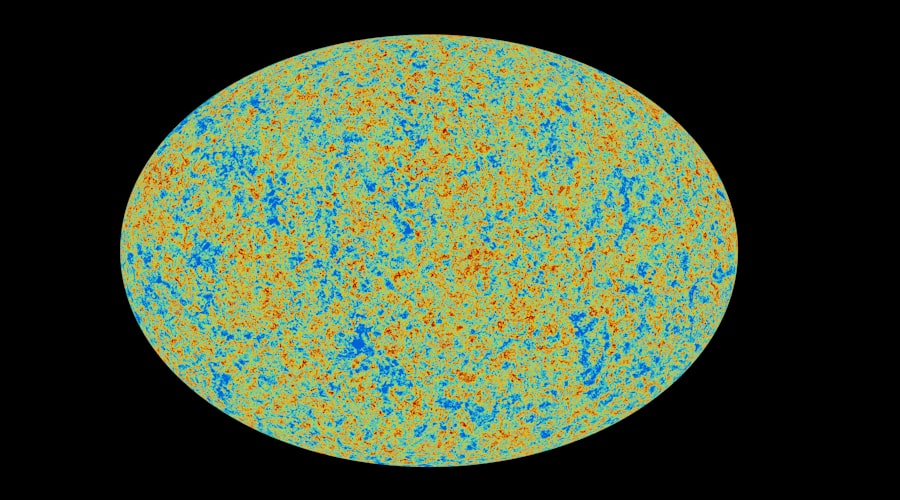
This phenomenon implies that information is not lost when matter falls into a black hole but is instead preserved in some form, supporting the idea that reality may be encoded on a two-dimensional surface. Additionally, recent advancements in cosmology have provided further support for this theory. Observations of cosmic microwave background radiation and large-scale structures in the universe have revealed patterns that align with holographic principles.
These findings suggest that the universe’s expansion and its underlying structure may be influenced by information encoded at its boundaries, reinforcing the notion that our three-dimensional experience is a projection of deeper realities.
The Role of Quantum Physics in the Holographic Universe
Quantum physics plays a pivotal role in shaping the Holographic Universe Theory. The principles of quantum mechanics challenge classical notions of determinism and locality, introducing concepts such as entanglement and superposition. These phenomena suggest that particles can be interconnected across vast distances, leading to implications for how information is transmitted and perceived within the universe.
Entanglement, in particular, raises questions about the nature of reality itself. When two particles become entangled, their states are linked regardless of the distance separating them. This interconnectedness aligns with holographic principles, suggesting that information about one particle can influence another instantaneously.
Such insights compel researchers to reconsider traditional views on causality and locality, further supporting the idea that reality may be more complex than it appears.
Exploring the Implications of the Holographic Universe Theory
The implications of embracing the Holographic Universe Theory are profound and far-reaching. If reality is indeed a holographic projection, it challenges individuals to rethink their understanding of existence, consciousness, and even spirituality. This perspective encourages a sense of unity among all beings, as it suggests that everyone and everything is interconnected at a fundamental level.
Moreover, this theory opens up new avenues for exploring consciousness itself. If consciousness arises from information encoded in a holographic framework, it raises questions about the nature of self-awareness and perception. Individuals may begin to see themselves not as isolated entities but as integral parts of a larger cosmic tapestry.
This shift in perspective could foster greater empathy and understanding among people, promoting collaboration and harmony in an increasingly fragmented world.
The Connection Between Consciousness and the Holographic Universe
The relationship between consciousness and the Holographic Universe Theory is an area ripe for exploration. Some theorists propose that consciousness itself may be a fundamental aspect of this holographic reality rather than merely an emergent property of biological processes. This notion suggests that consciousness could be intertwined with the fabric of space-time, influencing how individuals perceive and interact with their environment.
Furthermore, if consciousness is indeed linked to holographic principles, it raises intriguing questions about the nature of perception and reality itself. Individuals may begin to consider whether their experiences are merely projections shaped by their consciousness or if they reflect an objective reality beyond their immediate awareness. This exploration could lead to new insights into meditation, altered states of consciousness, and even spiritual experiences as individuals seek to understand their place within this holographic framework.
Applications of the Holographic Universe Theory in Technology and Medicine
The implications of the Holographic Universe Theory extend beyond theoretical physics; they also hold potential applications in technology and medicine. In technology, advancements in holography have already led to innovations in imaging systems, data storage, and virtual reality experiences. As researchers continue to explore holographic principles, they may uncover new methods for manipulating information at fundamental levels, leading to breakthroughs in computing and communication technologies.
In medicine, understanding holographic principles could revolutionize approaches to health and wellness. For instance, researchers are investigating how holographic imaging techniques can enhance diagnostic capabilities by providing more detailed representations of biological structures. Additionally, insights from holography may inform new therapeutic approaches that consider patients holistically rather than merely addressing isolated symptoms.
Criticisms and Debates Surrounding the Holographic Universe Theory
Despite its intriguing possibilities, the Holographic Universe Theory has faced criticism and skepticism from various quarters within the scientific community. Some critics argue that while it offers compelling metaphors for understanding complex phenomena, it lacks empirical evidence necessary for validation as a scientific theory. They contend that without concrete experimental data supporting its claims, it remains speculative at best.
Moreover, debates surrounding interpretations of quantum mechanics further complicate discussions about holography. Different schools of thought exist regarding how quantum phenomena should be understood—whether through deterministic frameworks or probabilistic interpretations—leading to divergent views on how these concepts relate to holography. As researchers continue to grapple with these complexities, ongoing dialogue will be essential for refining theories and addressing criticisms.
The Future of Research in the Holographic Universe
The future of research into the Holographic Universe Theory holds promise for uncovering new insights into both fundamental physics and human consciousness. As technology advances and experimental techniques improve, scientists may find ways to test predictions derived from holographic principles more rigorously. This could involve exploring connections between quantum mechanics and gravitational theories or investigating potential applications in various fields.
By bringing together physicists, philosophers, neuroscientists, and other experts from diverse backgrounds, researchers can foster innovative approaches to exploring questions about reality’s nature and consciousness’s role within it.
Embracing the Mysteries of the Holographic Universe
In conclusion, embracing the mysteries presented by the Holographic Universe Theory invites individuals to reconsider their understanding of existence itself. As humanity delves deeper into quantum mechanics and cosmology, this theory offers profound insights into reality’s interconnectedness and consciousness’s role within it. While challenges remain in validating its claims empirically, ongoing research holds promise for uncovering new dimensions of understanding.
Ultimately, whether viewed through scientific inquiry or philosophical exploration, the Holographic Universe Theory encourages individuals to embrace curiosity about existence’s nature. By contemplating these mysteries with an open mind, humanity can continue its journey toward greater knowledge and understanding—an endeavor that may ultimately reveal not only what lies beyond but also what resides within each individual as part of this vast cosmic tapestry.
In exploring the fascinating concept of the holographic universe theory, one can delve deeper into the implications of long tail keywords in this context. For a comprehensive understanding of how these keywords can enhance visibility and engagement in discussions surrounding such complex theories, check out this insightful article on My Cosmic Ventures. This resource provides valuable information that can help you navigate the intricate relationship between digital marketing and theoretical physics.
WATCH THIS! Scientists Say The Universe Is A Quantum Computer (And We Are The Output)
FAQs
What are long tail keywords?
Long tail keywords are specific and longer keyword phrases that visitors are more likely to use when they are closer to making a purchase or when using voice search. They typically have lower search volume but higher conversion rates compared to broad keywords.
What is the holographic universe theory?
The holographic universe theory is a scientific hypothesis suggesting that the entire universe can be seen as a two-dimensional information structure “painted” on the cosmological horizon, such that the three dimensions we observe are an effective description at macroscopic scales and low energies.
Why use long tail keywords for the holographic universe theory?
Using long tail keywords for the holographic universe theory helps target a more specific audience interested in detailed or niche aspects of the theory. This can improve search engine rankings and attract visitors who are more likely to engage deeply with the content.
Can you give examples of long tail keywords related to the holographic universe theory?
Examples include “evidence supporting holographic universe theory,” “how holographic principle explains black holes,” “holographic universe theory and quantum gravity,” and “scientific experiments testing holographic universe hypothesis.”
How do long tail keywords improve SEO for scientific topics?
Long tail keywords reduce competition by focusing on niche queries, making it easier to rank higher in search results. They also attract users with specific interests, increasing the likelihood of engagement and sharing, which benefits SEO.
Is the holographic universe theory widely accepted in the scientific community?
The holographic universe theory is a respected and influential hypothesis in theoretical physics, particularly in string theory and quantum gravity research, but it remains a topic of ongoing study and debate rather than a universally accepted fact.
How can I find effective long tail keywords for the holographic universe theory?
You can use keyword research tools like Google Keyword Planner, Ahrefs, or SEMrush, and analyze search queries related to the holographic universe theory. Additionally, exploring forums, academic papers, and Q&A sites can reveal common questions and phrases used by interested audiences.
Do long tail keywords help in academic or scientific content marketing?
Yes, long tail keywords help academic and scientific content reach targeted audiences such as students, researchers, and enthusiasts by addressing specific questions or topics, thereby increasing visibility and engagement in niche areas.