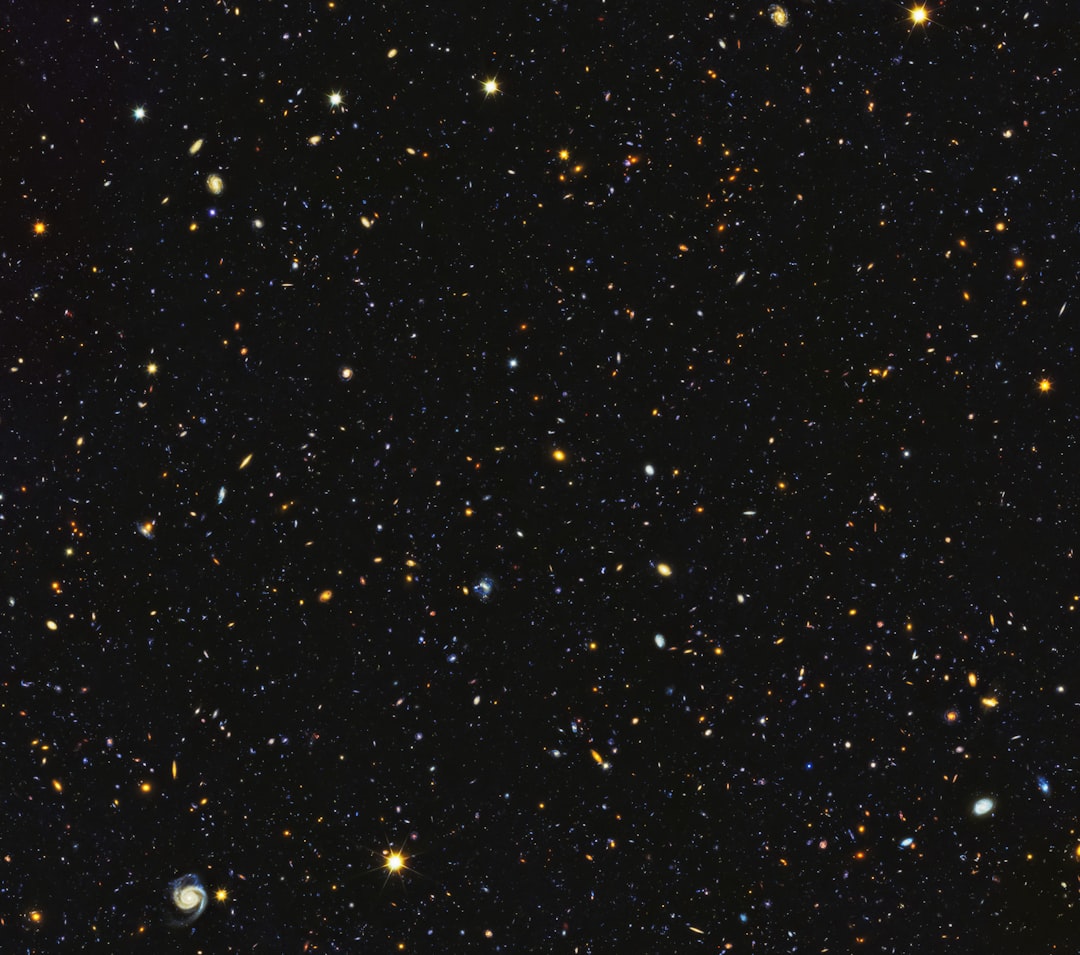
The Legacy Survey of Space and Time (LSST) represents a monumental leap in the field of cosmology, offering unprecedented capabilities to observe the universe over time. Scheduled to be fully operational at the Vera Rubin Observatory in Chile, LSST is designed to capture vast amounts of data, enabling scientists to study the cosmos in ways previously thought impossible. By utilizing a wide-field telescope equipped with advanced imaging technology, LSST will survey the entire visible sky every few nights, creating a dynamic map of celestial objects and phenomena.
This innovative approach to time domain cosmology allows researchers to track changes in the universe, providing insights into its structure, evolution, and the fundamental forces that govern it. Time domain cosmology focuses on the study of astronomical objects that change over time, such as supernovae, variable stars, and transient phenomena. The LSST’s ability to monitor these changes in real-time will revolutionize our understanding of cosmic events and their implications for the universe’s expansion and composition.
As LSST embarks on its mission, it promises to unlock new avenues of research, challenging existing theories and potentially leading to groundbreaking discoveries about the nature of dark matter, dark energy, and the overall dynamics of the cosmos.
Key Takeaways
- LSST enables detailed time domain cosmology, allowing dynamic observation of the universe over time.
- It significantly advances understanding of dark matter, dark energy, and cosmic evolution.
- LSST excels in discovering transient and variable astronomical phenomena like supernovae.
- The survey aids in studying galaxy formation, solar system origins, and near-Earth object detection.
- LSST is poised to transform future cosmological research with its comprehensive, time-sensitive data.
Understanding the Universe with LSST
The LSST’s comprehensive survey capabilities will provide an extensive dataset that will enhance our understanding of the universe’s structure and behavior. By capturing images of billions of galaxies and other celestial objects, LSST will allow astronomers to analyze their distribution and movement across vast distances. This data will be crucial for mapping the large-scale structure of the universe, revealing how galaxies cluster and interact over time.
Such insights are essential for testing cosmological models and refining our understanding of gravitational forces at play on cosmic scales. Moreover, LSST’s ability to observe the universe in multiple wavelengths will enable researchers to study various astrophysical processes in greater detail. By examining light from different parts of the electromagnetic spectrum, scientists can gain insights into the physical properties of celestial objects, such as their temperature, composition, and motion.
This multi-faceted approach will not only deepen our understanding of individual objects but also provide a broader context for their role within the universe’s intricate tapestry.
The Role of Time Domain Cosmology in Exploring the Universe
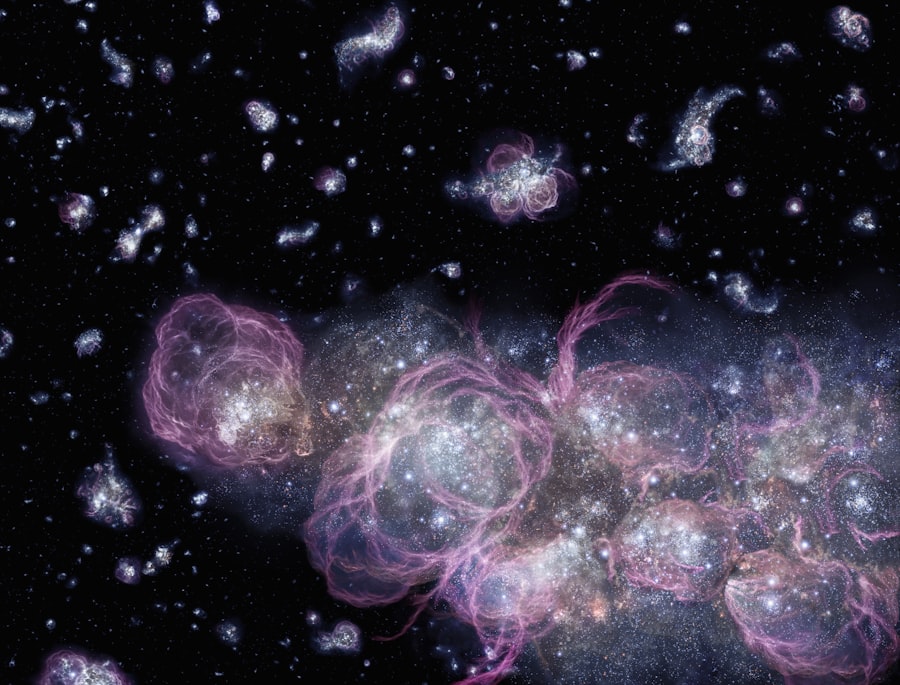
Time domain cosmology plays a pivotal role in unraveling the mysteries of the universe by focusing on how celestial objects change over time. This field encompasses a wide range of phenomena, from the explosive deaths of stars to the subtle variations in brightness of distant galaxies. By studying these changes, astronomers can glean valuable information about the underlying physical processes that govern cosmic evolution.
The LSST’s unique capabilities will significantly enhance this area of research, allowing for systematic monitoring of transient events and variable objects. One of the key advantages of time domain cosmology is its ability to provide a dynamic view of the universe. Unlike traditional static observations that capture a single moment in time, LSST will enable continuous monitoring of celestial phenomena.
This real-time data collection will facilitate the identification of rare events, such as gamma-ray bursts or gravitational wave sources, which may otherwise go unnoticed. By understanding these transient events, researchers can piece together a more comprehensive picture of cosmic history and the forces that shape it.
The Impact of LSST on Cosmological Research
| Metric | Current Status | LSST Expected Improvement | Impact on Cosmological Research |
|---|---|---|---|
| Survey Area | ~10,000 sq. degrees | ~18,000 sq. degrees | Enables wider sky coverage for better statistical sampling |
| Number of Galaxies Observed | ~100 million | ~20 billion | Improves constraints on dark energy and dark matter models |
| Depth (Magnitude Limit) | ~24 mag | ~27.5 mag | Allows detection of fainter and more distant objects |
| Time Resolution (Cadence) | Days to weeks | Every few nights | Enables time-domain cosmology and transient event studies |
| Photometric Redshift Accuracy | ~0.05 (σ_z) | ~0.02 (σ_z) | Enhances 3D mapping of large-scale structure |
| Number of Supernovae Detected | Thousands per year | Millions over survey duration | Improves measurements of cosmic expansion history |
| Weak Lensing Shape Measurements | ~100 million galaxies | ~2 billion galaxies | Refines measurements of matter distribution and growth |
The impact of LSST on cosmological research is poised to be profound. With its ability to generate an enormous volume of data—estimated at 20 terabytes per night—LSST will provide an unprecedented resource for astronomers worldwide. This wealth of information will not only enhance existing research but also inspire new questions and avenues for exploration.
As researchers sift through this data, they will have the opportunity to test current theories and develop new models that better explain observed phenomena. Furthermore, LSST’s open data policy will democratize access to its findings, allowing scientists from diverse backgrounds and institutions to engage with its results. This collaborative approach is likely to foster innovation and accelerate discoveries across various fields within astronomy and astrophysics.
By bringing together a global community of researchers, LSST will catalyze advancements in our understanding of fundamental questions about the universe’s origin, evolution, and ultimate fate.
LSST’s Contribution to Understanding Dark Matter and Dark Energy
One of the most significant contributions LSST is expected to make is in the study of dark matter and dark energy—two enigmatic components that constitute a substantial portion of the universe’s mass-energy content. Dark matter is believed to exert gravitational influence on visible matter, while dark energy is thought to drive the accelerated expansion of the universe. Despite their importance, both remain poorly understood due to their elusive nature.
LSST’s extensive survey capabilities will provide critical data that can help unravel these mysteries.
The gravitational lensing effect—where light from distant objects is bent by massive foreground structures—will be a key focus area for LSST.
By analyzing how light is distorted around galaxy clusters, scientists can estimate the amount and distribution of dark matter within these structures. Additionally, LSST’s observations will help refine measurements of cosmic expansion rates, providing insights into dark energy’s role in shaping the universe’s fate.
Discovering Transient and Variable Objects with LSST
The LSST’s ability to detect transient and variable objects is one of its most exciting features. These objects can include anything from supernovae to asteroids and comets that exhibit changes in brightness or position over time. The survey’s rapid cadence—capturing images every few nights—will allow astronomers to identify these fleeting phenomena quickly and accurately.
This capability is particularly important for studying explosive events like supernovae, which can provide valuable information about stellar evolution and nucleosynthesis. Moreover, LSST’s advanced algorithms for data processing will facilitate the identification of previously unknown transient objects. As new discoveries are made, researchers will be able to classify these objects based on their characteristics and behaviors.
This classification process will not only enhance our understanding of individual events but also contribute to broader studies on cosmic evolution and the lifecycle of stars. The potential for discovering new types of transients adds an exciting dimension to LSST’s mission.
LSST’s Role in Studying Supernovae and Other Explosive Events
Supernovae are among the most energetic events in the universe, marking the explosive death throes of massive stars. They play a crucial role in enriching the interstellar medium with heavy elements and influencing galaxy formation and evolution. The LSST’s capabilities will significantly enhance our understanding of supernovae by enabling systematic surveys that capture these events in real-time.
With its wide-field view and rapid imaging capabilities, LSST will be able to detect supernovae shortly after they occur, providing invaluable data for researchers. By analyzing light curves—the brightness variations over time—of supernovae detected by LSST, astronomers can glean insights into their progenitor stars and explosion mechanisms. Additionally, these observations can help refine models for measuring cosmic distances through standard candles, which are essential for understanding the expansion history of the universe.
The wealth of data generated by LSST will allow for statistical analyses that can reveal patterns in supernova occurrences and their relationship with other cosmic phenomena.
Probing the Evolution of Galaxies with LSST
Galaxies are fundamental building blocks of the universe, and understanding their evolution is key to unraveling cosmic history. The LSST will provide a comprehensive dataset that allows researchers to study galaxies at various stages of their development across different epochs. By observing billions of galaxies over time, astronomers can investigate how they form, evolve, and interact with one another through processes such as mergers and accretion.
The survey’s ability to capture detailed images will enable scientists to analyze galaxy morphology—shapes and structures—and how these characteristics change over time. Additionally, by examining star formation rates and chemical compositions within galaxies, researchers can gain insights into their evolutionary pathways. The data collected by LSST will facilitate large-scale studies that can reveal trends in galaxy formation across cosmic time, contributing significantly to our understanding of how galaxies have shaped the universe we observe today.
LSST’s Contribution to Understanding the Formation of Solar Systems
The formation of solar systems is a complex process influenced by various factors such as gravity, gas dynamics, and dust interactions. The LSST’s capabilities extend beyond distant galaxies; it also has significant implications for studying solar system formation within our own Milky Way galaxy. By monitoring nearby stars and their surrounding environments over time, LSST can provide insights into how planetary systems develop from protoplanetary disks.
Through its observations, LSST will help identify young stars still in their formative stages along with any associated disks or structures indicative of planet formation. By tracking changes in brightness or other characteristics over time, researchers can gain insights into processes such as accretion and disk evolution. This information is crucial for understanding not only our solar system’s history but also for drawing comparisons with other systems throughout the galaxy.
LSST’s Role in Identifying Near-Earth Objects and Potentially Hazardous Asteroids
The identification and tracking of near-Earth objects (NEOs) are critical for planetary defense efforts aimed at mitigating potential asteroid impacts on Earth. The LSST is uniquely positioned to contribute significantly to this field by providing continuous monitoring capabilities that can detect NEOs as they approach our planet. With its wide-field survey approach, LSST can cover large areas of sky quickly, increasing the chances of identifying new asteroids before they become a threat.
By cataloging NEOs and analyzing their orbits over time, researchers can better understand their trajectories and potential impact risks. Additionally, LSST’s ability to detect changes in brightness can help characterize these objects’ physical properties—such as size, shape, rotation rates—and surface compositions. This information is vital for assessing potential hazards posed by asteroids while also informing strategies for deflection or mitigation should an impact threat be identified.
The Future of Cosmological Research with LSST
As it embarks on its mission, the Legacy Survey of Space and Time (LSST) stands poised to transform cosmological research fundamentally. With its unparalleled capabilities for observing transient phenomena and mapping celestial structures over time, LSST promises to unlock new insights into some of the most profound questions about our universe. From understanding dark matter and dark energy to probing galaxy evolution and solar system formation, LSST’s contributions will reverberate across multiple fields within astronomy.
The collaborative nature of LSST’s data sharing further enhances its potential impact by fostering global scientific engagement and innovation. As researchers around the world access this wealth of information, they will be empowered to explore new hypotheses and challenge existing paradigms in cosmology. Ultimately, as LSST continues its groundbreaking work over the coming years, it holds great promise for advancing humanity’s understanding of the cosmos—illuminating not only what lies beyond but also our place within this vast expanse.
In the realm of time domain cosmology, the Large Synoptic Survey Telescope (LSST) plays a pivotal role in advancing our understanding of the universe. For those interested in exploring more about the implications of LSST’s findings, I recommend checking out a related article on cosmic phenomena at mycosmicventures.
com/’>My Cosmic Ventures. This resource delves into the latest discoveries and ongoing research that are shaping our comprehension of cosmic events and their significance in the broader context of cosmology.
WATCH THIS! The 27-Order-of-Magnitude Secret That Connects Your Brain to the Cosmos
FAQs
What is LSST in the context of time domain cosmology?
The LSST, or Legacy Survey of Space and Time, is a large-scale astronomical survey conducted by the Vera C. Rubin Observatory. It is designed to repeatedly image the entire visible sky over a ten-year period, enabling detailed studies of time-varying phenomena in the universe, which is essential for time domain cosmology.
What does time domain cosmology study?
Time domain cosmology focuses on observing and understanding changes in the universe over time. This includes studying transient events like supernovae, variable stars, gravitational lensing, and other phenomena that evolve or appear on timescales from seconds to years.
How does LSST contribute to time domain cosmology?
LSST contributes by providing high-cadence, wide-field imaging of the sky, capturing repeated observations that allow astronomers to detect and analyze transient and variable cosmic events. Its large data volume and depth enable new insights into the dynamic universe and help constrain cosmological models.
What types of transient events can LSST detect?
LSST can detect a wide range of transient events, including supernovae, gamma-ray bursts, variable stars, tidal disruption events, gravitational microlensing, and potentially unknown or rare phenomena, thanks to its frequent and deep sky surveys.
Why is time domain cosmology important for understanding the universe?
Time domain cosmology provides critical information about the evolution and structure of the universe by observing how cosmic objects and phenomena change over time. This helps refine models of dark energy, dark matter, cosmic expansion, and the life cycles of stars and galaxies.
What is the expected data output from LSST for time domain studies?
LSST is expected to generate tens of terabytes of data each night, resulting in petabytes over its operational lifetime. This massive dataset includes billions of objects with time-resolved measurements, enabling comprehensive time domain analyses.
How can researchers access LSST time domain data?
Researchers can access LSST data through the Rubin Observatory’s data management system, which provides public data releases and tools for querying and analyzing the time domain datasets. Access policies and data release schedules are managed to support broad scientific use.
What challenges are associated with LSST time domain cosmology?
Challenges include managing and processing the enormous data volume, developing algorithms for real-time transient detection, distinguishing between different types of variable phenomena, and coordinating follow-up observations with other telescopes.
How does LSST complement other cosmological surveys?
LSST complements other surveys by providing time-resolved imaging over a large sky area and deep magnitude limits. It enhances multi-wavelength and multi-messenger astronomy by enabling rapid identification of transient events for follow-up and cross-correlation with data from other observatories.
When is LSST expected to begin full operations?
The Vera C. Rubin Observatory is expected to begin full survey operations in the mid-2020s, with the Legacy Survey of Space and Time planned to run for approximately ten years thereafter, providing a decade-long dataset for time domain cosmology research.