The analogy between the universe and the human brain has captivated thinkers, scientists, and philosophers alike for centuries. This comparison invites a deeper exploration of both realms, suggesting that the intricate workings of the cosmos may mirror the complexities of human cognition. By examining the universe as a vast expanse filled with galaxies, stars, and dark matter, alongside the brain’s intricate network of neurons and synapses, one can begin to appreciate the profound connections that exist between these two seemingly disparate entities.
As humanity continues to unravel the mysteries of both the universe and the brain, the parallels between them become increasingly apparent. The universe, with its vastness and complexity, can be likened to the brain’s intricate neural pathways and cognitive functions.
Each galaxy, star, and planet can be seen as a neuron or synapse, contributing to a larger network that defines both cosmic and cognitive processes. This article will delve into various aspects of this analogy, exploring how insights from one domain can illuminate understanding in the other.
Key Takeaways
- The universe and the brain share complex network structures, with galaxies resembling neurons interconnected in vast systems.
- Both the universe’s expansion and the brain’s plasticity highlight dynamic growth and adaptability over time.
- Dark matter in the universe parallels unconscious processes in the brain, representing hidden yet influential components.
- Quantum physics offers intriguing insights into the relationship between cosmic phenomena and mental processes.
- The universe brain analogy provides a novel framework for advancing consciousness studies and artificial intelligence development.
Exploring the Complexity of the Universe
The universe is an awe-inspiring tapestry woven from countless celestial bodies and phenomena. From the smallest particles to the largest galaxies, its complexity is staggering. Scientists estimate that there are over two trillion galaxies in the observable universe, each containing billions of stars and potentially even more planets.
This vastness is not merely a collection of isolated entities; rather, it is a dynamic system characterized by intricate interactions and relationships. Gravitational forces govern the movements of celestial bodies, while cosmic events such as supernovae and black holes contribute to the ongoing evolution of the universe. In parallel, the human brain exhibits a similar level of complexity.
Comprising approximately 86 billion neurons interconnected by trillions of synapses, the brain operates as a highly sophisticated network. Each neuron communicates with others through electrical impulses and chemical signals, creating a web of interactions that underpin thoughts, emotions, and behaviors. Just as galaxies collide and merge, neurons form new connections and pathways in response to experiences and learning.
This dynamic interplay within both systems highlights their shared complexity and adaptability.
The Brain as a Network of Neurons and the Universe as a Network of Galaxies
At its core, the brain functions as a network of neurons that communicate through synaptic connections. Each neuron can connect with thousands of others, forming an intricate web that facilitates information processing and storage. This network is not static; it evolves over time through experiences, learning, and environmental influences.
The brain’s ability to reorganize itself in response to new information is known as neuroplasticity, allowing individuals to adapt their thinking and behavior throughout their lives. Similarly, the universe can be viewed as a vast network of galaxies interconnected by gravitational forces and cosmic phenomena. Galaxies are not isolated entities; they interact with one another through gravitational attraction, leading to mergers and collisions that reshape their structures over time.
Just as neurons form new connections in response to stimuli, galaxies evolve in response to cosmic events. This analogy underscores the idea that both systems are dynamic networks characterized by continuous change and adaptation.
Understanding the Universe’s Expansion and the Brain’s Plasticity
| Aspect | Universe’s Expansion | Brain’s Plasticity |
|---|---|---|
| Definition | The increase in distance between galaxies over time, indicating the universe is growing larger. | The brain’s ability to reorganize itself by forming new neural connections throughout life. |
| Key Metric | Hubble Constant (~70 km/s/Mpc) | Synaptic Plasticity Rate (varies by age and region) |
| Time Scale | Billions of years (since the Big Bang, ~13.8 billion years ago) | Seconds to years (depending on learning or recovery processes) |
| Measurement Tools | Telescope observations, redshift data, cosmic microwave background radiation | fMRI, EEG, PET scans, behavioral tests |
| Driving Force | Dark energy causing accelerated expansion | Experience, learning, injury, and environmental stimuli |
| Impact | Determines the fate and structure of the cosmos | Enables learning, memory, and recovery from brain injury |
| Current Challenges | Understanding dark energy’s nature and precise expansion rate | Mapping exact mechanisms and limits of plasticity in adults |
The expansion of the universe is one of its most profound characteristics. Since the Big Bang, space itself has been stretching, causing galaxies to move away from each other at an accelerating rate. This expansion is not merely a physical phenomenon; it also raises questions about the nature of time, space, and existence itself.
As scientists study this expansion, they uncover insights into dark energy and the fundamental forces that govern cosmic behavior. In a parallel manner, neuroplasticity represents the brain’s capacity for change and adaptation. The brain is not a fixed entity; rather, it is constantly reshaping itself based on experiences and learning.
This plasticity allows individuals to recover from injuries, acquire new skills, and adapt to changing environments. Just as the universe expands and evolves over time, so too does the brain undergo transformations that reflect its interactions with the world. Understanding these processes in both realms can provide valuable insights into how change occurs on both cosmic and cognitive scales.
Similarities in the Structure and Function of the Universe and the Brain
The structural similarities between the universe and the brain are striking. Both systems exhibit hierarchical organization, with smaller components forming larger structures. In the universe, atoms combine to form molecules, which in turn create stars, planets, and galaxies.
Similarly, in the brain, individual neurons connect to form neural circuits that give rise to complex cognitive functions. This hierarchical organization suggests that both systems operate on similar principles of complexity and interconnectivity. Functionally, both the universe and the brain engage in processes that involve information transfer and transformation.
In the cosmos, energy flows through various forms—light from stars illuminates planets while gravitational waves ripple through space-time. In the brain, information is processed through electrical impulses that travel along neural pathways. These processes highlight how both systems are engaged in continuous cycles of input, processing, and output—whether it be light from distant stars or thoughts generated by neural activity.
The Concept of Dark Matter in the Universe and Unconscious Processes in the Brain
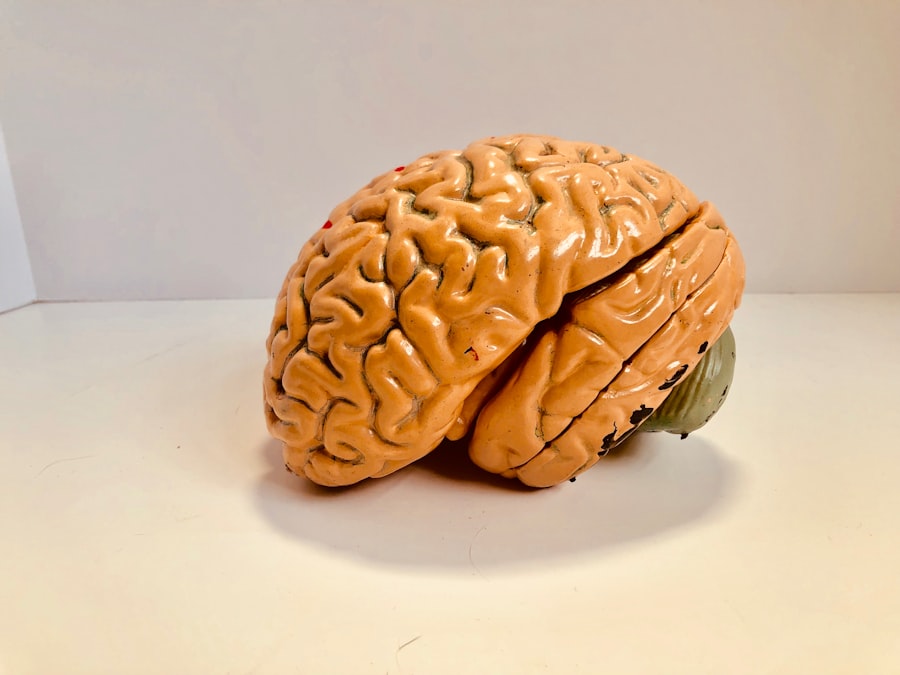
Dark matter is one of the most enigmatic components of the universe. Although it cannot be directly observed, its presence is inferred from its gravitational effects on visible matter. Dark matter constitutes approximately 27% of the universe’s total mass-energy content yet remains largely mysterious to scientists.
Its elusive nature raises questions about what lies beyond our current understanding of physics. In a similar vein, unconscious processes within the brain represent aspects of cognition that remain hidden from conscious awareness. Much like dark matter influences cosmic structures without being directly observable, unconscious thoughts and feelings shape behavior in ways that individuals may not fully comprehend.
These unconscious processes can include repressed memories or automatic responses shaped by past experiences. By exploring these hidden dimensions in both realms—dark matter in cosmology and unconscious processes in psychology—researchers can gain deeper insights into how unseen forces shape reality.
Quantum Physics and the Mind: Exploring the Connection
Quantum physics introduces a level of complexity that challenges conventional understandings of reality. At subatomic scales, particles behave in ways that defy classical physics—exhibiting properties such as superposition and entanglement. These phenomena raise profound questions about observation, consciousness, and reality itself.
Some theorists propose that consciousness may play a role in collapsing quantum states into observable realities. This intersection between quantum physics and consciousness invites intriguing parallels with brain function. The brain operates at a level where quantum effects may influence neural processes—suggesting that understanding consciousness may require insights from quantum mechanics.
Just as particles exist in multiple states until observed, thoughts may exist in potential forms until they are brought into conscious awareness. This connection between quantum physics and cognitive processes opens new avenues for exploring how reality is constructed at both cosmic and cognitive levels.
The Universe as a Source of Inspiration for Brain Research
The vastness of the universe serves as an endless source of inspiration for researchers studying the brain. The exploration of cosmic phenomena often parallels investigations into neural processes—both fields seek to understand complex systems governed by intricate interactions. For instance, studying how galaxies form and evolve can inform models of neural development and connectivity.
Moreover, advancements in technology used for astronomical observations have parallels in neuroimaging techniques employed to study brain activity. Tools such as functional magnetic resonance imaging (fMRI) allow researchers to visualize brain activity in real-time—much like telescopes reveal distant galaxies’ structures and movements. By drawing inspiration from cosmic research methodologies, neuroscientists can develop innovative approaches to understanding brain function.
Implications of the Universe Brain Analogy for Understanding Consciousness
The analogy between the universe and the brain carries significant implications for understanding consciousness—a topic that has perplexed philosophers and scientists for centuries. By viewing consciousness through this lens, one can consider it as an emergent property arising from complex interactions within neural networks akin to how cosmic phenomena emerge from interactions among celestial bodies. This perspective encourages interdisciplinary collaboration between neuroscience, psychology, philosophy, and cosmology—fostering a holistic approach to exploring consciousness’s nature.
By recognizing parallels between cognitive processes and cosmic dynamics, researchers can develop new frameworks for understanding how consciousness arises from intricate networks—whether they be neuronal or galactic.
Applying the Universe Brain Analogy to Artificial Intelligence
The universe-brain analogy also extends into the realm of artificial intelligence (AI). As researchers strive to create intelligent systems capable of mimicking human cognition, insights drawn from both cosmic structures and neural networks can inform AI development. For instance, algorithms inspired by neural connectivity patterns may enhance machine learning capabilities—allowing AI systems to adapt similarly to how brains learn from experiences.
Furthermore, understanding how complex systems operate—whether they be galaxies or neural networks—can guide ethical considerations surrounding AI development. As AI systems become increasingly sophisticated, recognizing their potential impact on society requires an awareness of how these technologies mirror human cognition while also diverging from it.
The Universe Brain Analogy as a Tool for Understanding the Mysteries of the Mind and the Cosmos
In conclusion, the analogy between the universe and the human brain serves as a powerful tool for exploring some of life’s most profound mysteries. By examining their complexities side by side—ranging from structural similarities to functional dynamics—researchers can gain valuable insights into consciousness, cognition, and existence itself. This analogy not only fosters interdisciplinary collaboration but also encourages innovative approaches to understanding both realms.
As humanity continues its quest for knowledge about both the cosmos and the mind, embracing this analogy may lead to breakthroughs that transcend traditional boundaries between disciplines. Ultimately, recognizing that both systems operate on principles of complexity, interconnectivity, and evolution can inspire future generations to explore new frontiers in science—unlocking secrets that lie at the intersection of thought and existence.
The universe brain analogy offers a fascinating perspective on the interconnectedness of knowledge and consciousness, likening the vast expanse of the universe to a complex neural network. For a deeper exploration of this concept, you can read more in the related article found at this link. This article delves into the implications of viewing the universe as a cognitive entity, providing insights into how our understanding of the cosmos can shape our perception of intelligence and awareness.
WATCH THIS! The 27-Order-of-Magnitude Secret That Connects Your Brain to the Cosmos
FAQs
What is the universe brain analogy?
The universe brain analogy is a conceptual comparison that likens the structure and functioning of the universe to that of a brain. It suggests that the universe operates in a way similar to neural networks, with interconnected systems processing information and exhibiting complex behavior.
Who proposed the universe brain analogy?
The analogy has been discussed by various scientists, philosophers, and thinkers over time. It is not attributed to a single individual but is a metaphor used in cosmology, neuroscience, and philosophy to explore the nature of the universe and consciousness.
How does the universe resemble a brain?
The universe resembles a brain in terms of its network-like structure, where galaxies and cosmic filaments form interconnected systems similar to neurons and synapses. Both systems process information, adapt, and exhibit emergent properties from complex interactions.
Is the universe literally a brain?
No, the universe is not literally a brain. The analogy is metaphorical, used to help understand complex cosmic phenomena by comparing them to the more familiar structure and function of a brain.
What scientific fields study the universe brain analogy?
The analogy is explored in fields such as cosmology, theoretical physics, neuroscience, and philosophy of mind. Researchers use it to investigate the nature of consciousness, information processing, and the fundamental structure of reality.
Does the universe brain analogy imply consciousness in the universe?
The analogy raises philosophical questions about whether the universe could possess a form of consciousness or self-awareness. However, this remains speculative and is not supported by empirical evidence.
How does the analogy help in understanding the universe?
By comparing the universe to a brain, scientists and thinkers can use concepts from neuroscience, such as networks and information processing, to model cosmic phenomena and explore the emergence of complexity in the universe.
Are there any criticisms of the universe brain analogy?
Yes, some critics argue that the analogy oversimplifies the universe’s complexity and may lead to anthropomorphizing cosmic structures. It is important to recognize it as a metaphor rather than a literal description.
Can the universe brain analogy be tested scientifically?
While aspects of the analogy can inspire scientific models and hypotheses, the idea of the universe as a brain is largely conceptual and philosophical, making it difficult to test directly through experiments.
Where can I learn more about the universe brain analogy?
You can explore scientific literature on cosmology and neuroscience, philosophical texts on consciousness, and popular science books or articles that discuss the metaphor and its implications for understanding the universe.