
In the realm of theoretical physics, the concepts of Planck length and spacetime pixels represent a frontier where the known laws of physics begin to blur. The Planck length, a minuscule unit of measurement, is derived from fundamental constants and is believed to be the smallest scale at which the fabric of spacetime can be understood. It is approximately \(1.6 \times 10^{-35}\) meters, a distance so small that it challenges the imagination.
This scale is not merely a number; it signifies a threshold beyond which classical notions of space and time cease to apply, giving way to a quantum reality that remains largely uncharted. Spacetime pixels, on the other hand, are a conceptual framework that suggests spacetime itself may be quantized into discrete units, much like pixels in a digital image. This idea posits that the continuous nature of spacetime, as described by Einstein’s theory of relativity, might be an illusion at the most fundamental level.
By examining these two concepts together, physicists hope to unlock deeper insights into the nature of reality, potentially leading to a unified theory that reconciles quantum mechanics with general relativity.
Key Takeaways
- Plank length is the smallest possible length in the universe, according to quantum physics, and is a fundamental constant in the fabric of spacetime.
- Understanding spacetime pixels involves the concept of breaking down the fabric of the universe into tiny, indivisible units, similar to pixels on a screen.
- The relationship between plank length and spacetime pixels provides insights into the nature of the universe at the smallest scales and may hold the key to understanding quantum gravity.
- The implications of plank length and spacetime pixels in cosmology are far-reaching, potentially impacting our understanding of the Big Bang, black holes, and the structure of the universe.
- Theoretical and experimental approaches to studying plank length and spacetime pixels face significant challenges, including the limitations of current technology and the need for new theoretical frameworks.
The Concept of Planck Length in Quantum Physics
The Planck length emerges from a combination of three fundamental constants: the speed of light, the gravitational constant, and Planck’s constant. This unique combination yields a length scale that is pivotal in quantum physics. At this scale, the effects of quantum gravity become significant, and traditional physics begins to falter.
The implications of this length are profound; it suggests that space and time may not be continuous but rather composed of discrete units. In quantum physics, the Planck length serves as a boundary where our current understanding of the universe is challenged. Theories such as string theory and loop quantum gravity attempt to describe phenomena at this scale, suggesting that particles may not be point-like but rather one-dimensional strings or loops.
These theories propose that at the Planck length, spacetime itself may exhibit fluctuations, leading to a foamy structure that defies classical intuition. This foamy nature of spacetime could have far-reaching consequences for our understanding of black holes, the Big Bang, and the very fabric of reality.
Understanding Spacetime Pixels in the Fabric of the Universe
The notion of spacetime pixels introduces a revolutionary perspective on how we perceive the universe. If spacetime is indeed quantized into discrete units, it implies that there exists a fundamental granularity to reality itself. This idea challenges the classical view that space and time are smooth and continuous, suggesting instead that they may be composed of tiny, indivisible units akin to pixels in a digital image.
Each pixel would represent a specific point in spacetime, contributing to the overall tapestry of the universe. This concept has profound implications for our understanding of physical laws. If spacetime is pixelated, then events in the universe may not unfold in a continuous manner but rather in discrete steps.
This could lead to new insights into phenomena such as time dilation and gravitational waves, as well as provide a framework for understanding how information is processed in the universe. The idea of spacetime pixels invites physicists to rethink fundamental questions about causality and the nature of existence itself.
The Relationship Between Planck Length and Spacetime Pixels
| Planck Length | Spacetime Pixels |
|---|---|
| 1.616255(18)×10^-35 meters | 10^69 |
The relationship between Planck length and spacetime pixels is intrinsic and foundational.
Each pixel can be thought of as having dimensions on the order of the Planck length, suggesting that all physical processes occur within this discrete framework.
This relationship implies that at scales approaching the Planck length, traditional concepts of distance and time may break down entirely. Moreover, this connection raises intriguing questions about how information is encoded within these spacetime pixels. If spacetime is indeed composed of discrete units, then it follows that all physical phenomena—ranging from particle interactions to cosmic events—are fundamentally linked through these pixels.
Implications of Planck Length and Spacetime Pixels in Cosmology
The implications of Planck length and spacetime pixels extend far beyond theoretical physics; they resonate deeply within cosmology. Understanding these concepts could shed light on the early universe’s conditions during the Big Bang when spacetime was likely dominated by quantum effects. At such extreme scales, traditional cosmological models may need to be revised or replaced with new frameworks that incorporate the quantized nature of spacetime.
Furthermore, these ideas could influence our understanding of black holes and their singularities. If spacetime is pixelated at the Planck scale, then singularities may not represent points of infinite density but rather regions where our current theories fail to apply. This could lead to new models for black hole evaporation and information retention, challenging long-held beliefs about what happens when matter crosses an event horizon.
Theoretical and Experimental Approaches to Studying Planck Length and Spacetime Pixels
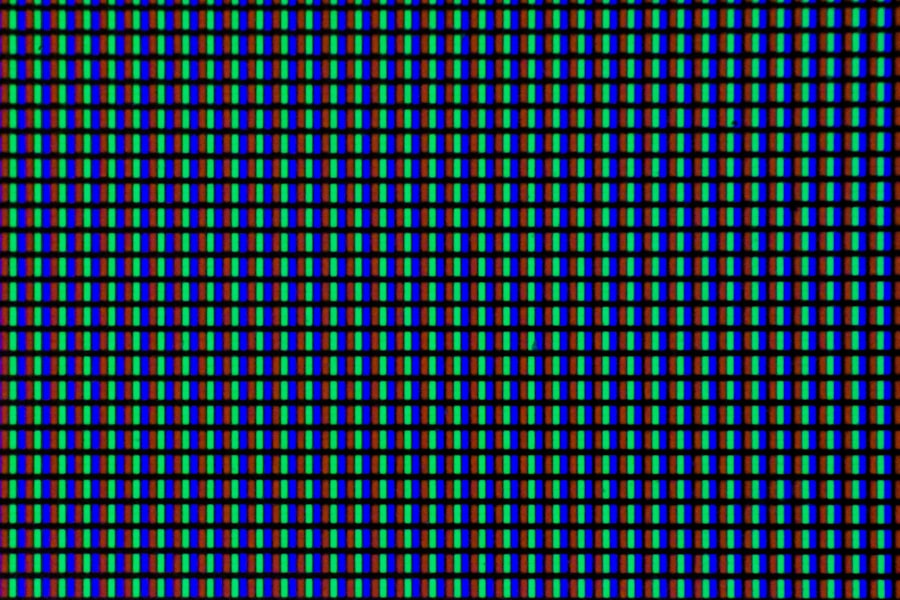
The exploration of Planck length and spacetime pixels requires both theoretical innovation and experimental ingenuity. On the theoretical side, physicists are developing frameworks such as loop quantum gravity and string theory to describe phenomena at these minuscule scales. These theories aim to unify general relativity with quantum mechanics by incorporating the concept of quantized spacetime into their formulations.
Experimentally, however, probing the Planck length presents significant challenges due to its incredibly small scale. Current particle accelerators operate at energies far below what would be necessary to directly observe effects at this level. Nevertheless, researchers are exploring indirect methods for testing these theories through high-energy cosmic events or by studying gravitational waves produced by colliding black holes.
Such experiments could provide crucial evidence supporting or refuting the existence of spacetime pixels and their relationship with Planck length.
Challenges in Measuring and Observing Planck Length and Spacetime Pixels
Measuring phenomena at the Planck scale poses formidable challenges for scientists. The primary difficulty lies in the fact that current technology cannot reach energies or resolutions sufficient to observe effects at this minuscule scale directly. The Planck length is so small that any attempt to measure it using conventional methods would require instruments far beyond our current capabilities.
Additionally, even if experimental setups could be devised to probe this scale, interpreting results would be fraught with complexity. Theoretical models predicting behavior at the Planck scale often involve intricate mathematics and assumptions that may not hold true under experimental scrutiny. As such, researchers must navigate a landscape filled with uncertainty while striving to develop innovative techniques for exploring these elusive concepts.
The Role of Planck Length and Spacetime Pixels in Quantum Gravity
In the quest for a theory of quantum gravity, both Planck length and spacetime pixels play pivotal roles. Quantum gravity seeks to reconcile general relativity’s description of gravity with quantum mechanics’ probabilistic nature. At scales approaching the Planck length, gravitational effects become intertwined with quantum phenomena, necessitating a new framework for understanding their interplay.
The concept of spacetime pixels offers a potential pathway toward achieving this reconciliation by suggesting that spacetime itself is quantized. This perspective aligns with various approaches in quantum gravity research, which posit that gravity may emerge from more fundamental interactions occurring at these discrete scales. By investigating how these concepts interact, physicists hope to uncover a deeper understanding of gravity’s role in shaping the universe.
Applications of Planck Length and Spacetime Pixels in Astrophysics
The implications of Planck length and spacetime pixels extend into astrophysics as well, influencing our understanding of cosmic phenomena such as black holes, neutron stars, and even dark matter. For instance, if black holes are indeed governed by principles related to quantized spacetime, this could lead to new insights into their formation and behavior. Moreover, understanding how spacetime behaves at these scales could provide clues about dark matter’s elusive nature.
If dark matter interacts with ordinary matter through mechanisms influenced by quantum gravity effects at the Planck scale, it may open new avenues for research aimed at detecting this mysterious substance.
The Future of Research on Planck Length and Spacetime Pixels
As research continues into Planck length and spacetime pixels, physicists remain optimistic about uncovering new insights into the universe’s fundamental nature. Advances in technology may eventually allow for more precise measurements and observations at these scales, paving the way for breakthroughs in our understanding of quantum gravity and cosmology. Furthermore, interdisciplinary collaboration between physicists, mathematicians, and computer scientists will likely play a crucial role in advancing research in this area.
By combining theoretical models with computational simulations and experimental data, researchers can develop more comprehensive frameworks for exploring these complex concepts.
Unraveling the Mysteries of the Universe through Planck Length and Spacetime Pixels
In conclusion, the exploration of Planck length and spacetime pixels represents an exciting frontier in modern physics. These concepts challenge existing paradigms and offer new perspectives on fundamental questions about reality’s nature. As researchers continue to investigate these ideas through theoretical frameworks and experimental approaches, they inch closer to unraveling some of the universe’s most profound mysteries.
The journey toward understanding Planck length and spacetime pixels is not merely an academic pursuit; it holds the potential to reshape humanity’s comprehension of existence itself. By delving into these enigmatic realms, physicists aspire to bridge gaps between quantum mechanics and general relativity while illuminating the intricate tapestry that constitutes our universe.
In exploring the fascinating concepts of plank length and spacetime pixels, one can gain deeper insights by reading the related article on the fundamental nature of spacetime. This article delves into how these tiny units of measurement could revolutionize our understanding of the universe. For more information, you can check out the article [here](https://www.mycosmicventures.com/sample-page/).
WATCH THIS! The Universe Stops Rendering When You Stop Looking (It’s Not a Metaphor)
FAQs
What is the plank length?
The Planck length is the smallest possible length in the universe, according to the theory of quantum mechanics. It is approximately 1.616229(38) x 10^-35 meters.
What are spacetime pixels?
Spacetime pixels are hypothetical units of space and time that are thought to make up the fabric of the universe at the smallest scales. They are often discussed in the context of theories that attempt to reconcile quantum mechanics and general relativity.
How are plank length and spacetime pixels related?
The concept of spacetime pixels is related to the idea that at the Planck length scale, spacetime becomes “grainy” or quantized, similar to how an image becomes pixelated at a certain level of magnification. Some theories suggest that spacetime pixels could be the fundamental building blocks of the universe at the smallest scales.
Can we observe the plank length or spacetime pixels directly?
As of now, we do not have the technological capability to directly observe the Planck length or spacetime pixels. These concepts are theoretical and are based on the current understanding of quantum mechanics and general relativity.