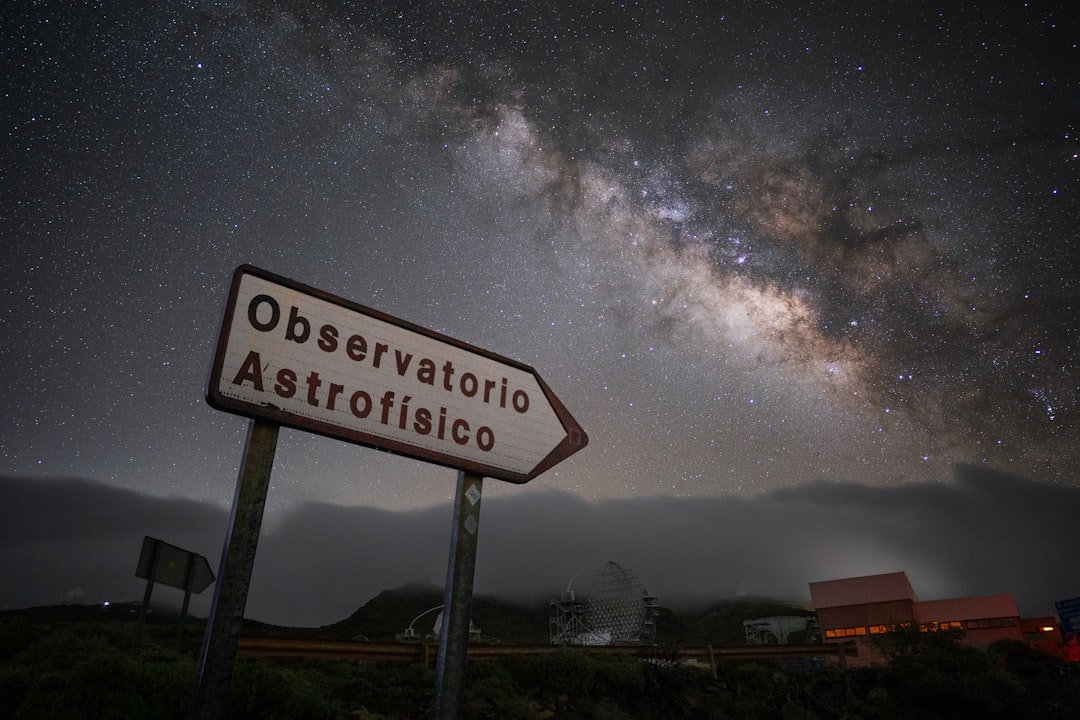
The cosmic horizon represents a boundary that delineates the limits of what can be observed in the universe. This boundary is not a physical barrier but rather a consequence of the finite speed of light and the age of the universe. As light travels through space, it takes time to reach observers on Earth, meaning that there are regions of the universe from which light has not yet had enough time to arrive.
Consequently, the cosmic horizon defines a sphere around an observer, encompassing all the celestial objects whose light has reached them since the beginning of time. This concept is crucial for understanding the observable universe, as it sets the stage for what can be studied and understood. The cosmic horizon is often described in terms of its distance, which is approximately 46.5 billion light-years from Earth.
This distance is not merely a measure of space but also a reflection of time, as it accounts for the expansion of the universe since the Big Bang. The implications of this horizon are profound; it suggests that there are regions of the universe that remain forever inaccessible to observation. As such, the cosmic horizon serves as a reminder of the limitations inherent in human understanding and the vastness of the cosmos that lies beyond our reach.
Key Takeaways
- The cosmic horizon represents the boundary beyond which we cannot observe the universe.
- Scientists define the observable universe as the portion of the universe that we can potentially observe from Earth.
- Observing the universe is limited by factors such as the speed of light and the age of the universe.
- The expansion of the universe is understood through the observation of redshift in distant galaxies.
- Dark matter and dark energy play crucial roles in shaping the observable universe.
- The cosmic microwave background radiation provides valuable insights into the early universe.
- Extragalactic objects at the edge of the observable universe offer clues about the universe’s history.
- Theoretical models explore the possibility of a universe beyond the cosmic horizon.
- Future discoveries beyond the observable universe hold great potential for advancing our understanding of the cosmos.
- The edge of the observable universe raises profound philosophical and existential questions about our place in the universe.
How Scientists Define the Observable Universe
Scientists define the observable universe as the portion of the entire universe that can be seen or detected from Earth, given the constraints imposed by the speed of light and the age of the universe. This definition is rooted in both observational astronomy and theoretical physics, as it combines empirical data with models of cosmic evolution. The observable universe encompasses all galaxies, stars, and other celestial phenomena whose light has had time to travel to Earth since the Big Bang, approximately 13.8 billion years ago.
To quantify this observable region, astronomers utilize various techniques, including redshift measurements and cosmic distance ladders. Redshift occurs when light from distant objects shifts toward longer wavelengths due to the expansion of space. By measuring this shift, scientists can infer how far away an object is and how fast it is moving away from us.
This information allows them to map out the observable universe and understand its structure and composition. However, it is essential to note that while scientists can define and measure this observable region, they acknowledge that it represents only a fraction of the entire universe, which may extend far beyond what is currently visible.
The Limitations of Observing the Universe

Despite advancements in technology and observational techniques, there are inherent limitations to observing the universe. One significant constraint is the finite speed of light, which means that observers can only see objects whose light has reached them within the age of the universe. This limitation implies that there are countless celestial bodies and phenomena that exist beyond the cosmic horizon, forever hidden from view.
As a result, astronomers must rely on indirect methods and theoretical models to infer properties about these unreachable regions. Additionally, cosmic events such as cosmic inflation and dark energy complicate observations further. The rapid expansion of space during inflation means that some regions are receding from us faster than light can travel, rendering them unobservable.
Furthermore, dark energy, which is believed to drive the accelerated expansion of the universe, adds another layer of complexity to our understanding. As scientists strive to comprehend these limitations, they are continually challenged to refine their models and develop new technologies that may one day allow for deeper insights into the cosmos.
Understanding the Expansion of the Universe
| Topic | Data/Metric |
|---|---|
| Hubble’s Law | Velocity of galaxies proportional to their distance from Earth |
| Redshift | Measure of how much light from distant objects has been stretched to longer wavelengths |
| Expansion Rate | Hubble constant: 70 km/s/Mpc |
| Dark Energy | Estimated to contribute to 68% of the total energy density of the universe |
The expansion of the universe is a fundamental concept in cosmology that describes how galaxies are moving away from each other over time.
This observation led to the formulation of Hubble’s Law, which states that the farther away a galaxy is, the faster it appears to be receding.
The expansion is not merely a movement through space; rather, it is space itself that is expanding. Understanding this expansion requires a grasp of general relativity, which describes how mass and energy influence the curvature of spacetime. As space expands, it stretches the wavelengths of light traveling through it, resulting in redshifted light from distant galaxies.
This expansion has profound implications for cosmology, suggesting that the universe had a beginning—a moment known as the Big Bang—after which it has been continuously expanding. The rate of this expansion is still a subject of active research, with scientists investigating factors such as dark energy’s role in accelerating this process.
The Role of Dark Matter and Dark Energy in the Observable Universe
Dark matter and dark energy are two enigmatic components that play crucial roles in shaping the observable universe. Dark matter is thought to account for approximately 27% of the universe’s total mass-energy content, yet it does not emit or interact with electromagnetic radiation in any detectable way. Its presence is inferred through gravitational effects on visible matter, such as galaxies and galaxy clusters.
Observations reveal that galaxies rotate at speeds that would cause them to fly apart if only visible matter were present; thus, dark matter provides the necessary gravitational glue to hold these structures together. On the other hand, dark energy constitutes about 68% of the universe’s total energy density and is believed to be responsible for its accelerated expansion. While its exact nature remains elusive, dark energy acts as a repulsive force counteracting gravity on cosmological scales.
The discovery of dark energy has transformed our understanding of cosmology and raised new questions about the ultimate fate of the universe. Together, dark matter and dark energy form a significant part of modern cosmological models, influencing everything from galaxy formation to large-scale structure.
Exploring the Cosmic Microwave Background Radiation

The cosmic microwave background radiation (CMB) is one of the most significant pieces of evidence supporting the Big Bang theory. This faint glow permeates the entire universe and represents relic radiation from an early hot phase shortly after the Big Bang occurred. As space expanded and cooled, photons decoupled from matter approximately 380,000 years post-Big Bang, allowing them to travel freely through space.
Today, these photons are observed as a uniform background radiation with a temperature of about 2.7 Kelvin. The CMB provides invaluable information about the early universe’s conditions and has been instrumental in shaping our understanding of cosmology. Detailed measurements from missions like NASA’s Wilkinson Microwave Anisotropy Probe (WMAP) and ESA’s Planck satellite have revealed tiny fluctuations in temperature across the CMThese fluctuations correspond to density variations in matter at that time and ultimately led to galaxy formation.
By studying these patterns, scientists can glean insights into fundamental parameters such as the universe’s age, composition, and curvature.
The Search for Extragalactic Objects at the Edge of the Observable Universe
As astronomers push the boundaries of their observational capabilities, they increasingly focus on extragalactic objects located at or near the edge of the observable universe. These distant galaxies provide critical insights into cosmic evolution and help researchers understand how structures formed in an expanding universe. Telescopes equipped with advanced technology allow scientists to peer deeper into space than ever before, revealing galaxies that existed billions of years ago.
One notable endeavor in this search involves identifying high-redshift galaxies—those whose light has taken an extensive journey through expanding space before reaching Earth. By studying these ancient galaxies, astronomers can piece together a timeline of cosmic history and gain insights into star formation rates and galactic evolution during different epochs. However, observing these distant objects presents challenges due to their faintness and redshifted light; thus, researchers must employ innovative techniques such as gravitational lensing to enhance their observations.
Theoretical Models of the Universe Beyond the Cosmic Horizon
Theoretical models exploring what lies beyond the cosmic horizon have captivated cosmologists for decades. While direct observation remains impossible due to light’s finite speed, various hypotheses attempt to describe potential structures or phenomena beyond this boundary. Some theories propose that our observable universe is just one bubble within a vast multiverse—a collection of universes with varying physical laws and constants.
Other models suggest that regions beyond our cosmic horizon may contain different forms of matter or even entirely distinct physical laws governing their behavior. These ideas challenge conventional notions about reality and raise questions about causality and existence itself. While these theories remain speculative without empirical evidence, they stimulate discussions about fundamental aspects of cosmology and encourage researchers to think creatively about what lies beyond our current understanding.
The Potential for Future Discoveries Beyond the Observable Universe
As technology advances and observational techniques improve, there exists immense potential for future discoveries beyond the observable universe’s limits. Upcoming telescopes like NASA’s James Webb Space Telescope (JWST) promise to revolutionize our understanding by capturing unprecedented details about distant galaxies and cosmic phenomena. With enhanced sensitivity and resolution capabilities, these instruments may uncover new insights into galaxy formation during epochs previously thought unreachable.
Moreover, advancements in theoretical physics may lead to novel frameworks for understanding what lies beyond our cosmic horizon. Concepts such as quantum gravity or string theory could provide new perspectives on fundamental questions regarding space-time structure and connectivity between different regions of existence. As researchers continue to explore these frontiers, they may uncover phenomena that challenge existing paradigms or reveal entirely new aspects of reality.
Implications for Cosmology and Astrophysics
The exploration of boundaries within cosmology has profound implications for both theoretical frameworks and observational practices in astrophysics. Understanding concepts like cosmic horizons shapes how scientists approach questions about structure formation, dark matter interactions, and cosmic evolution over time scales spanning billions of years. It encourages interdisciplinary collaboration between physicists, astronomers, mathematicians, and philosophers as they grapple with complex ideas about existence itself.
Furthermore, grappling with limitations imposed by observation fosters humility within scientific inquiry—reminding researchers that despite remarkable progress made thus far; there remains much yet unknown about our universe’s nature beyond what can be seen or measured directly.
The Philosophical and Existential Questions Raised by the Edge of the Observable Universe
The edge of the observable universe raises profound philosophical and existential questions about humanity’s place within an incomprehensibly vast cosmos. As individuals contemplate their existence against this backdrop—where countless stars twinkle across infinite distances—they may grapple with feelings ranging from awe to insignificance. Questions arise regarding whether life exists elsewhere in this expansive realm or if humanity stands alone amid an ocean of stars.
Moreover, pondering what lies beyond our cosmic horizon invites reflections on concepts such as time itself—does it extend infinitely? Are there realms where different physical laws govern existence? Such inquiries challenge conventional notions about reality while prompting deeper explorations into consciousness itself—what does it mean to be aware within such an expansive framework?
Ultimately, these philosophical musings serve as reminders that while science seeks answers through empirical investigation; some questions may remain forever elusive—inviting contemplation about humanity’s role within this grand tapestry woven across time and space.
The edge of the observable universe is a fascinating topic that delves into the limits of our cosmic horizon and the mysteries that lie beyond. For those interested in exploring this subject further, you can read a related article that discusses the implications of the observable universe and what it means for our understanding of space and time. Check it out here: The Edge of the Observable Universe.
WATCH THIS! The Universe Stops Rendering When You Stop Looking (It’s Not a Metaphor)
FAQs
What is the observable universe?
The observable universe is the part of the universe that we can see from Earth. It is the portion of the universe that light has had enough time to reach us since the Big Bang.
What is the edge of the observable universe?
The edge of the observable universe is the farthest distance from which light has had enough time to reach us since the beginning of the universe. This is currently estimated to be about 46.5 billion light-years away.
What lies beyond the edge of the observable universe?
It is currently unknown what lies beyond the edge of the observable universe. Some theories suggest that there may be more universe beyond what we can see, while others propose that the universe may be finite and wrap around on itself.
How do we know the edge of the observable universe?
Scientists use the expansion of the universe and the speed of light to calculate the distance to the edge of the observable universe. By measuring the redshift of distant galaxies, they can estimate how far light has traveled to reach us.
Can we ever reach the edge of the observable universe?
Due to the expansion of the universe and the limitations of the speed of light, it is currently not possible for us to reach the edge of the observable universe. The universe is expanding faster than the speed of light, making it unreachable.