The dust mote, carrying secrets from the dawn of the solar system, was hurtling towards Earth. After a seven-year, three-billion-mile journey through the interstellar void, NASA’s Stardust mission was about to culminate in a fiery, yet controlled, descent. This wasn’t just another spacecraft returning; it was a tiny capsule, smaller than a microwave oven, tasked with delivering precious cosmic dust back to Earth for scientific analysis. The Stardust atmospheric entry was a meticulously planned event, a testament to human ingenuity and the insatiable desire to understand our origins. It was a spectacular return, a blazing testament to a mission that had dared to reach out into the darkness and bring back tangible pieces of the universe.
The Stardust mission, launched in February 1999, was an ambitious undertaking designed to capture and return samples of dust from beyond Earth’s orbit. Its primary target was comet Wild 2, a celestial wanderer whose icy body harbored pristine material from the formation of the solar system, approximately 4.6 billion years ago. The spacecraft was equipped with a revolutionary aerogel collector, a material that resembled solidified smoke and was specifically engineered to gently ensnare the microscopic dust particles without damaging their delicate structures. This wasn’t a simple flyby; Stardust had to navigate the turbulent environment around the comet, a region teeming with fast-moving debris, to collect its precious cargo.
The Genesis of Stardust: A Quest for Primordial Matter
The scientific rationale behind the Stardust mission was rooted in the fundamental questions about the formation of our solar system. Scientists hypothesized that comets, being icy remnants from the early solar nebula, held unadulterated clues about the composition of the material that coalesced to form the Sun, planets, and everything in between. Unlike asteroids, which have undergone significant geological processing, comets were believed to have preserved their original composition, offering a direct window into the primordial soup from which our planetary system emerged. The Stardust mission was conceived as a means to physically retrieve these ancient relics for in-depth laboratory analysis, a feat that could not be replicated by remote sensing alone.
Early Concepts and Technological Hurdles
The idea of returning comet dust to Earth was not new, but the technological challenges were immense. Capturing hypervelocity dust particles without vaporizing them required a material with an incredibly low density and an open, porous structure. After extensive research and development, aerogel emerged as the ideal candidate. Its unique properties allowed it to absorb the kinetic energy of the impacting dust particles, effectively trapping them within its matrix. However, manufacturing aerogel in the required quantities and ensuring its stability in the harsh conditions of space presented significant engineering hurdles.
The Spacecraft and its Scientific Payload
The Stardust spacecraft itself was a marvel of engineering, designed for a long and arduous journey. It incorporated a suite of instruments, including the aerogel collector, star trackers for precise navigation, and a camera for imaging the comet and its surroundings. The spacecraft’s propulsion system was critical for maneuvering through the vastness of space, making the necessary course corrections to intercept comet Wild 2 and, eventually, to set it on a trajectory back to Earth. The scientific payload was carefully chosen to maximize the chances of success in capturing and returning the desired samples.
The Comet Wild 2 Encounter: A Daring Dive into the Unknown
In January 2004, after years of interplanetary travel, Stardust reached its target: comet Wild 2. The encounter was a nerve-wracking yet exhilarating period for the mission control team. The spacecraft had to navigate through the comet’s coma, the hazy atmosphere surrounding its nucleus, which is filled with gas and dust. This was a particularly hazardous phase, as even microscopic dust particles could pose a significant threat to the spacecraft’s integrity. Despite the risks, Stardust successfully executed its flyby, collecting thousands of dust particles within its aerogel collector.
The Challenge of the Cometary Environment
Comet Wild 2 presented a formidable challenge. Its nucleus is known to be highly active, spewing out gas and dust at a high rate. The coma, therefore, is a turbulent region, filled with particles traveling at speeds of tens of kilometers per second. Navigating this environment required precise maneuvering and a robust spacecraft design. The risk of impact with larger debris was a constant concern, and the mission team had to develop sophisticated trajectory planning to minimize these dangers.
Capturing the Pristine Samples
The core of the scientific objective was the successful capture of cometary dust. The aerogel collector, deployed as Stardust approached the comet, acted like a cosmic net. As the particles impacted the aerogel, they became embedded within its structure, their original composition preserved. The collection phase was critical; any failure in the collector’s design or deployment would have rendered the mission’s primary goal unachievable. The success of this phase was a direct result of years of meticulous design and rigorous testing.
The Long Voyage Home: A Capsule on a Return Course
Following the comet encounter, Stardust’s mission transitioned to its return phase. The spacecraft, now carrying its precious cargo, began the long journey back to Earth. The return trajectory was carefully calculated to ensure that the sample return capsule would enter Earth’s atmosphere at the correct angle and speed for a successful landing. The spacecraft itself would continue on a trajectory to fly past Earth and then into orbit around the Sun.
Preparing the Sample Return Capsule
The sample return capsule (SRC) was a vital component of the Stardust spacecraft. It was designed to withstand the extreme conditions of atmospheric entry. Aerodynamic shielding was a critical element, protecting the precious dust samples from the intense heat generated during re-entry. The capsule was also equipped with parachutes to ensure a soft landing in the designated recovery zone. The design of the SRC was a painstaking process, involving simulations and extensive testing to ensure its resilience.
The Interstellar Cruise and Trajectory Adjustments
The journey back to Earth was not a simple straight line. Stardust had to make several course corrections to fine-tune its trajectory. These maneuvers, executed with precise thruster firings, ensured that the SRC would arrive at Earth at the optimal time and angle for re-entry. The spacecraft also conducted further scientific observations during its cruise phase, gathering additional data about the interstellar medium. The long duration of this phase allowed for meticulous planning of the final descent.
The NASA Stardust mission, which successfully collected samples from a comet and returned them to Earth, has sparked significant interest in the study of cosmic materials and their implications for understanding the solar system’s formation. For those looking to delve deeper into the fascinating details of atmospheric entry and sample collection, a related article can be found at My Cosmic Ventures, which explores the technological advancements and scientific discoveries stemming from this groundbreaking mission.
The Fiery Descent: A Controlled Plunge Through Earth’s Atmosphere
The moment of truth arrived on January 15, 2006. After its long journey, the Stardust sample return capsule separated from the main spacecraft and began its fiery descent into Earth’s atmosphere. This was the most critical phase of the mission, a meticulously orchestrated event designed to safely deliver the cosmic dust to the surface. The capsule, resembling a shooting star, blazed through the sky, a testament to the intense forces at play.
The Art of Atmospheric Entry: Harnessing the Power of Friction
Atmospheric re-entry is a delicate dance between speed, angle, and the Earth’s atmosphere. The Stardust SRC was designed to enter the atmosphere at a specific velocity and angle to generate sufficient aerodynamic drag to slow it down, while also dissipating the immense heat generated by friction. Too steep an angle, and the capsule would burn up; too shallow, and it would skip off the atmosphere. The precisely calculated trajectory was paramount to the mission’s success.
Understanding Aerodynamic Heating
As the SRC plunged into the atmosphere at speeds exceeding 28,000 miles per hour, the air molecules in front of it became compressed and superheated, creating a plasma sheath around the capsule. This intense heat, generated by friction, could easily destroy an unprotected spacecraft. The SRC’s heat shield, made of advanced ablative materials, was designed to absorb this heat by slowly vaporizing, carrying the thermal energy away from the capsule and its precious cargo.
Navigating the Plasma Sheath
The plasma sheath surrounding the re-entering capsule presented challenges for communication. Radio signals could be disrupted or even blocked by the ionized gas. Mission control had to carefully monitor the capsule’s telemetry, relying on the carefully timed release of its parachutes to ensure a successful landing. The brief but intense period within the plasma sheath was a testament to the extreme conditions the SRC was engineered to withstand.
NASA’s Stardust mission, which successfully collected samples from a comet and returned them to Earth, has been a topic of great interest, particularly regarding its atmospheric entry. For those looking to delve deeper into the intricacies of this mission, a related article can provide valuable insights into the challenges and successes faced during the re-entry process. You can read more about it in this informative piece on cosmic exploration at My Cosmic Ventures.
The Separation and Descent Sequence: A Symphony of Engineering
Hours before re-entry, the SRC detached from the Stardust spacecraft. This separation was a clean, precise event, sending the capsule on its independent plunge towards Earth. Once within the atmosphere, a series of programmed events unfolded, each crucial for a safe landing. This sequence was designed with multiple redundancies, ensuring that even if one component failed, the mission could still succeed.
The Drogue Parachute Deployment
At a specific altitude and velocity, the capsule deployed a small drogue parachute. This parachute’s primary function was to further stabilize the capsule and reduce its speed. It was a critical intermediate step before the deployment of the main parachutes, ensuring that the capsule was in the correct orientation for the next phase of deceleration.
The Main Parachute Deployment and Soft Landing
The final and most crucial deceleration phase involved the deployment of the main parachutes. These large, robust parachutes were designed to drastically slow the capsule’s descent to a safe landing speed. The culmination of this sequence was a soft landing in the Utah desert, a testament to the precision and reliability of the engineering involved. The sight of the small capsule gently settling onto the desert floor was a moment of immense relief and triumph for the mission team.
Recovery and Analysis: Unlocking the Secrets of the Early Solar System
The successful landing of the Stardust SRC marked the beginning of a new chapter: the meticulous recovery and analysis of the collected samples. The dust particles, now safely on Earth, held the potential to revolutionize our understanding of the early solar system. Scientists were eager to examine these pristine relics, to decipher the stories they held about the birth of planets and the origins of life.
The Secure Recovery Operation: Protecting Precious Cargo
Immediately following the landing, a specialized recovery team, equipped with specialized vehicles and containment protocols, was dispatched to the landing site. The primary objective was to locate, retrieve, and secure the SRC with utmost care. The dust particles were incredibly valuable and fragile, and any contamination could compromise the scientific integrity of the samples.
Locating and Securing the Capsule
The landing zone was a vast expanse of desert, making the precise location of the capsule crucial. Airborne reconnaissance and ground teams worked in tandem to pinpoint the SRC’s exact position. Once found, the capsule was carefully secured, preventing any accidental disturbance. The recovery team followed strict protocols to ensure that the samples remained pristine and uncontaminated.
Transporting the Samples to a Pristine Laboratory
The secured SRC was then transported to a specially designed cleanroom laboratory. This laboratory was meticulously controlled to prevent any terrestrial contamination of the extraterrestrial samples. The air was filtered, and personnel wore specialized suits to minimize the introduction of any foreign particles. The careful handling of the samples began the moment they were retrieved.
The Scientific Bonanza: Unveiling Cosmic Mysteries
Once the samples were safely in the laboratory, the painstaking process of analysis began. Scientists from around the world collaborated, employing a battery of advanced analytical techniques to study the cometary dust. Each dust grain, no bigger than a speck of dust on your desk, held a wealth of information.
Analyzing the Composition of Cometary Dust
Through techniques such as mass spectrometry and transmission electron microscopy, scientists were able to determine the elemental and isotopic composition of the dust particles. This revealed the presence of organic molecules, minerals, and other compounds that provided insights into the conditions present during the formation of the solar system. The analysis confirmed the presence of presolar grains, remnants of stars that existed before our Sun.
Unraveling the Secrets of Planetary Formation
The Stardust samples provided crucial data for refining models of planetary formation. By understanding the composition of cometary material, scientists could better understand the building blocks of planets, including Earth. The presence of water-bearing minerals and organic compounds also offered clues about the potential role of comets in delivering the ingredients for life to early Earth. The findings from Stardust have significantly advanced our understanding of this complex process.
Legacy and Future Prospects: A Foundation for Further Exploration
The Stardust mission was more than just a successful sample return; it was a pioneering effort that pushed the boundaries of space exploration and scientific discovery. Its achievements laid the groundwork for future missions and inspired a new generation of scientists and engineers. The techniques developed and the knowledge gained from Stardust continue to inform ongoing and future astrobiology and planetary science endeavors.
The Significance of Sample Return Missions
The Stardust mission underscored the immense value of physical sample return missions. While remote sensing is invaluable, the ability to bring samples back to Earth for detailed laboratory analysis provides a level of insight that is simply not achievable through observation alone. The Stardust SRC, a small vessel carrying the weight of cosmic history, proved that bringing pieces of the universe back to our planet is not only possible but profoundly illuminating.
Inspiring Future Interstellar Ventures
The success of Stardust has fueled ambitions for even more ambitious sample return missions. Plans are already underway for missions to collect samples from asteroids, Mars, and even the moons of outer planets. These future endeavors will build upon the technological innovations and scientific understanding gained from Stardust, pushing the frontiers of our exploration of the solar system and beyond. The lessons learned from Stardust are invaluable for the design and execution of these complex undertakings.
A Continued Quest for Cosmic Understanding
The dust motes that returned with Stardust are just a small glimpse into the vastness of the cosmos. The mission has ignited a continued quest for cosmic understanding, a relentless pursuit of knowledge that drives humanity to explore the unknown. The secrets unlocked by Stardust will undoubtedly pave the way for future discoveries, bringing us closer to answering fundamental questions about our place in the universe and the potential for life beyond Earth. The Stardust mission stands as a beacon of scientific achievement, a testament to humanity’s enduring curiosity and our unyielding drive to reach for the stars.
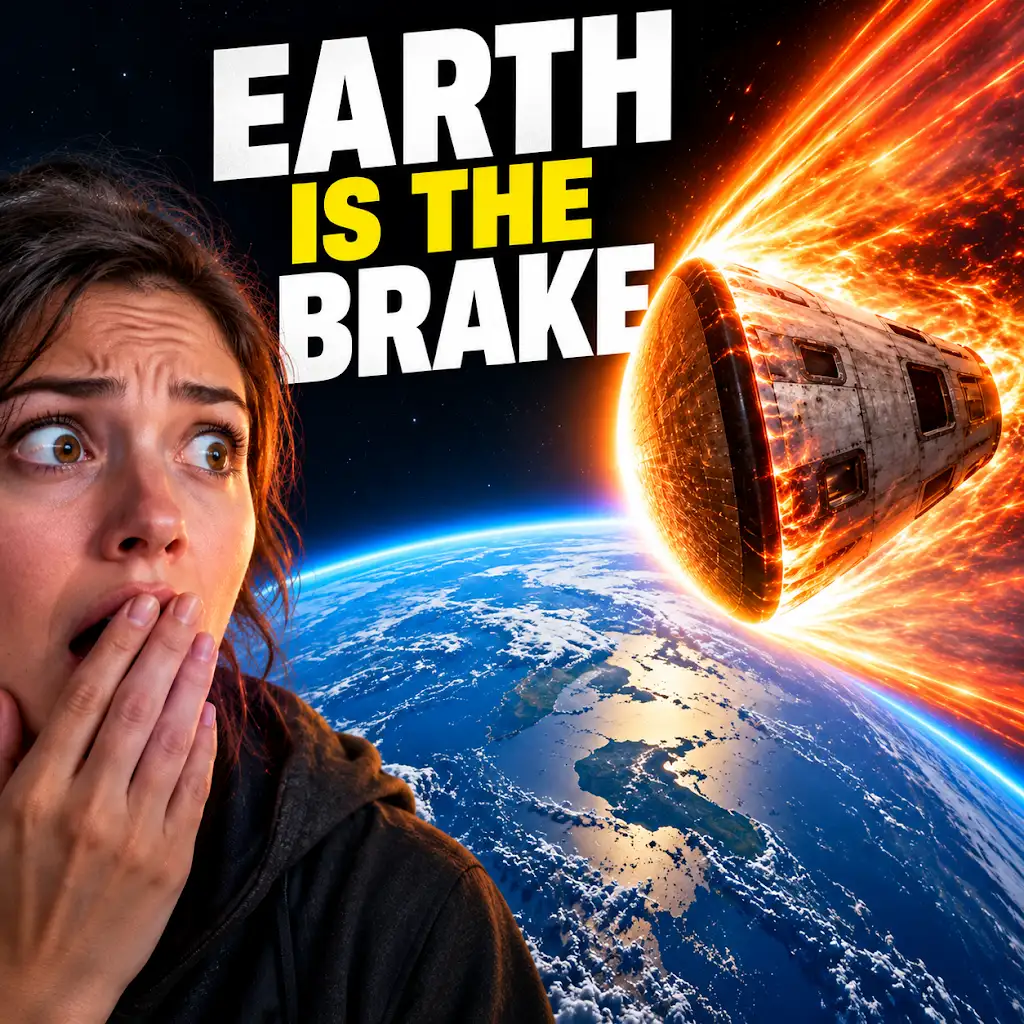
At 25,000 MPH, Earth Becomes the Brake — Here’s How They Survive
FAQs
What is the NASA Stardust mission?
The NASA Stardust mission was a space mission that aimed to collect samples of a comet’s coma and interstellar dust and return them to Earth for analysis.
What was the purpose of the atmospheric entry of the NASA Stardust capsule?
The purpose of the atmospheric entry of the NASA Stardust capsule was to safely return the collected samples from the comet’s coma and interstellar dust back to Earth.
How did the NASA Stardust capsule re-enter Earth’s atmosphere?
The NASA Stardust capsule re-entered Earth’s atmosphere at a speed of approximately 28,900 miles per hour, making it one of the fastest re-entries in history.
What precautions were taken to ensure the safe return of the NASA Stardust capsule?
To ensure the safe return of the NASA Stardust capsule, it was equipped with a heat shield to protect it from the intense heat generated during re-entry into Earth’s atmosphere.
What were the findings from the samples collected by the NASA Stardust mission?
The samples collected by the NASA Stardust mission provided valuable insights into the composition and origins of comets and interstellar dust, contributing to our understanding of the early solar system.