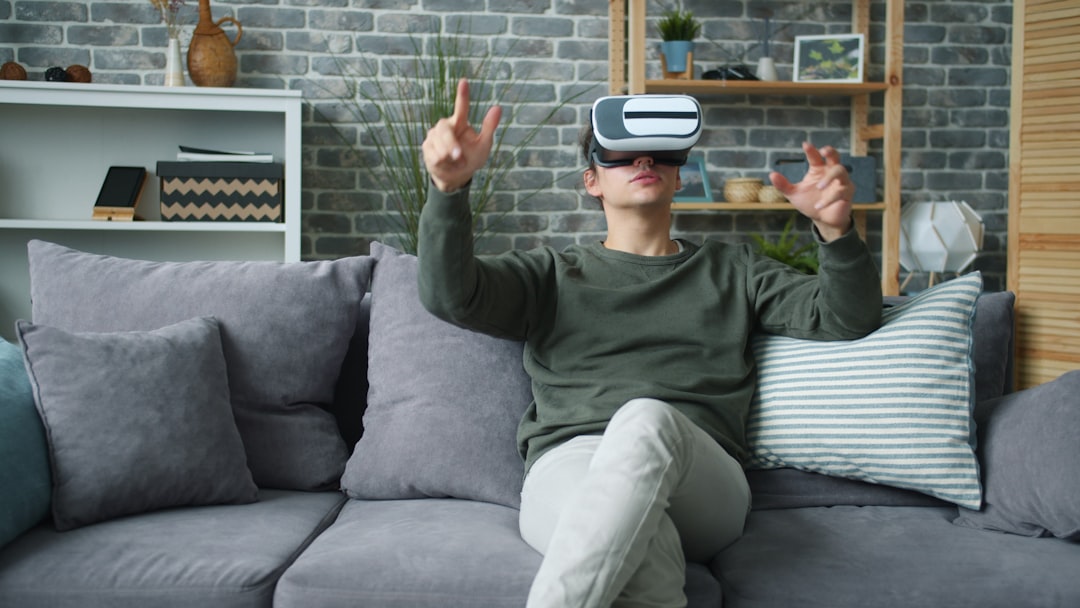
The Simulation Hypothesis posits that reality, as experienced by humans, may be an artificial simulation, akin to a highly advanced computer program. This concept has gained traction in both philosophical and scientific circles, prompting discussions about the nature of existence and the boundaries of human understanding. The idea suggests that what individuals perceive as reality could be a sophisticated construct, designed by an advanced civilization or even future versions of humanity.
The origins of the Simulation Hypothesis can be traced back to philosophical musings about reality and perception. Notable thinkers such as René Descartes and more recently, Nick Bostrom, have explored the implications of living in a simulated environment.
Bostrom’s argument, presented in his 2003 paper, suggests that if it is possible for advanced civilizations to create realistic simulations of their ancestors, then it is statistically likely that most beings with consciousness are living in such simulations. This provocative notion challenges the very foundation of human experience and invites a reevaluation of what it means to be “real.”
Key Takeaways
- The Simulation Hypothesis proposes that reality as we perceive it may be a computer-generated simulation.
- Theoretical Basis for Reality as a Simulation includes concepts from quantum physics, information theory, and computational science.
- Evidence Supporting the Simulation Hypothesis includes unexplained phenomena, mathematical patterns in nature, and limitations in human perception.
- Philosophy and Ethics of a Simulated Reality raise questions about the nature of consciousness, free will, and the moral implications of creating and controlling simulated beings.
- Scientific Experiments and Research on Simulation Theory aim to test the hypothesis through experiments in physics, computer science, and neuroscience.
Theoretical Basis for Reality as a Simulation
At its core, the Simulation Hypothesis is grounded in several theoretical frameworks that question the nature of reality. One of the most compelling arguments comes from advancements in computer science and artificial intelligence. As technology progresses, the ability to create increasingly complex virtual environments becomes more feasible.
Theoretical physicists and computer scientists alike have speculated that if humanity continues on its current trajectory, it may one day possess the capability to simulate entire universes, complete with sentient beings unaware of their artificial existence. Moreover, concepts from quantum mechanics further bolster the Simulation Hypothesis. The peculiar behavior of particles at the quantum level raises questions about the fundamental nature of reality.
For instance, phenomena such as wave-particle duality and entanglement suggest that observation plays a crucial role in determining the state of a system. This has led some theorists to propose that reality may not be as solid and deterministic as it appears, but rather a fluid construct influenced by perception—much like a simulation that responds to user input.
Evidence Supporting the Simulation Hypothesis

While direct evidence for the Simulation Hypothesis remains elusive, several lines of reasoning and indirect evidence lend credence to the idea. One notable example is the increasing sophistication of virtual reality technologies. As these technologies advance, they create immersive experiences that can mimic real life with astonishing accuracy.
This progress raises questions about the potential for future simulations to become indistinguishable from actual reality, suggesting that if humanity can achieve this level of realism, it is plausible that an advanced civilization has already done so. Additionally, some researchers point to anomalies in physical laws as potential indicators of a simulated reality. For instance, the fine-tuning of constants in physics—such as the gravitational constant or the speed of light—has led some scientists to speculate that these parameters may have been deliberately set within a simulation framework.
The idea that these constants could be manipulated or adjusted by an external programmer aligns with the notion of a constructed reality, further supporting the Simulation Hypothesis.
Philosophy and Ethics of a Simulated Reality
| Topic | Metrics |
|---|---|
| Existential Questions | Number of philosophical inquiries into the nature of reality |
| Moral Dilemmas | Instances of ethical challenges within the simulated reality |
| Simulation Hypothesis | Percentage of individuals who believe in the concept of a simulated reality |
| Consciousness Studies | Research on the nature of consciousness within a simulated environment |
The implications of living in a simulated reality extend beyond scientific inquiry into profound philosophical and ethical considerations. If individuals are indeed living within a simulation, questions arise regarding free will and autonomy. Are choices genuinely their own, or are they predetermined by the parameters set by the creators of the simulation?
This dilemma echoes long-standing philosophical debates about determinism and free will, challenging individuals to reconsider their understanding of agency and responsibility. Moreover, ethical considerations emerge regarding the treatment of sentient beings within a simulation. If simulated entities possess consciousness and self-awareness, what moral obligations do their creators have toward them?
This raises significant questions about rights, suffering, and the ethical implications of creating life within a digital framework. The potential for exploitation or harm within a simulated environment necessitates a reevaluation of ethical standards in both technological development and philosophical discourse.
Scientific Experiments and Research on Simulation Theory
In recent years, scientists have begun to explore experimental approaches to test aspects of the Simulation Hypothesis. One notable endeavor involves examining cosmic rays and their behavior at high energies. Researchers have proposed that if reality is indeed a simulation, certain patterns or anomalies might emerge in cosmic ray data that could indicate underlying computational limits or glitches within the fabric of reality.
Additionally, advancements in quantum computing have opened new avenues for investigating simulation theory. By simulating quantum systems on quantum computers, researchers can explore fundamental questions about reality and computation. These experiments not only provide insights into quantum mechanics but also serve as a practical framework for understanding how simulations might operate at a fundamental level.
Technology and Simulation: Advancements and Implications

The rapid advancement of technology has profound implications for the Simulation Hypothesis. As virtual reality (VR) and augmented reality (AR) technologies continue to evolve, they offer increasingly immersive experiences that challenge perceptions of reality.
Moreover, developments in artificial intelligence (AI) further complicate this landscape. As AI systems become more sophisticated and capable of simulating human-like behavior, they blur the lines between human consciousness and machine intelligence. This convergence raises ethical dilemmas regarding the treatment of AI entities and their potential rights within simulated environments.
The implications extend beyond technology; they touch upon fundamental questions about identity, consciousness, and what it means to be alive.
Criticisms and Challenges to the Simulation Hypothesis
Despite its intriguing nature, the Simulation Hypothesis faces significant criticisms and challenges from various quarters. One major critique centers on the lack of empirical evidence supporting the idea that reality is a simulation. Skeptics argue that without concrete proof or observable phenomena indicating a simulated environment, the hypothesis remains speculative at best.
They contend that extraordinary claims require extraordinary evidence, which has yet to materialize in support of this theory. Furthermore, some philosophers argue that the Simulation Hypothesis may be an unfalsifiable proposition—meaning it cannot be tested or disproven through empirical means. This raises concerns about its scientific validity and whether it should be taken seriously within academic discourse.
Critics assert that focusing on such speculative ideas detracts from more pressing philosophical inquiries about existence and consciousness that can be explored through more grounded frameworks.
Religious and Spiritual Perspectives on Simulated Reality
The Simulation Hypothesis intersects intriguingly with various religious and spiritual perspectives on existence. Many religious traditions grapple with questions about creation, purpose, and the nature of reality itself. Some interpretations suggest parallels between simulated realities and concepts such as divine creation or enlightenment experiences where individuals perceive a higher truth beyond ordinary existence.
For instance, certain Eastern philosophies propose that life is an illusion (Maya) and that true enlightenment involves transcending this illusion to grasp a deeper reality. In this context, the Simulation Hypothesis can be seen as a modern reinterpretation of ancient wisdom—suggesting that what individuals perceive as real may be merely a façade obscuring a more profound truth.
The Simulation Hypothesis in Popular Culture and Media
The allure of the Simulation Hypothesis has permeated popular culture and media, inspiring countless works across various genres. Films like “The Matrix” explore themes of simulated realities where characters grapple with their existence within an artificial construct. Such narratives resonate with audiences by tapping into existential fears and desires for authenticity in an increasingly digital world.
Literature also reflects this fascination with simulated realities. Novels such as “Neuromancer” by William Gibson delve into cybernetic landscapes where characters navigate complex virtual environments. These stories not only entertain but also provoke thought about technology’s role in shaping human experience and identity in an age where simulations become ever more prevalent.
Practical Implications of Living in a Simulated Reality
If humanity were to accept the premise that it exists within a simulation, practical implications would arise across various domains—ranging from ethics to governance and personal relationships. For instance, individuals might reassess their priorities and values if they believed their experiences were part of a larger design or experiment. This could lead to shifts in societal norms regarding responsibility toward one another and toward any potential creators.
Moreover, understanding life as a simulation could influence mental health perspectives. Individuals grappling with existential crises might find solace in recognizing their experiences as part of a broader narrative rather than isolated events devoid of meaning. This shift in perspective could foster resilience and adaptability in navigating life’s challenges.
The Future of Simulation Theory and Its Impact on Society
As technology continues to advance at an unprecedented pace, the Simulation Hypothesis will likely remain a topic of fascination and debate within both scientific and philosophical realms. The exploration of this concept challenges individuals to confront fundamental questions about existence, consciousness, and reality itself. Whether humanity ultimately discovers evidence supporting or refuting this hypothesis remains uncertain; however, its implications will undoubtedly shape future discussions about identity, ethics, and the nature of human experience.
In contemplating the future impact of simulation theory on society, one must consider how it may influence technological development, ethical standards, and even spiritual beliefs. As individuals navigate an increasingly complex digital landscape where simulations become more prevalent, understanding their place within this framework will be crucial for fostering meaningful connections with one another and with any potential creators beyond their perceived reality. Ultimately, whether one views life as a simulation or not may shape not only personal beliefs but also collective societal values in an ever-evolving world.
The concept of reality as a simulation has intrigued philosophers and scientists alike, prompting discussions about the nature of existence and consciousness. A related article that delves deeper into this fascinating topic can be found on My Cosmic Ventures, where various perspectives on the simulation hypothesis are explored. For more insights, you can read the article [here](https://www.mycosmicventures.com/).
WATCH THIS! The Universe Stops Rendering When You Stop Looking (It’s Not a Metaphor)
FAQs
What is the simulation hypothesis?
The simulation hypothesis proposes that reality, as we perceive it, may actually be a computer simulation created by a more advanced civilization.
Who first proposed the simulation hypothesis?
The simulation hypothesis was popularized by philosopher Nick Bostrom in 2003, although similar ideas have been discussed by scientists and philosophers for centuries.
What evidence supports the simulation hypothesis?
There is currently no empirical evidence to support the simulation hypothesis. It is purely a speculative concept based on philosophical and theoretical considerations.
Can the simulation hypothesis be tested?
As of now, there is no known way to test the simulation hypothesis. It remains a thought experiment and a topic of philosophical debate rather than a scientifically testable theory.
What are the implications of the simulation hypothesis?
If the simulation hypothesis were true, it would fundamentally change our understanding of reality and our place in the universe. It would raise profound questions about the nature of consciousness, free will, and the existence of a higher intelligence.
Is there consensus among scientists and philosophers about the simulation hypothesis?
There is no consensus among scientists and philosophers about the simulation hypothesis. It is a highly speculative idea that is debated and discussed within the realms of philosophy, theoretical physics, and computer science.