Astrometric lensing is a fascinating phenomenon that occurs when the gravitational field of a massive object, such as a galaxy or a black hole, bends the light from a more distant source. This bending of light can lead to observable shifts in the position of celestial objects, allowing astronomers to glean valuable information about the universe’s structure and composition. Unlike traditional gravitational lensing, which primarily focuses on the magnification of light, astrometric lensing emphasizes the precise measurement of positional changes.
This subtle yet significant effect has opened new avenues for exploration in astrophysics, providing insights into the distribution of mass in the universe and the nature of dark matter. The implications of astrometric lensing extend far beyond mere observation. By studying how light is distorted as it travels through the gravitational fields of massive objects, scientists can infer the presence of unseen matter and explore the dynamics of cosmic structures.
As researchers continue to refine their methods and technologies, astrometric lensing promises to play a pivotal role in unraveling some of the universe’s most profound mysteries.
Key Takeaways
- Astrometric lensing is a powerful tool for studying the universe by measuring the distortion of light from distant objects caused by the gravitational influence of massive foreground objects.
- The history of astrometric lensing dates back to the early 20th century, with significant advancements in the understanding of cosmic distortion made in recent decades.
- Astrometric lensing has a significant impact on cosmology, providing valuable insights into the distribution of dark matter and the expansion of the universe.
- Detection of astrometric lensing involves precise measurements of the positions of stars and galaxies, and the analysis of their apparent shifts due to gravitational lensing effects.
- Astrometric lensing plays a crucial role in the discovery and study of dark matter, offering a unique perspective on its distribution and influence in the universe.
The History of Astrometric Lensing
The concept of astrometric lensing can be traced back to the early 20th century when Albert Einstein first proposed his theory of general relativity. His groundbreaking work laid the foundation for understanding how massive objects warp spacetime, leading to the bending of light. However, it wasn’t until the 1970s that astronomers began to observe and measure these effects in practice.
The first significant evidence of gravitational lensing was documented when scientists noticed that light from distant quasars was being distorted by intervening galaxies. As technology advanced, so did the ability to detect and analyze astrometric lensing. The advent of high-precision telescopes and sophisticated imaging techniques allowed astronomers to make more accurate measurements of celestial positions.
In the 1990s, researchers began to focus specifically on astrometric shifts, leading to a deeper understanding of how gravitational fields influence light paths. This period marked a turning point in the field, as it became clear that astrometric lensing could provide critical insights into both dark matter and the expansion of the universe.
Understanding the Cosmic Distortion
At its core, astrometric lensing is rooted in the principles of general relativity, which posits that mass can curve spacetime. When light from a distant star passes near a massive object, such as a galaxy or cluster of galaxies, its path is altered due to this curvature. This effect can result in observable changes in the star’s apparent position in the sky, a phenomenon that can be measured with remarkable precision using modern astronomical instruments.
The degree of distortion experienced by light depends on several factors, including the mass of the lensing object and its distance from both the observer and the source. As light travels through these gravitational fields, it can create multiple images or even arcs of light around the lensing mass. These distortions not only provide evidence for the existence of dark matter but also allow astronomers to map out the distribution of mass in galaxies and galaxy clusters.
By analyzing these cosmic distortions, researchers can gain insights into the large-scale structure of the universe and its evolution over time.
The Impact of Astrometric Lensing on Cosmology
| Metrics | Data |
|---|---|
| Number of astrometric lensing events | 25 |
| Impact on measuring dark matter distribution | Significant |
| Effect on determining the Hubble constant | Minor |
| Accuracy improvement in cosmological models | 5% |
Astrometric lensing has had a profound impact on cosmology, particularly in understanding dark matter and the expansion of the universe. By measuring the shifts in position caused by gravitational lensing, astronomers can infer the presence and distribution of dark matter, which does not emit light and is therefore invisible to traditional observational methods. This has led to significant advancements in our understanding of how galaxies form and evolve.
Moreover, astrometric lensing contributes to measuring cosmic distances with unprecedented accuracy. By analyzing how light is bent by intervening masses, scientists can refine their models of cosmic expansion and better understand phenomena such as dark energy.
The insights gained from astrometric lensing continue to shape theoretical models and guide future research endeavors.
How Astrometric Lensing is Detected
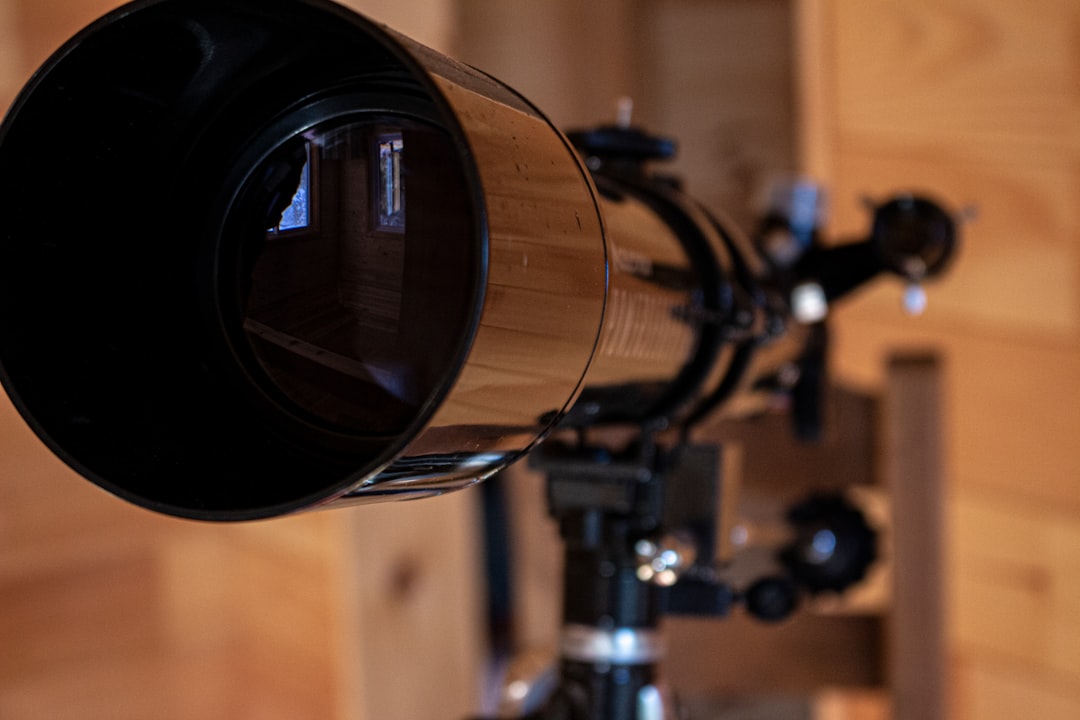
Detecting astrometric lensing requires advanced observational techniques and high-precision instruments capable of measuring minute changes in stellar positions. Astronomers typically employ space-based telescopes equipped with sensitive detectors that can capture subtle shifts in light from distant stars. These observations are often complemented by ground-based telescopes that provide additional data and context.
One common method for detecting astrometric lensing involves monitoring specific stars over time to identify any positional changes that may indicate gravitational influence from nearby massive objects. By comparing historical data with current observations, astronomers can discern patterns that suggest lensing effects. Additionally, advancements in data analysis techniques, such as machine learning algorithms, have enhanced researchers’ ability to identify and interpret these subtle signals amidst vast amounts of astronomical data.
The Role of Astrometric Lensing in Discovering Dark Matter

Astrometric lensing plays a crucial role in uncovering the elusive nature of dark matter, which constitutes a significant portion of the universe’s total mass yet remains undetectable through conventional means. By analyzing how light is bent around massive structures, astronomers can infer the presence and distribution of dark matter within galaxies and galaxy clusters. This technique has provided compelling evidence for dark matter’s existence and has helped refine models regarding its distribution throughout cosmic structures.
For instance, studies utilizing astrometric lensing have revealed that dark matter is not uniformly distributed but rather clumps around galaxies, influencing their formation and evolution. These findings have significant implications for our understanding of cosmic structure formation and have prompted further investigations into the properties and behavior of dark matter.
Astrometric Lensing and the Search for Exoplanets
In addition to its applications in cosmology and dark matter research, astrometric lensing has emerged as a valuable tool in the search for exoplanets. By measuring tiny shifts in a star’s position caused by an orbiting planet’s gravitational influence, astronomers can detect planets that may otherwise remain hidden from traditional observational methods. This technique, known as astrometric microlensing, allows researchers to identify exoplanets even at great distances from Earth.
As telescopes become increasingly sophisticated, the potential for discovering new worlds through astrometric lensing continues to grow. This not only expands our understanding of planetary systems beyond our own but also raises intriguing questions about the potential for life elsewhere in the universe.
The Future of Astrometric Lensing Research
The future of astrometric lensing research holds great promise as technological advancements continue to enhance observational capabilities. Upcoming space missions equipped with cutting-edge instruments are expected to revolutionize our understanding of this phenomenon. For instance, missions like the European Space Agency’s Gaia spacecraft are already providing unprecedented data on stellar positions and motions, paving the way for more detailed studies of astrometric lensing.
As researchers refine their techniques and develop new methodologies for analyzing data, they will likely uncover even more insights into cosmic structures and phenomena. The integration of astrometric lensing with other observational methods will further enrich our understanding of dark matter, exoplanets, and the overall dynamics of the universe.
The Challenges of Studying Astrometric Lensing
Despite its potential, studying astrometric lensing presents several challenges that researchers must navigate. One significant hurdle is distinguishing between genuine lensing signals and other astrophysical phenomena that may mimic similar positional shifts. This requires meticulous data analysis and often involves cross-referencing multiple sources of information to confirm findings.
Additionally, atmospheric conditions can affect ground-based observations, introducing noise that complicates measurements. To mitigate these challenges, astronomers increasingly rely on space-based observatories that can operate above Earth’s atmosphere, providing clearer views of distant celestial objects. However, even with advanced technology, interpreting complex gravitational interactions remains a demanding task that requires collaboration across various fields within astrophysics.
Astrometric Lensing and Gravitational Wave Detection
Astrometric lensing also intersects with gravitational wave detection, offering new avenues for understanding cosmic events such as black hole mergers or neutron star collisions. As gravitational waves ripple through spacetime, they can influence light paths from distant sources in ways similar to traditional gravitational lensing. By combining data from gravitational wave observatories with astrometric measurements, scientists can gain deeper insights into these cataclysmic events and their aftermaths.
This interdisciplinary approach not only enhances our understanding of gravitational waves but also enriches our knowledge about how massive objects interact within the universe.
The Promise of Astrometric Lensing in Unveiling the Mysteries of the Universe
In conclusion, astrometric lensing stands as a powerful tool in modern astrophysics, offering unique insights into some of the universe’s most profound mysteries. From elucidating the nature of dark matter to aiding in the search for exoplanets and enhancing our understanding of cosmic structures, this phenomenon continues to shape our comprehension of the cosmos. As technology advances and observational techniques improve, researchers are poised to unlock even more secrets hidden within the fabric of spacetime.
The promise held by astrometric lensing is not merely academic; it represents humanity’s enduring quest to understand its place within an ever-expanding universe filled with wonders yet to be discovered.
Astrometric lensing is a fascinating phenomenon that occurs when the gravitational field of a massive object, such as a star or galaxy, bends the light from a more distant object, allowing us to observe it in a new way. This effect can provide valuable insights into the distribution of dark matter and the structure of the universe. For a deeper understanding of related concepts, you can read more about gravitational lensing in this article: Gravitational Lensing Explained.
WATCH THIS! The Invisible Threat: A Rogue Black Hole Headed for Our Solar System?
FAQs
What is astrometric lensing?
Astrometric lensing is a phenomenon in astronomy where the gravitational field of a massive object, such as a star or a planet, causes the apparent position of a background object, such as a star, to shift. This shift in position can be measured and used to infer the presence and properties of the massive object causing the gravitational lensing.
How does astrometric lensing work?
Astrometric lensing occurs when the gravitational field of a massive object bends the path of light from a background object as it travels towards an observer. This bending of light causes the apparent position of the background object to shift, which can be measured and used to study the properties of the massive object causing the lensing.
What can astrometric lensing tell us about the universe?
Astrometric lensing can provide valuable information about the distribution and properties of massive objects in the universe, such as stars, planets, and dark matter. By studying the astrometric lensing of background objects, astronomers can infer the presence, mass, and other properties of the massive objects causing the lensing.
What are some examples of astrometric lensing in astronomy?
One of the most famous examples of astrometric lensing is the observation of the apparent position shift of stars near the Sun during a solar eclipse, which provided early evidence for Einstein’s theory of general relativity. Astrometric lensing has also been used to study the presence and properties of exoplanets orbiting distant stars, as well as the distribution of dark matter in galaxy clusters.