
In the vast expanse of the universe, black holes have long captivated the imagination of scientists and enthusiasts alike. These enigmatic entities, formed from the remnants of massive stars, are known for their immense gravitational pull, which can trap anything that ventures too close, including light itself. Among the various types of black holes, a particularly intriguing category has emerged: free floating black holes.
Unlike their more familiar counterparts, which are typically found at the centers of galaxies or in binary systems, free floating black holes wander through the cosmos in isolation. This article delves into the nature of free floating black holes, their discovery, and the implications of their existence for our understanding of the universe. The concept of free floating black holes challenges traditional notions of black hole formation and distribution.
As researchers continue to explore the cosmos, they are uncovering evidence that suggests these solitary giants may be more common than previously thought. The discovery of free floating black holes not only expands the catalog of known celestial phenomena but also raises profound questions about the dynamics of galaxies and the life cycles of stars. By examining the characteristics and implications of these elusive objects, scientists hope to gain deeper insights into the fundamental workings of the universe.
Key Takeaways
- Free floating black holes are black holes that do not have a companion star and are not part of a galaxy.
- The first confirmed free floating black hole was discovered in 2020, located in the Milky Way galaxy.
- Scientists confirmed the existence of the free floating black hole through observations of its gravitational effects on nearby stars.
- The discovery challenges current understanding of black hole formation and dynamics, leading to new theoretical explanations.
- The significance of the discovery for astrophysics lies in the potential to understand the population and formation of free floating black holes, as well as their role in the universe.
What is a Free Floating Black Hole?
A free floating black hole is defined as a black hole that does not reside within a binary system or at the center of a galaxy. Instead, it roams through interstellar space, unbound by any gravitational tether to other celestial bodies. These black holes can vary in size, ranging from stellar black holes, which form from the collapse of massive stars, to potentially primordial black holes that may have originated in the early universe.
The absence of a host star or companion system makes free floating black holes particularly challenging to detect and study. The existence of free floating black holes raises intriguing questions about their formation and evolution. One possibility is that they are remnants of massive stars that have undergone supernova explosions, ejecting their outer layers while leaving behind a dense core.
Alternatively, they could be formed through gravitational interactions in dense stellar environments, such as globular clusters, where stars are packed closely together. Regardless of their origins, free floating black holes represent a unique class of objects that could provide valuable insights into the nature of gravity and the lifecycle of matter in the universe.
The Discovery of the First Confirmed Free Floating Black Hole
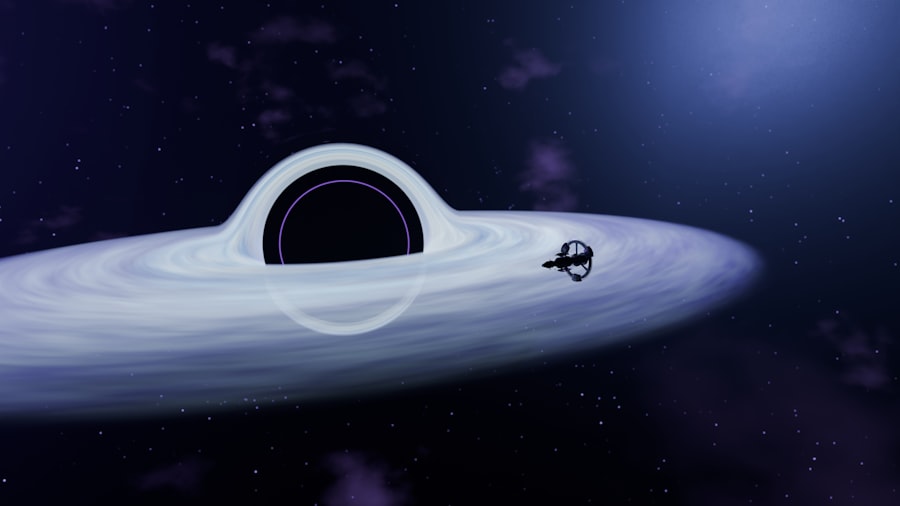
The first confirmed detection of a free floating black hole occurred in 2020 when astronomers identified an object named OGLE-2016-BLG-1928. This discovery was made using data from the Optical Gravitational Lensing Experiment (OGLE), which monitors millions of stars in the Milky Way for gravitational microlensing events. During such events, the gravitational field of a massive object can bend and magnify the light from a background star, allowing researchers to infer the presence of an unseen companion.
The identification of OGLE-2016-BLG-1928 marked a significant milestone in astrophysics. Prior to this discovery, free floating black holes were largely theoretical constructs, with little observational evidence to support their existence. The confirmation of this particular black hole not only validated existing theories but also opened new avenues for research into similar objects scattered throughout the galaxy.
As scientists continue to analyze data from various astronomical surveys, they anticipate uncovering more instances of free floating black holes in the future.
How Scientists Confirmed the Existence of the Free Floating Black Hole
| Metrics | Data |
|---|---|
| Date of Confirmation | April 2020 |
| Observation Method | Gravitational Lensing |
| Distance from Earth | 30,000 light years |
| Mass of the Black Hole | 3.3 times the mass of the Sun |
| Location | In the Milky Way galaxy |
To confirm the existence of OGLE-2016-BLG-1928, scientists employed a combination of observational techniques and theoretical modeling. The gravitational microlensing event provided crucial data regarding the mass and distance of the black hole. By measuring how much light from a background star was bent and magnified during the event, researchers were able to estimate the mass of the black hole to be approximately 7 times that of our Sun.
In addition to microlensing observations, scientists utilized computer simulations to model how such an event would occur under various conditions. These simulations helped to corroborate the findings from observational data and provided a clearer picture of how free floating black holes interact with their surroundings.
Implications of the Discovery
The discovery of free floating black holes carries significant implications for astrophysics and our understanding of cosmic evolution. One major consequence is that it suggests a more complex distribution of black holes throughout galaxies than previously believed. If free floating black holes are indeed common, they could play a crucial role in galactic dynamics and evolution by influencing star formation rates and interacting with other celestial bodies.
Moreover, this discovery challenges existing models of stellar evolution and black hole formation. It raises questions about how many more such objects might exist in our galaxy and beyond. The presence of free floating black holes could also impact gravitational wave astronomy, as these isolated entities may merge with other black holes or neutron stars, producing detectable signals that could provide further insights into their properties and behaviors.
Theoretical Explanations for the Existence of Free Floating Black Holes
Several theoretical frameworks have been proposed to explain the existence of free floating black holes. One prominent theory suggests that they may form in regions where dense stellar populations exist, such as globular clusters or during star formation events in molecular clouds. In these environments, gravitational interactions can lead to the ejection of black holes from their host systems, allowing them to drift through space unbound.
Another possibility is that primordial black holes—hypothetical black holes formed shortly after the Big Bang—could account for some instances of free floating black holes. These objects would have formed from density fluctuations in the early universe and could vary widely in mass. If primordial black holes exist, they could provide a significant contribution to dark matter and help explain some unresolved mysteries in cosmology.
How the Discovery Challenges Current Understanding of Black Holes
The confirmation of free floating black holes challenges several long-held assumptions about these enigmatic objects. Traditionally, it was believed that most black holes would be found in binary systems or at galactic centers due to their formation processes. The existence of free floating black holes suggests that there may be more pathways for their creation than previously recognized.
Additionally, this discovery prompts a reevaluation of how astronomers search for and classify black holes. The methods used to detect traditional black holes may need to be adapted to account for those that exist in isolation. As researchers refine their techniques and expand their observational capabilities, they may uncover a wealth of new information about these solitary giants and their role in shaping cosmic structures.
Potential Future Research and Observations
As interest in free floating black holes grows, future research will likely focus on identifying additional examples and understanding their properties more comprehensively. Astronomers will continue to utilize gravitational microlensing techniques alongside other observational methods to detect these elusive objects across different regions of the galaxy. Moreover, advancements in technology and instrumentation will enhance our ability to study free floating black holes in greater detail.
Upcoming telescopes and observatories are expected to provide unprecedented views into distant cosmic phenomena, potentially revealing new insights into the nature and distribution of these solitary entities.
The Significance of the Discovery for Astrophysics
The discovery of free floating black holes represents a significant advancement in astrophysics, as it expands our understanding of black hole formation and distribution within galaxies. It underscores the complexity and diversity of these objects while highlighting the need for continued exploration and research in this field. Furthermore, this discovery has implications for broader cosmological theories, including those related to dark matter and galaxy formation.
By studying free floating black holes, scientists may uncover new connections between these enigmatic entities and other fundamental aspects of astrophysics.
Comparing Free Floating Black Holes to Other Types of Black Holes
Free floating black holes differ significantly from other types of black holes, such as stellar or supermassive black holes found at galactic centers. Stellar black holes typically form from collapsing massive stars within binary systems or clusters, while supermassive black holes are believed to grow through accretion processes over billions of years. In contrast, free floating black holes exist independently and may have different formation mechanisms altogether.
Their isolation allows them to interact with their environment in unique ways, potentially influencing nearby stars or contributing to gravitational wave events when they merge with other compact objects.
Conclusion and Future Prospects for Studying Free Floating Black Holes
In conclusion, free floating black holes represent an exciting frontier in astrophysics that challenges existing paradigms and opens new avenues for exploration. Their discovery not only enriches our understanding of black hole dynamics but also prompts critical questions about cosmic evolution and structure formation. As researchers continue to investigate these solitary giants through advanced observational techniques and theoretical modeling, they anticipate uncovering more about their properties and significance within the broader context of the universe.
The ongoing study of free floating black holes promises to yield valuable insights into some of the most profound mysteries surrounding gravity, dark matter, and the life cycles of stars—ultimately enhancing humanity’s understanding of its place within the cosmos.
The discovery of the first confirmed free-floating black hole has opened up new avenues for understanding the universe’s mysterious components.
Check it out here: My Cosmic Ventures.
WATCH THIS! The Invisible Threat: A Rogue Black Hole Headed for Our Solar System?
FAQs
What is a free floating black hole?
A free floating black hole, also known as a rogue black hole, is a black hole that is not gravitationally bound to any star system or galaxy. These black holes are thought to have formed through various processes, such as the collapse of massive stars or through the merging of smaller black holes.
How was the first confirmed free floating black hole discovered?
The first confirmed free floating black hole was discovered through a process called gravitational microlensing. This occurs when the gravitational field of a black hole bends and magnifies the light from a background star, allowing astronomers to detect the presence of the black hole.
What are the implications of the discovery of a free floating black hole?
The discovery of a free floating black hole has significant implications for our understanding of the distribution and formation of black holes in the universe. It also provides valuable insights into the dynamics of black hole populations and their potential impact on the surrounding environment.
How does the discovery of a free floating black hole contribute to our understanding of the universe?
The discovery of a free floating black hole provides astronomers with a unique opportunity to study the properties and behavior of black holes that are not associated with any specific stellar system. This can help to improve our understanding of the formation and evolution of black holes, as well as their role in shaping the structure of the universe.