
Rogue black holes are enigmatic celestial objects that wander through the cosmos, unbound by the gravitational pull of any galaxy. Unlike their more familiar counterparts, which reside at the centers of galaxies, rogue black holes drift through intergalactic space, often formed from the remnants of massive stars that have undergone gravitational collapse. These black holes can vary significantly in size, ranging from stellar black holes, which are typically a few times the mass of the Sun, to supermassive black holes that can be millions or even billions of times more massive.
Their solitary nature makes them particularly intriguing to astronomers and astrophysicists alike. The existence of rogue black holes challenges conventional understandings of cosmic structure and dynamics. While most black holes are anchored within galaxies, rogue black holes represent a different paradigm, suggesting that the universe is populated with these elusive entities that may have originated from various processes.
Their unpredictable paths through space raise questions about their formation and the role they play in the broader cosmic landscape. As researchers delve deeper into the mysteries of rogue black holes, they uncover insights that could reshape our understanding of black hole formation and evolution.
Key Takeaways
- Rogue black holes are black holes that have been ejected from their original galaxies and are now wandering through space.
- Rogue black holes can form through various processes, such as the merging of two black holes or the gravitational interactions within a dense star cluster.
- The potential threat of rogue black holes lies in their unpredictability and the possibility of them coming into close proximity to our solar system.
- Rogue black holes can have a significant impact on the surrounding space, disrupting the orbits of nearby stars and planets.
- Detecting and tracking rogue black holes is challenging due to their lack of visible light and the vastness of space, but scientists are developing new methods to identify them.
How do Rogue Black Holes Form?
The formation of rogue black holes is a complex process that can occur through several mechanisms. One primary pathway involves the gravitational collapse of massive stars. When such a star exhausts its nuclear fuel, it can no longer support itself against gravitational forces, leading to a catastrophic implosion that results in a black hole.
If this event occurs in a binary star system, interactions between the two stars can lead to one being ejected at high velocity, effectively turning it into a rogue black hole. Another potential formation scenario involves the merger of smaller black holes. When two black holes orbit each other, they can eventually collide and merge, creating a more massive black hole.
If this merger occurs in a dense stellar environment, such as a globular cluster, the newly formed black hole may gain enough velocity to escape the gravitational grip of its host cluster, becoming a rogue entity. Additionally, interactions with other massive objects can impart enough energy to propel a black hole into intergalactic space, further contributing to the population of rogue black holes.
The Potential Threat of Rogue Black Holes
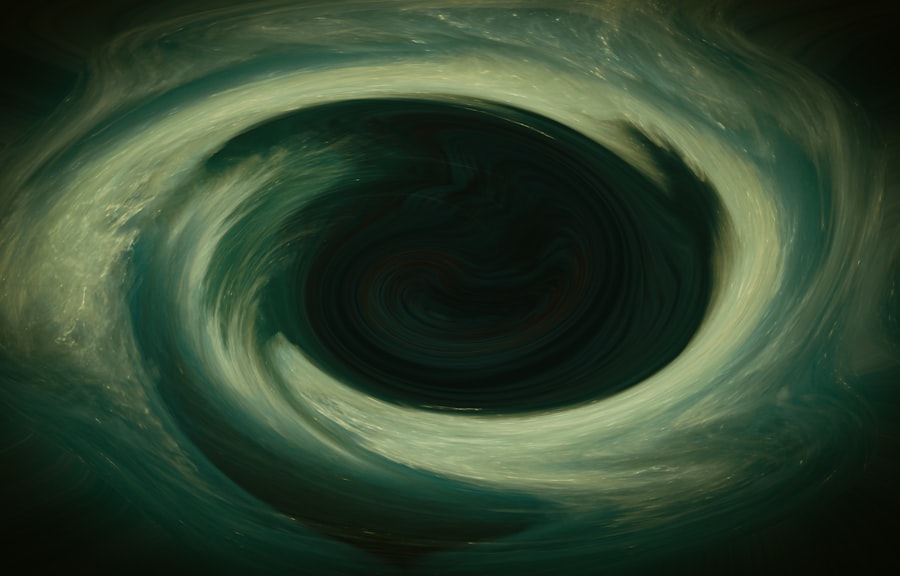
The potential threat posed by rogue black holes is a topic of considerable debate among scientists. While these cosmic wanderers are not inherently dangerous, their immense gravitational pull can have catastrophic consequences for nearby celestial bodies. If a rogue black hole were to pass close to a star system, it could disrupt the orbits of planets and other objects, potentially leading to collisions or ejections from their orbits.
Such events could have dire implications for any life forms residing on those planets. Moreover, the sheer mass of a rogue black hole can create tidal forces strong enough to rip apart stars and planets that venture too close. This phenomenon, known as spaghettification, occurs when an object experiences extreme differences in gravitational pull across its length.
The potential for such destructive encounters raises questions about the frequency and likelihood of rogue black holes traversing regions populated by stars and planets. While the vastness of space makes direct encounters rare, the consequences of such an event could be catastrophic.
The Impact of Rogue Black Holes on Surrounding Space
| Aspect | Impact |
|---|---|
| Gravitational Pull | Disrupts orbits of nearby stars and planets |
| Accretion Disk | Emits high-energy radiation and jets |
| Galactic Evolution | Alters the structure and dynamics of galaxies |
| Black Hole Mergers | Can lead to the formation of larger black holes |
Rogue black holes can significantly impact their surrounding environment as they traverse through space. Their gravitational influence extends far beyond their immediate vicinity, affecting the trajectories of nearby stars and gas clouds. As they move through interstellar or intergalactic space, they can disrupt the delicate balance of gravitational forces that govern the motion of celestial bodies.
This disruption can lead to the formation of new star systems or even trigger star formation in regions that were previously dormant. Additionally, rogue black holes can interact with interstellar matter, accreting gas and dust as they travel. This process can generate high-energy emissions, including X-rays and gamma rays, which can be detected by observatories on Earth and in space.
Such emissions provide valuable information about the properties and behavior of rogue black holes, offering insights into their mass, spin, and surrounding environment. The study of these interactions not only enhances understanding of rogue black holes but also contributes to broader knowledge about cosmic evolution and dynamics.
Can Rogue Black Holes be Detected and Tracked?
Detecting and tracking rogue black holes presents significant challenges due to their elusive nature and the vastness of space.
However, astronomers employ various indirect methods to identify their presence.
One approach involves monitoring the gravitational effects these black holes exert on nearby stars and gas clouds. By observing changes in the motion of these objects, scientists can infer the presence of an unseen mass—potentially a rogue black hole. Another method involves detecting high-energy emissions resulting from interactions between rogue black holes and surrounding matter.
These emissions serve as beacons for astronomers seeking to locate rogue black holes in the vast expanse of space. While tracking these elusive entities remains a formidable task, advancements in observational technology continue to enhance our ability to identify and study them.
Are Rogue Black Holes a Realistic Threat to Earth?

The likelihood of a rogue black hole posing a direct threat to Earth is exceedingly low. The vastness of space means that even if rogue black holes are relatively common on a cosmic scale, their chances of intersecting with our solar system are minimal. Current estimates suggest that there may be millions of rogue black holes scattered throughout the Milky Way galaxy alone; however, their distribution is so sparse that the probability of one coming close enough to affect Earth is negligible.
Moreover, even if a rogue black hole were to approach our solar system, its effects would depend on various factors such as its mass and velocity. A small rogue black hole passing at a safe distance would likely have little impact on planetary orbits or life on Earth. In contrast, a more massive rogue black hole could potentially disrupt gravitational interactions within the solar system but would still need to come alarmingly close for any significant effects to manifest.
Thus, while the concept of rogue black holes may evoke fear due to their destructive potential, they remain an unlikely threat to humanity.
The Potential Consequences of a Rogue Black Hole Encounter
Should a rogue black hole venture too close to our solar system, the consequences could be profound and far-reaching. The gravitational influence of such an object could alter the orbits of planets and other celestial bodies within the solar system. This disruption might lead to catastrophic collisions between planets or ejections from their orbits into interstellar space.
For Earth, this could mean drastic changes in climate and conditions necessary for sustaining life. In addition to orbital disruptions, a close encounter with a rogue black hole could result in tidal forces strong enough to affect geological processes on Earth itself. The intense gravitational pull could trigger seismic activity or even volcanic eruptions as tectonic plates shift under stress.
While these scenarios remain speculative due to the improbability of such an encounter occurring in reality, they highlight the potential consequences that could arise from interactions with these mysterious cosmic entities.
Strategies for Mitigating the Risk of Rogue Black Holes
Given the low probability of encountering a rogue black hole, strategies for mitigating this risk may seem unnecessary; however, understanding potential threats is crucial for advancing knowledge in astrophysics and planetary defense. One approach involves enhancing observational capabilities to detect rogue black holes at greater distances. By improving telescopes and monitoring systems capable of identifying high-energy emissions or gravitational effects from distant objects, scientists can better assess potential risks.
Additionally, fostering international collaboration among astronomers and astrophysicists can facilitate information sharing regarding rogue black holes and their behavior. Establishing databases that catalog known rogue black holes and their trajectories could aid in predicting future movements and potential encounters with other celestial bodies. While proactive measures may not be immediately necessary given current knowledge about rogue black holes, continued research will ensure preparedness for any unforeseen developments in our understanding of these enigmatic entities.
The Search for Rogue Black Holes in the Universe
The search for rogue black holes is an ongoing endeavor that captivates astronomers worldwide. Various observational campaigns aim to identify these elusive objects by utilizing advanced telescopes equipped with cutting-edge technology capable of detecting faint signals from deep space. Surveys targeting specific regions within galaxies or intergalactic space have yielded promising results, revealing potential candidates for further study.
In addition to traditional observational methods, researchers are increasingly employing computer simulations to model the dynamics of rogue black holes within different cosmic environments. These simulations help predict how these objects might behave over time and provide insights into their formation processes. By combining observational data with theoretical models, scientists hope to gain a comprehensive understanding of rogue black holes and their role in shaping the universe.
The Role of Rogue Black Holes in the Evolution of the Universe
Rogue black holes play a significant role in shaping cosmic evolution and structure formation within the universe. Their interactions with surrounding matter can influence star formation rates and contribute to the redistribution of gas and dust across intergalactic space. As they traverse through different regions, they may trigger new star formation by compressing gas clouds or disrupting existing stellar systems.
Furthermore, rogue black holes may serve as important markers for understanding galaxy formation and evolution processes over cosmic time scales. By studying their distribution and behavior, astronomers can glean insights into how galaxies interact with one another and how massive structures evolve within the universe’s vast tapestry. The ongoing research into rogue black holes not only enhances knowledge about these enigmatic entities but also contributes to broader discussions regarding cosmic history.
The Future of Research on Rogue Black Holes
The future of research on rogue black holes holds great promise as advancements in technology continue to enhance observational capabilities and theoretical modeling techniques. As telescopes become more sensitive and capable of detecting fainter signals from distant objects, astronomers will likely uncover new insights into the population and behavior of rogue black holes throughout the universe. Moreover, interdisciplinary collaboration among astrophysicists, cosmologists, and computer scientists will foster innovative approaches to studying these enigmatic entities.
By integrating observational data with sophisticated simulations and theoretical frameworks, researchers can develop comprehensive models that elucidate the complexities surrounding rogue black holes. As humanity’s understanding deepens regarding these cosmic wanderers, it will undoubtedly lead to new questions about their origins, interactions with other celestial bodies, and overall impact on cosmic evolution. The ongoing exploration into rogue black holes promises not only to expand knowledge within astrophysics but also to inspire future generations of scientists eager to unravel the mysteries of our universe.
The concept of rogue black holes raises intriguing questions about their potential dangers to our galaxy and beyond. For a deeper understanding of this phenomenon, you can explore the article on cosmic anomalies at this link. It delves into the nature of black holes and their unpredictable movements, shedding light on the implications they may have for celestial bodies in their vicinity.
WATCH THIS! The Invisible Threat: A Rogue Black Hole Headed for Our Solar System?
FAQs
What is a rogue black hole?
A rogue black hole is a black hole that has been ejected from its original galaxy and is now traveling through space on its own.
How dangerous is a rogue black hole?
Rogue black holes are potentially dangerous if they were to come into close proximity to our solar system or another galaxy. Their gravitational pull could disrupt the orbits of planets and stars, causing chaos in the affected area.
What are the chances of a rogue black hole coming near Earth?
The chances of a rogue black hole coming near Earth are extremely low. The vastness of space and the rarity of rogue black holes make the likelihood of one coming close to our solar system very small.
Can we detect rogue black holes?
Rogue black holes are difficult to detect because they do not emit light. However, scientists are constantly improving their methods for detecting black holes, and it is possible that advanced technology could help us identify rogue black holes in the future.
What would happen if a rogue black hole came near Earth?
If a rogue black hole were to come near Earth, its gravitational pull could potentially disrupt the orbits of planets and stars, leading to catastrophic consequences for our solar system. However, as mentioned earlier, the chances of this happening are extremely low.