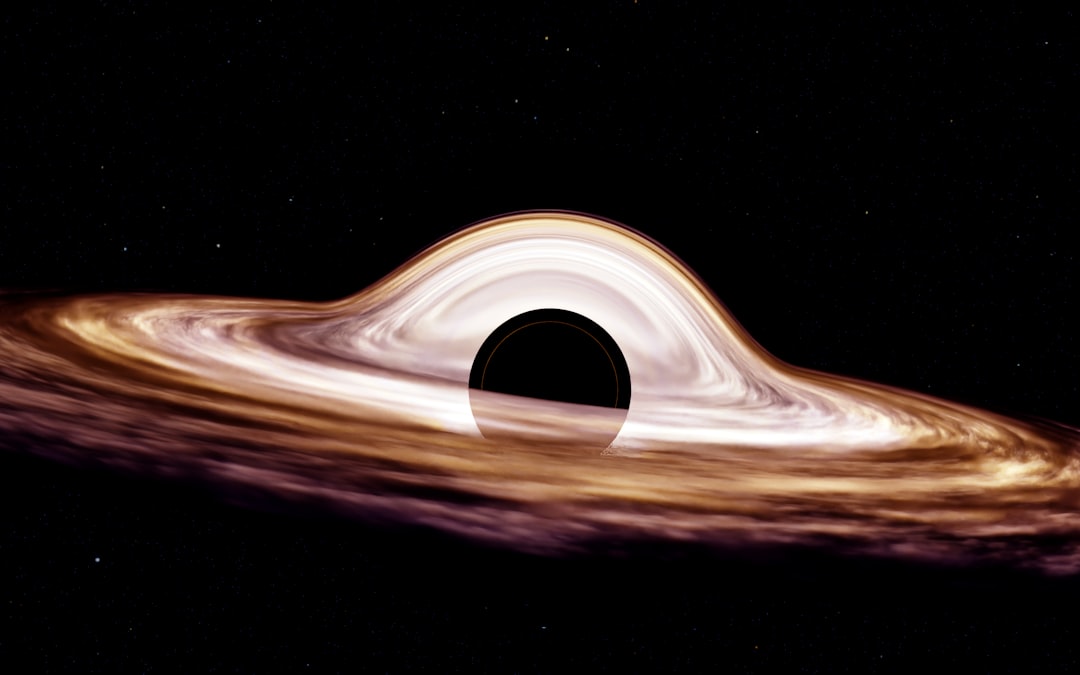
The discovery of an isolated black hole marks a significant milestone in the field of astrophysics, capturing the imagination of scientists and enthusiasts alike. In recent years, advancements in observational technology and theoretical models have allowed astronomers to identify these enigmatic entities that exist far from the gravitational influence of other celestial bodies. The first confirmed detection of an isolated black hole occurred in 2020 when researchers utilized data from the European Southern Observatory’s Very Large Telescope.
This groundbreaking finding not only expanded the known population of black holes but also raised questions about their formation and evolution in the cosmos. The isolated black hole, dubbed “LB-1,” was located approximately 15,000 light-years away in the constellation of Monoceros. Its discovery was particularly intriguing because it challenged existing theories about black hole formation, which typically suggested that these massive objects are born from the remnants of dying stars in densely populated regions of space.
Instead, LB-1’s isolation indicated that black holes could form in relative solitude, prompting scientists to reconsider the conditions necessary for their creation. This revelation opened new avenues for research, as astronomers began to explore the implications of isolated black holes on our understanding of the universe.
Key Takeaways
- The discovery of an isolated black hole has opened up new possibilities for understanding the universe.
- Isolated black holes are characterized by their lack of a companion star and their ability to remain undetected for long periods of time.
- Theoretical explanations for the existence of isolated black holes include the possibility of them being remnants of massive stars or the result of gravitational interactions in dense stellar environments.
- Isolated black holes have a significant impact on surrounding space, influencing the movement of nearby stars and potentially contributing to the formation of new stars and planets.
- Observing and studying isolated black holes is challenging but crucial for advancing our understanding of the universe and the role of black holes in it.
Characteristics of an Isolated Black Hole
Isolated black holes possess unique characteristics that distinguish them from their more commonly known counterparts. One of the most defining features is their solitary existence, which means they are not part of a binary system or a cluster of stars. This isolation can lead to a different evolutionary path compared to black holes that interact with other celestial bodies.
For instance, isolated black holes may accumulate mass at a slower rate since they lack the gravitational pull of nearby stars to draw in material. This slower growth can result in a different size and mass distribution among isolated black holes compared to those found in more crowded environments. Another notable characteristic is their potential for being dormant or inactive.
Many black holes are detected through their interactions with surrounding matter, such as gas and dust, which emit X-rays as they spiral into the black hole. However, isolated black holes may not exhibit such activity if they are not actively consuming material.
Consequently, researchers must rely on indirect methods and advanced observational techniques to identify these elusive objects.
Theoretical Explanations for the Existence of Isolated Black Holes
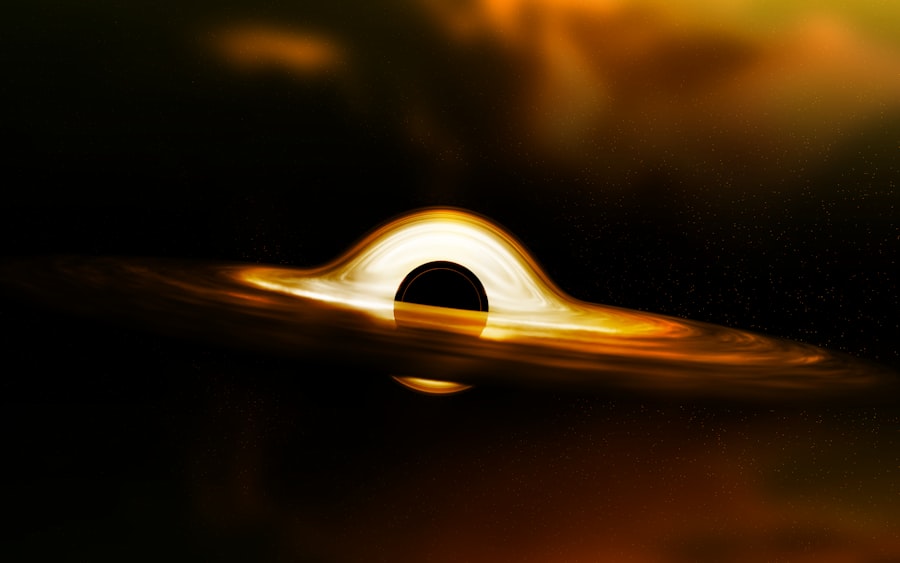
The existence of isolated black holes has prompted scientists to develop various theoretical frameworks to explain their formation and characteristics. One prominent theory suggests that these black holes could arise from the collapse of massive stars in regions of space where there is minimal interaction with other stellar objects. In this scenario, a star may exhaust its nuclear fuel and undergo gravitational collapse without being influenced by nearby stars, leading to the formation of an isolated black hole.
This process challenges traditional models that emphasize the role of stellar interactions in black hole creation. Another theoretical explanation posits that isolated black holes could be remnants of primordial black holes formed shortly after the Big Bang. These primordial black holes would have emerged from density fluctuations in the early universe and could exist independently of other cosmic structures.
If this theory holds true, it would imply that isolated black holes could be more common than previously thought, potentially contributing to the overall mass distribution in the universe. Such insights could reshape our understanding of cosmic evolution and the formation of large-scale structures.
The Impact of Isolated Black Holes on Surrounding Space
| Aspect | Impact |
|---|---|
| Gravitational Pull | Strong gravitational force can distort nearby space and affect the motion of surrounding objects. |
| Accretion Disk | Black holes can have an accretion disk of gas and dust that emits radiation and affects nearby celestial bodies. |
| Time Dilation | Time near a black hole can be dilated, affecting the perception of time for surrounding objects. |
| Spaghettification | Extreme tidal forces near a black hole can cause spaghettification of nearby objects. |
Isolated black holes exert a profound influence on their surrounding environment, despite their solitary nature. Their immense gravitational pull can affect nearby stars and gas clouds, even if they are located at significant distances. For instance, an isolated black hole may alter the trajectories of passing stars, causing them to change course or accelerate as they pass through its gravitational field.
This interaction can lead to complex dynamical behaviors within star clusters or galactic halos, ultimately shaping the structure and evolution of these systems. Moreover, isolated black holes can play a role in the distribution of dark matter within galaxies. As they interact with surrounding matter, they may contribute to gravitational lensing effects, which can distort the light from distant objects.
This phenomenon allows astronomers to map the distribution of dark matter in galaxies and gain insights into its elusive nature. The presence of isolated black holes thus adds another layer of complexity to our understanding of cosmic dynamics and the interplay between visible and dark matter.
Observing and Studying Isolated Black Holes
Observing isolated black holes presents unique challenges for astronomers due to their lack of visible emissions and solitary nature. Traditional methods for detecting black holes often rely on their interactions with nearby matter, such as X-ray emissions from accreting material. However, isolated black holes do not exhibit such activity unless they happen to encounter gas or dust clouds.
As a result, researchers have turned to innovative observational techniques to identify these elusive objects. One promising approach involves gravitational wave detection, which has revolutionized our understanding of black holes in recent years. When two black holes merge, they produce ripples in spacetime known as gravitational waves.
By analyzing these waves, scientists can infer information about the properties and origins of the merging black holes, including those that may be isolated prior to their merger. Additionally, advancements in radio astronomy and other observational technologies have enabled astronomers to search for indirect signs of isolated black holes, such as their gravitational influence on nearby stars or gas clouds.
The Role of Isolated Black Holes in the Universe
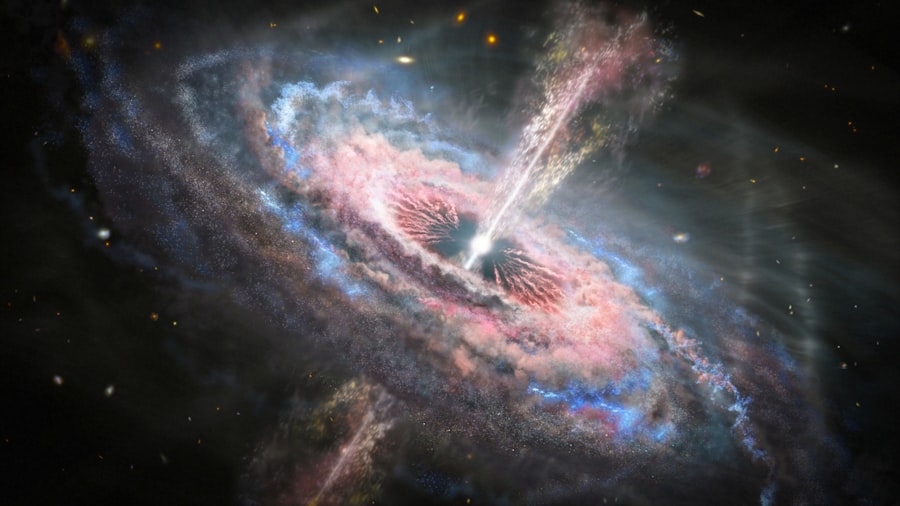
Isolated black holes play a crucial role in shaping our understanding of the universe’s structure and evolution. Their existence challenges conventional theories about how black holes form and evolve, prompting scientists to reconsider the processes that govern cosmic evolution. By studying these solitary entities, researchers can gain insights into the dynamics of star formation, galaxy evolution, and even the nature of dark matter.
Furthermore, isolated black holes may serve as important markers for understanding cosmic history. Their distribution across different regions of space can provide clues about the conditions present during various epochs in the universe’s evolution. For instance, if isolated black holes are found predominantly in certain areas, it may indicate specific environmental factors that influenced their formation.
This knowledge can help astronomers piece together a more comprehensive picture of how galaxies and cosmic structures have developed over billions of years.
Potential Dangers of Isolated Black Holes
While isolated black holes may seem distant and benign from Earth’s perspective, they pose potential dangers that warrant consideration. Their immense gravitational pull can disrupt nearby celestial bodies if they come too close, leading to catastrophic consequences for any stars or planets caught in their vicinity. For instance, a passing star could be torn apart by tidal forces if it ventures too close to an isolated black hole, resulting in a spectacular display known as spaghettification.
Moreover, if an isolated black hole were to wander into a densely populated region of space, such as a star cluster or galaxy, it could significantly alter the dynamics of that environment. The gravitational influence exerted by an isolated black hole could lead to destabilization within star systems or even trigger new star formation by compressing gas clouds. While such events may seem far-fetched on a cosmic scale, they highlight the unpredictable nature of these enigmatic entities and their potential impact on surrounding space.
The Search for More Isolated Black Holes
The quest to discover more isolated black holes is an ongoing endeavor that captivates astronomers worldwide. As technology continues to advance, researchers are developing new methods for identifying these elusive objects across vast distances. Surveys utilizing powerful telescopes equipped with advanced imaging capabilities are being conducted to scan regions of space where isolated black holes are likely to exist.
Additionally, collaborations between international observatories are enhancing efforts to locate these solitary entities. By pooling resources and data from multiple telescopes around the globe, scientists can create comprehensive maps that highlight potential candidates for isolated black holes.
Isolated Black Holes and the Search for Dark Matter
The study of isolated black holes is intricately linked to ongoing efforts to understand dark matter—one of the universe’s most elusive components. Dark matter is believed to make up a significant portion of the universe’s total mass; however, its nature remains largely unknown. Some researchers propose that isolated black holes could be candidates for dark matter particles or even primordial black holes formed during the early universe.
If isolated black holes do indeed contribute to dark matter’s composition, their detection could provide crucial insights into this enigmatic substance’s properties and behavior. By studying their distribution and interactions with visible matter, scientists may uncover clues about dark matter’s role in shaping cosmic structures and influencing galaxy formation. This intersection between isolated black holes and dark matter research underscores the importance of continued exploration in both fields.
The Future of Research on Isolated Black Holes
The future of research on isolated black holes holds great promise as technological advancements continue to reshape our understanding of the cosmos. With next-generation telescopes and observatories on the horizon, astronomers are poised to make significant strides in identifying and studying these enigmatic entities. Projects like the James Webb Space Telescope aim to provide unprecedented views into distant regions of space where isolated black holes may reside.
Moreover, interdisciplinary collaborations between astrophysicists, cosmologists, and theoretical physicists will likely yield new insights into the nature and behavior of isolated black holes. As researchers continue to refine their models and observational techniques, they will be better equipped to unravel the mysteries surrounding these solitary giants and their role within the broader context of cosmic evolution.
The Cosmic Mysteries Surrounding Isolated Black Holes
Isolated black holes remain one of the most intriguing subjects in modern astrophysics, shrouded in cosmic mysteries that challenge our understanding of fundamental physics. Their solitary existence raises profound questions about how they form and evolve without significant interactions with other celestial bodies. As scientists delve deeper into this enigmatic realm, they uncover new layers of complexity that enrich our comprehension of the universe.
The ongoing exploration of isolated black holes not only enhances our knowledge but also inspires curiosity about what lies beyond our current understanding. Each discovery brings with it new questions and avenues for investigation, ensuring that the study of these solitary giants will continue to captivate generations of astronomers and enthusiasts alike. As researchers strive to unlock the secrets held within these cosmic enigmas, they contribute to a broader narrative about humanity’s quest for knowledge in an ever-expanding universe filled with wonders yet to be discovered.
Recent studies have revealed intriguing insights into black holes that exist without a companion star, challenging our understanding of their formation and evolution. For a deeper exploration of this phenomenon, you can read more in the article available at My Cosmic Ventures. This article delves into the implications of solitary black holes and their role in the cosmos, shedding light on the mysteries that continue to captivate astronomers and astrophysicists alike.
WATCH THIS! The Invisible Threat: A Rogue Black Hole Headed for Our Solar System?
FAQs
What is a black hole without a companion star?
A black hole without a companion star is a black hole that exists on its own, without being part of a binary star system.
How are black holes without companion stars formed?
Black holes without companion stars are typically formed from the collapse of a massive star at the end of its life cycle. This collapse can occur when the star’s core runs out of nuclear fuel and is no longer able to support itself against its own gravity.
What are the characteristics of black holes without companion stars?
Black holes without companion stars have the same characteristics as other black holes, including a gravitational pull so strong that nothing, not even light, can escape from it. They also have a singularity at their center, which is a point of infinite density.
How do we detect black holes without companion stars?
Black holes without companion stars can be detected through their gravitational effects on nearby objects, such as stars and gas clouds. They can also be detected through the radiation emitted by the material falling into them, known as accretion disks.
What is the significance of studying black holes without companion stars?
Studying black holes without companion stars can help us better understand the formation and evolution of black holes, as well as the role they play in the universe. It can also provide insights into the behavior of matter under extreme conditions and the nature of spacetime.