Black holes have long captivated the imagination of scientists and the general public alike. These enigmatic cosmic entities, formed from the remnants of massive stars that have undergone gravitational collapse, possess gravitational fields so intense that nothing, not even light, can escape their grasp. The concept of a black hole challenges the very fabric of our understanding of physics, particularly in the realms of general relativity and quantum mechanics.
As researchers delve deeper into the mysteries of the universe, black holes remain a focal point of inquiry, offering insights into the nature of space, time, and the fundamental forces that govern celestial phenomena. The study of black holes has evolved significantly since their theoretical inception in the early 20th century. Initially dismissed as mere mathematical curiosities, they have since been confirmed through various astronomical observations, including the detection of gravitational waves and the imaging of their event horizons.
As scientists continue to explore these cosmic giants, they uncover not only their formation and characteristics but also their potential implications for the universe at large. Among these implications is the potential threat posed by a black hole passing through our solar system, a scenario that raises questions about the stability of planetary orbits and the fate of celestial bodies.
Key Takeaways
- Black holes are regions in space where the gravitational pull is so strong that nothing, not even light, can escape.
- The potential threat of a black hole passing through our solar system is a topic of concern for scientists and astronomers.
- The disruption of planetary orbits can occur if a black hole were to pass through our solar system, leading to catastrophic consequences.
- The gravitational pull of a black hole can lead to the destruction of celestial bodies, including planets and stars.
- Black holes emit radiation and energy, which can have a significant impact on surrounding stars and galaxies.
The Potential Threat of a Black Hole Passing
The prospect of a black hole passing through the solar system is a topic that stirs both intrigue and concern among astronomers and astrophysicists. While the likelihood of such an event occurring in the near future is exceedingly low, it is not entirely outside the realm of possibility. The vastness of space means that black holes can traverse great distances, and their paths can intersect with those of other celestial bodies.
If a rogue black hole were to enter our solar system, it could have catastrophic consequences for the planets and other objects within its gravitational influence. The potential threat posed by a passing black hole is not merely theoretical; it serves as a reminder of the dynamic and often unpredictable nature of the cosmos. The gravitational forces exerted by a black hole could disrupt the delicate balance that maintains planetary orbits, leading to chaotic movements and potential collisions among celestial bodies.
Such an event would not only alter the structure of our solar system but could also have far-reaching effects on the stability of nearby star systems and galaxies.
Disruption of Planetary Orbits
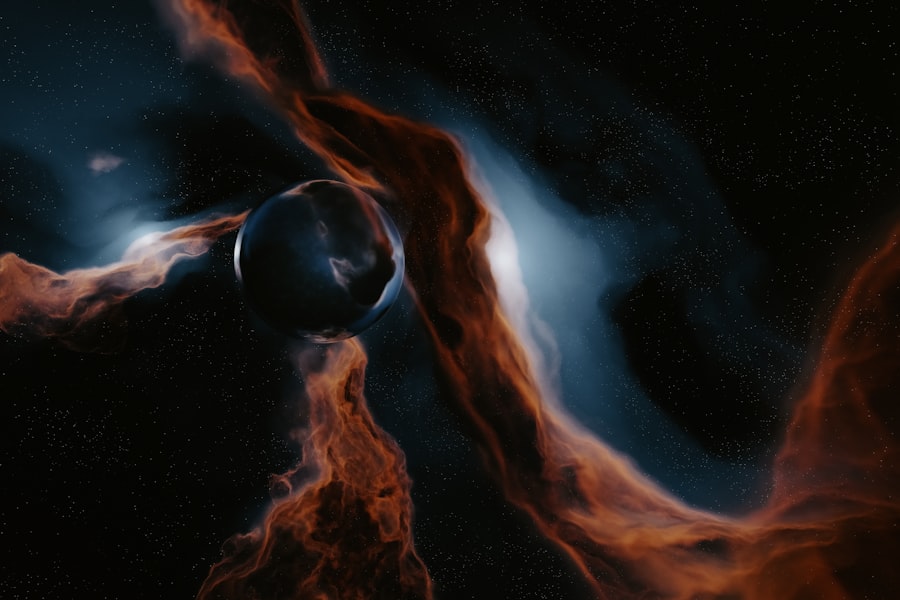
One of the most immediate consequences of a black hole passing through the solar system would be the disruption of planetary orbits. The gravitational pull exerted by a black hole is immense, and as it approaches, it could alter the trajectories of planets, moons, and other celestial objects. This gravitational influence could lead to significant changes in orbital patterns, potentially causing planets to be flung into new orbits or even ejected from the solar system entirely.
The implications of such disruptions are profound. For instance, if Earth were to be displaced from its stable orbit around the Sun, it could result in drastic changes to climate and environmental conditions. A shift in distance from the Sun could lead to extreme temperature fluctuations, making life as we know it unsustainable.
Additionally, interactions between planets could result in collisions or gravitational slingshots that would further destabilize the solar system’s architecture. The delicate balance that has allowed life to thrive on Earth could be irrevocably altered by such cosmic upheaval.
Gravitational Pull and Destruction of Celestial Bodies
| Celestial Body | Gravitational Pull (N) | Destruction |
|---|---|---|
| Earth | 9.81 | None |
| Moon | 1.62 | None |
| Sun | 274 | Possible |
| Black Hole | Varies | Highly Likely |
As a black hole approaches, its gravitational pull would become increasingly pronounced, exerting forces on nearby celestial bodies that could lead to their destruction. The phenomenon known as “spaghettification” illustrates this effect; as objects come closer to a black hole, they experience extreme tidal forces that stretch them into elongated shapes. This process could obliterate asteroids, comets, and even planets that venture too close to the event horizon.
The destruction of celestial bodies would not only be a dramatic spectacle but would also have significant implications for the solar system’s composition and dynamics. Debris from shattered planets or asteroids could create hazardous conditions for other objects in space, leading to increased risks of collisions and further destabilization. The remnants of these destroyed bodies might also contribute to new formations within the solar system, potentially giving rise to new celestial phenomena or altering existing ones.
Radiation and Energy Emission
In addition to gravitational effects, a passing black hole would emit intense radiation and energy as it interacts with surrounding matter. As gas and dust are drawn toward a black hole, they form an accretion disk that heats up due to friction and gravitational forces, emitting X-rays and other forms of radiation detectable by telescopes on Earth. This radiation could pose significant risks to any nearby planets or life forms.
The energy emitted by a black hole could have dire consequences for Earth if it were to pass close enough. Increased radiation levels could lead to heightened exposure for living organisms, potentially causing genetic mutations or other health issues. Moreover, such radiation could disrupt electronic systems and communications on Earth, leading to widespread technological failures.
The potential for catastrophic effects underscores the importance of understanding how black holes interact with their environments.
Impact on Surrounding Stars and Galaxies
The influence of a passing black hole extends beyond just our solar system; it can also affect surrounding stars and galaxies. As a black hole moves through space, its gravitational field can disrupt the orbits of nearby stars, leading to changes in their trajectories and potentially causing them to collide with one another. This disruption can create chaotic stellar environments where stars are flung into new orbits or even ejected from their host galaxies.
In addition to altering stellar dynamics, a passing black hole can also impact galactic structures on a larger scale. The gravitational interactions may trigger star formation in some regions while suppressing it in others, leading to uneven distributions of stars within galaxies. Such changes can have long-term consequences for galactic evolution and may influence the formation of new celestial bodies over time.
Potential Impact on Earth
The potential impact of a passing black hole on Earth is perhaps one of the most concerning aspects of this cosmic phenomenon. While the likelihood of such an event occurring is low, its consequences could be catastrophic if it were to happen. The gravitational forces exerted by a nearby black hole could lead to significant alterations in Earth’s orbit, climate, and overall stability.
If Earth were displaced from its current orbit around the Sun due to a passing black hole’s influence, it could result in extreme temperature fluctuations that would threaten life on our planet. Additionally, increased radiation exposure from the black hole’s emissions could pose serious health risks to living organisms. The combination of these factors highlights the vulnerability of Earth within the vast cosmos and underscores the need for continued research into potential threats posed by black holes.
Theoretical Scenarios of Black Hole Passing
Scientists have developed various theoretical scenarios regarding what might occur if a black hole were to pass through our solar system. One possibility involves a rogue black hole entering from interstellar space, drawn into our solar system by gravitational interactions with other celestial bodies. In this scenario, astronomers would likely have limited time to prepare for its arrival, making early detection crucial.
Another scenario involves a supermassive black hole at the center of our galaxy exerting influence over nearby stars and potentially affecting our solar system’s stability over long periods. While this scenario may not pose an immediate threat, it raises questions about how gravitational interactions over time could shape our solar system’s future trajectory within the Milky Way galaxy.
Scientific Efforts to Predict and Prevent Catastrophic Effects
In light of the potential threats posed by black holes, scientists are actively engaged in efforts to predict their movements and understand their effects on surrounding celestial bodies. Advanced telescopes equipped with cutting-edge technology allow astronomers to monitor distant regions of space for signs of rogue black holes or unusual gravitational anomalies that may indicate their presence. Additionally, researchers are exploring ways to mitigate potential catastrophic effects should a black hole approach our solar system.
This includes developing models that simulate various scenarios involving black holes and their interactions with other celestial bodies. By understanding these dynamics better, scientists hope to devise strategies for protecting Earth and its inhabitants from potential dangers posed by these cosmic giants.
Survival Strategies for Humanity
While the likelihood of encountering a rogue black hole is low, humanity must consider survival strategies in case such an event were to occur. One approach involves enhancing our understanding of space weather and developing technologies capable of detecting changes in gravitational fields or radiation levels associated with approaching black holes. Furthermore, fostering international collaboration among scientists and space agencies can facilitate information sharing and resource allocation in response to potential threats from cosmic phenomena like black holes.
By pooling knowledge and expertise, humanity can better prepare for unforeseen challenges posed by these enigmatic entities.
Conclusion and Future Considerations
In conclusion, while black holes remain one of the most fascinating yet terrifying aspects of our universe, understanding their potential threats is crucial for humanity’s future.
As scientists continue to explore these mysteries, they emphasize the importance of vigilance in monitoring celestial phenomena.
Looking ahead, ongoing research into black holes will not only deepen humanity’s understanding of these cosmic giants but also enhance preparedness for any potential threats they may pose. By fostering collaboration among scientists worldwide and investing in advanced technologies for detection and prediction, humanity can navigate the complexities of our universe with greater confidence and resilience against its unpredictable nature.
When a black hole passes through a region of space, it can have dramatic effects on nearby celestial bodies and the fabric of spacetime itself. For a deeper understanding of these phenomena, you can explore the article on cosmic events and their implications at this link. This resource provides insights into the gravitational forces at play and the potential consequences for surrounding stars and planets.
WATCH THIS! The Invisible Threat: A Rogue Black Hole Headed for Our Solar System?
FAQs
What is a black hole?
A black hole is a region in space where the gravitational pull is so strong that nothing, not even light, can escape from it. It is formed when a massive star collapses under its own gravity.
What happens when a black hole passes through a region of space?
When a black hole passes through a region of space, it can disrupt the orbits of nearby objects and cause gravitational disturbances. This can lead to the capture of objects by the black hole or the ejection of objects from the region.
Can a black hole consume a planet or a star when it passes through a region of space?
Yes, a black hole can consume a planet or a star if it comes too close to them. The intense gravitational pull of the black hole can cause the planet or star to be pulled into the black hole, a process known as “spaghettification”.
What happens to light when a black hole passes through a region of space?
When a black hole passes through a region of space, it can bend the path of light due to its strong gravitational pull. This effect is known as gravitational lensing and can cause the appearance of objects behind the black hole to be distorted or magnified.
Can a black hole passing through our solar system pose a threat to Earth?
The chances of a black hole passing through our solar system are extremely low. Even if a black hole were to pass through our solar system, the likelihood of it posing a threat to Earth is minimal, as the closest known black hole is located thousands of light years away.