Black holes have long captivated the imagination of scientists and the general public alike. These enigmatic cosmic entities, formed from the remnants of massive stars that have undergone gravitational collapse, possess gravitational fields so intense that nothing, not even light, can escape their grasp. The concept of a black hole challenges the very fabric of our understanding of physics, particularly in the realms of general relativity and quantum mechanics.
As researchers delve deeper into the mysteries of the universe, black holes remain at the forefront of astronomical inquiry, serving as both a source of fascination and a critical area of study. The existence of black holes was first theorized in the early 20th century, but it wasn’t until the advent of advanced observational technologies that their presence could be confirmed. Today, astronomers classify black holes into several categories, including stellar black holes, supermassive black holes, and intermediate black holes.
Each type plays a unique role in the cosmic landscape, influencing galaxy formation and evolution. As scientists continue to explore these celestial phenomena, they uncover new insights that challenge existing theories and expand our understanding of the universe.
Key Takeaways
- Black holes are mysterious cosmic objects with gravitational pull so strong that nothing, not even light, can escape from them.
- Radio arrays, such as the Event Horizon Telescope, play a crucial role in observing black holes and their surroundings.
- The recent discovery of black hole wake, caused by a passing star, has provided new insights into the behavior of black holes.
- Understanding black hole wake can help scientists better comprehend the dynamics and impact of black holes in the universe.
- Detecting black hole wake is significant as it offers a unique opportunity to study the effects of black holes on their surroundings.
The Role of Radio Arrays in Astronomy
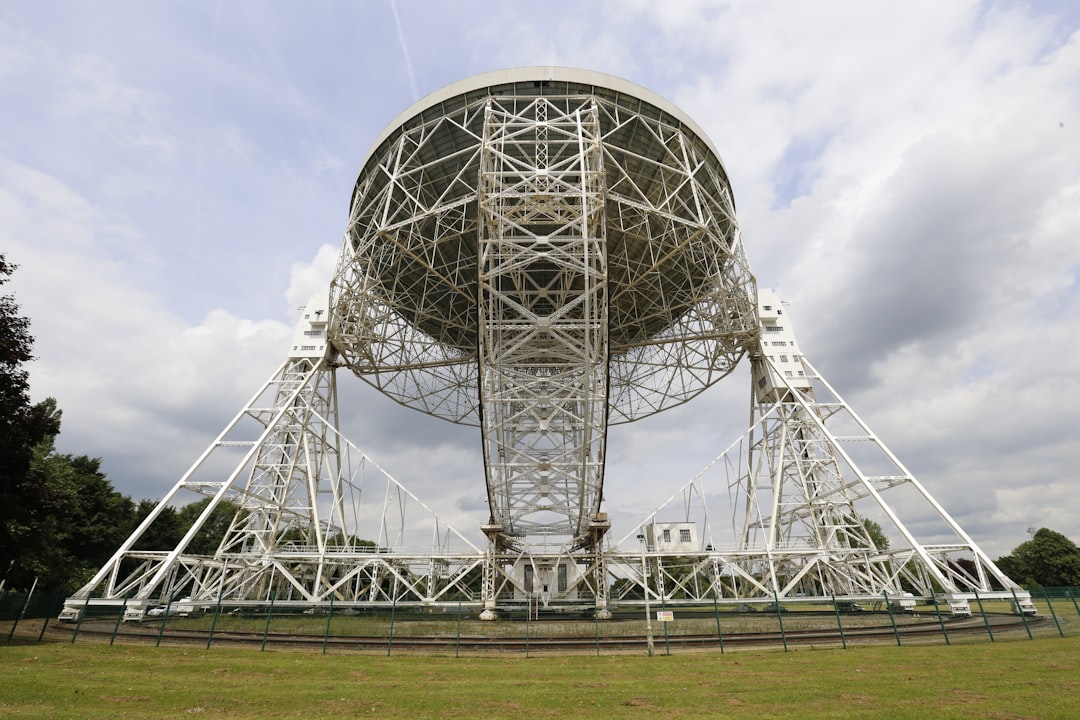
Radio arrays have revolutionized the field of astronomy by providing a powerful tool for observing celestial objects that are often invisible to optical telescopes. These arrays consist of multiple radio antennas working in unison to detect radio waves emitted by various astronomical sources. By combining data from these antennas, astronomers can achieve high-resolution images and gather detailed information about distant galaxies, pulsars, and other cosmic phenomena.
The ability to observe the universe in radio wavelengths has opened up new avenues for research, allowing scientists to study objects that emit little or no visible light. One of the most significant advantages of radio arrays is their capacity to penetrate dense interstellar dust clouds that obscure optical observations. This capability enables astronomers to investigate regions of star formation and the dynamics of galaxies with unprecedented clarity.
Furthermore, radio waves can provide insights into the magnetic fields and particle interactions occurring in these environments. As technology continues to advance, radio arrays are becoming increasingly sophisticated, enhancing their ability to contribute to our understanding of complex astrophysical processes.
The Discovery of Black Hole Wake
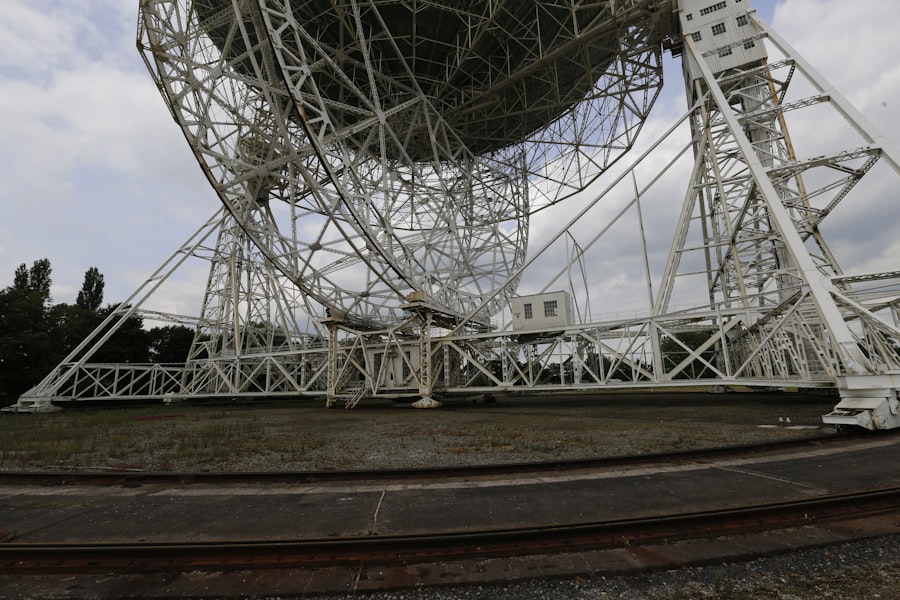
The concept of black hole wake emerged from recent advancements in observational astronomy, particularly through the use of radio arrays. Researchers began to notice peculiar patterns in the radio emissions surrounding certain black holes, suggesting the presence of a wake—a disturbance in the surrounding space caused by the black hole’s immense gravitational influence. This discovery has profound implications for our understanding of how black holes interact with their environments and influence the dynamics of nearby matter.
The identification of black hole wake is a testament to the power of modern observational techniques. By analyzing data from radio arrays, astronomers have been able to map out these wakes with remarkable precision. The wakes appear as elongated structures trailing behind moving black holes, providing valuable information about the motion and behavior of these cosmic giants.
This groundbreaking discovery not only sheds light on the nature of black holes but also raises new questions about their role in shaping the universe.
Understanding the Phenomenon of Black Hole Wake
| Metrics | Data |
|---|---|
| Black Hole Mass | 10^6 to 10^10 solar masses |
| Event Horizon Size | 5 to 10 times the Schwarzschild radius |
| Accretion Disk Temperature | Millions of degrees Kelvin |
| Black Hole Spin | 0 to 1 (dimensionless) |
| X-ray Emission | Highly energetic photons |
Understanding black hole wake requires a multidisciplinary approach that combines theoretical physics with observational data. The wake phenomenon is thought to arise from the interaction between a black hole and its surrounding medium, which can include gas, dust, and even other celestial bodies. As a black hole moves through space, it exerts gravitational forces that can compress and heat nearby material, creating shock waves that manifest as detectable emissions in radio wavelengths.
The study of black hole wake also involves examining how these wakes influence star formation and galactic dynamics. For instance, as a black hole moves through a galaxy, its wake can trigger the collapse of gas clouds, leading to new star formation. Conversely, it can also disrupt existing structures within a galaxy, altering its evolution over time.
By investigating these interactions, astronomers hope to gain a deeper understanding of the complex relationships between black holes and their host galaxies.
The Significance of Detecting Black Hole Wake
Detecting black hole wake is significant for several reasons. Firstly, it provides direct evidence of how black holes interact with their environments, offering insights into their growth and evolution over cosmic time. Understanding these interactions is crucial for developing comprehensive models of galaxy formation and evolution, as black holes are believed to play a pivotal role in shaping their host galaxies.
Moreover, studying black hole wakes can help refine existing theories about gravitational waves and their sources. As black holes merge or interact with other massive objects, they produce ripples in spacetime that can be detected by observatories like LIGO and Virgo. By correlating observations of black hole wakes with gravitational wave data, researchers can enhance their understanding of these phenomena and improve models predicting their occurrence.
How Radio Arrays Detect Black Hole Wake

Radio arrays detect black hole wake through a combination of advanced technology and sophisticated data analysis techniques. When a black hole moves through its environment, it generates shock waves that emit radio waves detectable by these arrays. The process begins with the collection of data from multiple antennas spread across vast distances, which work together to capture faint signals from space.
Once the data is collected, astronomers employ various imaging techniques to reconstruct the radio emissions into coherent images. This process often involves complex algorithms that account for factors such as interference and noise in the data. By analyzing these images, researchers can identify patterns indicative of black hole wakes and study their properties in detail.
The ability to visualize these wakes provides invaluable insights into the dynamics surrounding black holes and enhances our understanding of their role in the universe.
Implications for Astrophysics and Cosmology
The implications of detecting black hole wake extend far beyond individual studies; they resonate throughout astrophysics and cosmology as a whole. By providing new insights into how black holes interact with their environments, this research challenges existing paradigms and encourages scientists to rethink fundamental concepts related to gravity, matter distribution, and cosmic evolution. Furthermore, understanding black hole wakes can inform theories about dark matter and dark energy—two elusive components that constitute much of the universe’s mass-energy content.
As researchers explore how black holes influence their surroundings, they may uncover clues about the nature of these mysterious entities and their role in shaping cosmic structures on large scales.
Collaborative Efforts in Black Hole Research
The study of black holes and their wakes is inherently collaborative, drawing on expertise from various fields within astronomy and physics. Researchers from different institutions often come together to share data, resources, and insights, fostering an environment conducive to groundbreaking discoveries. This collaborative spirit is exemplified by large-scale projects involving multiple radio arrays working in concert to observe specific regions of space.
International partnerships also play a crucial role in advancing our understanding of black holes. By pooling resources and expertise from around the globe, scientists can tackle complex questions that require diverse perspectives and methodologies.
Future Research and Observations
As technology continues to evolve, future research on black holes and their wakes promises to yield even more exciting discoveries. Upcoming advancements in radio array technology will enhance sensitivity and resolution, allowing astronomers to detect fainter signals and observe more distant black holes than ever before. This progress will enable researchers to explore previously uncharted territories in astrophysics and cosmology.
Moreover, ongoing developments in computational techniques will facilitate more sophisticated modeling of black hole interactions with their environments. By simulating various scenarios involving different types of black holes and surrounding matter, scientists can refine their understanding of how these entities shape galaxies over time. The combination of improved observational capabilities and advanced modeling techniques will undoubtedly lead to significant breakthroughs in our comprehension of black holes.
Potential Applications of Black Hole Wake Detection
The detection of black hole wake holds potential applications beyond pure scientific inquiry; it may also have implications for technology development and practical applications on Earth. For instance, advancements in radio astronomy techniques could translate into improved communication technologies or enhanced imaging systems used in various fields such as medicine or environmental monitoring. Additionally, understanding the dynamics surrounding black holes may inspire new approaches to tackling complex problems related to energy generation or resource management.
As researchers continue to explore these cosmic phenomena, they may uncover principles that can be applied to address challenges faced by society today.
The Ongoing Exploration of Black Holes
The exploration of black holes remains one of the most exciting frontiers in modern science. As researchers uncover new insights into phenomena such as black hole wake through advanced observational techniques like radio arrays, they continue to challenge existing paradigms and expand our understanding of the universe. The significance of these discoveries extends beyond individual studies; they resonate throughout astrophysics and cosmology, prompting collaborative efforts that bring together experts from diverse fields.
As technology advances and research methodologies evolve, the future holds great promise for further unraveling the mysteries surrounding black holes. With each new discovery comes an opportunity to deepen our understanding not only of these enigmatic entities but also of the fundamental laws governing our universe. The ongoing exploration of black holes is not merely an academic pursuit; it is a journey into the very heart of existence itself—a quest that will undoubtedly yield profound insights for generations to come.
Recent studies on the radio array black hole wake have provided fascinating insights into the behavior of black holes and their surrounding environments.
Check it out here: My Cosmic Ventures.
WATCH THIS! The Invisible Threat: A Rogue Black Hole Headed for Our Solar System?
FAQs
What is a radio array black hole wake?
A radio array black hole wake refers to the detection of radio emissions from a black hole’s surroundings, which can provide valuable information about the properties and behavior of the black hole.
How is a radio array used to study black hole wakes?
A radio array is a collection of radio telescopes working together as a single instrument, allowing scientists to observe and study black hole wakes by detecting and analyzing radio emissions from the surrounding area.
What can the study of black hole wakes tell us about black holes?
Studying black hole wakes can provide insights into the accretion processes, jet formation, and the interaction of black holes with their surrounding environment. This information can help scientists better understand the behavior and properties of black holes.
Why is it important to study black hole wakes using radio arrays?
Radio arrays provide a unique and powerful tool for studying black hole wakes, as they can detect radio emissions from the surrounding area, allowing scientists to gain a deeper understanding of the processes and phenomena associated with black holes.
What are some of the key findings from the study of black hole wakes using radio arrays?
Some key findings from the study of black hole wakes using radio arrays include the detection of jet formation, the measurement of accretion rates, and the observation of interactions between black holes and their surrounding environment. These findings contribute to our understanding of black hole behavior and properties.