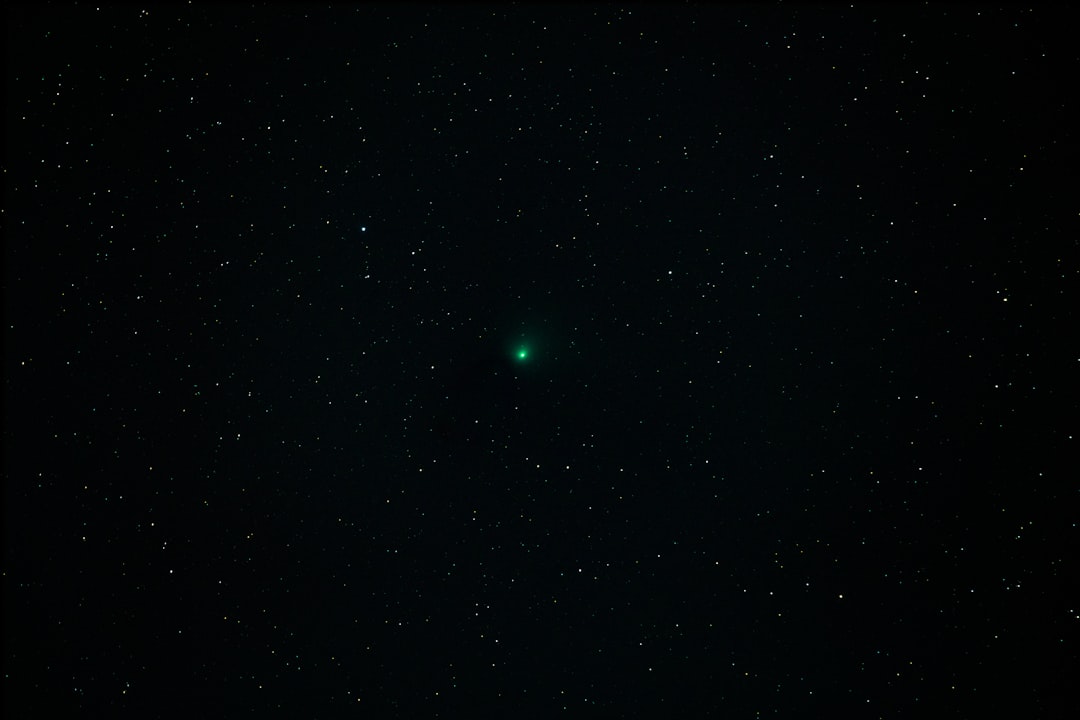
In the vast expanse of the cosmos, long period comets and black holes represent two of the most enigmatic phenomena. Long period comets, characterized by their elongated orbits that can take them thousands of years to complete, are celestial wanderers that originate from the distant reaches of the solar system. These icy bodies, composed primarily of dust and frozen gases, offer a glimpse into the primordial materials that formed the solar system.
The interplay between these two cosmic entities raises intriguing questions about their origins, behaviors, and the fundamental laws governing the universe. The study of long period comets and black holes not only enhances our understanding of individual celestial bodies but also sheds light on the broader dynamics of the universe.
As astronomers continue to explore these phenomena, they uncover connections that reveal the intricate web of interactions that shape cosmic evolution. The relationship between long period comets and black holes is particularly fascinating, as it intertwines the life cycles of these objects and their potential impacts on one another. This article delves into the characteristics and behaviors of long period comets, the nature of black holes, and the complex interactions that occur between these two captivating aspects of our universe.
Key Takeaways
- Long period comets are celestial bodies that have very long orbital periods and are influenced by the gravitational pull of black holes.
- Long period comets exhibit characteristics such as highly elliptical orbits and volatile compositions, making them unpredictable and fascinating objects of study.
- The origins of long period comets can be traced back to the Oort Cloud, a hypothesized region of icy bodies at the edge of the solar system, and they are believed to have been formed during the early stages of the solar system’s formation.
- Black holes are regions of spacetime where gravity is so strong that nothing, not even light, can escape, and they play a crucial role in the evolution and dynamics of galaxies and the universe as a whole.
- The connection between long period comets and black holes lies in the potential influence of black holes on the trajectory and behavior of long period comets, which can lead to significant changes in their orbits and paths.
The Characteristics and Behavior of Long Period Comets
Long period comets are distinguished by their highly elliptical orbits, which can extend beyond the outer planets of the solar system and into the Oort Cloud—a vast reservoir of icy bodies surrounding the solar system. Unlike short period comets, which typically originate from the Kuiper Belt and have orbits lasting less than 200 years, long period comets can take anywhere from 200 years to several million years to complete a single orbit around the Sun. This extended journey through space allows them to traverse vast distances, often bringing them close to the Sun before retreating back into the depths of interstellar space.
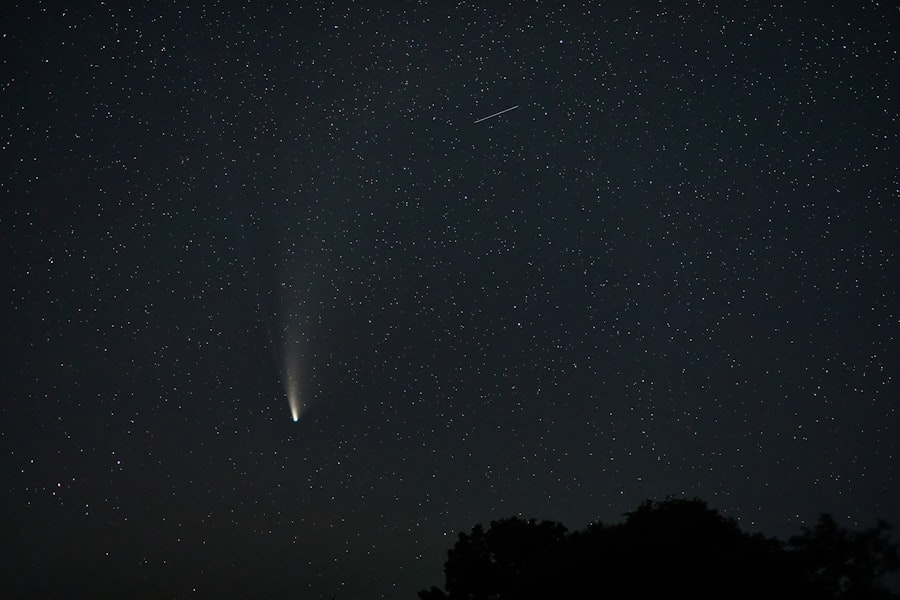
The behavior of long period comets is equally captivating. As they approach the Sun, the heat causes their icy nuclei to sublimate, releasing gas and dust that form a glowing coma and a tail that can stretch for millions of kilometers. This transformation is a spectacular sight, often making these comets visible from Earth with the naked eye.
The tails of long period comets always point away from the Sun due to solar wind pressure, creating a stunning visual display that has fascinated humanity for centuries. Their unpredictable appearances and dramatic changes in brightness add an element of mystery to these celestial wanderers, making them subjects of both scientific study and cultural fascination.
The Origins and Formation of Long Period Comets
The origins of long period comets can be traced back to the early solar system, where they formed from the same primordial material that coalesced to create planets and other celestial bodies. These comets are believed to originate from the Oort Cloud, a hypothetical spherical shell of icy objects located far beyond Neptune’s orbit. The Oort Cloud is thought to be a remnant of the solar system’s formation, containing countless icy bodies that were not incorporated into larger planets.
Over time, gravitational perturbations—possibly from nearby stars or molecular clouds—can nudge these icy bodies into orbits that bring them closer to the Sun. The formation process of long period comets is a complex interplay of gravitational forces and physical processes. As these icy bodies are perturbed from their distant orbits, they begin their long journey toward the inner solar system.
During this journey, they may encounter other celestial objects or be influenced by gravitational interactions with planets, further altering their trajectories. This dynamic environment contributes to the diversity observed among long period comets, with each one having a unique orbital path and physical characteristics shaped by its individual history.
The Role of Black Holes in the Universe
| Aspect | Details |
|---|---|
| Definition | A region of spacetime where gravity is so strong that nothing, not even light, can escape from it |
| Formation | Occurs when a massive star collapses under its own gravity |
| Types | Stellar black holes, Intermediate black holes, Supermassive black holes |
| Role | Regulates the growth of galaxies, influences the movement of stars, and may play a role in the creation of elements |
| Research | Scientists continue to study black holes to better understand their impact on the universe |
Black holes play a crucial role in our understanding of astrophysics and cosmology. These mysterious entities are formed when massive stars exhaust their nuclear fuel and collapse under their own gravity, resulting in a singularity surrounded by an event horizon—the point beyond which nothing can escape. Black holes come in various sizes, from stellar black holes formed by collapsing stars to supermassive black holes found at the centers of galaxies, containing millions or even billions of times the mass of our Sun.
The influence of black holes extends far beyond their immediate vicinity. They are thought to play a significant role in galaxy formation and evolution, affecting star formation rates and the distribution of matter within galaxies. The gravitational pull exerted by supermassive black holes can regulate the dynamics of entire galaxies, shaping their structure and behavior over cosmic timescales.
Additionally, black holes are sources of intense radiation as they accrete matter from their surroundings, emitting powerful jets that can impact nearby celestial objects and contribute to cosmic phenomena such as gamma-ray bursts.
The Connection Between Long Period Comets and Black Holes
The connection between long period comets and black holes is an area of growing interest among astronomers. While these two entities may seem disparate at first glance—one being a small icy body and the other a massive gravitational well—they share a common thread in their interactions with gravity and cosmic dynamics. Long period comets can be influenced by the gravitational fields of nearby black holes, particularly those located in dense regions of space such as galactic centers.
As long period comets traverse through space, they may encounter gravitational perturbations from black holes that alter their trajectories or even capture them into new orbits. This interaction can lead to dramatic changes in a comet’s path, potentially sending it on a collision course with other celestial bodies or into regions where it may be torn apart by tidal forces. Understanding these connections not only enhances knowledge about individual objects but also provides insights into broader cosmic processes.
How Long Period Comets are Affected by Black Holes

Long period comets can be significantly affected by black holes through gravitational interactions that alter their trajectories. When a comet approaches a black hole, it experiences intense gravitational forces that can change its speed and direction. Depending on its proximity to the black hole, a comet may be captured into orbit around it or flung out into interstellar space at high velocities.
This process is known as gravitational slingshotting and can result in dramatic changes in a comet’s orbital characteristics. Moreover, if a long period comet ventures too close to a supermassive black hole at the center of a galaxy, it may encounter tidal forces strong enough to disrupt its structure. These tidal forces arise from the differential gravitational pull exerted on different parts of the comet as it approaches the black hole.
In extreme cases, this can lead to the disintegration of the comet into smaller fragments, which may then follow new trajectories influenced by the black hole’s gravity. Such interactions highlight the dynamic nature of cosmic environments and underscore how even small objects like comets can be profoundly affected by massive entities like black holes.
The Influence of Black Holes on the Trajectory of Long Period Comets
The trajectory of long period comets can be significantly influenced by nearby black holes due to their immense gravitational pull. When a comet passes within a certain distance from a black hole, it can experience alterations in its velocity and direction as it navigates through varying gravitational fields. This influence can lead to changes in orbital parameters such as eccentricity and inclination, resulting in new paths that may take them closer to or further away from the Sun.
In some cases, this gravitational interaction can result in what is known as “capture,” where a comet becomes bound to a black hole’s gravity and enters into an orbit around it. Such events are rare but illustrate how interconnected celestial dynamics can be within galaxies. Conversely, if a comet is flung out into interstellar space due to a close encounter with a black hole, it may embark on an entirely new journey through the cosmos—one that could last for millennia before it encounters another star or celestial body.
The Potential Impact of Long Period Comets on Black Holes
While long period comets are often viewed as passive objects drifting through space, they can also have potential impacts on black holes under certain circumstances. For instance, if a long period comet were to approach a supermassive black hole closely enough, it could contribute material to the accretion disk surrounding the black hole. This process could enhance the luminosity of the black hole as it consumes additional mass, leading to increased radiation output detectable by astronomers.
Additionally, if a comet were to disintegrate near a black hole due to tidal forces or other interactions, it could create a shower of smaller fragments that might also be drawn into the accretion disk. This influx of material could have implications for our understanding of how black holes grow over time and how they interact with their environments. Such events highlight the interconnectedness of cosmic phenomena and emphasize that even small objects like long period comets can play roles in shaping larger structures within the universe.
The Study and Observation of Long Period Comets and Black Holes
The study and observation of long period comets and black holes require advanced astronomical techniques and technologies due to their unique characteristics and behaviors. Observing long period comets often involves tracking their movements across vast distances using ground-based telescopes equipped with sensitive imaging capabilities. Astronomers utilize various wavelengths—from visible light to infrared—to capture detailed information about these comets’ compositions and trajectories.
In contrast, studying black holes presents its own set of challenges due to their nature as regions devoid of light. Instead, astronomers rely on indirect methods such as observing X-ray emissions from accretion disks or monitoring stellar motions around suspected black hole locations within galaxies. Advanced instruments like space-based observatories have revolutionized our ability to detect and study both long period comets and black holes, allowing researchers to gather data that enhances our understanding of these cosmic phenomena.
The Future of Research on Long Period Comets and Black Holes
As technology continues to advance, future research on long period comets and black holes promises to yield exciting discoveries that deepen our understanding of these celestial entities. Upcoming space missions aimed at exploring comets will provide unprecedented insights into their compositions and behaviors while enhancing knowledge about their origins within the solar system’s early history. Additionally, advancements in observational techniques will enable astronomers to detect fainter long period comets that may have previously gone unnoticed.
Simultaneously, ongoing research into black holes will continue to unravel their mysteries—particularly regarding their formation processes and interactions with surrounding matter. As scientists develop more sophisticated models incorporating data from both long period comets and black holes, they will gain valuable insights into how these two phenomena influence one another within cosmic environments. The future holds great promise for expanding our understanding not only of individual objects but also of the intricate relationships that govern our universe.
Unraveling the Mysteries of Long Period Comets and Black Holes
In conclusion, long period comets and black holes represent two fascinating aspects of our universe that continue to captivate scientists and enthusiasts alike. Their unique characteristics and behaviors offer valuable insights into cosmic processes while highlighting the interconnectedness inherent in celestial dynamics. As researchers delve deeper into understanding these phenomena—exploring their origins, interactions, and impacts—they unravel mysteries that have puzzled humanity for centuries.
The relationship between long period comets and black holes exemplifies how even seemingly disparate entities can influence one another within the grand tapestry of cosmic evolution. As technology advances and observational capabilities improve, future research promises to shed light on these enigmatic objects while enhancing our comprehension of fundamental astrophysical principles governing our universe’s behavior. Ultimately, unraveling these mysteries not only enriches scientific knowledge but also deepens humanity’s appreciation for the wonders that lie beyond our planet.
Recent studies on long-period comets have sparked interest in their potential relationship with black holes, particularly in how these celestial bodies might influence the trajectories of comets as they traverse the solar system. For a deeper understanding of this fascinating topic, you can explore the article on cosmic phenomena at My Cosmic Ventures, which delves into the dynamics of comets and their interactions with massive gravitational forces.
WATCH THIS! The Invisible Threat: A Rogue Black Hole Headed for Our Solar System?
FAQs
What are long period comets?
Long period comets are comets with orbital periods greater than 200 years. They originate from the Oort Cloud, a spherical region of icy bodies located beyond the outer planets of our solar system.
What is a black hole?
A black hole is a region of spacetime where gravity is so strong that nothing, not even light, can escape from it. Black holes are formed when massive stars collapse under their own gravity at the end of their life cycle.
What is the connection between long period comets and black holes?
There is no direct connection between long period comets and black holes. Long period comets originate from the outer regions of our solar system, while black holes are located in distant galaxies. However, the gravitational influence of a passing star or the tidal forces from a nearby black hole can potentially perturb the orbit of a long period comet, sending it on a new trajectory.
Can long period comets be affected by black holes?
While it is theoretically possible for the gravitational influence of a black hole to affect the trajectory of a long period comet, the chances of such an event occurring are extremely low. The vast distances between long period comets and black holes make direct interactions unlikely.
Are there any observed instances of long period comets being influenced by black holes?
As of now, there are no confirmed observations of long period comets being directly influenced by black holes. Most long period comets are believed to be influenced by the gravitational pull of passing stars or the outer planets in our solar system.