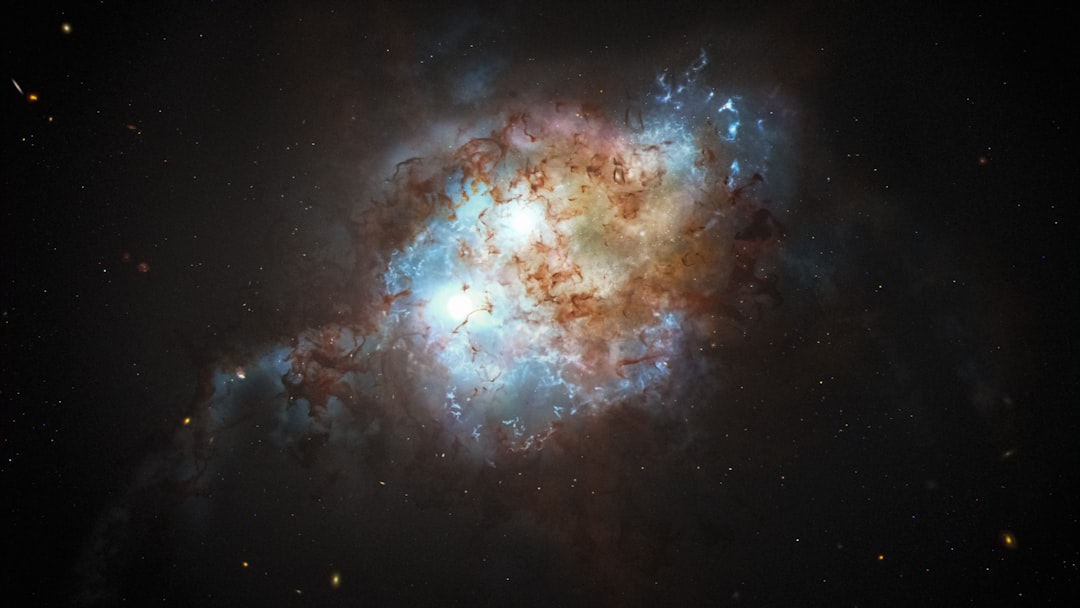
Black holes have long captivated the imagination of scientists and the general public alike. These enigmatic cosmic entities, formed from the remnants of massive stars that have undergone gravitational collapse, possess gravitational fields so intense that nothing, not even light, can escape their grasp. The concept of a black hole challenges the very fabric of our understanding of physics, particularly in the realms of general relativity and quantum mechanics.
As researchers delve deeper into the mysteries of the universe, black holes remain a focal point of inquiry, offering insights into the nature of space, time, and the fundamental forces that govern the cosmos. The allure of black holes extends beyond their scientific significance; they also evoke a sense of wonder and fear. The idea that an object could exist in the universe that is capable of consuming everything in its vicinity raises profound questions about existence and the limits of human understanding.
As astronomers continue to observe and study these celestial phenomena, they uncover new layers of complexity, revealing not only how black holes form and evolve but also their potential interactions with other astronomical bodies, including our own planet.
Key Takeaways
- Black holes are mysterious and powerful cosmic entities that have fascinated scientists and the public for decades.
- The discovery of a near miss with a black hole has raised concerns about the potential impact on Earth and the solar system.
- Understanding the science behind black holes is crucial for predicting and preparing for future encounters.
- Earth’s close encounter with a black hole could have theoretical consequences that challenge our current understanding of physics and astronomy.
- Scientists have closely monitored the near miss and are working to better understand the astronomical significance of the event.
The Discovery of the Near Miss
In a remarkable turn of events, astronomers recently reported a near miss involving a black hole that passed alarmingly close to Earth. This discovery sent ripples through the scientific community, igniting discussions about the implications of such an encounter. The black hole, identified as part of a distant star system, was detected using advanced observational techniques that allowed scientists to track its trajectory with unprecedented accuracy.
The event highlighted the dynamic nature of our galaxy and underscored the importance of ongoing astronomical research. The near miss was not merely a theoretical exercise; it represented a tangible reminder of the vastness and unpredictability of the universe.
The implications of this discovery prompted researchers to reevaluate existing models of black hole behavior and their potential interactions with other celestial bodies, including planets like Earth.
Understanding the Potential Impact
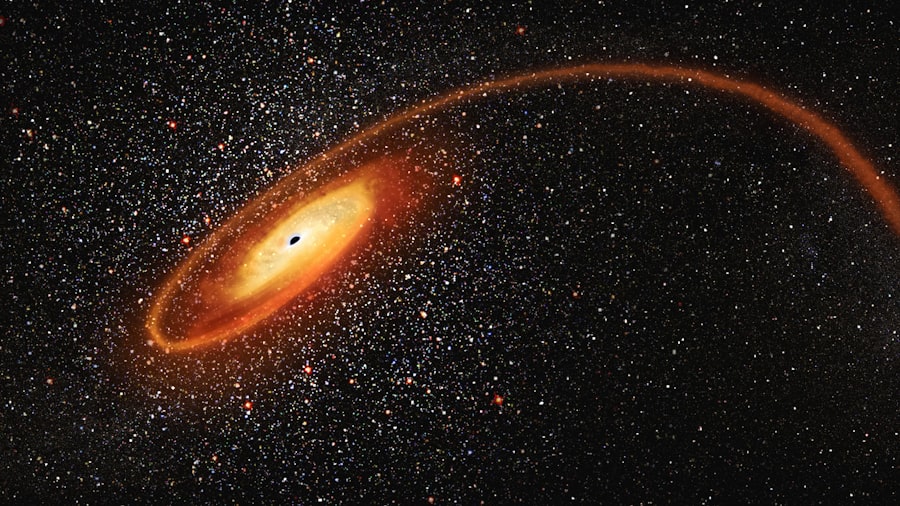
The potential impact of a black hole passing near Earth is a topic that stirs both curiosity and concern among scientists and laypeople alike. While the immediate threat posed by this particular black hole was minimal, the event raised important questions about what might happen if a black hole were to come significantly closer. The gravitational influence of such an object could disrupt the orbits of planets and other celestial bodies, leading to catastrophic consequences for any life forms that might exist in those systems.
Moreover, the gravitational pull exerted by a nearby black hole could affect the stability of our solar system. If a black hole were to approach within a few astronomical units, it could alter the orbits of planets, potentially leading to collisions or ejections from their respective orbits. Such scenarios, while unlikely in the near future, serve as a reminder of the delicate balance that governs celestial mechanics and the potential for unforeseen events in an ever-evolving universe.
The Science Behind Black Holes
| Aspect | Details |
|---|---|
| Formation | Result of the death of a massive star |
| Size | Can range from a few times the mass of the sun to millions of times the mass of the sun |
| Event Horizon | Boundary beyond which nothing can escape the gravitational pull |
| Gravity | Extremely strong, causing time dilation and spaghettification near the singularity |
| Observation | Detected indirectly through their effect on nearby matter and light |
Understanding black holes requires delving into complex scientific principles that govern their formation and behavior. At their core, black holes are defined by their event horizons—the boundary beyond which nothing can escape their gravitational pull. The formation of a black hole typically occurs when a massive star exhausts its nuclear fuel and collapses under its own gravity, leading to an infinitely dense point known as a singularity.
This process is governed by Einstein’s theory of general relativity, which describes how mass warps spacetime. The study of black holes has evolved significantly over the years, with advancements in technology allowing scientists to observe phenomena associated with these cosmic giants. For instance, researchers have utilized gravitational wave detectors to capture ripples in spacetime caused by black hole mergers.
Additionally, telescopes equipped with sophisticated imaging techniques have enabled astronomers to visualize the accretion disks surrounding black holes—regions where matter spirals inward before being consumed. These observations provide critical insights into the behavior of matter under extreme gravitational conditions and contribute to our understanding of fundamental physics.
Earth’s Close Encounter with a Black Hole
The recent close encounter with a black hole has sparked renewed interest in the dynamics of our solar system and its place within the galaxy. While Earth was fortunate to escape any immediate danger from this particular black hole, the event serves as a reminder that our planet exists within a vast and often unpredictable cosmic landscape. The trajectory of this black hole was meticulously tracked by astronomers who utilized data from multiple observatories to create a comprehensive picture of its path through space.
As scientists analyzed the data surrounding this near miss, they considered various factors that could influence future encounters with black holes. The Milky Way galaxy is home to millions of stars and potentially numerous black holes, many of which remain undetected due to their elusive nature. Understanding how these objects move through space and interact with other celestial bodies is crucial for predicting potential future encounters and assessing any risks they may pose to Earth.
Theoretical Consequences of a Black Hole’s Near Miss
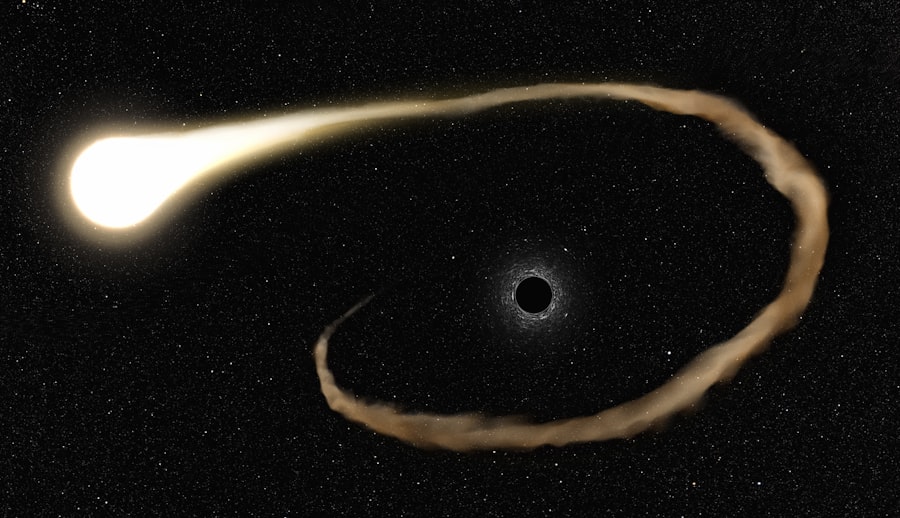
The theoretical consequences of a near miss with a black hole extend far beyond immediate physical impacts; they also encompass broader implications for our understanding of astrophysics and cosmology. If a black hole were to pass close enough to Earth, it could create significant gravitational disturbances that might alter planetary orbits or even lead to catastrophic events such as collisions between celestial bodies. Such scenarios highlight the interconnectedness of cosmic systems and the delicate balance that sustains them.
Furthermore, these theoretical considerations prompt scientists to explore how such encounters could influence the evolution of life on Earth. While life has demonstrated remarkable resilience throughout history, an encounter with a black hole could introduce unprecedented challenges. Researchers are increasingly interested in modeling these scenarios to better understand how life might adapt—or fail to adapt—in response to extreme cosmic events.
The Astronomical Significance of the Event
The astronomical significance of this near miss cannot be overstated. It serves as a crucial reminder of the dynamic nature of our universe and the myriad forces at play within it. This event has prompted scientists to reevaluate existing models of stellar evolution and black hole behavior, leading to new hypotheses about how these entities interact with their surroundings.
The discovery has also reignited interest in studying other celestial phenomena associated with black holes, such as gamma-ray bursts and quasars. Moreover, this near miss has implications for future astronomical research initiatives. As technology continues to advance, astronomers are better equipped to detect and monitor distant celestial objects, including black holes.
This event underscores the importance of collaboration among international research teams and observatories in order to share data and insights that can enhance our understanding of these complex phenomena.
The Future of Earth’s Encounters with Black Holes
Looking ahead, scientists are keenly aware that encounters with black holes—while rare—are not entirely out of the realm of possibility. As research continues to advance, astronomers are developing more sophisticated models to predict potential future encounters based on current observations and simulations. Understanding the distribution and movement patterns of black holes within our galaxy will be essential for assessing any risks they may pose to Earth.
Additionally, ongoing advancements in observational technology will enable researchers to detect smaller black holes that may have previously gone unnoticed. By expanding our knowledge base regarding these elusive entities, scientists can better prepare for any potential future encounters and develop strategies for mitigating risks associated with them.
How Scientists Monitored the Near Miss
The monitoring of this near miss involved an intricate web of observational techniques and collaborative efforts among astronomers worldwide. Utilizing data from ground-based telescopes and space observatories, scientists were able to track the trajectory of the black hole with remarkable precision. Advanced algorithms were employed to analyze light patterns emitted by surrounding stars and gas clouds, providing critical information about the black hole’s movement through space.
In addition to traditional observational methods, researchers also relied on gravitational wave detectors to capture any ripples in spacetime caused by interactions between celestial bodies in proximity to the black hole. This multi-faceted approach allowed scientists to create a comprehensive picture of the event and its implications for our understanding of cosmic dynamics.
Public Reaction to the News
The announcement regarding the near miss generated significant public interest and discussion across various platforms. Social media erupted with reactions ranging from awe and fascination to concern about the implications for Earth’s safety. Many individuals expressed curiosity about what it would mean for humanity if a black hole were to come closer than previously thought possible.
Public fascination with space phenomena often leads to increased interest in science education and outreach initiatives. As news outlets covered this event extensively, it provided an opportunity for educators and scientists alike to engage with audiences about astrophysics and cosmology. This heightened awareness can inspire future generations to pursue careers in science and contribute to our understanding of the universe.
Conclusion and Implications
In conclusion, the recent near miss involving a black hole serves as both a scientific milestone and a poignant reminder of humanity’s place within an expansive universe filled with mysteries yet to be unraveled. While this particular encounter posed no immediate threat to Earth, it has sparked vital discussions about potential future risks associated with black holes and their interactions with celestial bodies. As researchers continue to explore these enigmatic entities, they will undoubtedly uncover new insights that challenge existing paradigms in astrophysics and cosmology.
The implications extend beyond mere academic inquiry; they touch upon fundamental questions about existence, survival, and humanity’s relationship with the cosmos. Ultimately, this event underscores the importance of continued investment in scientific research and education as we strive to understand our universe’s complexities while preparing for whatever challenges may lie ahead.
Recent studies have raised intriguing questions about the proximity of black holes to Earth and the potential implications for our planet. For a deeper understanding of this topic, you can explore the article on cosmic phenomena and their effects on Earth by visiting