The ultimate fate of the universe is a question that has captivated humanity for millennia, driving scientific inquiry and philosophical contemplation alike. As cosmologists peer deeper into the cosmos, employing ever more sophisticated telescopes and theoretical models, a clearer, albeit still somewhat speculative, picture of our universe’s eventual demise begins to emerge. The answer, however, is not a single, definitive event, but rather a spectrum of possibilities, each dictated by the fundamental properties of the universe itself, primarily its expansion rate and the enigmatic dark energy that appears to be driving it.
The cornerstone of our understanding of the universe’s ultimate fate lies in its ceaseless expansion. Edwin Hubble’s groundbreaking observations in the early 20th century revealed that distant galaxies are receding from us, and the further away they are, the faster they move. This cosmic outward push, initially attributed to the aftermath of the Big Bang, has since been revealed to be an accelerating phenomenon, a startling discovery made in the late 1990s.
The Big Bang: A Point of Origin
Every cosmic narrative begins with the Big Bang. This singular event, theorized to have occurred approximately 13.8 billion years ago, marks the moment from which all matter, energy, space, and time originated. It was not an explosion in space, but rather the rapid expansion of space itself. From an infinitesimally small and incredibly hot point, the universe unfurled, cooling and condensing to form the fundamental particles, atoms, stars, and galaxies we observe today. The initial conditions of this expansion, including the precise balance of matter and energy, are crucial in determining the universe’s long-term trajectory.
Cosmic Expansion: The Driving Force
The expansion of the universe is not a static process. It is a dynamic force that continues to shape the cosmos. For a long time, scientists debated whether gravity, the attractive force between all matter, would eventually halt or even reverse this expansion, leading to a Big Crunch. However, the discovery of dark energy has fundamentally altered this perspective.
Dark Energy: The Accelerating Enigma
Dark energy is a hypothetical form of energy that permeates all of space and exerts a negative, repulsive pressure. It is estimated to constitute about 68% of the total energy density of the universe, a far greater proportion than ordinary matter (about 5%) or dark matter (about 27%). The precise nature of dark energy remains one of the greatest mysteries in modern physics. Several theories exist, including the cosmological constant, a remnant of the vacuum energy of space, or a dynamic field that changes over time. Regardless of its true identity, its influence on the universe’s expansion is profound and appears to be accelerating.
The Hubble Constant: Measuring the Pace of Expansion
The rate at which the universe is expanding is quantified by the Hubble constant. Precise measurements of this constant are vital for predicting the universe’s future. Current estimates place it around 70 kilometers per second per megaparsec, meaning that for every megaparsec (approximately 3.26 million light-years) further away a galaxy is, it appears to be moving away from us 70 kilometers per second faster. Ongoing research aims to refine this value, which has implications for discerning between different cosmological models.
As scientists continue to explore the fate of the universe, intriguing theories emerge about its ultimate destiny. For a deeper understanding of these concepts, you can read the article on cosmic expansion and the potential scenarios that may unfold over billions of years. This insightful piece delves into topics such as the Big Freeze, Big Crunch, and Big Rip, providing a comprehensive overview of what might happen to our universe in the distant future. To learn more, visit this article.
Potential End Scenarios: A Cosmic Obituary
Based on our current understanding of the universe’s expansion and the influence of dark energy, several scenarios for its ultimate fate have been proposed. Each presents a unique and often stark vision of the cosmic endgame.
The Big Freeze (Heat Death): The Most Likely Scenario
The Big Freeze, also known as the Heat Death of the Universe, is currently considered the most probable ultimate fate. This scenario hinges on the continued acceleration of cosmic expansion driven by dark energy.
The Ever-Expanding Void
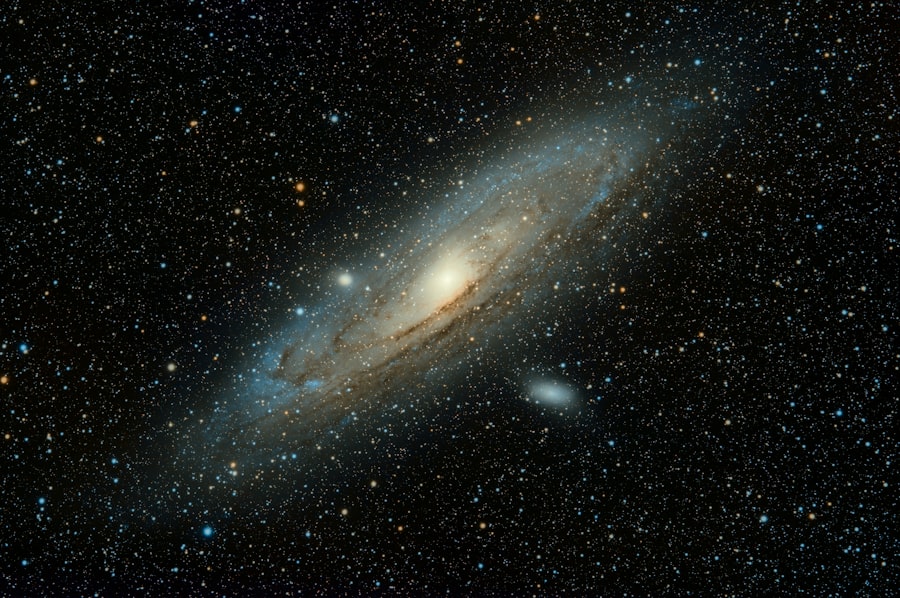
In the Big Freeze scenario, the universe continues to expand indefinitely. As it expands, it cools. Galaxies, initially bound together by gravity, will eventually be pulled so far apart that they become causally disconnected, meaning light from one can never reach another. Our own Milky Way galaxy will likely merge with the Andromeda galaxy in billions of years, forming a larger, elliptical galaxy. However, beyond this local galactic cluster, the universe will become an increasingly empty and cold expanse.
The Fading of Stars and Galaxies
As time progresses, stars will exhaust their nuclear fuel. The birth of new stars will eventually cease as the necessary gas and dust clouds become too diffuse and cold. Existing stars will evolve through their life cycles, becoming white dwarfs, neutron stars, and eventually black holes. Over immense timescales, even these stellar remnants will fade and cool.
The Demise of Matter
The ultimate end of the Big Freeze involves the decay of all matter. Protons, the building blocks of atomic nuclei, are theorized to be unstable and may eventually decay into lighter particles like positrons and photons. If protons decay, then all atoms will eventually disintegrate, leaving behind a universe filled only with elementary particles and low-energy radiation, all moving further and further apart in an ever-expanding, frigid vacuum. Black holes, too, are predicted to eventually evaporate through a process known as Hawking radiation, albeit over timescales that are almost incomprehensibly vast.
The Big Rip: A Violent Tear in Spacetime
While the Big Freeze is the most favored scenario, the possibility of a more dramatic end, the Big Rip, cannot be entirely ruled out, especially if the nature of dark energy is different from what is currently assumed.
Phantom Energy: An Aggressive Dark Energy
The Big Rip scenario relies on a hypothetical form of dark energy known as “phantom energy.” Unlike the cosmological constant, phantom energy’s density increases with the expansion of the universe. This aggressive form of dark energy would exert an ever-increasing repulsive force.
The Unraveling of Cosmic Structures
If phantom energy dominates, the accelerating expansion would not only pull galaxies apart but would eventually become strong enough to overcome all other forces, including gravity, the strong nuclear force, and even the electromagnetic force.
The Disintegration of Galaxies
First, galaxies would be torn apart. Individual stars would be ripped from their galactic anchors.
The Destruction of Stars and Planets
Then, stars themselves would be ripped asunder. Planets would be torn from their orbits around these disintegrating stars.
The Final Singularity
In the most extreme version of the Big Rip, spacetime itself would eventually be ripped apart, leading to a singularity and the complete destruction of the universe as we know it. This scenario, while scientifically intriguing, is considered less likely than the Big Freeze given current observational data.
The Big Crunch: A Cosmic Collapse (Less Likely)
The Big Crunch is a scenario where the expansion of the universe eventually reverses, leading to a collapse back upon itself. This was a leading theory before the discovery of dark energy.
The Dominance of Gravity
For a Big Crunch to occur, the total density of matter and energy in the universe would need to be high enough for gravity to overcome the expansion. Essentially, gravity would act as a cosmic brake, eventually bringing the expansion to a halt.
The Reverse Expansion
Once the expansion stops, gravity would begin to pull everything back together. Galaxies would start to move towards each other, the universe would contract, and temperatures would rise dramatically.
The Return to a Singularity
This contraction would accelerate, leading to a reversal of the Big Bang. All matter and energy would eventually be compressed back into an infinitely dense and hot singularity, effectively erasing the universe as we know it. While this scenario is less likely given current evidence for accelerating expansion, some theoretical models still allow for its possibility under specific conditions.
The Role of Dark Matter and Black Holes: Unseen Architects of Fate
While dark energy is the primary driver of the universe’s ultimate fate, dark matter and black holes play significant roles in shaping cosmic evolution and influencing the various end scenarios.
Dark Matter: The Invisible Scaffold
Dark matter, though unseen, exerts a powerful gravitational influence. It forms the invisible scaffolding upon which galaxies and galaxy clusters are built. Its presence contributes to the overall gravitational pull of the universe, which, in the absence of dark energy, might have led to a Big Crunch.
Galactic Formation and Stability
Dark matter’s gravitational pull is crucial for the formation and stability of galaxies. Without it, the visible matter within galaxies would not have coalesced sufficiently to form the structures we observe.
Influence on Cosmic Expansion
While dark energy is currently overpowering gravity, the distribution and density of dark matter contribute to the overall gravitational landscape, subtly influencing the rate of expansion and the potential for gravitational collapse.
Black Holes: Cosmic Drainpipes and Potential Survivors
Black holes, the remnants of collapsed massive stars, represent extreme concentrations of mass and gravity. Their ultimate fate within the grand cosmic narrative is also a subject of scientific interest.
Stellar Black Holes and Supermassive Black Holes
Stellar black holes form from the collapse of individual massive stars, while supermassive black holes reside at the centers of most galaxies, including our own. They continue to accrete matter, growing larger over time.
Hawking Radiation and Evaporation
While black holes are often thought of as eternal, Stephen Hawking proposed that they are not truly black but emit thermal radiation, known as Hawking radiation. Over unimaginably long timescales, this radiation would cause black holes to gradually lose mass and eventually evaporate. This process is extremely slow for stellar and supermassive black holes, making their evaporation occur far beyond the timescales relevant for other cosmic events in most scenarios. However, in the very far future of a Big Freeze universe, black hole evaporation might be the last significant process to occur.
Their Role in a Collapsing Universe
In a Big Crunch scenario, black holes would contribute to the overall mass and gravitational pull, accelerating the collapse. Their eventual fate in such a scenario would be to merge with other matter as the universe contracts.
The Uncertainties of the Future: Gaps in Our Cosmic Knowledge
Despite significant advancements, our understanding of the universe’s ultimate fate is not without its uncertainties. Several key unknowns continue to shape the possibilities and prevent a definitive pronouncement.
The Nature of Dark Energy: The Biggest Unknown
As mentioned, the most significant uncertainty lies in the precise nature of dark energy. Is it a constant force, as described by Einstein’s cosmological constant, or is it a dynamic entity that changes over time? The answer to this question is paramount in distinguishing between the Big Freeze and the Big Rip scenarios.
Cosmological Constant vs. Dynamic Dark Energy
If dark energy is the cosmological constant, its density remains constant, leading to a steady acceleration and the Big Freeze. If dark energy is dynamic, its density could increase, potentially leading to the Big Rip.
Quintessence and Other Models
Other theoretical models, such as quintessence, propose a scalar field that permeates space and drives acceleration. The behavior of this field would dictate the universe’s ultimate destiny.
The Fate of Fundamental Particles: The Long Goodbye
The stability of fundamental particles, particularly protons, is another crucial factor. If protons are indeed unstable and decay, then the Big Freeze scenario becomes even more complete, with all baryonic matter eventually disintegrating.
Proton Decay and Grand Unified Theories
The theoretical framework for proton decay stems from Grand Unified Theories (GUTs), which attempt to unify the fundamental forces of nature. Experimental searches for proton decay have so far yielded no definitive results, but the possibility remains.
The Lifespan of Matter
The timescale for proton decay, if it occurs, is predicted to be extraordinarily long, far exceeding the lifespan of stars. This makes its direct observation impossible within the current human epoch.
The Possibility of Cyclic Universes and Other Exotic Scenarios
While the Big Freeze, Big Rip, and Big Crunch are the most discussed end scenarios, some theoretical models propose more complex or cyclic futures for the universe.
The Big Bounce: A Precursor to a New Beginning
The Big Bounce theory suggests that a Big Crunch could lead to a rebound, initiating a new Big Bang and a new cycle of cosmic expansion. This would imply an eternal, oscillating universe.
Multiverse Theories: Beyond Our Cosmic Horizon
The concept of a multiverse, where our universe is just one of many, introduces further complexity. The fate of our specific universe might be intertwined with the dynamics of a larger, overarching cosmic structure.
As scientists continue to explore the fate of the universe, intriguing theories emerge about its ultimate destiny. One compelling perspective suggests that the universe may eventually undergo a dramatic transformation, leading to scenarios such as the Big Freeze or the Big Crunch. For those interested in delving deeper into these fascinating concepts, a related article can be found at this link, which provides a comprehensive overview of current research and hypotheses regarding the universe’s future. Understanding these possibilities not only expands our knowledge of cosmology but also ignites our imagination about what lies ahead in the vast expanse of space.
The Human Perspective: Contemplating Our Place in the Cosmic Timeline
| Event | Description |
|---|---|
| Expansion | The universe will continue to expand at an accelerating rate. |
| Heat Death | Eventually, the universe will reach a state of maximum entropy, resulting in a “heat death” where all energy is evenly distributed. |
| Dark Energy | The mysterious force driving the universe’s expansion will continue to be a major area of study and speculation. |
| Galactic Collisions | Over billions of years, galaxies will continue to collide and merge, reshaping the cosmic landscape. |
| Black Holes | Black holes will continue to grow and merge, potentially leading to the formation of supermassive black holes. |
The contemplation of the universe’s ultimate fate inevitably prompts reflection on humanity’s place within this vast cosmic narrative. While the timescales involved are almost incomprehensible, understanding these potential endgames can offer a unique perspective on our existence.
The Ephemeral Nature of Civilizations
The immense timescales required for the universe’s demise highlight the fleeting nature of human civilizations. Even the most advanced societies are but brief sparks in the grand cosmic drama. This realization can foster humility and a greater appreciation for the present.
The Drive for Knowledge: A Cosmic Imperative
The pursuit of understanding the universe’s ultimate fate is a testament to humanity’s insatiable curiosity and our drive for knowledge. This quest pushes the boundaries of science and philosophy, enriching our understanding of ourselves and our place in the cosmos.
The Legacy of Humanity: Echoes in the Void
Even if the universe eventually succumbs to the Big Freeze or another terminal event, the echoes of humanity’s existence, our achievements, our art, our knowledge, might persist in some form, perhaps imprinted on the cosmic background radiation or carried by the last remnants of matter. The ultimate legacy of humanity may not be physical but conceptual, a testament to the universe’s capacity for consciousness and creativity.
In conclusion, the ultimate fate of the universe remains a subject of ongoing scientific investigation and profound philosophical contemplation. While the Big Freeze appears to be the most probable outcome, contingent on the behavior of dark energy, the possibility of other, more dramatic scenarios cannot be entirely dismissed. As humanity continues to explore the cosmos, our understanding of our universe’s grand finale will undoubtedly evolve, offering ever deeper insights into the majestic and mysterious journey of existence.

Dark Energy May Be Changing—So What Happens to the Universe?
FAQs
What is the fate of the universe according to current scientific understanding?
According to current scientific understanding, the fate of the universe is determined by the amount of matter and energy it contains. There are several possible scenarios, including the Big Freeze, the Big Rip, and the Big Crunch.
What is the Big Freeze?
The Big Freeze, also known as the Heat Death, is one possible fate of the universe. In this scenario, the universe continues to expand at an accelerating rate, eventually leading to a state of maximum entropy where all energy is evenly distributed and no more work can be done.
What is the Big Rip?
The Big Rip is another possible fate of the universe. In this scenario, the expansion of the universe accelerates to the point where it tears apart all matter, including galaxies, stars, and even atoms, resulting in the complete destruction of the universe.
What is the Big Crunch?
The Big Crunch is a third possible fate of the universe. In this scenario, the expansion of the universe eventually slows and reverses, leading to a contraction of the universe back to a hot, dense state similar to the Big Bang.
What are some other theories about the fate of the universe?
In addition to the Big Freeze, Big Rip, and Big Crunch, there are other theories about the fate of the universe, including the possibility of a cyclic universe where the universe goes through repeated cycles of expansion and contraction, and the idea of a multiverse where our universe is just one of many parallel universes.