
The cosmos, a canvas of infinite wonder, continues to unveil its secrets, pushing the boundaries of human comprehension with each passing year. Astronomers and physicists, armed with increasingly sophisticated instruments and theoretical frameworks, are relentlessly exploring the farthest reaches of space and delving into the fundamental nature of reality. These ongoing investigations are not merely academic pursuits; they reshape our understanding of our place in the universe and inspire a profound sense of awe. The latest discoveries paint a picture of a dynamic, evolving cosmos, far stranger and more intricate than we could have imagined.
The observation that the universe is expanding is one of the cornerstones of modern cosmology. However, the precise rate of this expansion, known as the Hubble constant, has become a persistent puzzle, with different measurement techniques yielding conflicting values. This discrepancy, known as the “Hubble tension,” hints at potential new physics beyond our current Standard Model of cosmology.
The Cosmic Microwave Background: A Stale but Telling Signal
The Cosmic Microwave Background (CMB) radiation, a faint afterglow from the Big Bang, provides a snapshot of the early universe. Precise measurements of the CMB’s temperature fluctuations by missions like Planck have allowed cosmologists to determine the age and composition of the universe with remarkable accuracy. These measurements suggest a universe dominated by dark energy and dark matter, with ordinary matter making up a surprisingly small fraction.
The Planck Satellite’s Legacy
The European Space Agency’s Planck satellite, which concluded its observations in 2013, provided the most detailed map of the CMB to date. Its data refined our understanding of cosmological parameters, including the age of the universe (approximately 13.8 billion years), the proportion of dark matter (around 27%), and dark energy (around 68%). However, the precise values derived from Planck data, when compared to local measurements of the expansion rate, are where the tension arises.
Acoustic Oscillations as a Local Yardstick
Astronomers also measure the expansion rate by observing the distances to objects in the more local universe, such as Type Ia supernovae and Baryon Acoustic Oscillations (BAOs). BAOs, imprinted in the distribution of galaxies, act as a “standard ruler” across cosmic distances. While these local measurements generally agree with each other, they consistently yield a higher Hubble constant than that inferred from the CMB.
The Mystery of Dark Energy’s Acceleration
The accelerating expansion of the universe is attributed to a mysterious force known as dark energy. While its existence is strongly supported by observations, its nature remains one of the greatest unsolved mysteries in physics. Is it a cosmological constant, a property of spacetime itself, or something else entirely?
Cosmological Constant: Einstein’s Resurrected Idea?
The simplest explanation for dark energy is Einstein’s cosmological constant, a term he initially introduced to create a static universe but later called his “biggest blunder.” If dark energy is indeed a cosmological constant, its energy density would remain constant as the universe expands. However, theoretical predictions for the value of this constant from quantum field theory are vastly larger than what is observed, a discrepancy known as the “cosmological constant problem.”
Beyond the Cosmological Constant: Exploring Alternatives
Scientists are actively exploring alternative theories for dark energy. These include scalar fields, such as quintessence, whose energy density can evolve over time, or modifications to the laws of gravity on cosmic scales. The ongoing Hubble tension could be a crucial clue, potentially pointing towards a deviation from the standard cosmological model and the need for new theoretical frameworks.
Recent discoveries about the universe have unveiled astonishing insights into dark matter and its role in cosmic evolution. A fascinating article titled “Unraveling the Mysteries of Dark Matter” delves into the latest findings from astrophysicists who are using advanced telescopes and simulations to better understand this elusive substance. For more information on these groundbreaking revelations, you can read the full article here: Unraveling the Mysteries of Dark Matter.
The Enigmatic Realm of Dark Matter
Dark matter, an invisible substance that interacts gravitationally but not electromagnetically, constitutes about 85% of the matter in the universe. Its presence is inferred from its gravitational influence on visible matter, such as the rotation of galaxies and the bending of light around massive objects. Despite decades of searching, its fundamental nature remains elusive.
Galactic Rotation Curves: The First Clues
The initial evidence for dark matter came from observing the unexpectedly fast rotation of stars in the outer regions of galaxies. According to the laws of gravity, stars farther from the galactic center should orbit slower. However, observations revealed that stars in galactic halos rotate at nearly constant speeds, implying the presence of a significant amount of unseen mass extending far beyond the visible disc.
The Milky Way’s Invisible Halo
Our own Milky Way galaxy is enveloped in a vast halo of dark matter. This halo plays a crucial role in the formation and evolution of galaxies, providing the gravitational scaffolding for baryonic matter to coalesce. Understanding the distribution and properties of this halo is key to understanding galactic dynamics.
Gravitational Lensing: Bending the Unseen
Gravitational lensing, the bending of light by massive objects, provides another powerful tool for detecting and mapping dark matter. As light from distant galaxies passes through regions of high mass concentration, its path is distorted, creating magnified, distorted, or even multiple images of the background source. By analyzing these lensing patterns, astronomers can infer the distribution of both visible and dark matter.
Galaxy Clusters: Cosmic Magnifying Glasses
Galaxy clusters, the largest known gravitationally bound structures in the universe, are particularly effective gravitational lenses. The immense mass of a galaxy cluster warps spacetime to such an extent that it can magnify and distort the light from galaxies behind it, allowing us to study the distribution of dark matter within these massive structures.
The Search for Dark Matter Particles: The Elusive Quarry
The leading hypothesis is that dark matter is composed of weakly interacting massive particles (WIMPs) or other exotic particles not accounted for by the Standard Model of particle physics. Numerous experiments worldwide are dedicated to directly detecting these elusive particles by looking for the faint signals produced when a dark matter particle collides with ordinary matter in highly sensitive detectors.
Direct Detection Experiments: Waiting for the Whisper
Experiments like LUX-ZEPLIN (LZ) in the United States and XENONnT in Italy employ large tanks of noble liquids, such as xenon or argon, shielded deep underground to minimize interference from cosmic rays. They aim to detect the tiny flashes of light or charge produced when a WIMP or other dark matter candidate interacts with the detector material. So far, no definitive detection has been made, placing increasingly stringent limits on the properties of potential dark matter particles.
Indirect Detection: Looking for Cosmic Byproducts
Another approach is indirect detection, which searches for the products of dark matter annihilation or decay. If dark matter particles can interact with each other, they might produce detectable fluxes of gamma rays, neutrinos, or antimatter particles. Telescopes like the Fermi Gamma-ray Space Telescope and neutrino observatories like IceCube are employed in this search.
Unveiling the Earliest Moments: Insights from the James Webb Space Telescope
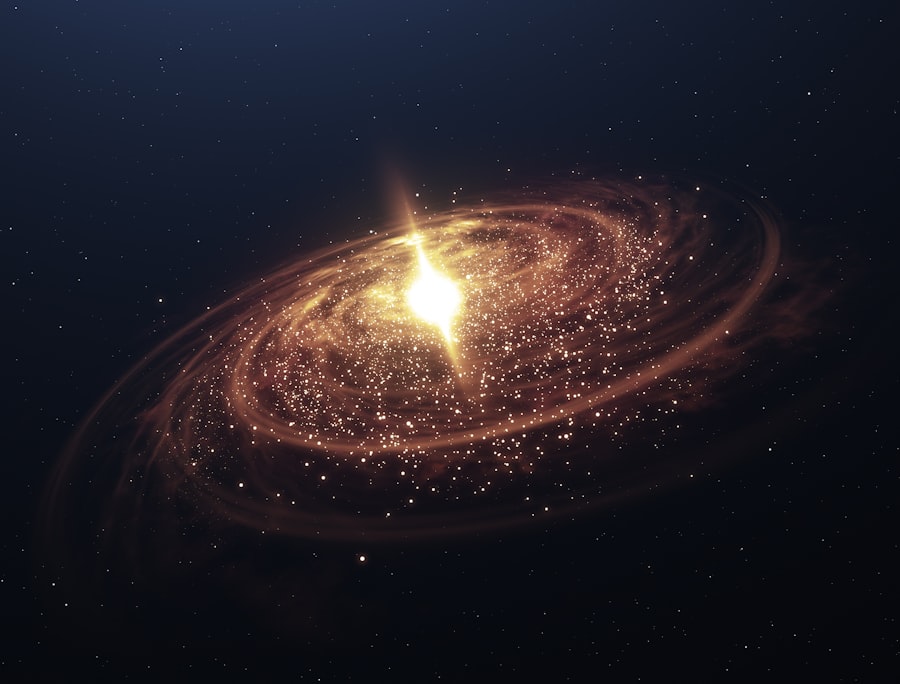
The James Webb Space Telescope (JWST), a revolutionary infrared observatory, has opened a new window into the universe’s distant past, allowing astronomers to observe the formation of the first stars and galaxies in unprecedented detail. Its powerful instruments can peer through cosmic dust clouds that obscure the view for optical telescopes, revealing the universe as it was billions of years ago.
The Dawn of Galaxies: Webb’s Stunning Revelations
JWST’s early observations have already yielded startling results, pushing back the frontiers of our understanding of galaxy formation. It has detected galaxies that appear to be more massive and mature than expected for their early cosmic age, challenging existing models of how the first structures in the universe assembled.
Early Stellar Populations: More Developed Than Predicted
Scientists are finding evidence of stars forming much earlier and more efficiently than previously thought. These early galaxies, observed as they were just a few hundred million years after the Big Bang, exhibit signs of complex stellar populations and heavy element production, suggesting that the first generations of stars were already quite evolved.
The Role of Supermassive Black Holes
The presence of surprisingly massive black holes in the early universe is another perplexing discovery. These supermassive black holes, observed at the centers of young galaxies, seem to have grown to enormous sizes incredibly quickly, raising questions about the mechanisms of black hole seed formation and growth in the early cosmos.
Peering into Protoplanetary Disks: The Birth of Worlds
JWST’s infrared capabilities are also revolutionizing our study of protoplanetary disks – the swirling disks of gas and dust around young stars where planets are born. By analyzing the composition and structure of these disks, astronomers can gain crucial insights into the conditions under which planetary systems form.
Water and Organic Molecules in Planet Nurseries
JWST has detected water vapor and complex organic molecules in protoplanetary disks, providing direct evidence for the ingredients necessary for life being present in these nascent planetary nurseries. This research helps us understand the diversity of exoplanetary systems and the potential for habitability elsewhere in the galaxy.
Understanding Planet Formation Pathways
By studying a wide range of protoplanetary disks at different stages of evolution, JWST is helping to refine our models of planet formation. It can reveal the presence of gaps and structures within the disks that indicate the ongoing formation of planets and the processes that shape their orbits and compositions.
The Dance of Black Holes: Unraveling Their Mysteries
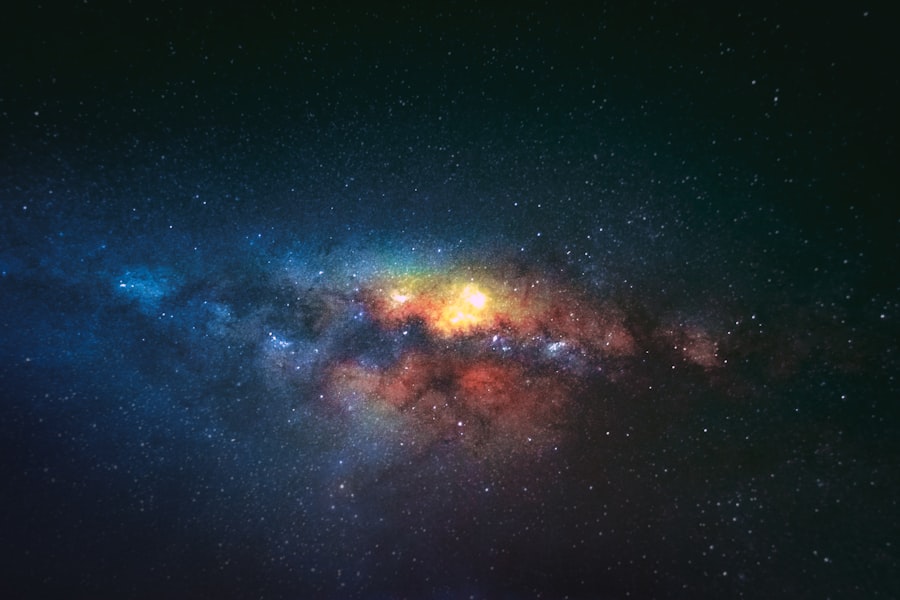
Black holes, regions of spacetime with such strong gravity that nothing, not even light, can escape, are some of the most extreme and fascinating objects in the universe. Recent advancements have provided unprecedented insights into their formation, behavior, and the role they play in cosmic evolution.
Merging Black Holes: Gravitational Wave Astronomy’s Triumph
The advent of gravitational wave astronomy, pioneered by the LIGO and Virgo collaborations, has opened a new window into the universe by detecting ripples in spacetime caused by cataclysmic events like the merger of black holes. These detections have confirmed long-standing predictions of Einstein’s theory of general relativity and provided direct evidence for the existence of stellar-mass black hole binaries.
Stellar-Mass Black Hole Mergers: A Symphony of Gravity Waves
The detection of gravitational waves from the merger of two stellar-mass black holes has provided a wealth of information about their masses, spins, and the nature of the event. These mergers are far more common than previously anticipated, suggesting that many galaxies host such binaries.
Supermassive Black Hole Mergers: A Future Frontier
While detecting the mergers of stellar-mass black holes is now routine, the next frontier is the detection of gravitational waves from the mergers of supermassive black holes, found at the centers of galaxies. Projects like the Laser Interferometer Space Antenna (LISA) are being developed to achieve this, promising to reveal the dynamics of galactic evolution and the growth of these cosmic behemoths.
Imaging the Unseeable: The Event Horizon Telescope’s Achievement
The Event Horizon Telescope (EHT) collaboration achieved a monumental feat by capturing the first-ever images of the event horizons of black holes – the M87 black hole in 2019 and Sagittarius A, the supermassive black hole at the center of our own Milky Way galaxy, in 2022. These groundbreaking images provide direct visual confirmation of the existence of black holes and offer crucial tests of Einstein’s theory of general relativity in extreme gravitational environments.
The Shadow of M87*: A Silhouette of Power
The image of M87*, a supermassive black hole millions of times the mass of our Sun, revealed a bright ring of light surrounding a dark central region – the black hole’s “shadow.” This shadow is not the black hole itself but rather the region where light is so strongly bent that it is captured by the black hole. The size and shape of this shadow are precisely as predicted by general relativity.
Sagittarius A*: Our Galactic Neighbor’s Enigma
The imaging of Sagittarius A* presented its own set of challenges due to its proximity and the intervening gas and dust. However, the resulting image, also showing a bright ring around a dark shadow, further validated the predictions of general relativity and provided a closer look at the enigmatic object at the heart of our galaxy.
Black Holes and Galaxy Evolution: A Cosmic Partnership
Black holes are not just passive objects; they actively influence the evolution of their host galaxies. Supermassive black holes, through powerful jets of plasma and radiation they can emit, can regulate star formation within galaxies, a process known as “feedback.”
Active Galactic Nuclei (AGN): Cosmic Furnaces
When material falls onto a supermassive black hole, it can form an accretion disk that heats up to incredibly high temperatures, releasing vast amounts of energy in the form of radiation and powerful jets. These active galactic nuclei (AGN) can inject enormous amounts of energy into their surroundings, influencing the gas and dust within the galaxy and potentially quenching star formation.
The Co-evolution of Black Holes and Galaxies
The tight correlation observed between the mass of a supermassive black hole and the properties of its host galaxy suggests a co-evolutionary relationship. Understanding how these two entities influence each other is a key area of research in modern astrophysics.
Recent discoveries about the universe continue to captivate scientists and enthusiasts alike, shedding light on the mysteries of dark matter and cosmic expansion. A fascinating article on this topic can be found at My Cosmic Ventures, where researchers discuss groundbreaking findings that could reshape our understanding of the cosmos. These revelations not only enhance our knowledge of the universe’s structure but also inspire new questions about its origins and ultimate fate.
The Quest for Extraterrestrial Life: New Horizons in Exoplanet Exploration
| Discovery | Details |
|---|---|
| Gravitational Waves | First direct detection in 2015, confirming Einstein’s theory of general relativity. |
| Exoplanets | Over 4,000 confirmed planets outside our solar system, some in the habitable zone. |
| Dark Matter | Indirect evidence of its existence, but its nature remains a mystery. |
| Fast Radio Bursts | Mysterious cosmic signals detected, their origin is still unknown. |
The discovery of thousands of exoplanets – planets orbiting stars other than our Sun – has transformed our understanding of planetary systems and ignited the search for life beyond Earth. Advances in observational techniques and the development of new instruments are bringing us closer than ever to answering the age-old question: are we alone?
The Habitable Zone: Where Life Might Flourish
The concept of the “habitable zone” – the region around a star where liquid water could exist on a planet’s surface – is central to the search for life. Astronomers are actively identifying exoplanets within the habitable zones of their host stars, particularly those that are Earth-sized and rocky.
Proxima Centauri b: A Nearby Candidate
The discovery of Proxima Centauri b, an exoplanet orbiting our closest stellar neighbor, Proxima Centauri, has generated significant excitement. This planet, located within its star’s habitable zone, is considered a prime candidate for further investigation in the search for biosignatures.
TRAPPIST-1: A System of Seven Earth-Sized Worlds
The TRAPPIST-1 system, with its seven Earth-sized planets orbiting a cool red dwarf star, represents another remarkable discovery. Several of these planets reside within the habitable zone, offering a unique laboratory for studying diverse planetary environments and potentially searching for signs of life.
Atmospheric Characterization: Unveiling Planetary Atmospheres
The next crucial step in exoplanet exploration is to characterize the atmospheres of these distant worlds. By analyzing the light that passes through or is emitted by an exoplanet’s atmosphere, scientists can identify the presence of specific molecules, some of which could be indicative of biological activity.
Biosignatures: The Fingerprints of Life
Scientists are searching for “biosignatures” – gases or combinations of gases in an exoplanet’s atmosphere that are unlikely to be produced by geological processes alone. For example, the simultaneous presence of oxygen and methane would be a strong indicator of life, as these gases react with each other and would need to be constantly replenished.
The Power of Transmission Spectroscopy
Transmission spectroscopy, used by JWST, is a powerful technique for atmospheric characterization. When an exoplanet passes in front of its star (a transit), starlight filters through its atmosphere. By measuring the specific wavelengths of light that are absorbed, scientists can deduce the composition of the atmosphere.
SETI’s Evolving Strategy: Listening to the Cosmos
The Search for Extraterrestrial Intelligence (SETI) continues its long-standing mission to detect signals from advanced civilizations. While once solely focused on radio waves, SETI’s strategies are evolving to encompass a broader range of observational techniques and scientific disciplines.
Radio Astronomy’s Enduring Role
Radio telescopes, such as the Green Bank Telescope and the Allen Telescope Array, remain vital tools for SETI. They scan the skies for narrow-band radio signals that might be artificial in origin, looking for patterns that deviate from natural cosmic emissions.
Optical SETI: Searching for Laser Signals
Optical SETI, which searches for brief, powerful pulses of laser light, is another avenue being explored. Lasers could be used for interstellar communication, and their signals would stand out against the background noise of stars.
The ongoing unraveling of the universe’s mysteries is a testament to human curiosity and ingenuity. From the accelerating expansion of space to the enigmatic nature of dark matter, the birth of the first stars to the potential for life on distant exoplanets, each new discovery pushes the boundaries of our knowledge and inspires us to continue our quest for understanding. The universe, in its vastness and complexity, remains the ultimate frontier, a boundless source of wonder and a constant invitation to explore.

Dark Energy May Be Changing—So What Happens to the Universe?
FAQs
What are the latest discoveries about the universe?
Some of the latest discoveries about the universe include the detection of gravitational waves, the discovery of exoplanets in the habitable zone, and the observation of mysterious fast radio bursts.
How do these discoveries contribute to our understanding of the universe?
These discoveries contribute to our understanding of the universe by providing insights into the nature of black holes, the potential for extraterrestrial life, and the existence of cosmic phenomena that were previously unknown.
What are gravitational waves and why are they significant?
Gravitational waves are ripples in spacetime caused by the acceleration of massive objects. Their significance lies in the fact that they provide direct evidence of the existence of black holes and other massive cosmic events, confirming a key prediction of Albert Einstein’s theory of general relativity.
What are exoplanets and why are they important in the study of the universe?
Exoplanets are planets that orbit stars outside of our solar system. They are important in the study of the universe because they offer the potential for finding habitable worlds and understanding the prevalence of life beyond Earth.
What are fast radio bursts and what do they tell us about the universe?
Fast radio bursts are brief, intense pulses of radio waves from distant galaxies. Their origin is still not fully understood, but they provide valuable information about the cosmic phenomena that produce them and the nature of the universe at large.