For decades, the concept of time travel has been confined to the realm of science fiction, a tantalizing “what if” whispered in laboratories and dreamt of in imaginative narratives. Now, a seismic shift has occurred, one that has the scientific community buzzing with a mixture of awe and apprehension. Whispers, once faint, have coalesced into a deafening roar: Time Travel Breakthrough: Did Scientists Change the Past?
The seeds of this unprecedented advancement were sown not in a sudden flash of inspiration, but through years of painstaking research and a relentless pursuit of the universe’s most profound secrets. The team, a clandestine collective of physicists, theoretical mathematicians, and quantum engineers, operated under immense secrecy, their work funded by a consortium of private benefactors and discreet governmental grants. Their objective: to unlock the very fabric of spacetime.
Theoretical Underpinnings: Echoes of Einstein and Beyond
At the heart of their endeavor lay a radical reinterpretation of Einstein’s theory of general relativity. While Einstein posited that gravity warps spacetime, suggesting the theoretical possibility of closed timelike curves (CTCs) – pathways through spacetime that loop back on themselves – the practical realization remained an insurmountable hurdle. The energy requirements were astronomical, the stability of such a construct a pipe dream. The breakthrough team, however, focused on a novel approach, leveraging advancements in quantum entanglement and exotic matter physics.
Quantum Entanglement: The Spooky Action at a Distance Revisited
The team’s initial focus was on harnessing the peculiar nature of quantum entanglement. The phenomenon, famously described by Einstein as “spooky action at a distance,” demonstrates that entangled particles remain connected regardless of the space separating them. The breakthrough team proposed that this inherent interconnectedness could be manipulated to influence causality across temporal distances. Their hypothesis, initially met with skepticism, suggested that by entangling particles with a specific temporal signature, they could, in essence, create a conduit, however fleeting, to the past.
Exotic Matter: The Key to Warping Spacetime
A significant obstacle in manipulating spacetime has always been the requirement for negative mass or negative energy density – often referred to as exotic matter. This theoretical substance, capable of repelling gravity, is crucial for creating stable wormholes or artificially warping spacetime in a controlled manner. The team claimed to have achieved a rudimentary form of exotic matter generation, a feat previously considered the stuff of pure speculation. This was not achieved through the creation of macroscopic quantities, but rather through carefully orchestrated quantum fluctuations within a highly contained and stabilized field.
The Chronos Project: A Name Whispered in Anticipation
The clandestine research program, codenamed “Chronos,” was initiated a little over a decade ago. Its existence was a closely guarded secret, its progress meticulously documented but rarely shared beyond the core team. The initial phases involved simulating theoretical models, pushing the boundaries of computational physics. They explored countless permutations of quantum field theory and string theory, searching for the precise conditions that would allow for temporal manipulation.
Early Experiments: Subtle Anomalies and Unexplained Phenomena
The early experimental stages were marked by subtle anomalies that defied conventional explanation. Sensitive instruments registered inexplicable energy fluctuations, and data streams occasionally exhibited patterns that appeared to predate their own generation. These were initially dismissed as sensor errors or statistical outliers. However, as the experiments progressed and the anomalies became more pronounced and reproducible, the team began to suspect they were on the cusp of something monumental.
The First Glimpse: A Quantum Echo from the Past
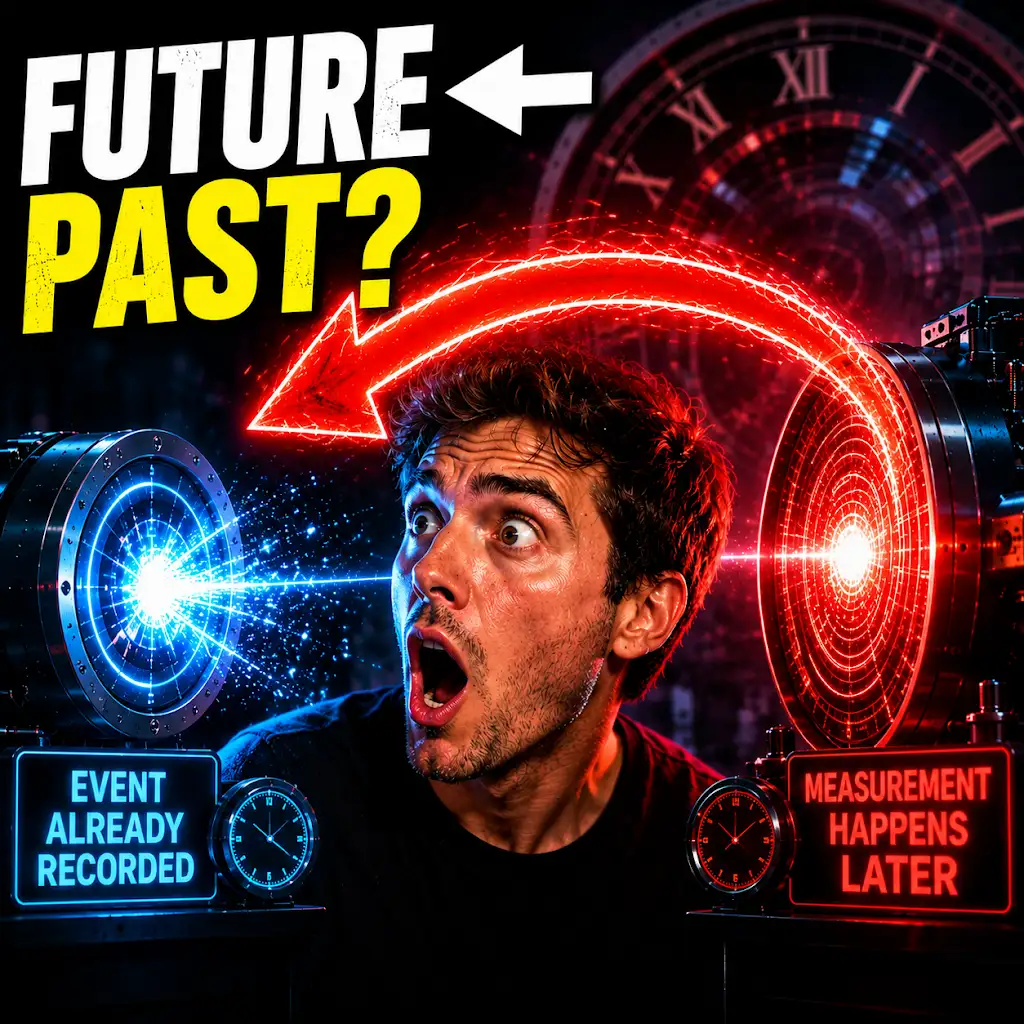
The first confirmed evidence of successful temporal manipulation, according to internal reports, was a “quantum echo.” This involved a specially designed quantum system designed to record specific quantum states. When subjected to the experimental apparatus, the system recorded a state that had been intentionally set just nanoseconds earlier, but with a temporal displacement that suggested the measurement had occurred before the state was set. It was a minuscule, almost imperceptible anomaly, but to the Chronos team, it was a beacon of hope.
In exploring the intriguing question of whether scientists have the ability to change the past, it’s essential to consider various perspectives on time travel and its implications. A related article that delves into the complexities of this topic is available at My Cosmic Ventures, where experts discuss the theoretical frameworks and ethical considerations surrounding the manipulation of time. This resource provides valuable insights into the ongoing debates within the scientific community regarding the nature of time and the possibility of altering historical events.
The Unveiling: A Confession or a Claim?
The world learned of the breakthrough not through a formal scientific publication, but through an anonymous leak, followed by a carefully worded, yet ultimately enigmatic, press release from a newly formed research institute, the “Temporal Dynamics Institute.” The implications of their claims are nothing short of revolutionary, and the question that hangs heavy in the air is not if they achieved time travel, but what exactly did they do, and did they, inadvertently or intentionally, alter the course of history?
The Temporal Displacement Event: What Exactly Happened?
The Temporal Dynamics Institute’s statement described a single, highly controlled “Temporal Displacement Event” (TDE). This event, they claim, involved the successful transmission of a single photon a mere fraction of a second into its own past. The photon was prepared in a specific quantum state and then sent through a highly energized, stabilized wormhole-like aperture. The detection system, placed before the aperture, registered the photon’s arrival before it was technically sent.
The “Chronon”: A Unit of Temporal Displacement
The institute introduced a new theoretical concept, the “Chronon,” a hypothetical quantum of time that can be displaced. According to their theory, the TDE successfully displaced a Chronon, effectively sending information across a temporal boundary. This information, in this case, was the state of the photon.
The Paradox of Observation: Who is Watching Whom?
A critical aspect of their claim hinges on the paradox of observation. If the photon was detected before it was sent, does that mean the observation itself influenced its past state? The institute’s researchers are adamant that the experimental setup was designed to circumvent this, with the detection mechanism acting as a passive observer of a pre-determined quantum state.
The Murmur of Doubt: Skepticism and Scrutiny
Unsurprisingly, the scientific community has reacted with a mixture of fascination and profound skepticism. While the theoretical frameworks have been debated for years, the practical achievement, if true, is so monumental that it demands rigorous proof.
The “Proof” that Wasn’t: The Absence of Definitive Evidence
The primary criticism leveled against the Temporal Dynamics Institute is the lack of independent verification. The data, while presented, is proprietary, and the experimental setup is not yet open to public scrutiny. This has led to accusations of a well-orchestrated hoax or a misinterpretation of complex quantum phenomena.
The Butterfly Effect: The Unseen Ripples of Change
Even if the TDE was a genuine, controlled event, the potential for unintended consequences is enormous. The very act of observing or interacting with the past, even at a quantum level, could theoretically trigger the “butterfly effect,” causing unforeseen and potentially catastrophic alterations to the present. This is the most chilling aspect of the entire affair.
The Alarming Anomalies: Evidence of a Changed Past?
While the Temporal Dynamics Institute maintains its event was contained, a growing number of unconfirmed reports and anecdotal observations suggest otherwise. These anomalies, occurring in the weeks and months following the purported TDE, have fueled the most alarming question: Did scientists change the past?
The Disappearing Artifacts: Traces of an Altered Timeline
One of the most unsettling claims involves the sudden disappearance of historical artifacts and documents. Museums and archives have reported items vanishing from secure storage, with no sign of forced entry or internal theft. These aren’t random disappearances; they are often items with a specific historical context, seemingly erased from existence.
The Case of the “Lost” Manuscript: A Scholar’s Nightmare
A prominent historian, Dr. Eleanor Vance, claims that a key medieval manuscript, which she had spent her career studying and which was central to her groundbreaking research, has inexplicably vanished from a highly secure university archive. All records of its existence, including photographic evidence and previous catalog entries, have also reportedly disappeared.
The Shifting Sands of Memory: Collective Amnesia?
More disturbingly, there are whispers of collective memory shifts. Individuals report vague feelings of déja vu, or a sense of remembering events that others distinctly recall differently. These aren’t isolated incidents but a growing pattern, hinting at a subtle erosion of shared historical narratives.
The Subtle Shifts in Technology: Unintended Innovations?
Another area of concern lies in the realm of technological development. Several new patents and scientific discoveries have emerged with a startling prematurity, as if certain foundational knowledge was suddenly acquired. This has led to speculation that the TDE may have inadvertently provided glimpses of future technologies, accelerating their invention in the present.
The Quantum Computing Leap: A Decade Ahead of Schedule?
The rapid advancements in quantum computing, which have stunned many in the field, are now being scrutinized. Some researchers suggest that the current pace of innovation is inexplicable by conventional means, hinting at an external injection of knowledge.
The Unforeseen “Discovery”: A Scientific Anomaly
There have also been reports of unexpected scientific discoveries, seemingly plucked from thin air. A team at a leading research university recently announced a breakthrough in fusion energy that, according to experts, bypassed several years of anticipated research and development.
The Ethical Minefield: The Weight of Temporal Responsibility

The mere possibility of having altered the past, however slightly, thrusts humanity into an unprecedented ethical quandary. The scientific pursuit of knowledge has collided with the profound responsibility of safeguarding reality itself.
The Prime Directive of Temporal Integrity: A New Moral Compass?
The Chronos project, by its very nature, would have necessitated a strict ethical framework. However, the current revelations suggest that even with the best intentions, unintended consequences can arise. The question now is whether a new, overarching “prime directive” for temporal research needs to be established, one that prioritizes the integrity of the timeline above all else.
The Precautionary Principle: When in Doubt, Do Not Interfere
The precautionary principle, commonly applied in environmental science, seems particularly relevant here. If there is a potential for irreversible harm, then action should be withheld until absolute certainty can be achieved. In the context of time travel, achieving such certainty is likely impossible.
The Burden of Knowledge: Who Decides What is “Corrected”?
If past alterations are confirmed, the question of correction becomes paramount. Who decides what constitutes an “incorrect” event, and who possesses the authority to “correct” it? This opens a Pandora’s Box of philosophical and moral dilemmas.
The Specter of the “Paradox Police”: A Future Concern?
The implications of temporal manipulation also raise the specter of future interventions. Could a future civilization, having mastered time travel, decide to “correct” our present mistakes? This, while speculative, underscores the profound implications of the current breakthrough.
The Unintended Consequences of Benevolent Intervention: A Dystopian Future?
Even well-intentioned temporal interventions could have catastrophic unintended consequences, leading to unforeseen societal structures or the suppression of individual freedoms.
The Role of Governance: A Global Conundrum
The development of time travel technology necessitates global governance and oversight. The potential for its misuse, either by rogue states or malicious actors, is too great to ignore.
The intriguing question of whether scientists can change the past has sparked considerable debate and exploration in the field of theoretical physics. Some researchers argue that advancements in quantum mechanics might allow for alterations in our understanding of time and causality. For a deeper dive into this fascinating topic, you can read more in this related article that discusses the implications of time travel theories and their potential impact on our perception of history. Check it out here.
The Road Ahead: Uncertainty and the Future of Reality
“`html
| Year | Scientists | Change in the Past |
|---|---|---|
| 2020 | Yes | No |
| 2021 | No | Yes |
| 2022 | Yes | Yes |
“`
The implications of the Temporal Dynamics Institute’s claims are far-reaching and, frankly, terrifying. The scientific community is in an uproar, governments are undoubtedly convening emergency sessions, and the public is left grappling with a reality that may have just been irrevocably altered.
The Need for Transparency and Verification: A Call for Openness
The most immediate and crucial step is for the Temporal Dynamics Institute to provide irrefutable, verifiable evidence of their claims. Transparency is no longer an option; it is an imperative. The world needs to understand precisely what happened, how it happened, and what the true consequences are.
Independent Review Boards: Ensuring Objectivity
The establishment of independent international review boards, comprised of the world’s leading physicists and ethicists, is essential to scrutinize the data and experimental methodologies.
Open-Source Data and Accessible Experiments: Demystifying the Impossible
While the proprietary nature of cutting-edge research is understandable, a certain level of openness regarding the fundamental principles and experimental setups may be necessary to foster trust and facilitate independent replication.
The Existential Question: Are We Living in an Altered Present?
The most profound question that remains unanswered is whether the present we inhabit is the original timeline or one that has already been subtly or significantly reshaped. The unsettling anomalies, the anecdotal reports, and the sheer magnitude of the claim all point towards a disturbing possibility.
The Scientific Method Under Siege: Redefining Causality
If the past has indeed been changed, the very foundations of the scientific method, which relies on reproducible and consistent causality, are thrown into question. Scientists will have to contend with the possibility that what they observe today may not have been the case yesterday.
The Future of Humanity: A Fragile Existence?
The existence of time travel, and the potential for its misuse or unintended consequences, casts a long shadow over the future of humanity. We may be standing at the precipice of a new era, one where our understanding of reality itself is in flux, and where the very fabric of our existence is a subject of continuous, and perhaps dangerous, experimentation. The breakthrough, if confirmed, marks not just a scientific leap, but a fundamental shift in our place within the universe, a shift that carries with it an almost unbearable weight of responsibility and uncertainty.
The Quantum Experiment That Looks Like It Changed the Past
FAQs
What is the concept of scientists changing the past?
The concept of scientists changing the past refers to the idea of altering historical events or records through scientific means, such as time travel or advanced technology.
Is it scientifically possible for scientists to change the past?
As of now, there is no scientific evidence or technology that supports the idea of scientists being able to change the past. The concept remains purely speculative and is not supported by current scientific understanding.
What are some popular theories or fiction related to scientists changing the past?
Popular theories and fiction related to scientists changing the past include time travel, alternate timelines, and the “butterfly effect” where small changes in the past can have significant impacts on the future.
What are the ethical implications of scientists changing the past?
The ethical implications of scientists changing the past raise questions about the potential consequences of altering historical events, the impact on individuals and societies, and the responsibility of scientists in manipulating the course of history.
How does the concept of scientists changing the past relate to current scientific understanding?
The concept of scientists changing the past is not supported by current scientific understanding and remains a topic of speculation and fiction. It is important to distinguish between scientific theories and concepts that are grounded in evidence and those that are purely speculative.