In the vast expanse of the universe, stars serve as the luminous beacons that illuminate the night sky. Among these celestial bodies, stellar giants stand out due to their immense size and extraordinary luminosity. These titanic stars, often several times larger than our Sun, play a crucial role in the cosmic tapestry, influencing the formation of galaxies and the evolution of the universe itself.
Their existence is a testament to the complex processes that govern stellar formation and evolution, showcasing the delicate balance between gravity, nuclear fusion, and the forces that dictate a star’s life cycle. Stellar giants are not merely fascinating objects of study; they are pivotal in understanding the life cycles of stars and the ultimate fate of matter in the universe. Their immense gravitational pull and energy output can affect nearby celestial bodies, leading to the creation of new stars and planetary systems.
As scientists delve deeper into the mysteries of these colossal entities, they uncover insights into the fundamental processes that shape the cosmos, revealing a narrative that spans billions of years and countless light-years.
Key Takeaways
- Stellar giants are massive stars that play a crucial role in the life cycle of stars.
- Stars are born from the gravitational collapse of gas and dust in interstellar clouds.
- The life cycle of a star includes stages such as the main sequence, red giant phase, and supernova explosion.
- Red giants are large, cool stars that form when a star runs out of hydrogen fuel in its core.
- Massive stars end their lives in spectacular supernova explosions, leaving behind remnants such as white dwarfs, neutron stars, or black holes.
The Birth of Stars
The birth of a star is a magnificent event that begins in the cold, dark regions of space known as molecular clouds. These clouds, composed primarily of hydrogen and helium, serve as the raw material for star formation. Over time, gravitational forces cause regions within these clouds to collapse under their own weight, leading to an increase in density and temperature.
As the core of this collapsing region heats up, it eventually reaches a point where nuclear fusion can commence, marking the birth of a new star. This process is not instantaneous; it can take millions of years for a star to form from a molecular cloud. During this time, various factors influence the outcome, including the mass of the collapsing region and the presence of nearby stars.
Massive stars tend to form in clusters, where their gravitational interactions can trigger further star formation in their vicinity. The intricate dance of gravity and thermodynamics during this phase sets the stage for the diverse array of stars that populate the universe.
The Life Cycle of a Star
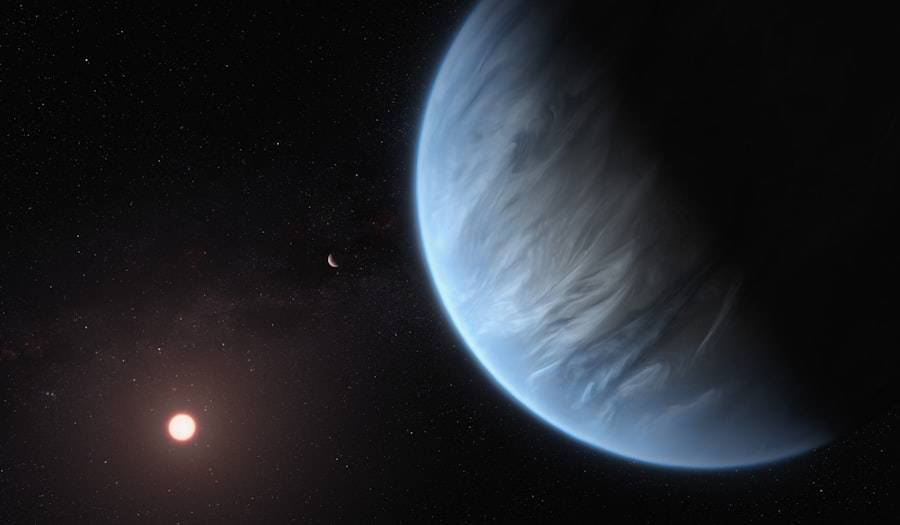
Once a star is born, it embarks on a journey through various stages of its life cycle, each characterized by distinct physical processes and changes in its structure. The initial phase is known as the main sequence, where a star spends most of its life fusing hydrogen into helium in its core. This phase can last for millions to billions of years, depending on the star’s mass.
For instance, while a massive star may only remain on the main sequence for a few million years, smaller stars like our Sun can persist for over ten billion years. As stars exhaust their hydrogen fuel, they transition into later stages of their life cycle. The path they take depends largely on their mass.
Lower-mass stars will eventually swell into red giants before shedding their outer layers and leaving behind a dense core. In contrast, massive stars will undergo more dramatic transformations, culminating in explosive events that can reshape entire regions of space. Understanding these stages provides crucial insights into stellar evolution and the processes that govern the lifecycle of matter in the universe.
The Red Giant Phase
| Aspect | Details |
|---|---|
| Definition | The phase in a star’s life cycle when it expands and becomes a red giant. |
| Duration | Millions to billions of years, depending on the size of the star. |
| Size | Red giants can be tens to hundreds of times larger than the original star. |
| Temperature | Cooler surface temperatures compared to the star’s main sequence phase. |
| Color | Red or orange due to lower surface temperatures and increased brightness in the red part of the spectrum. |
The red giant phase represents a significant transformation in a star’s life cycle, occurring after it has depleted its hydrogen reserves. As nuclear fusion slows down in the core, gravitational forces cause the core to contract while the outer layers expand dramatically. This expansion results in a cooler surface temperature, giving the star its characteristic reddish hue.
During this phase, a star can grow to several times its original size, engulfing nearby planets and altering their orbits. In this stage, helium begins to accumulate in the core until temperatures rise sufficiently for helium fusion to commence. This process leads to further expansion and instability as the star attempts to balance gravitational forces with outward pressure from nuclear reactions.
The red giant phase is not merely a transitional period; it is a time of intense activity that can lead to significant changes in a star’s composition and structure, ultimately setting the stage for its final fate.
The Fate of Massive Stars
The fate of massive stars diverges significantly from that of their smaller counterparts once they reach the end of their hydrogen-burning phase. After exhausting their helium supply, these colossal stars undergo successive rounds of fusion, creating heavier elements such as carbon, oxygen, and even iron in their cores. This relentless cycle continues until iron accumulates, at which point fusion ceases to produce energy.
The inability to generate sufficient outward pressure leads to catastrophic consequences. When gravitational forces overpower any remaining nuclear reactions, the core collapses under its own weight, resulting in an implosion that triggers an explosive release of energy known as a supernova. This spectacular event not only marks the end of a massive star’s life but also plays a crucial role in enriching the interstellar medium with heavy elements forged during its lifetime.
The remnants of this explosion can give rise to new celestial phenomena, including neutron stars or black holes.
The Formation of White Dwarfs
For stars with masses similar to or less than that of our Sun, the end of their life cycle culminates in a different fate: they shed their outer layers and leave behind a hot core known as a white dwarf. This process begins when these stars exhaust their nuclear fuel and enter the asymptotic giant branch phase. As they expand and lose mass through stellar winds or planetary nebulae, what remains is an incredibly dense core composed primarily of carbon and oxygen.
White dwarfs are fascinating objects; they are no longer undergoing fusion but instead radiate energy from their residual heat. Over time, they will cool and fade away into darkness over billions of years. Despite their small size—typically comparable to Earth—they possess a mass similar to that of the Sun, resulting in extraordinarily high densities.
The study of white dwarfs provides valuable insights into stellar evolution and serves as a reminder of how even stars with modest beginnings can leave lasting legacies in the cosmos.
The Creation of Neutron Stars
Neutron stars represent one of the most extreme outcomes in stellar evolution, formed from the remnants of massive stars after they undergo supernova explosions. When a massive star’s core collapses under gravity during a supernova event, protons and electrons combine to form neutrons—a process that results in an incredibly dense object primarily composed of neutrons. These stellar remnants are typically only about 20 kilometers in diameter but can contain more mass than our Sun.
The density within neutron stars is staggering; just a teaspoonful could weigh as much as a mountain on Earth. Neutron stars also exhibit remarkable properties such as rapid rotation and strong magnetic fields. Some neutron stars emit beams of radiation from their magnetic poles, creating pulsars—highly regular sources of radio waves that have become invaluable tools for astrophysicists studying cosmic phenomena.
The formation and characteristics of neutron stars highlight the diverse outcomes possible in stellar evolution.
The Spectacular End of Stellar Giants: Supernovae
Supernovae are among the most awe-inspiring events in the universe, marking the explosive death throes of massive stars. When these giants exhaust their nuclear fuel and can no longer support themselves against gravitational collapse, they unleash an incredible amount of energy in a matter of seconds—outshining entire galaxies for brief periods. This cataclysmic explosion disperses heavy elements into space, enriching surrounding regions with materials necessary for future star and planet formation.
The mechanics behind supernovae are complex; they can occur through different mechanisms depending on whether they are Type I or Type II supernovae. Type I supernovae arise from binary systems where one star siphons material from its companion until it reaches critical mass, while Type II supernovae result from single massive stars collapsing under their own gravity.
The Birth of Black Holes
The remnants left behind after a supernova explosion can lead to one of two outcomes: either a neutron star or a black hole. If the core’s mass exceeds approximately three solar masses after collapse, no known force can counteract gravitational pull, resulting in the formation of a black hole—a region in space where gravity is so strong that nothing can escape its grasp, not even light itself. This phenomenon challenges our understanding of physics and raises profound questions about the nature of reality.
Black holes come in various sizes; stellar black holes form from individual massive stars while supermassive black holes reside at the centers of galaxies, containing millions or even billions of solar masses. Their formation processes remain an area of active research as scientists seek to understand how these colossal entities influence galaxy formation and evolution over cosmic timescales.
The Evolution of Black Holes
Black holes are not static entities; they evolve over time through various mechanisms such as accretion and mergers with other black holes or stellar remnants. When matter falls into a black hole—a process known as accretion—it forms an accretion disk around it, emitting intense radiation as it spirals inward due to frictional heating. This process can lead to powerful jets being ejected from the poles of black holes, creating some of the most energetic phenomena observed in the universe.
Additionally, black holes can merge with one another through gravitational waves—ripples in spacetime caused by accelerating masses—resulting in larger black holes over time. These mergers have been detected by observatories like LIGO and Virgo, providing valuable insights into black hole populations and their role in cosmic evolution. As researchers continue to explore these enigmatic objects, they uncover new dimensions to our understanding of gravity and spacetime.
The Ongoing Cycle of Stellar Evolution
The journey through stellar evolution is an intricate tapestry woven from countless threads—each representing different stages in a star’s life cycle. From their birth in molecular clouds to their explosive deaths as supernovae or quiet fades into white dwarfs, every phase contributes to an ongoing cycle that shapes the universe around us. Stellar giants exemplify this process with their dramatic transformations and profound impacts on cosmic structures.
As scientists continue to study these celestial phenomena, they gain deeper insights into not only how stars evolve but also how they influence galactic dynamics and contribute to the chemical enrichment necessary for life as we know it. The ongoing cycle of stellar evolution serves as a reminder that even amidst destruction lies potential for rebirth—a cosmic dance that has persisted for billions of years and will continue long into the future.
For a comprehensive overview of how massive stars evolve and the conditions that lead to black hole formation, you can read more in this related article: Stellar Evolution and Black Holes. This resource provides valuable insights into the life cycles of stars and the dramatic events that culminate in the creation of these enigmatic cosmic entities.
WATCH THIS! The Invisible Threat: A Rogue Black Hole Headed for Our Solar System?
FAQs
What is stellar evolution?
Stellar evolution is the process by which a star changes over the course of its lifetime. It includes the birth, life, and eventual death of a star.
How do black holes form during stellar evolution?
Black holes are formed when massive stars undergo a supernova explosion at the end of their life cycle. If the core of the star is massive enough, it will collapse under its own gravity to form a black hole.
What is a black hole?
A black hole is a region of space where the gravitational pull is so strong that nothing, not even light, can escape from it. It is formed when a massive star collapses under its own gravity.
What are the different types of black holes?
There are three main types of black holes: stellar black holes, which are formed from the collapse of massive stars; supermassive black holes, which are found at the centers of galaxies and can be millions or even billions of times more massive than the sun; and intermediate black holes, which are thought to be formed from the merging of smaller black holes.
What happens to the material that falls into a black hole?
Once material falls past the event horizon of a black hole, it is pulled into the singularity at the center of the black hole, where it is crushed to an infinitely small point of infinite density.
Can black holes die?
According to current theories, black holes do not die. However, they can slowly lose mass over time through a process called Hawking radiation, which is a theoretical prediction of quantum mechanics.