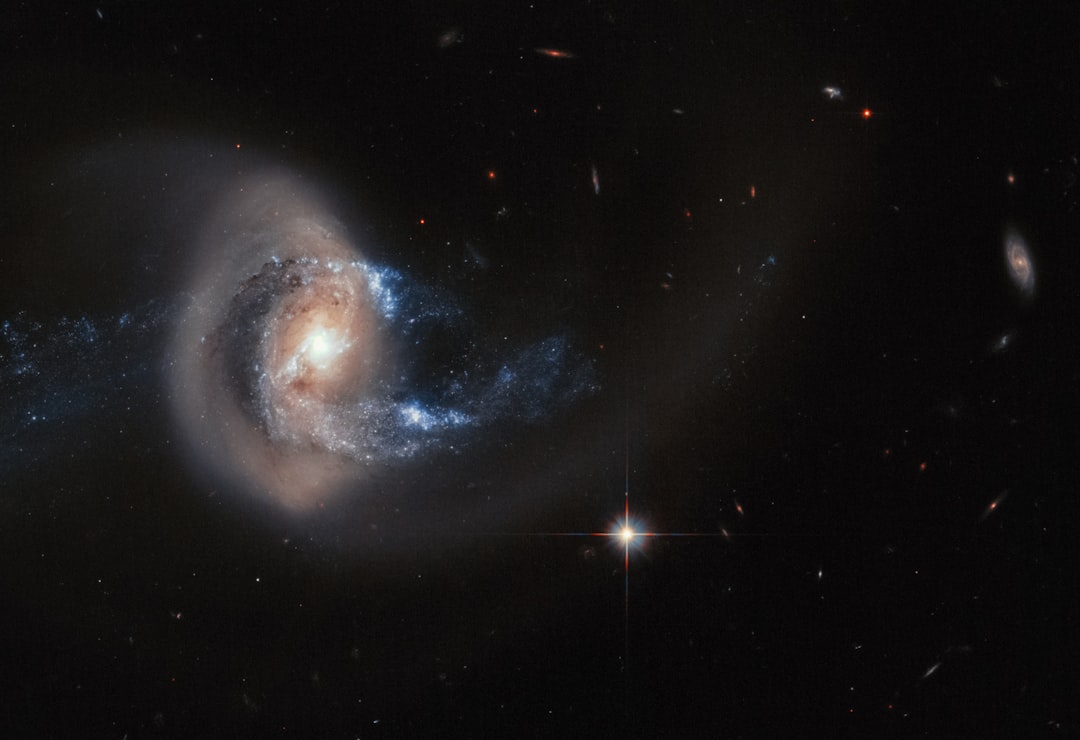
Stellar mass black holes are a fascinating and enigmatic class of astronomical objects that arise from the remnants of massive stars. Typically, these black holes possess masses ranging from about three to several tens of solar masses, making them significantly smaller than their supermassive counterparts, which can weigh millions or even billions of times the mass of the Sun. Stellar mass black holes are formed when a massive star exhausts its nuclear fuel and undergoes gravitational collapse, leading to a region in space where the gravitational pull is so intense that nothing, not even light, can escape from it.
The defining characteristic of a stellar mass black hole is its event horizon, the boundary beyond which no information or matter can escape. This event horizon marks the point of no return for any object that ventures too close. The study of stellar mass black holes not only enhances our understanding of stellar evolution but also provides insights into the fundamental laws of physics, particularly in extreme conditions.
Their existence challenges our comprehension of gravity and spacetime, making them a focal point for both theoretical and observational astrophysics.
Key Takeaways
- Stellar mass black holes are formed from the collapse of massive stars at the end of their life cycle.
- Stellar mass black holes can be detected through their gravitational effects on nearby objects and by observing the X-rays emitted from their accretion disks.
- Stellar mass black holes play a crucial role in the evolution of galaxies and the distribution of matter in the universe.
- Characteristics of stellar mass black holes include their mass, size, and the presence of an accretion disk.
- Stellar mass black holes can impact their surroundings by emitting powerful jets of radiation and influencing the formation of stars and galaxies.
How are Stellar Mass Black Holes Formed?
The formation of stellar mass black holes is intrinsically linked to the life cycle of massive stars. When a star with a mass greater than approximately 20 times that of the Sun reaches the end of its life, it undergoes a series of nuclear fusion processes that create heavier elements in its core. Eventually, the star can no longer sustain the outward pressure generated by nuclear fusion against the inward pull of gravity.
This imbalance leads to a catastrophic collapse of the core, resulting in a supernova explosion that expels the outer layers of the star into space. What remains after this explosive event is a dense core that may collapse further under its own gravity, forming a black hole. The precise conditions during this collapse determine whether a neutron star or a black hole will form.
If the core’s mass exceeds a certain threshold, known as the Tolman-Oppenheimer-Volkoff limit, it will continue to collapse into a singularity, creating a stellar mass black hole. This process highlights the intricate relationship between stellar evolution and black hole formation, illustrating how the life and death of stars contribute to the cosmic landscape.
Detecting Stellar Mass Black Holes
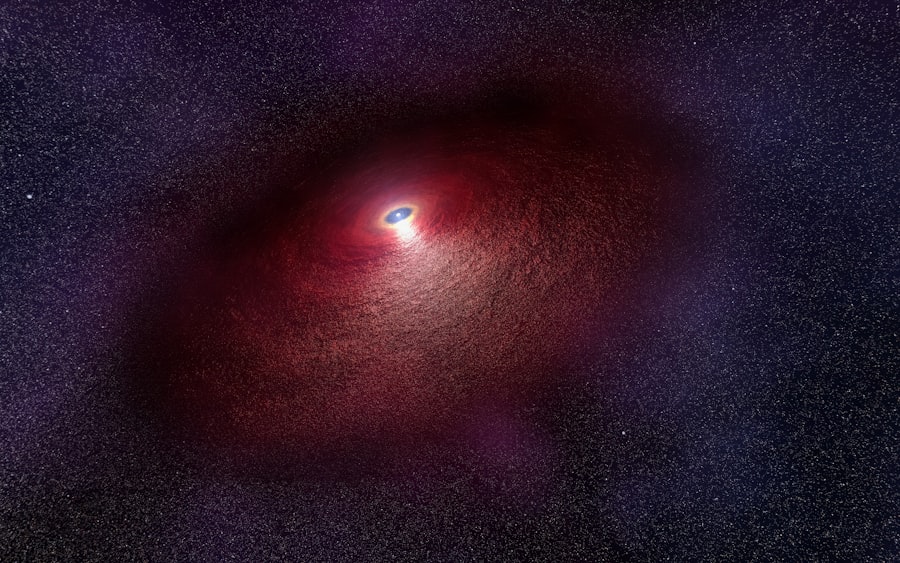
Detecting stellar mass black holes poses significant challenges due to their elusive nature. Unlike stars, which emit light and can be observed directly, black holes do not emit any radiation that can be detected by conventional means. Instead, astronomers rely on indirect methods to infer their presence.
One common technique involves observing the effects of a black hole’s gravitational influence on nearby stars or gas clouds. When a black hole is part of a binary system, it can pull material from its companion star, forming an accretion disk that emits X-rays as matter spirals inward. Another method involves gravitational wave detection.
The merger of two stellar mass black holes generates ripples in spacetime that can be detected by observatories such as LIGO and Virgo. These gravitational waves provide direct evidence of black hole existence and offer insights into their properties, such as mass and spin. As technology advances, astronomers are developing new techniques to enhance detection capabilities, allowing for a deeper understanding of these mysterious objects.
The Role of Stellar Mass Black Holes in the Universe
| Stellar Mass Black Holes | Role in the Universe |
|---|---|
| Formation | Result from the collapse of massive stars at the end of their life cycle |
| Population | Estimated to be in the range of millions to billions in the Milky Way galaxy |
| Gravitational Effects | Contribute to the dynamics of galaxies and star clusters through their gravitational pull |
| Black Hole Mergers | Believed to merge with other black holes, producing gravitational waves that can be detected on Earth |
| Accretion Disks | Can form accretion disks when they are in close binary systems with companion stars, emitting X-rays and other radiation |
Stellar mass black holes play a crucial role in the cosmic ecosystem, influencing both their immediate surroundings and the broader universe. They are essential for understanding stellar evolution and the lifecycle of matter in galaxies. As they form from dying stars, they contribute to the recycling of elements in the universe.
The supernova explosions that precede their formation disperse heavy elements into space, enriching the interstellar medium and providing the building blocks for new stars and planets. Moreover, stellar mass black holes can affect star formation rates in their host galaxies. Their gravitational influence can trigger or suppress star formation in nearby regions, leading to complex interactions within galactic dynamics.
Additionally, they may serve as seeds for the formation of supermassive black holes found at the centers of galaxies. By studying stellar mass black holes, astronomers gain valuable insights into the processes that shape galaxies and influence cosmic evolution.
The Characteristics of Stellar Mass Black Holes
Stellar mass black holes exhibit several distinctive characteristics that set them apart from other celestial objects.
The size of this event horizon is proportional to the mass of the black hole; thus, more massive black holes have larger event horizons.
This property leads to intriguing implications for how matter behaves near these objects. Another important characteristic is their spin, which can vary widely among different stellar mass black holes. Spin is a result of angular momentum conservation during the collapse of a star and can influence how matter interacts with the black hole.
High-spin black holes may exhibit different accretion dynamics compared to those with low spin, affecting their X-ray emissions and other observable properties. Understanding these characteristics is vital for constructing accurate models of stellar mass black holes and their interactions with surrounding matter.
The Impact of Stellar Mass Black Holes on their Surroundings
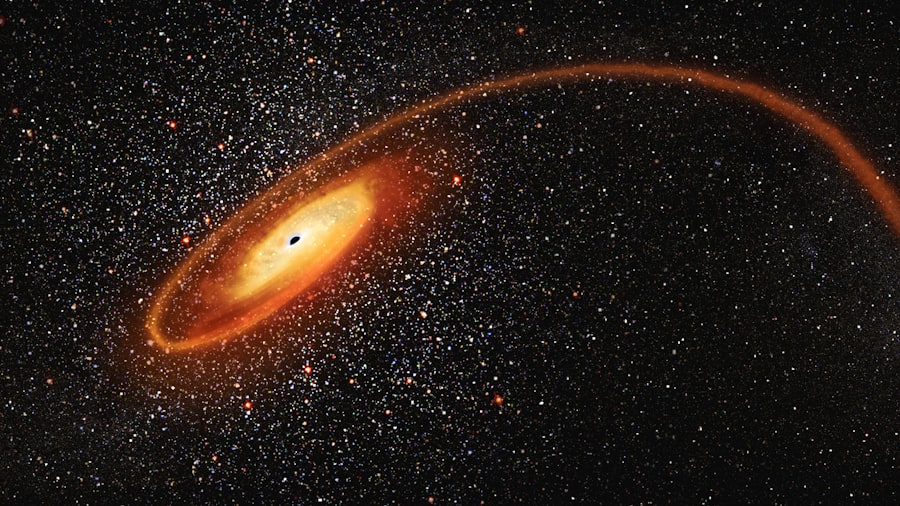
The presence of stellar mass black holes can have profound effects on their surrounding environments. As they accrete material from companion stars or interstellar gas clouds, they generate intense radiation across various wavelengths, particularly in X-rays. This radiation can heat nearby gas and influence star formation processes in their vicinity.
In some cases, this energy output can create powerful jets that extend far beyond the immediate surroundings of the black hole, impacting galactic dynamics.
Their strong gravitational fields can disrupt orbits and lead to dynamic interactions among stars.
This can result in phenomena such as tidal disruption events, where stars are torn apart by the gravitational forces exerted by a black hole. Such interactions not only provide valuable observational opportunities but also enhance our understanding of gravitational physics in extreme environments.
The Relationship Between Stellar Mass Black Holes and Supernovae
The relationship between stellar mass black holes and supernovae is a critical aspect of astrophysical research. Supernovae are often viewed as the dramatic conclusion to a massive star’s life cycle, marking the transition from a luminous star to either a neutron star or a black hole. The mechanisms behind these explosive events are complex and involve intricate processes related to nuclear fusion and gravitational collapse.
When a massive star undergoes a supernova explosion, it ejects its outer layers into space while leaving behind a dense core that may collapse into a stellar mass black hole if conditions permit. This connection highlights how supernovae serve as both endpoints for massive stars and as catalysts for black hole formation. Furthermore, studying supernovae provides insights into the conditions necessary for black hole creation and helps astronomers understand the broader implications for cosmic evolution.
Theoretical Models of Stellar Mass Black Holes
Theoretical models play an essential role in advancing our understanding of stellar mass black holes and their formation processes. Various frameworks have been developed to describe how these objects form from massive stars and evolve over time. One prominent model is based on the concept of core-collapse supernovae, which outlines how changes in nuclear fusion processes lead to gravitational collapse.
Another important theoretical approach involves simulating binary systems where one star evolves into a black hole while interacting with its companion. These models help researchers explore how mass transfer occurs between stars and how it influences the properties of resulting black holes. By refining these theoretical frameworks through simulations and calculations, scientists can better predict observable phenomena associated with stellar mass black holes.
Observational Evidence of Stellar Mass Black Holes
Observational evidence for stellar mass black holes has been gathered through various methods over decades of astronomical research. One significant breakthrough came with the detection of X-ray emissions from binary systems containing black holes. Observations from space-based telescopes like Chandra and XMM-Newton have revealed X-ray binaries where one component is a stellar mass black hole actively accreting material from its companion star.
Gravitational wave astronomy has also provided compelling evidence for stellar mass black holes through the detection of mergers between these objects. The first detection by LIGO in 2015 marked a historic moment in astrophysics, confirming not only the existence of stellar mass black holes but also providing insights into their masses and spins. As observational techniques continue to improve, astronomers anticipate uncovering more evidence that will deepen our understanding of these enigmatic entities.
The Future of Research on Stellar Mass Black Holes
The future of research on stellar mass black holes holds great promise as advancements in technology and observational techniques continue to evolve. Upcoming space missions such as NASA’s James Webb Space Telescope are expected to provide unprecedented views into regions where stellar mass black holes reside, allowing astronomers to study their formation environments and interactions with surrounding matter in greater detail. Moreover, ongoing developments in gravitational wave astronomy will likely lead to more frequent detections of merging stellar mass black holes, enhancing our understanding of their population statistics and evolutionary pathways.
As researchers refine theoretical models and gather more observational data, they will be better equipped to address fundamental questions about the nature of gravity, spacetime, and the role of these intriguing objects in shaping our universe.
Practical Applications of Understanding Stellar Mass Black Holes
Understanding stellar mass black holes extends beyond theoretical astrophysics; it has practical applications that resonate across various fields. Insights gained from studying these objects contribute to advancements in fundamental physics, particularly in areas related to gravity and quantum mechanics. The extreme conditions surrounding black holes challenge existing theories and may lead to new discoveries that could reshape our understanding of physical laws.
Additionally, research on stellar mass black holes informs technologies used in fields such as data analysis and computational modeling. Techniques developed for analyzing gravitational wave signals or simulating astrophysical phenomena have applications in diverse areas ranging from engineering to computer science. By exploring these cosmic enigmas, scientists not only expand our knowledge of the universe but also foster innovations that benefit society at large.
In conclusion, stellar mass black holes represent one of the most intriguing aspects of modern astrophysics. Their formation processes, characteristics, and interactions with their surroundings provide valuable insights into fundamental questions about the universe’s structure and evolution. As research continues to advance through observational breakthroughs and theoretical developments, our understanding of these enigmatic objects will undoubtedly deepen, revealing new layers of complexity within the cosmos.
A stellar mass black hole is formed when a massive star exhausts its nuclear fuel and collapses under its own gravity, resulting in a dense object with a gravitational pull so strong that not even light can escape it. For a deeper understanding of black holes and their formation, you can read more in this related article on cosmic phenomena at My Cosmic Ventures.
WATCH THIS! The Invisible Threat: A Rogue Black Hole Headed for Our Solar System?
FAQs
What is a stellar mass black hole?
A stellar mass black hole is a type of black hole that forms from the remnants of a massive star that has undergone a supernova explosion.
How are stellar mass black holes formed?
Stellar mass black holes are formed when a massive star exhausts its nuclear fuel and undergoes a supernova explosion, leaving behind a collapsed core that can become a black hole.
What are the characteristics of a stellar mass black hole?
Stellar mass black holes are typically between 3 and 10 times the mass of the sun, with a radius of only a few kilometers. They have a gravitational pull so strong that not even light can escape from them, making them invisible to the naked eye.
What is the significance of stellar mass black holes in astrophysics?
Stellar mass black holes play a crucial role in the study of astrophysics as they provide valuable insights into the behavior of matter under extreme conditions and the effects of strong gravitational fields.
How do scientists detect stellar mass black holes?
Scientists detect stellar mass black holes through indirect methods such as observing the effects of their gravitational pull on nearby stars and gas, as well as through the detection of X-rays emitted from the hot gas swirling around them.