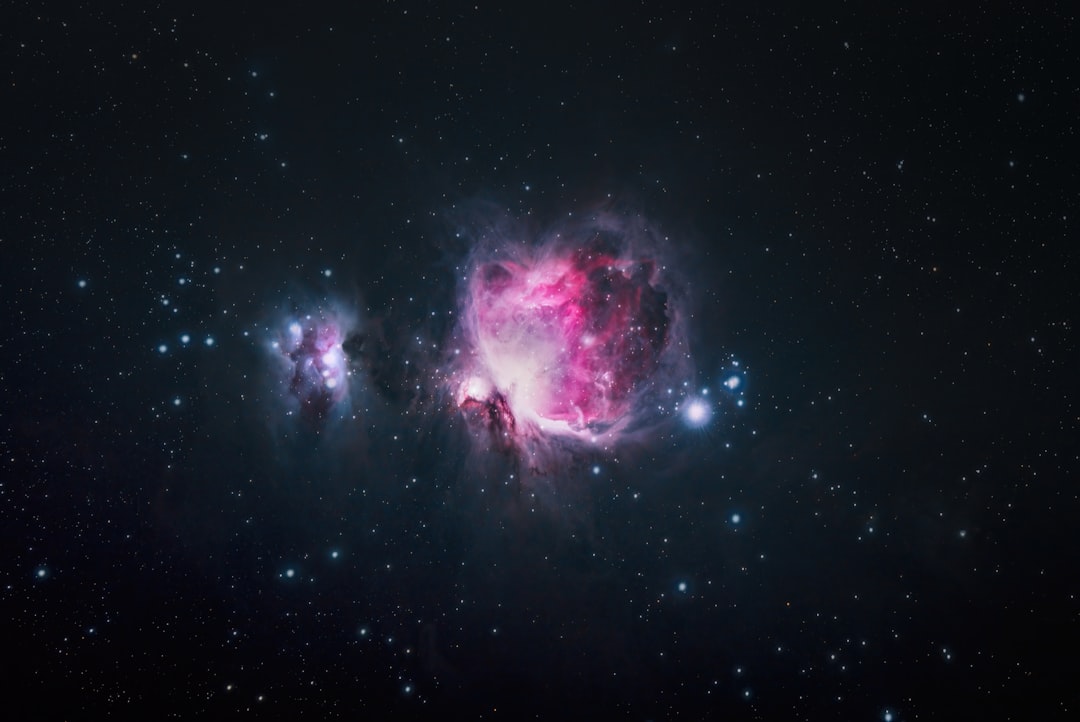
In the vast expanse of the cosmos, where mysteries abound and the unknown beckons, an enigmatic space object has captured the attention of astronomers and scientists alike. This object, which has yet to be fully understood, presents a unique challenge to the scientific community. Its peculiar characteristics and unpredictable behavior have sparked curiosity and debate, prompting researchers to delve deeper into its nature.
As humanity continues to explore the universe, this unexplained object serves as a reminder of the many secrets that still lie beyond our reach. The significance of this space object extends beyond mere curiosity; it has the potential to reshape our understanding of astrophysics and the fundamental laws governing celestial bodies. As scientists strive to unravel its mysteries, they are not only seeking answers about this particular object but also exploring broader questions about the universe itself.
The journey to comprehend this phenomenon is as much about expanding human knowledge as it is about satisfying a primal urge to understand the cosmos. Why Did NASA Hide 3i Atlas
Key Takeaways
- The unexplained space object has captured the attention of scientists and the public alike due to its mysterious nature and unusual characteristics.
- Scientists discovered the object through advanced telescopes and have been closely observing its behavior and movement in space.
- The object exhibits unique characteristics, such as irregular shape, unexpected trajectory, and unusual patterns of light emission.
- Various theories and explanations have been proposed by scientists to understand the origin and behavior of the object, but none have been conclusive.
- The object’s movement and trajectory have been analyzed in comparison to known space objects and phenomena, but it remains unlike anything previously observed.
Discovery and Observation of the Object
The discovery of the unexplained space object was a serendipitous event, occurring during routine observations by a team of astronomers using advanced telescopes. Initially detected as an anomaly in the night sky, its unusual trajectory and brightness prompted further investigation. As researchers gathered more data, they realized that this object did not conform to the expected patterns of known celestial bodies.
The initial excitement surrounding its discovery quickly transformed into a rigorous scientific inquiry aimed at understanding its origins and behavior. Observations of the object have been conducted using a variety of instruments, including ground-based telescopes and space-based observatories. These observations have revealed a wealth of information, from its spectral composition to its movement across the sky.
Each new piece of data has added layers to the mystery, leading scientists to question not only what the object is but also how it fits into the larger tapestry of the universe. The collaborative efforts of astronomers worldwide have underscored the importance of shared knowledge in tackling such complex phenomena.
Characteristics and Behavior of the Object

The characteristics of the unexplained space object are as intriguing as they are perplexing. Initial observations suggest that it possesses a highly reflective surface, indicating that it may be composed of materials not commonly found in other celestial bodies. Its brightness fluctuates in ways that defy conventional explanations, leading scientists to hypothesize about its composition and structure.
Some researchers have even suggested that it could be an artificial construct, although this theory remains speculative at best.
Unlike typical asteroids or comets, which follow predictable orbits, this object exhibits erratic movements that challenge existing models of celestial mechanics.
Its trajectory appears to be influenced by forces that are not yet fully understood, prompting scientists to consider new theories about gravitational interactions and other forces at play in space. The combination of its unique characteristics and unpredictable behavior makes this object a focal point for ongoing research.
Theories and Explanations from Scientists
| Scientist | Theory/Explanation | Year |
|---|---|---|
| Albert Einstein | Theory of General Relativity | 1915 |
| Charles Darwin | Theory of Evolution by Natural Selection | 1859 |
| Nikola Tesla | Explanation of Alternating Current (AC) | 1882 |
| Marie Curie | Explanation of Radioactivity | 1898 |
As scientists grapple with the enigma of the unexplained space object, a variety of theories have emerged to explain its existence and behavior. Some researchers propose that it could be a fragment of a larger celestial body that has broken apart, while others suggest that it may be a rogue asteroid or comet wandering through space. The possibility that it is an artificial object created by an advanced civilization has also been entertained, though such claims remain highly controversial within the scientific community.
The debate surrounding these theories highlights the challenges inherent in studying an object that defies categorization. Each hypothesis brings with it a set of implications for our understanding of astrophysics and planetary science. For instance, if the object is indeed artificial, it could revolutionize our understanding of intelligent life beyond Earth.
Conversely, if it is a natural phenomenon, it may prompt a reevaluation of existing models regarding the formation and evolution of celestial bodies. The ongoing discourse among scientists reflects both the excitement and uncertainty that accompany groundbreaking discoveries in astronomy.
Analysis of the Object’s Movement and Trajectory
The movement and trajectory of the unexplained space object have been subjects of intense scrutiny since its discovery. Initial calculations indicated that it was on a path that deviated significantly from those of known asteroids and comets. This deviation raised questions about the forces acting upon it and whether they could be explained by conventional gravitational models.
Researchers have employed sophisticated simulations and mathematical models to analyze its trajectory, seeking to identify any patterns or anomalies that could shed light on its nature. One particularly intriguing aspect of the object’s movement is its acceleration, which appears to exceed what would be expected based solely on gravitational influences from nearby celestial bodies. This unexpected acceleration has led some scientists to consider alternative explanations, such as outgassing or other non-gravitational forces acting on the object.
The implications of these findings could be profound, potentially challenging long-held assumptions about how objects move through space and interact with one another.
Comparison to Known Space Objects and Phenomena

In order to better understand the unexplained space object, scientists have drawn comparisons to known celestial bodies and phenomena. By examining its characteristics alongside those of asteroids, comets, and other space objects, researchers hope to identify similarities and differences that could provide clues about its origins. For instance, while some aspects of its brightness resemble those of certain comets, its erratic movement sets it apart from typical cometary behavior.
Additionally, comparisons with other anomalous objects in space have yielded valuable insights. For example, some researchers have looked at past discoveries of unusual asteroids or transient phenomena that exhibited similar characteristics. By studying these cases, scientists can develop a framework for understanding how this new object fits into the broader context of astronomical research.
Such comparisons not only enhance our knowledge of this specific object but also contribute to a more comprehensive understanding of celestial dynamics.
Implications for Our Understanding of Physics
The unexplained space object poses significant implications for our understanding of physics and astrophysics. If its behavior can be explained by existing theories, it may reinforce current models regarding gravitational interactions and celestial mechanics. However, if new forces or phenomena are discovered in relation to this object, it could necessitate a reevaluation of fundamental principles in physics.
The potential for groundbreaking discoveries in this area has energized researchers across multiple disciplines. Moreover, studying this object could lead to advancements in technology and methodologies used in astronomical research. As scientists develop new tools and techniques to analyze its characteristics and behavior, they may uncover insights that extend beyond this specific case.
The pursuit of knowledge surrounding this enigmatic object serves as a catalyst for innovation within the scientific community, driving progress in both theoretical and applied physics.
Potential Impact on Future Space Exploration
The implications of the unexplained space object extend beyond theoretical physics; they also hold significant potential for future space exploration endeavors. Understanding its nature could inform strategies for navigating similar objects in our solar system or beyond. If it is determined that such objects pose risks to spacecraft or planetary bodies, developing mitigation strategies will become paramount for future missions.
Furthermore, if this object is indeed artificial or contains materials not found elsewhere in our solar system, it could open new avenues for exploration and resource utilization.
As humanity looks toward the stars with aspirations for colonization and interstellar travel, insights gained from studying this unexplained object may prove invaluable.
Speculations about the Origin of the Object
Speculations regarding the origin of the unexplained space object abound within both scientific circles and popular culture. Some researchers posit that it may have originated from outside our solar system, possibly ejected from another star system or formed in an entirely different region of space. This theory raises intriguing questions about how such objects travel through interstellar space and what conditions might lead to their formation.
Conversely, others speculate that it could be a remnant from our own solar system’s early history—a relic from a time when planetary bodies were still forming and colliding. This perspective invites further investigation into the processes that govern celestial evolution and how remnants from our past can inform our understanding of present-day phenomena. Regardless of its origin, the quest to uncover the truth behind this object’s beginnings continues to captivate scientists and enthusiasts alike.
Public Interest and Media Coverage
The discovery of the unexplained space object has generated considerable public interest and media coverage, reflecting humanity’s enduring fascination with the cosmos. News outlets around the world have reported on its peculiar characteristics and behavior, often framing it within broader narratives about extraterrestrial life and cosmic mysteries. This media attention has not only raised awareness about the object itself but has also sparked discussions about humanity’s place in the universe.
Social media platforms have played a significant role in disseminating information about the object, allowing enthusiasts and experts alike to share their thoughts and theories with a global audience. This democratization of information has fostered a sense of community among those interested in astronomy and space exploration, encouraging dialogue between scientists and laypeople. As public interest continues to grow, so too does the potential for increased funding and support for research initiatives aimed at unraveling the mysteries surrounding this enigmatic object.
The Future of Research on the Unexplained Space Object
Looking ahead, research on the unexplained space object is poised to evolve as new technologies emerge and collaborative efforts expand across international borders. As astronomers continue to gather data through advanced telescopes and observational techniques, they will likely uncover additional insights that deepen our understanding of this phenomenon. The scientific community remains committed to exploring every avenue in pursuit of answers.
Moreover, interdisciplinary collaboration will be crucial in addressing the complexities associated with this object. Physicists, astronomers, engineers, and even philosophers may find themselves working together to tackle questions that transcend traditional boundaries within science. The future research landscape promises not only advancements in our understanding of this specific object but also broader implications for how humanity approaches cosmic exploration as a whole.
In conclusion, the unexplained space object stands as a testament to humanity’s insatiable curiosity about the universe. Its discovery has ignited discussions across multiple fields of study while challenging existing paradigms within astrophysics and physics at large. As researchers continue their quest for answers, they remain acutely aware that each revelation brings them one step closer to unlocking some of the universe’s most profound mysteries—mysteries that may ultimately redefine humanity’s relationship with the cosmos itself.
Recent discoveries in astrophysics have brought attention to space objects that seem to defy our current understanding of physics. One such intriguing phenomenon is the behavior of certain fast-moving celestial bodies that challenge the laws of motion and gravity. For a deeper dive into these fascinating topics, you can read more in this related article on cosmic ventures: My Cosmic Ventures.
WATCH THIS! Why NASA Hid the 3I/ATLAS Anomaly
FAQs
What is a physics defying space object?
A physics defying space object is an object in space that appears to defy the laws of physics as we currently understand them. This could include objects that move in ways that cannot be explained by known physical principles, or objects that exhibit properties that seem to contradict established scientific theories.
Can you give an example of a physics defying space object?
One example of a physics defying space object is ‘Oumuamua, an interstellar object that passed through our solar system in 2017. ‘Oumuamua’s unusual shape and trajectory led some scientists to speculate that it could be an artificial object, although this hypothesis has not been confirmed.
What are some possible explanations for physics defying space objects?
Possible explanations for physics defying space objects include natural phenomena that we do not yet fully understand, as well as the possibility of extraterrestrial technology or intelligence. It is also possible that our current understanding of physics is incomplete, and that these objects may be explained by new scientific discoveries in the future.
How do scientists study physics defying space objects?
Scientists study physics defying space objects using a variety of observational and analytical techniques, including telescopes, spectroscopy, and computer simulations. By gathering as much data as possible about these objects, scientists hope to gain a better understanding of their nature and behavior.
What are the implications of discovering a physics defying space object?
The discovery of a physics defying space object could have profound implications for our understanding of the universe and our place in it. It could lead to new scientific breakthroughs and technologies, and could also prompt us to reevaluate our current theories and assumptions about the nature of reality.