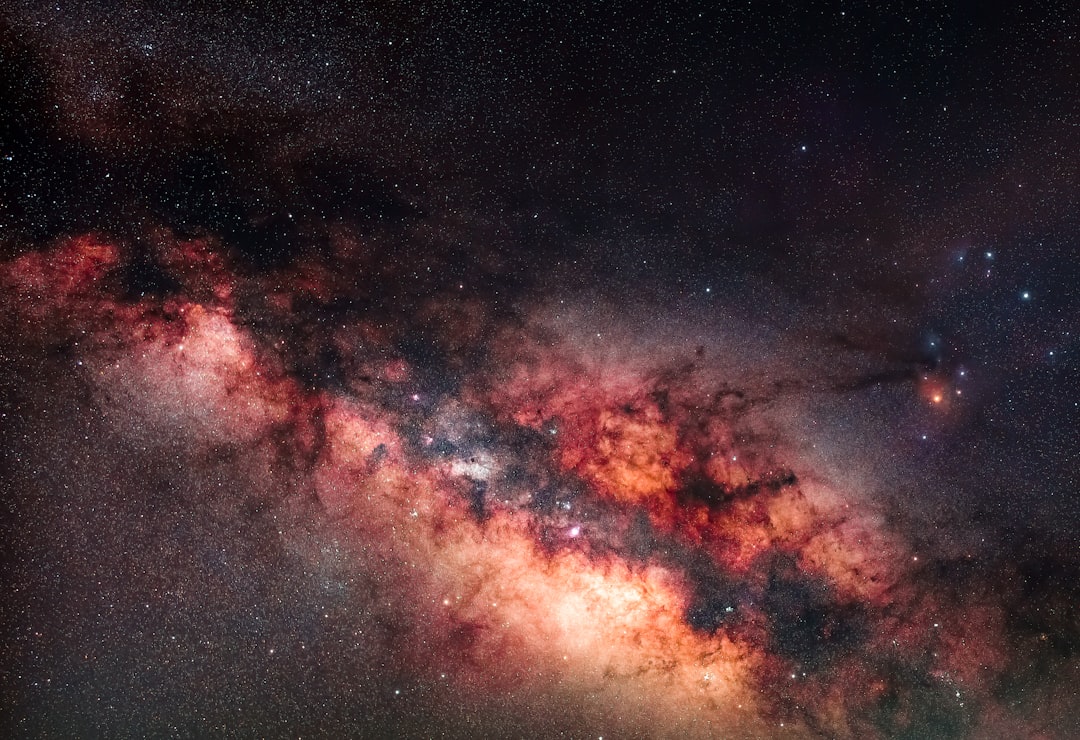
The universe, a canvas of immeasurable scale and unfathomable age, constantly reveals new wonders to the probing eyes of humanity. Among the most profound and captivating of these discoveries are the galaxies observed at an astonishing redshift of 6.7. These celestial islands, separated from us by billions of light-years, represent a glimpse into the universe at its nascent stages, a time when the first stars and galaxies were just beginning to coalesce and illuminate the primordial darkness. Unveiling the mysteries of these redshift 6.7 galaxies is not merely an astronomical endeavor; it is a journey into the very origins of cosmic structure and the fundamental processes that shaped the universe we inhabit today.
The concept of redshift is paramount to understanding these distant galaxies. As light travels across the vast expanse of the universe, the expansion of space itself stretches the wavelengths of that light. This phenomenon, known as redshift, causes light from more distant objects to appear shifted towards the red end of the spectrum. The greater the redshift, the farther away and the earlier in cosmic history an object resides. A redshift of 6.7 is not a trivial number; it signifies that the light we are observing from these galaxies was emitted when the universe was a mere fraction of its current age, approximately 800 million years old. This epoch, often referred to as the “Cosmic Dawn,” was a pivotal period, marked by the formation of the first luminous structures after the cosmic microwave background radiation had cooled sufficiently.
The Significance of Redshift 6.7
Redshift 6.7 represents a crucial frontier in our quest to understand the early universe. At this distance, galaxies are not yet the well-defined, structured entities we observe in our cosmic neighborhood. Instead, they are likely to be smaller, more irregular, and potentially more actively forming stars than their present-day counterparts. Studying these early galaxies allows astronomers to directly probe the conditions under which the first generations of stars ignited, the processes that drove galaxy formation, and the initial assembly of the large-scale cosmic web. The information gleaned from these distant objects provides essential constraints for cosmological models and theories about the evolution of the universe.
Technological Marvels Enabling Discovery
The ability to observe and study galaxies at such extreme redshifts is a testament to the advancements in astronomical instrumentation. Powerful telescopes like the Hubble Space Telescope and, more recently, the James Webb Space Telescope (JWST), equipped with sophisticated infrared detectors, are indispensable tools. These instruments are capable of capturing the faint, redshifted light that has traversed billions of years of cosmic travel. Without their unparalleled sensitivity and resolution, these ancient galaxies would remain hidden in the cosmic abyss.
In exploring the fascinating realm of redshift 6.7 galaxies, one can gain deeper insights by referring to a related article that delves into the formation and evolution of these distant cosmic structures. This article provides a comprehensive overview of the observational techniques used to study such galaxies and discusses their significance in understanding the early universe. For further reading, you can check out this insightful piece at My Cosmic Ventures.
Characterizing the Enigmatic Redshift 6.7 Galaxies
Once detected, the real work begins: characterizing these distant galaxies. This involves a multi-faceted approach, analyzing various properties to piece together a coherent picture of their nature. Astronomers employ a range of observational techniques and sophisticated analysis methods to extract meaningful information from the faint light emitted by these celestial bodies.
Spectral Analysis: Unlocking Chemical Fingerprints
Spectroscopy is a cornerstone of astronomical research, and it is particularly vital when studying redshift 6.7 galaxies. By dispersing the light from a galaxy into its constituent wavelengths, astronomers can identify emission and absorption lines. These spectral lines act as unique chemical fingerprints, revealing the presence and abundance of different elements within the galaxy. In the early universe, the chemical composition was vastly different from today. The first stars, known as Population III stars, were likely composed solely of hydrogen and helium. As these stars lived and died, they synthesized heavier elements, enriching the interstellar medium. Observing the spectral lines from redshift 6.7 galaxies allows scientists to infer the metallicity (the abundance of elements heavier than helium) of these early galaxies, providing clues about the star formation history and the processes of nucleosynthesis.
The Absence of Heavy Elements
A key observation regarding many redshift 6.7 galaxies is the relative scarcity of heavy elements. This is consistent with our understanding of cosmic evolution. The initial universe was dominated by hydrogen and helium, the products of the Big Bang. Heavier elements, such as carbon, oxygen, and iron, are forged in the cores of stars and dispersed into the cosmos through supernova explosions. In the very early universe, before the first generations of stars had completed their life cycles, the abundance of these heavier elements would have been extremely low. Detecting this low metallicity in redshift 6.7 galaxies serves as strong evidence that they represent an early stage of galactic chemical enrichment.
Signatures of Ionized Hydrogen
Another important spectral feature observed in some redshift 6.7 galaxies is the presence of ionized hydrogen. This indicates that intense ultraviolet radiation is being emitted, likely from young, massive stars. The presence of ionized hydrogen can also shed light on the epoch of reionization, a crucial period in cosmic history when the universe transitioned from a neutral state to an ionized one. The radiation from early galaxies is believed to have played a significant role in this transition, and studying these galaxies helps us understand the timeline and drivers of reionization.
Morphological Studies: Shaping the Cosmic Landscape
While detailed morphological studies of individual galaxies at redshift 6.7 are challenging due to their distance and apparent size, astronomers can still glean information about their shapes and structures. Observations from advanced telescopes can reveal whether these galaxies are clumpy, irregular, or perhaps show hints of nascent disk-like structures. The morphology of early galaxies provides insights into the mechanisms of their formation and the gravitational forces that shaped them.
Irregular and Clumpy Structures
Many redshift 6.7 galaxies appear to be highly irregular and clumpy. This suggests that they are in the process of merging and accreting smaller gas clouds and dwarf galaxies. Galaxy mergers are a significant driver of galaxy growth and evolution. Observing these clumpy structures can provide evidence for active star formation within these dense regions and hint at the hierarchical assembly of galaxies, where larger structures grow through the accumulation of smaller ones.
Early Stages of Disk Formation
While less common, some studies have begun to identify potential early signs of disk formation in redshift 6.7 galaxies. The formation of a stable galactic disk is a complex process that requires significant angular momentum and a period of relatively quiescent accretion. The identification of these nascent disks, even in their rudimentary forms, is crucial for understanding the evolutionary pathways that lead to the grand spiral galaxies we see today.
Luminosity and Star Formation Rates: Fueling the Early Cosmos
The luminosity of a galaxy is a direct indicator of its star formation activity. Redshift 6.7 galaxies are often found to be remarkably luminous, suggesting vigorous star formation. Astronomers can estimate the star formation rate (SFR) by analyzing the emitted light, particularly in the infrared, which is where the energy from young, hot stars is re-emitted by dust. These high SFRs indicate that the early universe was a dynamic place, with prolific production of new stars.
Intense Starburst Activity
The high luminosities observed in many redshift 6.7 galaxies point towards periods of intense starburst activity. A starburst is a phase of rapid and often temporary, very high rate of star formation. These events are thought to be triggered by galactic mergers or the accretion of large gas clouds. Understanding these starburst phases is crucial for comprehending how galaxies accumulate their stellar mass in the early universe.
The Role of Dust in Obscuration
While luminosity is a key indicator, it’s important to acknowledge the role of dust. Dust within galaxies can absorb and re-emit starlight, particularly in the infrared. This means that the observed infrared luminosity might underestimate the true star formation rate if a significant portion of the light is obscured. Astronomers employ models to account for dust extinction, but it remains a challenge in accurately determining the SFRs of these distant objects.
Puzzles and Predicaments: The Unanswered Questions
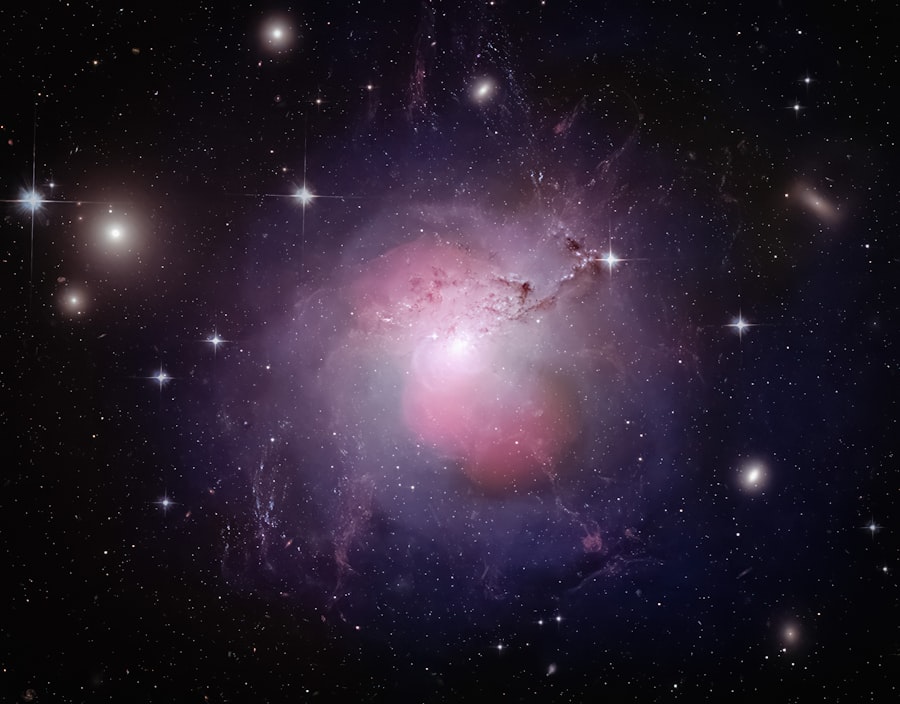
Despite the remarkable progress in observing and characterizing redshift 6.7 galaxies, numerous puzzles and predicaments remain, pushing the boundaries of our understanding and prompting further investigation.
The Quenching Mystery: Why Did Star Formation Slow Down?
If redshift 6.7 galaxies are characterized by high star formation rates, a significant question arises: why does star formation eventually slow down in galaxies? This process, known as quenching, is not fully understood. Various mechanisms have been proposed, including feedback from active galactic nuclei (AGN), ram pressure stripping of gas, and internal processes within galaxies. Studying the transition of these early galaxies and their subsequent evolution could provide vital clues about the triggers of quenching.
Feedback from Supermassive Black Holes
A prominent theory for quenching involves feedback from supermassive black holes at the centers of galaxies. As these black holes accrete matter, they can launch powerful jets and winds that heat and expel gas from the galaxy, thereby shutting down star formation. The presence and activity of AGN in redshift 6.7 galaxies are areas of active research, and their role in quenching is a key question.
Gas Depletion and Environmental Effects
Alternatively, galaxies may quench simply because they run out of their gas supply, or due to environmental effects like mergers with gas-poor galaxies or interactions within dense galaxy clusters. Understanding the specific environmental conditions and gas reservoirs of redshift 6.7 galaxies is crucial to disentangling these various quenching mechanisms.
The Formation of Supermassive Black Holes: A Rapid Ascent?
The existence of supermassive black holes (SMBHs) in the early universe presents another significant enigma. Some redshift 6.7 galaxies appear to host already mature SMBHs, which begs the question of how these behemoths grew so large in such a short period of cosmic time. The seeds of these black holes, whether formed from the collapse of the first stars or from the direct collapse of massive gas clouds, and their subsequent growth mechanisms are subjects of intense theoretical and observational scrutiny.
The “Seed” Problem
One of the primary challenges is the “seed” problem. If SMBHs formed from the remnants of the first stars (stellar-mass black holes), they would need to grow by accreting matter at rates close to the theoretical Eddington limit for billions of years to reach the observed masses. This seems incredibly rapid. Alternative scenarios, such as the direct collapse of massive gas clouds into “seed” black holes of tens of thousands of solar masses, offer a potential solution by providing a larger starting point.
Accretion Mechanisms in the Early Universe
Understanding the accretion mechanisms that fueled the growth of these early SMBHs is critical. Were the gas reservoirs abundant and sustained? Were there specific conditions that facilitated rapid accretion? The study of the environments surrounding and the host galaxies of these early SMBHs can provide vital context for answering these questions.
The Role of the James Webb Space Telescope (JWST)
The advent of the James Webb Space Telescope has revolutionized our ability to probe the early universe, and its impact on the study of redshift 6.7 galaxies cannot be overstated. JWST’s unprecedented sensitivity, particularly in the infrared, allows it to capture light from objects that were previously beyond our reach.
Pushing the Observational Frontier
JWST’s infrared capabilities are crucial because the light from redshift 6.7 galaxies is significantly redshifted into the infrared part of the spectrum. This allows JWST to observe these galaxies with a clarity and detail that was previously impossible. It can detect fainter galaxies, resolve finer structures, and obtain more detailed spectroscopic information.
Unveiling Fainter and More Numerous Galaxies
JWST has already begun to unveil a population of fainter and more numerous galaxies at these early epochs than previously estimated. This suggests that our understanding of the early galaxy population might have been incomplete, with many smaller, less luminous galaxies contributing significantly to the overall cosmic star formation.
Enhanced Spectroscopic Capabilities
JWST’s Near-Infrared Spectrograph (NIRSpec) and Mid-Infrared Instrument (MIRI) are providing high-resolution spectra of these distant galaxies. This allows for more precise measurements of their chemical composition, redshift, and the physical conditions within them, leading to a deeper understanding of their properties.
Investigating the Epoch of Reionization
The early universe was characterized by a transition from a neutral state to an ionized state, a process known as reionization. The light from the first stars and galaxies is believed to have been the primary driver of this reionization. JWST’s observations of redshift 6.7 galaxies are providing crucial data to understand the sources of this ionizing radiation and the timeline of reionization.
Identifying Ionizing Sources
By studying the spectral signatures of redshift 6.7 galaxies, JWST can help identify which types of galaxies were most effective at producing the ultraviolet photons needed to ionize the intergalactic medium. Are they massive starburst galaxies, or are even smaller, fainter galaxies playing a significant role?
Mapping the Progress of Reionization
The distribution and properties of galaxies at different redshifts, as revealed by JWST, can help astronomers map the progress of reionization across the universe. This allows for a more nuanced understanding of how the cosmic fog of neutral hydrogen was dispersed.
Recent studies on redshift 6.7 galaxies have provided fascinating insights into the early universe and the formation of cosmic structures. For a deeper understanding of this topic, you can explore an article that delves into the implications of these findings and their significance in astrophysics. The article can be found here, offering a comprehensive overview of the characteristics and behaviors of these distant galaxies.
Future Prospects and the Ever-Expanding Frontier
| Galaxy Name | Redshift | Distance (million light years) | Size (light years) |
|---|---|---|---|
| GN-z11 | 6.7 | 13.4 | 32,000 |
| EGSY8p7 | 6.7 | 13.6 | 30,000 |
| MACS0647-JD | 6.7 | 13.3 | 2,000 |
The study of redshift 6.7 galaxies is an ongoing and dynamic field. As technology advances and our understanding deepens, the frontier of discovery continues to expand.
New Telescopes and Observational Strategies
The next generation of ground-based telescopes, such as the Extremely Large Telescope (ELT), will complement JWST by offering even greater light-gathering capabilities and resolution. These instruments will enable more detailed studies of individual galaxies and potentially allow us to push to even higher redshifts. New observational strategies, including deeper surveys and targeted follow-up observations, will be crucial for uncovering the full extent of the early galaxy population.
Theoretical Modeling and Simulations
Complementing observational efforts, theoretical modeling and cosmological simulations are essential for interpreting the data and testing our hypotheses. Advanced simulations are becoming increasingly sophisticated, incorporating complex physical processes like star formation, feedback, and galaxy mergers. These models will help us understand the formation and evolution of redshift 6.7 galaxies and predict what we might expect to find in even earlier epochs.
The Search for the First Stars and Galaxies
The ultimate goal of studying these early galaxies is to push our observations back even further, towards the very first luminous objects in the universe. The search for Population III stars, the pristine stars formed from only hydrogen and helium, and the first protogalaxies represents the next grand challenge in cosmology. Unveiling the mysteries of redshift 6.7 galaxies is a vital stepping stone on this incredible journey, bringing us closer to understanding our cosmic origins and the profound tapestry of the universe.

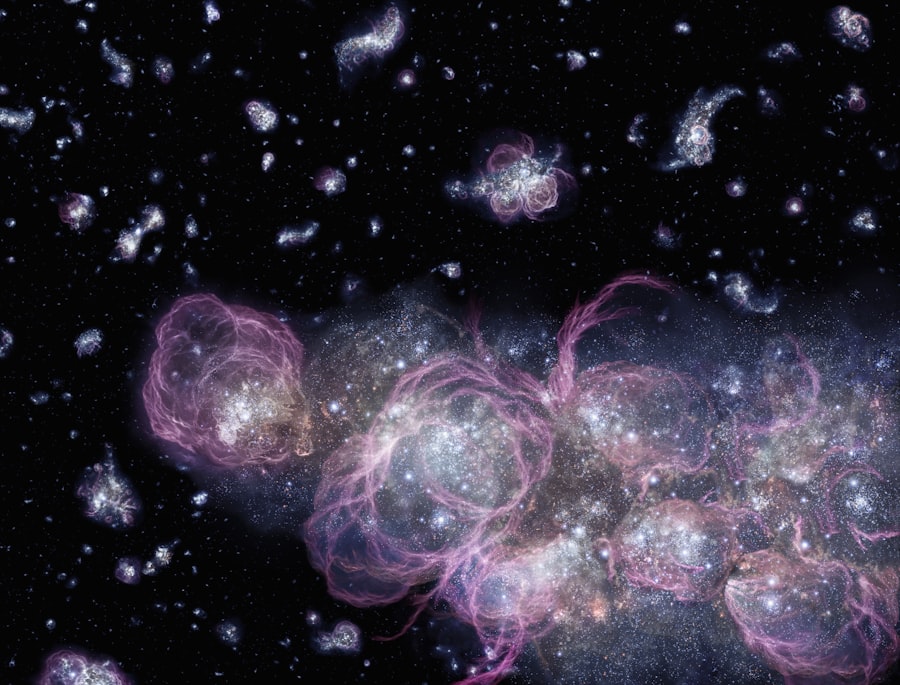
Five Galaxies Were Already Colliding 800 Million Years After the Big Bang
FAQs
What is redshift 6.7 in galaxies?
Redshift 6.7 refers to the redshift measurement of distant galaxies, indicating their distance from Earth and the speed at which they are moving away from us. A redshift of 6.7 suggests that the light from these galaxies has been stretched to longer wavelengths due to the expansion of the universe.
How are redshift 6.7 galaxies significant in astronomy?
Redshift 6.7 galaxies are significant in astronomy because they provide valuable insights into the early universe. Studying these distant galaxies can help astronomers understand the formation and evolution of galaxies, as well as the conditions that existed in the early universe.
What can we learn from studying redshift 6.7 galaxies?
Studying redshift 6.7 galaxies can provide information about the early stages of galaxy formation, the composition of the early universe, and the processes that led to the formation of the first stars and galaxies. This can help astronomers piece together the timeline of cosmic evolution.
How do astronomers measure redshift in galaxies?
Astronomers measure redshift in galaxies by analyzing the spectrum of light emitted by the galaxies. They look for characteristic patterns of absorption or emission lines in the spectrum, which can be used to calculate the redshift and determine the galaxy’s distance and velocity.
What are the implications of discovering redshift 6.7 galaxies?
The discovery of redshift 6.7 galaxies has implications for our understanding of the early universe, the formation of galaxies, and the processes that shaped the cosmos. It can also provide clues about the conditions that existed shortly after the Big Bang and help refine our models of cosmic evolution.