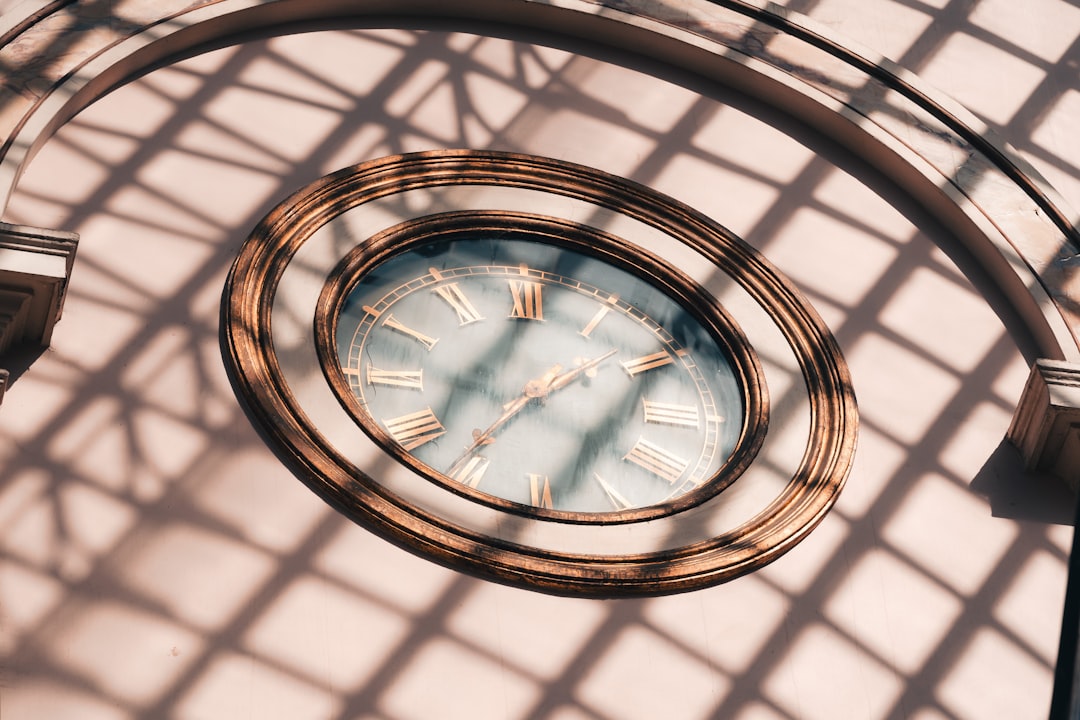
Quantum clocks represent a groundbreaking advancement in the field of timekeeping, merging the principles of quantum mechanics with the traditional understanding of time. Unlike conventional clocks that rely on mechanical or electronic oscillations, quantum clocks utilize the inherent properties of quantum systems to achieve unprecedented levels of accuracy. These devices operate on the principle that quantum states can oscillate at extremely stable frequencies, allowing for a more precise measurement of time.
The concept of quantum clocks is not merely an evolution of existing technology; it signifies a paradigm shift in how humanity perceives and measures time itself. The development of quantum clocks has been driven by the need for greater precision in various scientific and technological applications. For instance, global positioning systems (GPS) and telecommunications rely heavily on accurate timekeeping to function effectively.
As the demand for precision increases, so does the necessity for innovative solutions like quantum clocks. By harnessing the unique characteristics of quantum mechanics, these clocks promise to redefine standards in time measurement, potentially leading to advancements in fields ranging from navigation to fundamental physics.
Key Takeaways
- Quantum clocks utilize the principles of quantum mechanics to keep time more accurately than traditional clocks.
- Time dilation, a concept from the theory of relativity, explains how time can appear to pass differently for observers in different frames of reference.
- Quantum mechanics plays a crucial role in the development and functioning of highly precise timekeeping devices.
- The theory of relativity has a significant impact on how we perceive and measure time, especially in extreme conditions such as near the speed of light or in strong gravitational fields.
- Quantum clocks are essential for testing and validating the predictions of the theory of general relativity, particularly in the context of gravitational time dilation.
Understanding Time Dilation
Time dilation is a fascinating phenomenon that arises from the principles of relativity, illustrating how time is not a constant but rather a variable that can be influenced by speed and gravity. According to Einstein’s theory of relativity, time can pass at different rates depending on an observer’s relative velocity or proximity to a massive object. This means that a clock moving at high speeds will tick more slowly compared to a stationary clock, a concept that has been experimentally validated through various studies involving atomic clocks on fast-moving aircraft and satellites.
The implications of time dilation extend beyond theoretical physics; they have practical consequences in everyday technology. For example, GPS satellites orbiting Earth experience time differently than clocks on the ground due to their high velocities and the weaker gravitational field at their altitude. To ensure accurate positioning data, the system must account for these discrepancies in timekeeping.
Thus, understanding time dilation is crucial not only for theoretical exploration but also for the functionality of modern technology that relies on precise timing.
The Role of Quantum Mechanics in Timekeeping

Quantum mechanics plays a pivotal role in enhancing the accuracy of timekeeping devices. At its core, quantum mechanics describes the behavior of particles at the atomic and subatomic levels, where traditional laws of physics often fail to apply. Quantum clocks exploit these behaviors, particularly the oscillation frequencies of atoms or ions, which are remarkably stable and can be used as reference points for measuring time.
This stability arises from the quantum properties of these particles, allowing for measurements that are far more precise than those achievable with classical methods. The integration of quantum mechanics into timekeeping has led to the development of atomic clocks that utilize laser cooling and trapping techniques to manipulate atoms with extreme precision. These advancements have resulted in clocks that can maintain accuracy within a few billionths of a second over extended periods.
As researchers continue to explore the quantum realm, they are uncovering new methods to enhance timekeeping further, potentially leading to even more sophisticated quantum clocks that could redefine our understanding of temporal measurement.
The Impact of Relativity on Time Perception
| Experiment | Time Perception | Relativity Factor |
|---|---|---|
| Atomic Clock Experiment | Measured time dilation | Highly significant |
| Twin Paradox Experiment | Perceived time difference | Proven effect |
| GPS Satellite Experiment | Time synchronization | Practical application |
Relativity has fundamentally altered humanity’s perception of time, challenging long-held notions of its constancy. Prior to Einstein’s theories, time was often viewed as an absolute entity, ticking away uniformly regardless of external factors. However, relativity introduced the idea that time is intertwined with space and can be affected by speed and gravity.
This shift in understanding has profound implications for both theoretical physics and everyday life, as it suggests that two observers can experience time differently based on their relative positions and velocities. The impact of relativity extends beyond scientific theory; it influences how individuals perceive their own experiences. For instance, when people engage in activities they enjoy, they often report that time seems to fly by, while moments of boredom can stretch indefinitely.
This subjective experience aligns with the principles of relativity, where emotional states and environmental factors can alter one’s perception of time’s passage. As society continues to grapple with these concepts, it becomes increasingly clear that time is not merely a linear progression but a complex interplay of physical laws and human experience.
Quantum Clocks and the Theory of General Relativity
The intersection of quantum clocks and general relativity presents an intriguing area of study within modern physics. General relativity posits that gravity affects the flow of time, leading to variations in time measurement based on gravitational fields. Quantum clocks, with their unparalleled precision, offer a unique opportunity to test and explore these relativistic effects in greater detail.
By placing quantum clocks in different gravitational environments or subjecting them to varying velocities, researchers can gather data that may either reinforce or challenge existing theories. This synergy between quantum mechanics and general relativity is essential for advancing our understanding of the universe. As scientists strive to unify these two pillars of modern physics into a cohesive framework, quantum clocks may serve as critical tools in this endeavor.
Their ability to measure time with extraordinary accuracy could provide insights into phenomena such as black holes or gravitational waves, potentially leading to breakthroughs that reshape our comprehension of space-time itself.
The Practical Applications of Quantum Clocks
The practical applications of quantum clocks extend far beyond theoretical exploration; they hold significant promise for various industries and technologies. One notable application is in global positioning systems (GPS), where precise timing is crucial for accurate location data. Quantum clocks can enhance GPS accuracy by compensating for relativistic effects caused by satellite motion and gravitational variations.
This improvement could lead to more reliable navigation systems for both civilian and military use. In addition to navigation, quantum clocks have potential applications in telecommunications, where synchronization between networks is vital for data transmission efficiency.
Quantum clocks could provide the necessary accuracy to support advancements in 5G networks and beyond, ensuring seamless connectivity across devices and platforms.
Quantum Clocks and the Measurement of Time
The measurement of time has always been a fundamental aspect of human civilization, influencing everything from daily routines to scientific research. Quantum clocks represent a significant leap forward in this endeavor, offering unprecedented precision that challenges traditional methods. By utilizing atomic transitions as reference points for measuring time intervals, these clocks can achieve accuracies that were previously unimaginable.
This level of precision not only enhances scientific experiments but also has implications for various fields such as metrology and fundamental physics. Moreover, as society becomes increasingly reliant on technology that demands precise timing—such as financial markets and data centers—the role of quantum clocks will only grow more prominent. Their ability to provide stable and accurate time references will be essential for maintaining synchronization across global networks and systems.
As researchers continue to refine these devices, they may unlock new possibilities for measuring time itself, potentially leading to innovations that reshape our understanding of temporal dynamics.
The Influence of Quantum Mechanics on Timekeeping Devices
Quantum mechanics has profoundly influenced the design and functionality of modern timekeeping devices. Traditional clocks often rely on mechanical components or electronic circuits that can introduce errors due to environmental factors or wear over time. In contrast, quantum devices leverage the stability inherent in atomic transitions, resulting in significantly reduced uncertainties in time measurement.
This shift towards quantum-based technologies marks a departure from classical approaches, paving the way for more reliable and accurate timekeeping solutions. As researchers delve deeper into the principles of quantum mechanics, they are discovering new ways to enhance existing timekeeping devices further. Innovations such as optical lattice clocks and single-ion clocks are pushing the boundaries of precision even further, with some prototypes achieving accuracies within one second over billions of years.
These advancements not only improve our ability to measure time but also open up new avenues for exploring fundamental questions about the nature of reality itself.
Time Dilation and the Nature of Time
Time dilation serves as a compelling illustration of the complex nature of time itself. It challenges conventional notions by demonstrating that time is not an absolute entity but rather a relative experience influenced by various factors such as speed and gravity. This realization has profound implications for both theoretical physics and philosophical inquiries into the nature of existence.
As scientists continue to study time dilation through experiments involving high-speed particles or gravitational fields, they are uncovering deeper insights into how time operates within our universe. The exploration of time dilation also raises intriguing questions about human perception and experience. While scientific measurements may reveal objective truths about how time behaves under different conditions, individual experiences often diverge from these realities.
The subjective nature of time perception—shaped by emotions, context, and personal experiences—adds another layer of complexity to our understanding of this fundamental aspect of existence.
The Future of Quantum Clocks and Timekeeping Technology
The future of quantum clocks holds immense potential for revolutionizing our understanding and measurement of time. As technology continues to advance at an unprecedented pace, researchers are exploring new materials and techniques that could further enhance the performance of these devices.
Moreover, as society becomes increasingly interconnected through technology, the demand for accurate timekeeping will only grow stronger. Quantum clocks could play a pivotal role in supporting advancements across various sectors—from telecommunications to space exploration—by providing reliable timing references essential for synchronization and coordination. As researchers push the boundaries of what is possible with quantum technology, they may unlock new frontiers in our understanding of both time and the universe itself.
Quantum Clocks and the Quest to Understand the Mysteries of Time
The quest to understand the mysteries of time has captivated humanity for centuries, intertwining science with philosophy and existential inquiry. Quantum clocks represent a significant step forward in this ongoing exploration by providing tools capable of probing deeper into temporal phenomena than ever before. As researchers harness the power of quantum mechanics to measure time with unparalleled accuracy, they are also uncovering new questions about its fundamental nature.
This journey into the depths of temporal understanding may ultimately lead to breakthroughs that reshape our comprehension not only of time but also of space and reality itself. By bridging gaps between classical physics and quantum mechanics, scientists are inching closer to unraveling some of the universe’s most profound mysteries—questions about causality, entropy, and even the fabric of space-time itself. In this sense, quantum clocks are not merely instruments for measuring seconds; they are gateways into exploring the very essence of existence itself.
Quantum clocks are at the forefront of precision timekeeping, and their relationship with time dilation is a fascinating area of study. For a deeper understanding of how these advanced timekeeping devices operate and their implications for our understanding of time, you can read more in this related article on quantum technology and its impact on time measurement. Check it out here: My Cosmic Ventures.
WATCH THIS! The Universe Doesn’t Exist (And Science Proves It)
FAQs
What is a quantum clock?
A quantum clock is a highly accurate timekeeping device that uses the principles of quantum mechanics to measure time. It can achieve precision beyond the capabilities of traditional atomic clocks.
How does time dilation relate to quantum clocks?
Time dilation is a phenomenon predicted by the theory of relativity, where time appears to pass at different rates for observers in different gravitational fields or relative velocities. Quantum clocks are used to study and measure time dilation effects in various scenarios, including near black holes and at high speeds.
How do quantum clocks achieve high precision?
Quantum clocks use the properties of quantum systems, such as superposition and entanglement, to achieve high precision in timekeeping. These properties allow for more stable and accurate measurements of time intervals.
What are the potential applications of quantum clocks?
Quantum clocks have potential applications in fields such as global navigation systems, space exploration, and fundamental physics research. They could also enable more precise synchronization of communication networks and improve the accuracy of GPS systems.
How do quantum clocks differ from traditional atomic clocks?
While traditional atomic clocks rely on the behavior of atoms to measure time, quantum clocks use more advanced quantum mechanical principles to achieve even higher precision. Quantum clocks are expected to surpass the accuracy of atomic clocks in the near future.