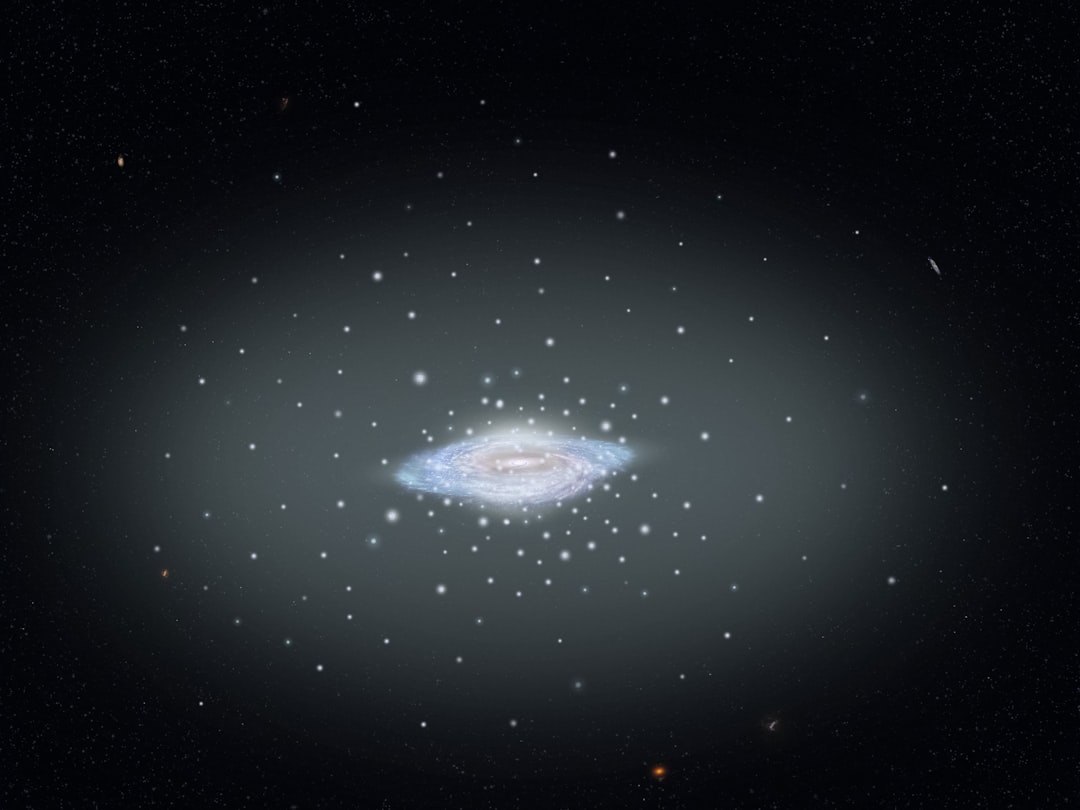
The past hypothesis is a pivotal concept in cosmology that seeks to explain the nature of time and the universe’s evolution. It posits that the universe began in a state of low entropy, which has profound implications for understanding the directionality of time and the development of cosmic structures. This hypothesis serves as a foundation for many theoretical frameworks in physics, particularly in the context of thermodynamics and cosmology.
By examining the past hypothesis, researchers aim to unravel the complexities of the universe’s origins and its subsequent evolution. As scientists delve deeper into the mysteries of the cosmos, the past hypothesis emerges as a crucial element in bridging the gap between thermodynamic principles and cosmological observations. It raises fundamental questions about the nature of time, causality, and the very fabric of reality.
The exploration of this hypothesis not only enhances our understanding of the universe but also challenges existing paradigms, prompting a reevaluation of how time is perceived in both scientific and philosophical contexts.
Key Takeaways
- The Past Hypothesis in cosmology aims to explain the low entropy state of the early universe.
- Understanding the Past Hypothesis involves exploring the conditions and constraints that led to the low entropy state.
- Entropy plays a crucial role in the Past Hypothesis, as it is used to explain the direction of time’s arrow.
- Challenges and criticisms of the Past Hypothesis include its reliance on low entropy boundary conditions and its inability to explain the origin of the universe.
- The Past Hypothesis is closely connected to the Arrow of Time, as it provides a framework for understanding the asymmetry of time.
Theoretical Framework: Understanding the Past Hypothesis
At its core, the past hypothesis asserts that the universe began in a highly ordered state, characterized by low entropy.
The past hypothesis provides a theoretical framework that connects this law with the observable universe, suggesting that our current high-entropy state is a result of a long history of evolution from that initial low-entropy condition.
The implications of this framework extend beyond mere theoretical musings; they influence how cosmologists model the universe’s evolution. By anchoring their models in the past hypothesis, researchers can better understand phenomena such as cosmic inflation, galaxy formation, and the eventual fate of the universe. This theoretical underpinning allows for a more coherent narrative regarding the universe’s history, providing insights into how complex structures emerged from simpler beginnings.
The Role of Entropy in the Past Hypothesis

Entropy plays a central role in the past hypothesis, serving as a measure of disorder within a system. In thermodynamics, entropy is often associated with the amount of energy unavailable for doing work, and it is intrinsically linked to the directionality of time. The past hypothesis posits that the universe started in a state of minimal entropy, which has significant implications for understanding how systems evolve over time.
As entropy increases, systems tend to move towards greater disorder, leading to the observable phenomena we witness today. This relationship between entropy and time is crucial for comprehending why events unfold in a particular sequence. The past hypothesis suggests that because the universe began in a low-entropy state, it naturally progresses towards higher entropy states.
This progression not only aligns with our observations but also provides a framework for understanding why time appears to flow in one direction—toward increased disorder. Thus, entropy serves as both a guiding principle and a fundamental aspect of the past hypothesis, shaping our understanding of cosmic evolution.
Challenges and Criticisms of the Past Hypothesis
| Challenges and Criticisms of the Past Hypothesis |
|---|
| 1. Lack of direct evidence |
| 2. Difficulty in testing the hypothesis |
| 3. Alternative explanations |
| 4. Inconsistencies with current understanding of physics |
| 5. Lack of consensus among scientists |
Despite its significance, the past hypothesis is not without its challenges and criticisms. One major contention arises from the question of why the universe began in such a low-entropy state. Critics argue that while the hypothesis provides an explanation for the increase in entropy over time, it does not adequately address the underlying reasons for this initial condition.
This gap in understanding raises philosophical questions about causality and the nature of existence itself. Furthermore, some physicists contend that the past hypothesis may be too simplistic to account for the complexities observed in modern cosmology. They argue that it fails to incorporate various factors that could influence entropy and cosmic evolution, such as quantum mechanics and gravitational effects.
As research progresses, these criticisms highlight the need for a more nuanced understanding of the past hypothesis and its implications for cosmological models.
The Connection between the Past Hypothesis and the Arrow of Time
The past hypothesis is intricately linked to the concept of the arrow of time, which refers to the one-way directionality observed in temporal phenomena. This connection is primarily rooted in the relationship between entropy and time; as entropy increases, so too does our perception of time moving forward. The past hypothesis provides a framework for understanding why we experience time as flowing from past to future rather than vice versa.
In this context, the arrow of time can be seen as a manifestation of the underlying thermodynamic principles outlined by the past hypothesis. As systems evolve from low-entropy states to high-entropy states, they create a temporal narrative that aligns with our observations of causality and change. This relationship not only reinforces the validity of the past hypothesis but also offers insights into broader philosophical questions regarding time’s nature and our place within it.
Historical Development of the Past Hypothesis in Cosmology
The historical development of the past hypothesis can be traced back to early 20th-century physics when scientists began to grapple with concepts such as entropy and thermodynamics in relation to cosmology. Pioneering figures like Ludwig Boltzmann laid the groundwork for understanding entropy’s role in physical systems, while Albert Einstein’s theories on relativity further shaped contemporary views on time and space. These foundational ideas set the stage for later developments in cosmological theories.
As research progressed through the mid-20th century, cosmologists began to integrate these concepts into their models of cosmic evolution. The advent of big bang theory provided a framework for understanding how the universe expanded from an initial singularity, reinforcing notions of low-entropy beginnings. Over time, various interpretations and refinements emerged, leading to a more comprehensive understanding of how the past hypothesis fits within modern cosmological paradigms.
Experimental Evidence Supporting the Past Hypothesis
While much of the past hypothesis is rooted in theoretical frameworks, there exists experimental evidence that lends support to its validity. Observations of cosmic microwave background radiation provide crucial insights into the early universe’s conditions, suggesting that it was indeed characterized by low entropy. These findings align with predictions made by models based on the past hypothesis, reinforcing its relevance in contemporary cosmology.
Additionally, studies examining large-scale structures within the universe offer further corroboration for this hypothesis. The distribution and behavior of galaxies can be interpreted through models that incorporate low-entropy initial conditions, supporting claims about how cosmic structures evolved over time.
Implications of the Past Hypothesis for Cosmological Models
The implications of the past hypothesis extend far beyond theoretical discussions; they significantly influence how cosmologists construct models to explain cosmic phenomena. By grounding their frameworks in low-entropy initial conditions, researchers can better account for observed structures and behaviors within the universe. This approach allows for more accurate predictions regarding cosmic evolution and helps clarify various processes such as galaxy formation and dark matter interactions.
Moreover, incorporating the past hypothesis into cosmological models encourages interdisciplinary collaboration among physicists, astronomers, and philosophers. As these fields intersect, new insights emerge regarding fundamental questions about existence, causality, and time itself. The past hypothesis thus serves as a catalyst for ongoing research and dialogue across disciplines, fostering a deeper understanding of both our universe and our place within it.
The Future of Research on the Past Hypothesis
As scientific inquiry continues to evolve, research on the past hypothesis remains an active area of exploration within cosmology. Future investigations are likely to focus on refining existing models and addressing criticisms surrounding initial conditions and entropy’s role in cosmic evolution. Advances in observational technology may provide new data that could either support or challenge current interpretations of the past hypothesis.
Additionally, interdisciplinary approaches will play a crucial role in shaping future research directions. By integrating insights from quantum mechanics, philosophy, and other scientific fields, researchers can develop more comprehensive frameworks that account for complexities often overlooked in traditional models. The ongoing exploration of the past hypothesis promises to yield valuable insights into fundamental questions about time, existence, and our understanding of reality itself.
Applications of the Past Hypothesis in Other Scientific Fields
The implications of the past hypothesis extend beyond cosmology; they resonate within various scientific disciplines such as thermodynamics, statistical mechanics, and even philosophy. In thermodynamics, principles derived from the past hypothesis inform discussions about energy distribution and system behavior over time. Similarly, statistical mechanics utilizes concepts related to entropy to explain macroscopic phenomena based on microscopic interactions.
Philosophically, discussions surrounding causality and time often draw upon ideas rooted in the past hypothesis. By examining how initial conditions influence subsequent events, scholars can engage with profound questions about determinism and free will. This interdisciplinary relevance underscores not only the significance of the past hypothesis but also its potential to foster dialogue across diverse fields.
The Significance of the Past Hypothesis in Understanding the Universe
In conclusion, the past hypothesis stands as a cornerstone concept within cosmology that offers profound insights into our understanding of time and cosmic evolution. By positing that the universe began in a low-entropy state, it provides a framework for explaining why entropy increases over time and how this relates to our perception of temporal directionality. Despite facing challenges and criticisms, ongoing research continues to explore its implications across various scientific disciplines.
As scientists strive to unravel the mysteries of existence and our place within it, the past hypothesis remains an essential tool for navigating these complexities. Its significance extends beyond theoretical frameworks; it fosters interdisciplinary collaboration and encourages deeper philosophical inquiry into fundamental questions about reality itself. Ultimately, by engaging with this concept, researchers contribute to a richer understanding of not only our universe but also our own existence within it.
The past hypothesis in cosmology posits that the universe began in a highly ordered state, which has significant implications for our understanding of entropy and the arrow of time. For a deeper exploration of this concept, you can read the article on the implications of the past hypothesis in cosmology at this link. This article delves into how the past hypothesis shapes our understanding of the universe’s evolution and the fundamental laws of thermodynamics.
WATCH THIS! The Universe Doesn’t Exist (And Science Proves It)
FAQs
What is the past hypothesis in cosmology?
The past hypothesis in cosmology is the idea that the universe began in a low entropy state, which is a measure of disorder, and has been evolving towards higher entropy ever since.
How does the past hypothesis relate to the second law of thermodynamics?
The past hypothesis is closely related to the second law of thermodynamics, which states that the entropy of a closed system will tend to increase over time. The past hypothesis suggests that the low entropy state of the early universe is a result of a special initial condition.
What are the implications of the past hypothesis for the future of the universe?
The past hypothesis implies that the universe will continue to evolve towards higher entropy, eventually leading to a state of maximum entropy known as the heat death of the universe.
How does the past hypothesis impact our understanding of the origins of the universe?
The past hypothesis provides a framework for understanding the initial conditions of the universe and how it has evolved over time. It helps to explain why the early universe was in a low entropy state and how that has led to the current state of the universe.
Are there any alternative theories to the past hypothesis in cosmology?
There are alternative theories to the past hypothesis, such as the idea of a cyclic universe or a multiverse, which propose different explanations for the initial conditions and evolution of the universe. These alternative theories are the subject of ongoing research and debate in the field of cosmology.