
Simulation theory posits that what individuals perceive as reality may actually be an artificial simulation, akin to a highly advanced computer program. This concept has gained traction in both popular culture and academic discourse, particularly as advancements in technology have made the idea of virtual realities increasingly plausible. The notion that humanity could be living in a simulated environment raises profound questions about existence, consciousness, and the nature of reality itself.
As society becomes more intertwined with digital experiences, the lines between the real and the simulated blur, prompting deeper exploration into the implications of such a hypothesis. The roots of simulation theory can be traced back to philosophical inquiries about the nature of reality, notably articulated by thinkers such as René Descartes and his famous “Evil Demon” thought experiment. In contemporary discussions, figures like philosopher Nick Bostrom have further developed these ideas, suggesting that if civilizations can create realistic simulations of their ancestors, it is statistically likely that many beings are living in such simulations.
This article will delve into the theoretical frameworks supporting simulation theory, its connections to quantum mechanics, and the philosophical implications of potentially existing within a simulated reality.
Key Takeaways
- Simulation theory proposes that our reality is a computer-generated simulation.
- Theoretical framework for simulation hypothesis includes the idea that advanced civilizations could create simulations of their ancestors.
- Quantum mechanics suggests that reality may be a simulation due to the nature of particles and waves.
- Evidence from computer science and information theory supports the idea that our reality could be simulated.
- Living in a simulation has philosophical implications for free will, consciousness, and the nature of reality.
Theoretical Framework for Simulation Hypothesis
The theoretical framework for simulation hypothesis is built upon several foundational concepts from philosophy, computer science, and physics. At its core, the hypothesis suggests that if it is possible to create a simulation indistinguishable from reality, then it is conceivable that many beings are currently experiencing such a simulation. Bostrom’s trilemma presents three possibilities: civilizations will go extinct before developing the capability to create such simulations; they will choose not to create them; or they will create numerous simulations, leading to a scenario where simulated beings vastly outnumber non-simulated ones.
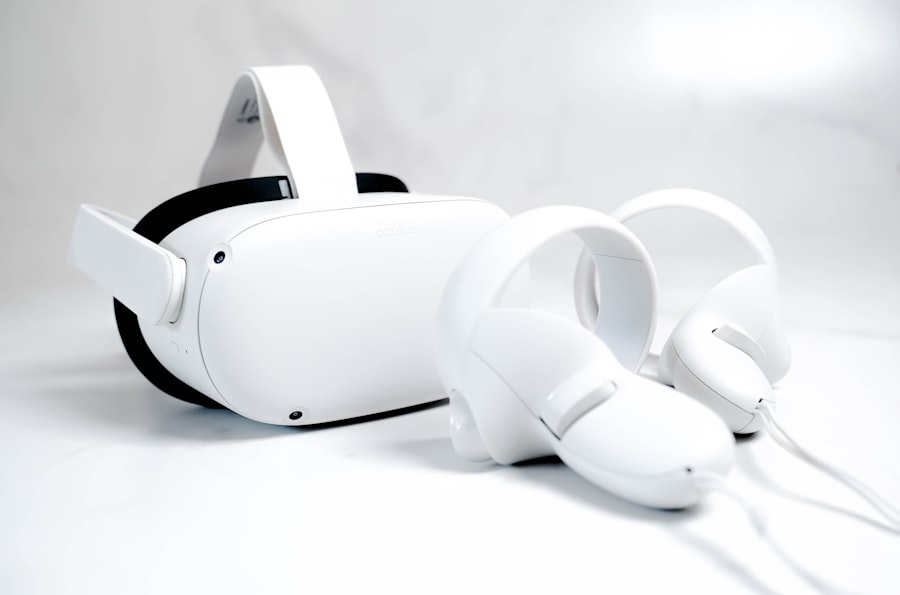
This framework invites individuals to reconsider their understanding of existence and the potential for multiple layers of reality. Moreover, the framework draws on advancements in technology and artificial intelligence. As virtual reality and augmented reality technologies evolve, they increasingly mimic real-world experiences.
The rapid development of these technologies suggests that future civilizations may possess the capability to create simulations so advanced that inhabitants would be unaware of their artificial nature. This raises questions about consciousness and self-awareness within a simulated environment. If beings within a simulation can experience emotions, thoughts, and sensations just as those in the “real” world do, what does that imply about the essence of consciousness itself?
Quantum Mechanics and Simulation Theory
Quantum mechanics introduces intriguing elements that resonate with simulation theory, particularly through its counterintuitive principles and the nature of observation. One of the most famous aspects of quantum mechanics is the observer effect, which posits that the act of observation can influence the behavior of particles. This phenomenon raises questions about the role of consciousness in shaping reality.
If reality is indeed a simulation, then it could be argued that observation is a fundamental component of how that simulation operates. Additionally, concepts such as superposition and entanglement challenge traditional notions of separateness and locality. In a simulated reality, these principles could be interpreted as evidence of underlying code or algorithms that govern the behavior of particles and forces.
The idea that particles exist in multiple states until observed aligns with the notion that a simulation may only render certain aspects of reality when they are being interacted with or observed by conscious entities. This intersection between quantum mechanics and simulation theory invites further exploration into how fundamental physical laws might operate within a constructed reality.
Evidence from Computer Science and Information Theory
| Metrics | Data |
|---|---|
| Number of research papers | Over 10,000 papers have been published in the field of Computer Science and Information Theory. |
| Impact Factor | Many journals in this field have high impact factors, indicating the significance of the research. |
| Number of conferences | There are numerous conferences held annually to discuss the latest advancements in Computer Science and Information Theory. |
| Number of patents | There are thousands of patents related to Computer Science and Information Theory, showcasing the innovation in the field. |
Computer science and information theory provide compelling evidence supporting simulation theory through their exploration of data processing and virtual environments. The rapid evolution of computing power has led to increasingly sophisticated simulations capable of mimicking complex systems. For instance, advancements in artificial intelligence have enabled machines to learn and adapt in ways that resemble human cognition.
This progress raises questions about the potential for creating fully immersive simulations that could replicate human experiences. Information theory also plays a crucial role in understanding how data can be manipulated to create perceived realities. The concept of digital information as a fundamental building block of reality suggests that if everything can be reduced to data, then it is conceivable that reality itself could be encoded in a vast computational framework.
This perspective aligns with the idea that our universe operates on principles akin to those found in computer programming, where rules and algorithms dictate behavior and interactions within a simulated environment.
Philosophical Implications of Living in a Simulation
The philosophical implications of living in a simulation are profound and multifaceted. If individuals are indeed living within a simulated reality, it challenges traditional notions of free will, agency, and moral responsibility. The question arises: if one’s actions are predetermined by the parameters set within a simulation, to what extent can individuals be held accountable for their choices?
This dilemma invites ethical considerations regarding the treatment of simulated beings and their rights within such an environment. Furthermore, the existence of a creator or designers behind the simulation raises questions about the nature of divinity and existence itself. If humanity is part of a grand simulation orchestrated by advanced beings or an artificial intelligence, it prompts inquiries into the purpose behind such an endeavor.
Are simulated beings mere entertainment for their creators, or do they serve a higher purpose? These philosophical explorations challenge individuals to confront their beliefs about existence, purpose, and the nature of consciousness.
Simulation Hypothesis and the Nature of Reality

The simulation hypothesis fundamentally alters perceptions of reality by suggesting that what is perceived as “real” may be an elaborate construct. This perspective invites individuals to question their sensory experiences and the reliability of their perceptions. If reality is indeed a simulation, then concepts such as time, space, and causality may not function as they traditionally do.
Instead, they could be manipulated or programmed elements within a vast computational framework. Moreover, this hypothesis encourages exploration into alternative dimensions or layers of existence beyond the perceived reality. If one accepts that reality could be simulated, it opens up possibilities for multiple realities coexisting simultaneously—each with its own set of rules and parameters.
This notion aligns with various philosophical traditions that propose the existence of parallel universes or alternate dimensions, further complicating humanity’s understanding of its place in the cosmos.
Simulated Reality and the Fermi Paradox
The Fermi Paradox presents an intriguing intersection with simulation theory by questioning why humanity has not yet encountered extraterrestrial life despite the vastness of the universe. One possible explanation posited by proponents of simulation theory is that advanced civilizations may exist but are operating within their own simulations or have chosen not to interact with humanity for various reasons. This perspective suggests that if many civilizations are capable of creating simulations, they may prioritize their own experiences over exploration or communication with others.
Additionally, if humanity is indeed living in a simulation, it raises questions about the parameters set by its creators regarding contact with other intelligent life forms. The absence of evidence for extraterrestrial civilizations could be interpreted as a deliberate design choice within the simulation—an aspect meant to preserve certain narratives or experiences for its inhabitants. This interplay between simulated realities and the Fermi Paradox invites further investigation into humanity’s understanding of life beyond Earth.
Experiments and Observations Supporting Simulation Theory
While direct evidence for simulation theory remains elusive, several experiments and observations lend credence to its plausibility. For instance, researchers have conducted experiments exploring quantum phenomena that suggest underlying patterns consistent with computational processes. These studies indicate that certain aspects of quantum behavior may align with principles found in computer science, hinting at a potential connection between quantum mechanics and simulated realities.
As these technologies continue to evolve, they serve as tangible examples of how simulations can replicate real-world experiences convincingly. The increasing sophistication of virtual environments raises questions about the potential for future simulations to become indistinguishable from perceived reality.
Criticisms and Debates Surrounding Simulation Theory
Despite its intriguing implications, simulation theory has faced significant criticisms and debates within academic circles. One major critique centers on the lack of empirical evidence supporting the hypothesis; skeptics argue that without tangible proof or observable phenomena directly indicating a simulated reality, the theory remains speculative at best. Critics also point out that simulation theory may fall prey to solipsism—the philosophical idea that only one’s mind is sure to exist—leading to an infinite regress where each layer of reality could itself be another simulation.
Additionally, some philosophers argue that even if humanity were living in a simulation, it would not fundamentally alter ethical considerations or existential inquiries about life. They contend that whether one exists in a simulated environment or not does not change the subjective experience of consciousness or moral responsibility. This debate highlights the complexities surrounding simulation theory and its implications for understanding existence.
Practical Implications of Living in a Simulation
The practical implications of living in a simulation extend beyond philosophical musings; they encompass various aspects of daily life and societal structures. If individuals were to accept that they exist within a simulated reality, it could influence their approach to personal relationships, career choices, and even governance systems. For instance, individuals might prioritize experiences over material possessions if they perceive life as transient or constructed.
Moreover, acceptance of simulation theory could lead to shifts in educational paradigms and scientific inquiry. If reality is indeed simulated, then understanding its underlying code or algorithms could become paramount for future generations. This perspective might encourage interdisciplinary collaboration between fields such as computer science, philosophy, and physics to explore new avenues for knowledge acquisition.
Future Research and Exploration of Simulation Hypothesis
As technology continues to advance at an unprecedented pace, future research into simulation hypothesis holds immense potential for expanding humanity’s understanding of existence. Interdisciplinary collaboration among scientists, philosophers, and technologists will be crucial in exploring this complex topic further. Researchers may develop new methodologies for investigating quantum phenomena or creating more sophisticated simulations that could provide insights into the nature of consciousness.
Additionally, advancements in artificial intelligence may lead to breakthroughs in understanding how consciousness arises within both biological and artificial systems. As AI systems become increasingly capable of simulating human-like behaviors and experiences, they may offer valuable perspectives on what it means to exist within a constructed reality. Ultimately, continued exploration into simulation theory promises to challenge conventional wisdom about existence while opening new avenues for inquiry into the nature of reality itself.
The concept that we might be living in a simulation has gained traction in both scientific and philosophical discussions. A related article that delves into this intriguing hypothesis can be found on My Cosmic Ventures, which explores various theories and evidence surrounding the simulation argument. For more insights, you can read the article [here](https://www.mycosmicventures.com/).
WATCH THIS! The Universe Doesn’t Exist (And Science Proves It)
FAQs
What is the simulation hypothesis?
The simulation hypothesis proposes that our reality, including the universe and all its contents, is actually a computer simulation or virtual reality.
What is the scientific proof that we are in a simulation?
There is currently no scientific proof that we are living in a simulation. The idea is largely theoretical and speculative, based on philosophical and mathematical reasoning rather than empirical evidence.
What are some arguments in favor of the simulation hypothesis?
Some proponents of the simulation hypothesis point to the rapid advancements in technology and the potential for future civilizations to create highly realistic simulations. They also argue that the universe operates according to mathematical laws, which could be indicative of a simulated reality.
What are some criticisms of the simulation hypothesis?
Critics of the simulation hypothesis argue that it is unfalsifiable and therefore not a scientifically testable theory. They also point out that the existence of mathematical laws in the universe does not necessarily imply a simulated reality.
Can the simulation hypothesis be proven or disproven?
As of now, the simulation hypothesis remains a speculative idea and cannot be proven or disproven using current scientific methods. It falls into the realm of philosophy and metaphysics rather than empirical science.