
The 3I/ATLAS Space Probe represents a significant leap in humanity’s quest to explore the cosmos. Launched with the ambition of unraveling the mysteries of distant celestial bodies, this probe is a testament to human ingenuity and the relentless pursuit of knowledge. Designed to traverse the vast expanses of space, the 3I/ATLAS is equipped with cutting-edge technology that allows it to gather invaluable data about the universe.
Its mission is not only to observe but also to understand the fundamental processes that govern celestial phenomena. As a part of a broader initiative to enhance our understanding of space, the 3I/ATLAS probe embodies the spirit of exploration that has driven humanity for centuries. From the early days of astronomy to the modern era of space travel, each step has brought us closer to understanding our place in the universe.
The 3I/ATLAS probe stands at the forefront of this journey, poised to deliver insights that could reshape our understanding of astrophysics and planetary science.
Key Takeaways
- The 3I/ATLAS Space Probe is a cutting-edge space exploration mission designed to push the boundaries of scientific discovery.
- The technology behind the 3I/ATLAS Space Probe includes advanced propulsion systems, state-of-the-art imaging equipment, and robust communication capabilities.
- The mission objectives of the 3I/ATLAS Space Probe include studying the composition of distant planets, searching for signs of extraterrestrial life, and gathering data on cosmic phenomena.
- The launch and journey of the 3I/ATLAS Space Probe involved meticulous planning, precise calculations, and overcoming the challenges of deep space travel.
- The instruments and equipment on board the 3I/ATLAS Space Probe are designed to withstand the harsh conditions of space and provide valuable data for scientific analysis.
The Technology Behind the 3I/ATLAS Space Probe
The technological framework of the 3I/ATLAS Space Probe is a marvel of modern engineering, integrating advanced materials and sophisticated systems designed for deep-space exploration. At its core, the probe utilizes a state-of-the-art propulsion system that enables it to navigate through the harsh conditions of space with remarkable precision. This propulsion system is complemented by an array of solar panels that harness energy from the sun, ensuring that the probe remains operational even in the most remote regions of the solar system.
In addition to its propulsion capabilities, the 3I/ATLAS is equipped with an array of scientific instruments that allow it to conduct a variety of experiments and observations. These instruments include high-resolution cameras, spectrometers, and magnetometers, each meticulously designed to capture data across different wavelengths and frequencies. The integration of artificial intelligence into its operational framework further enhances its capabilities, allowing the probe to analyze data in real-time and make autonomous decisions during its journey.
The Mission Objectives of the 3I/ATLAS Space Probe
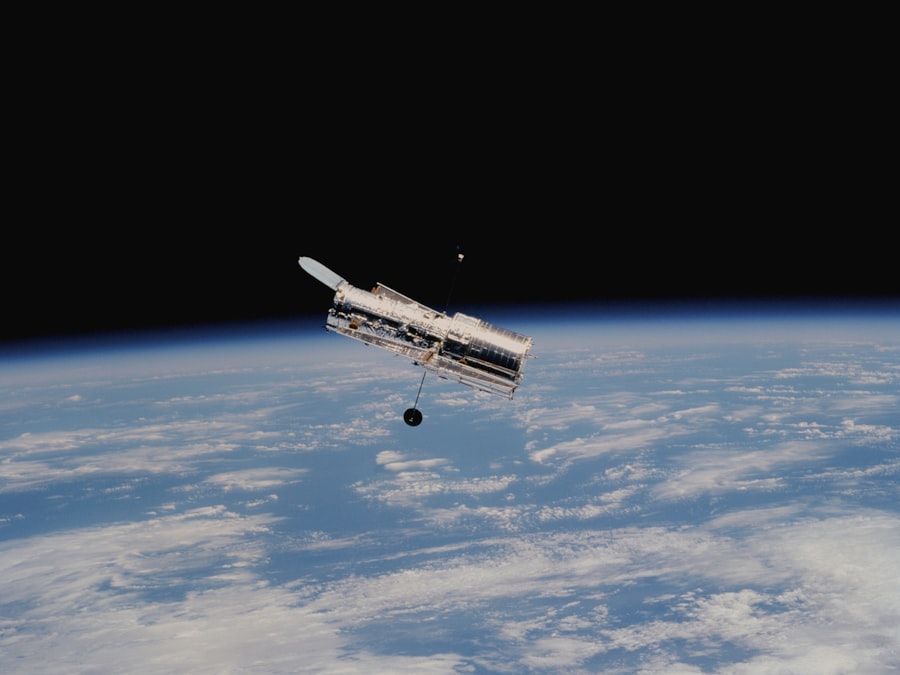
The mission objectives of the 3I/ATLAS Space Probe are both ambitious and multifaceted, reflecting a comprehensive approach to space exploration. One primary goal is to study the composition and structure of asteroids and comets, which are considered remnants from the early solar system. By analyzing these celestial bodies, scientists hope to gain insights into the conditions that prevailed during the formation of planets and other astronomical entities.
Another critical objective is to investigate exoplanets within habitable zones around distant stars. The 3I/ATLAS aims to identify potential biosignatures and assess the atmospheric conditions of these planets, contributing to our understanding of life beyond Earth. This aspect of its mission underscores humanity’s enduring curiosity about extraterrestrial life and the conditions necessary for its existence.
The Launch and Journey of the 3I/ATLAS Space Probe
| Phase | Details |
|---|---|
| Launch Date | October 6, 2021 |
| Destination | Study the atmosphere of Mars |
| Duration of Journey | Expected to take 9 months |
| Space Agency | Indian Space Research Organisation (ISRO) |
| Objective | To study the Martian atmosphere and climate |
The launch of the 3I/ATLAS Space Probe was a momentous occasion, marked by anticipation and excitement from scientists and space enthusiasts alike. Utilizing a powerful rocket, the probe was propelled into orbit with precision timing, ensuring it would follow its intended trajectory toward its target destinations. The launch was not merely a technical achievement; it symbolized years of research, development, and collaboration among various space agencies and institutions.
As it embarked on its journey through space, the 3I/ATLAS faced numerous challenges inherent in deep-space travel. The vast distances involved mean that communication with Earth can experience delays, requiring the probe to operate autonomously for extended periods. Despite these challenges, its journey has been characterized by successful maneuvers and data collection, showcasing the resilience and reliability of its design.
The Instruments and Equipment on Board the 3I/ATLAS Space Probe
The onboard instruments of the 3I/ATLAS Space Probe are a testament to human innovation in space science. Among its most notable features is a high-resolution imaging system capable of capturing detailed photographs of celestial bodies from great distances. This imaging system is crucial for mapping surfaces and identifying geological features that may provide clues about a body’s history.
In addition to imaging capabilities, the probe houses spectrometers designed to analyze light spectra emitted or reflected by celestial objects. These spectrometers can determine chemical compositions and physical properties, offering insights into everything from surface materials to atmospheric conditions. Furthermore, advanced sensors measure magnetic fields and radiation levels, providing a comprehensive view of the environments encountered during its mission.
The Discoveries and Findings of the 3I/ATLAS Space Probe

Since its launch, the 3I/ATLAS Space Probe has made several groundbreaking discoveries that have captivated scientists and researchers worldwide. One significant finding includes detailed observations of an asteroid belt previously thought to be devoid of activity. The probe’s data revealed unexpected geological features and signs of past volcanic activity, challenging existing theories about asteroid formation and evolution.
Moreover, the probe’s exploration of exoplanets has yielded promising results. Preliminary analyses suggest that some of these distant worlds may possess atmospheres conducive to supporting life. These findings have sparked renewed interest in astrobiology and have prompted further investigations into potential biosignatures on these planets.
Each discovery adds a new layer to humanity’s understanding of the universe and our place within it.
The Impact of the 3I/ATLAS Space Probe on Space Exploration
The impact of the 3I/ATLAS Space Probe on space exploration extends far beyond its immediate findings. By pushing the boundaries of what is technologically possible, it has set new standards for future missions. The lessons learned from its design, operation, and data collection processes will inform subsequent probes and missions aimed at exploring even more distant regions of space.
Additionally, the probe has fostered international collaboration among various space agencies, highlighting the importance of shared knowledge in advancing scientific understanding. This collaborative spirit is essential for tackling complex challenges in space exploration, as it brings together diverse expertise and resources. The success of the 3I/ATLAS mission serves as a model for future endeavors in which global cooperation will be crucial.
The Future of Space Probes: What’s Next After 3I/ATLAS?
As humanity looks toward the future of space exploration, questions arise about what lies ahead after the 3I/ATLAS mission. The advancements made during this mission will undoubtedly pave the way for more sophisticated probes capable of venturing even further into uncharted territories. Future missions may focus on exploring icy moons like Europa or Enceladus, where subsurface oceans could harbor life.
Moreover, there is growing interest in developing probes that can travel beyond our solar system. Concepts such as interstellar probes equipped with advanced propulsion systems are being explored, aiming to reach neighboring star systems within a human lifetime. The legacy of 3I/ATLAS will inspire these ambitious projects, encouraging scientists and engineers to dream big as they chart new paths in space exploration.
The Collaboration and Partnerships Involved in the 3I/ATLAS Mission
The success of the 3I/ATLAS mission is a testament to effective collaboration among various organizations and institutions worldwide. Multiple space agencies contributed resources, expertise, and funding to ensure that this ambitious project could come to fruition. This collaborative effort exemplifies how pooling knowledge can lead to groundbreaking advancements in science and technology.
In addition to governmental agencies, partnerships with academic institutions and private companies played a crucial role in developing innovative technologies for the probe. These collaborations fostered an environment where creativity could flourish, resulting in cutting-edge instruments that have enhanced our understanding of space. Such partnerships are likely to become increasingly important as future missions seek to explore more complex scientific questions.
The Challenges and Risks Faced by the 3I/ATLAS Space Probe
Despite its successes, the journey of the 3I/ATLAS Space Probe has not been without challenges and risks. Deep-space missions inherently involve uncertainties related to navigation, communication delays, and equipment malfunctions.
Moreover, exposure to cosmic radiation poses significant risks to both instruments and data integrity. Engineers meticulously designed shielding mechanisms to protect sensitive equipment from radiation damage; however, unforeseen circumstances can still arise during long-duration missions. Addressing these challenges requires continuous monitoring and adaptability throughout the probe’s journey.
The Legacy of the 3I/ATLAS Space Probe: Inspiring the Next Generation of Explorers
The legacy of the 3I/ATLAS Space Probe extends beyond its scientific contributions; it serves as an inspiration for future generations of explorers and scientists.
Educational initiatives stemming from this mission aim to engage students in discussions about space exploration and inspire them to think critically about their role in shaping humanity’s future in space.
As stories about the discoveries made by 3I/ATLAS circulate through classrooms and communities, they ignite curiosity and passion for exploration among young learners who may one day contribute their own discoveries to our understanding of the universe.
The 3I/ATLAS is often discussed in the context of its mission objectives and technological advancements in space exploration. For those interested in learning more about the broader implications of such space probes, a related article can be found on My Cosmic Ventures, which delves into the future of space exploration and the role of innovative technologies. You can read more about it in this article: My Cosmic Ventures.
WATCH THIS! The Object Defying Gravity: Is This Proof of Alien Technology?
FAQs
What is 3I/ATLAS?
3I/ATLAS is a comet that was discovered on December 28, 2019 by the Asteroid Terrestrial-impact Last Alert System (ATLAS) in Hawaii. It is also known as C/2019 Y4 (ATLAS).
Is 3I/ATLAS a space probe?
No, 3I/ATLAS is not a space probe. It is a comet that is on a trajectory through our solar system.
What is the difference between a comet and a space probe?
A comet is a small, icy body that orbits the sun, while a space probe is a spacecraft that is designed to explore space and gather data about celestial bodies.
What is the purpose of 3I/ATLAS?
As a comet, 3I/ATLAS does not have a specific purpose. Its trajectory and behavior are of interest to astronomers and scientists who study comets and the formation of the solar system.
Is 3I/ATLAS being studied by scientists?
Yes, 3I/ATLAS is being studied by scientists who are interested in learning more about its composition, behavior, and trajectory as it moves through our solar system.