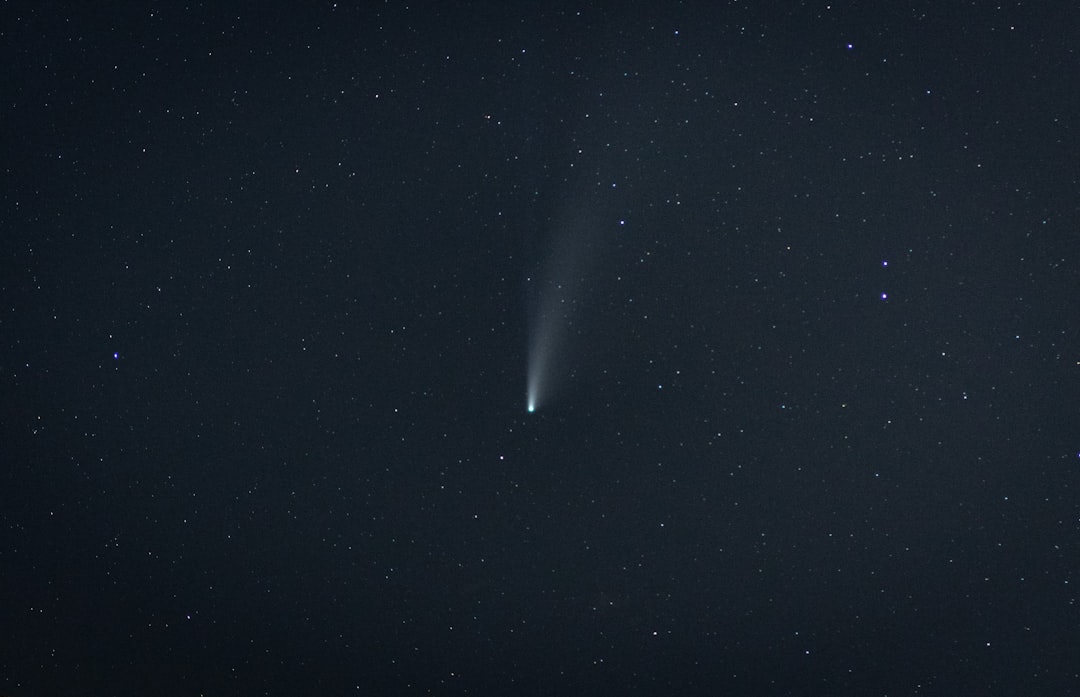
The cosmos has long captivated humanity’s imagination, with its vastness and mysteries prompting countless inquiries about the nature of existence beyond Earth. Among the most intriguing phenomena in recent astronomical history are interstellar visitors—celestial objects that originate from outside the solar system. These visitors offer a unique glimpse into the dynamics of our galaxy and the potential for life beyond our planet.
The discovery of such objects challenges existing paradigms in astronomy and compels scientists to rethink the boundaries of our cosmic neighborhood. Interstellar visitors, by their very nature, are rare and fleeting.
Two notable examples of these enigmatic travelers are ‘Oumuamua and 3I/ATLAS. Each of these objects has sparked significant interest and debate within the scientific community, not only due to their origins but also because of their physical characteristics and trajectories. As researchers delve deeper into the mysteries surrounding these interstellar wanderers, they uncover insights that could reshape our understanding of the universe.
Key Takeaways
- Interstellar visitors like ‘Oumuamua and 3I/ATLAS have sparked great interest in the scientific community.
- ‘Oumuamua was the first interstellar object discovered in 2017, followed by 3I/ATLAS in 2019.
- ‘Oumuamua is a cigar-shaped object with a reddish color, while 3I/ATLAS is more spherical and appears to be brighter.
- ‘Oumuamua is believed to have originated from the direction of the star Vega, while 3I/ATLAS’s origin remains unknown.
- ‘Oumuamua and 3I/ATLAS have different trajectories and speeds, as well as varying shapes and compositions, but share similarities in size and mass.
- The study of interstellar visitors has provided valuable insights into the nature of objects from other star systems and has opened up new avenues for future research.
- The differences in trajectories and physical characteristics of ‘Oumuamua and 3I/ATLAS have raised intriguing questions about the diversity of interstellar objects.
- The similarities in size and mass of ‘Oumuamua and 3I/ATLAS suggest that interstellar objects may come in a range of sizes and compositions.
- The scientific impact of studying interstellar visitors has been significant, and future studies will continue to enhance our understanding of these mysterious objects.
- In conclusion, the study of ‘Oumuamua and 3I/ATLAS has expanded our knowledge of interstellar visitors and their potential implications for our understanding of the universe.
Discovery of ‘Oumuamua and 3I/ATLAS
The first interstellar object to be identified was ‘Oumuamua, which was detected on October 19, 2017, by astronomers using the Pan-STARRS1 telescope in Hawaii. Its name, derived from Hawaiian meaning “scout” or “messenger,” reflects its status as a harbinger from beyond the solar system. Initial observations revealed that ‘Oumuamua was moving at an unusually high speed and on a hyperbolic trajectory, indicating that it was not bound to the Sun’s gravitational pull.
This discovery marked a significant milestone in astronomy, as it was the first time a visitor from another star system had been confirmed. In contrast, 3I/ATLAS was discovered later, on March 2, 2023, by astronomers using the Asteroid Terrestrial-impact Last Alert System (ATLAS). This object also exhibited a hyperbolic trajectory, suggesting an interstellar origin similar to that of ‘Oumuamua.
The discovery of 3I/ATLAS added to the growing list of interstellar objects and underscored the importance of ongoing astronomical surveys. Both discoveries have opened new avenues for research, prompting scientists to explore not only their origins but also their implications for our understanding of cosmic phenomena.
Physical Characteristics of ‘Oumuamua
‘Oumuamua’s physical characteristics have been a subject of intense scrutiny since its discovery. Initial observations suggested that it had an elongated shape, resembling a cigar or a pancake rather than a spherical body like most asteroids or comets. Estimates indicated that it was approximately 800 meters long and only about 80 meters wide, making it one of the most elongated objects ever observed in our solar system.
Its unusual shape raised questions about its formation and the processes that led to its current state. In addition to its shape, ‘Oumuamua exhibited a reddish hue, which scientists believe may be indicative of its surface composition. Spectroscopic analysis suggested that it is composed primarily of metal-rich materials and possibly some organic compounds.
The object’s brightness varied significantly as it rotated, leading to speculation about its surface features and texture. Some researchers even proposed that ‘Oumuamua could be a fragment of a larger body that had been ejected from its home star system, further complicating its classification and understanding.
Physical Characteristics of 3I/ATLAS
| Physical Characteristic | Measurement |
|---|---|
| Diameter | 1.2 kilometers |
| Albedo | 0.04 |
| Rotation period | 5.4 hours |
| Spectral type | C-type asteroid |
In contrast to ‘Oumuamua, 3I/ATLAS presented a different set of physical characteristics upon its discovery. Initial observations indicated that this interstellar visitor was smaller than ‘Oumuamua, with estimates suggesting a diameter of around 200 meters. Its shape appeared more spherical than elongated, which aligns more closely with typical cometary bodies found within our solar system.
This difference in shape raises intriguing questions about the formation processes of interstellar objects and how they might differ from those within our own solar system. The surface composition of 3I/ATLAS is still under investigation, but early spectroscopic data suggest that it may contain ice and other volatile materials commonly found in comets. This potential for icy components could indicate that 3I/ATLAS originated from a region rich in water ice or other volatiles, possibly hinting at different environmental conditions compared to those that produced ‘Oumuamua.
As researchers continue to analyze this object, they hope to uncover more about its physical properties and what they reveal about the diversity of interstellar bodies.
Origin and Journey of ‘Oumuamua
The journey of ‘Oumuamua through the solar system has been a topic of fascination for astronomers since its discovery. It is believed to have originated from the direction of the constellation Lyra, suggesting that it may have come from a star system located several light-years away. Its hyperbolic trajectory indicated that it was not gravitationally bound to the Sun, allowing it to pass through the solar system at an astonishing speed of approximately 315,000 kilometers per hour (196,000 miles per hour).
This rapid movement made it challenging for scientists to track and study the object in detail. As ‘Oumuamua approached the Sun, it exhibited unexpected acceleration that could not be fully explained by gravitational forces alone. This peculiar behavior led to various hypotheses regarding its nature; some scientists speculated that it might be a comet releasing gas or dust as it neared the Sun, while others proposed more exotic explanations involving solar radiation pressure or even artificial origins.
Despite extensive observations and analyses, the true nature of ‘Oumuamua’s acceleration remains one of the many mysteries surrounding this interstellar visitor.
Origin and Journey of 3I/ATLAS
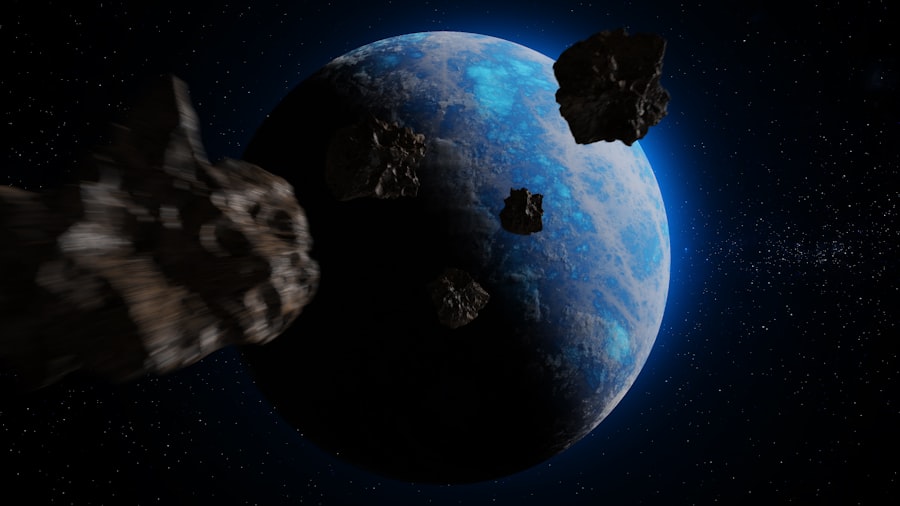
The origin and journey of 3I/ATLAS are still being pieced together as astronomers gather more data about this intriguing object. Initial observations suggest that it may have originated from a distant star system as well, although its exact point of origin remains uncertain. Unlike ‘Oumuamua, which had a well-documented trajectory through the solar system, 3I/ATLAS’s path is still being analyzed to determine how it came to be on its current course.
As it traversed the solar system, 3I/ATLAS exhibited characteristics typical of comets, including a potential coma or tail formed by sublimating ice as it approached the Sun. This behavior aligns with expectations for icy bodies originating from regions rich in volatiles. The study of 3I/ATLAS’s journey will provide valuable insights into the dynamics of interstellar objects and their interactions with solar systems they encounter along their paths.
Differences in Trajectories and Speed
One of the most striking differences between ‘Oumuamua and 3I/ATLAS lies in their trajectories and speeds as they traversed through the solar system. ‘Oumuamua’s hyperbolic trajectory was characterized by an exceptionally high velocity that allowed it to make a brief visit before continuing on its journey into interstellar space. Its speed was so great that it was able to escape the Sun’s gravitational influence entirely, marking it as a true interstellar traveler.
In contrast, 3I/ATLAS’s trajectory is still being studied to determine whether it will follow a similar path or if it will become gravitationally bound to the Sun or another celestial body. While initial observations suggest that it is also on a hyperbolic trajectory, its speed is comparatively lower than that of ‘Oumuamua. These differences in trajectories and speeds highlight the diverse nature of interstellar visitors and raise questions about how various factors influence their paths through space.
Differences in Shape and Composition
The differences in shape and composition between ‘Oumuamua and 3I/ATLAS further illustrate the diversity among interstellar objects. ‘Oumuamua’s elongated form has led to various hypotheses regarding its origin and structure, with some researchers suggesting that it may be a fragment from a larger body or even an artificial construct. Its reddish hue and metallic composition hint at a complex history shaped by various environmental factors over time.
On the other hand, 3I/ATLAS’s more spherical shape aligns with typical cometary bodies found within our solar system. Its potential icy composition suggests that it may have originated from a region rich in volatiles, providing insights into different formation processes compared to those that produced ‘Oumuamua.
Similarities in Size and Mass
Despite their differences in shape and composition, both ‘Oumuamua and 3I/ATLAS share similarities in size and mass that are noteworthy for astronomers studying interstellar visitors. While ‘Oumuamua is significantly larger than 3I/ATLAS, both objects fall within a range that suggests they are substantial enough to have survived their journeys through space without disintegrating upon entering the solar system. This resilience raises questions about the structural integrity of interstellar bodies and what factors contribute to their survival during such long voyages.
The similarities in size also prompt discussions about how these objects might interact with other celestial bodies they encounter along their paths. Understanding their mass can provide insights into their gravitational influences on nearby objects and how they might affect planetary systems they pass through. As researchers continue to study these interstellar visitors, they hope to uncover more about their physical properties and what they reveal about the broader context of cosmic evolution.
Scientific Impact and Future Studies
The discoveries of ‘Oumuamua and 3I/ATLAS have had profound implications for scientific research across multiple disciplines within astronomy. These interstellar visitors challenge existing models of solar system formation and evolution while providing new opportunities for understanding the dynamics of our galaxy. The study of such objects can shed light on how material is exchanged between star systems and how planetary systems evolve over time.
Future studies will likely focus on refining observational techniques to detect more interstellar objects as they enter our solar system. The development of advanced telescopes and observational programs will enhance scientists’ ability to track these fleeting visitors more effectively. Additionally, ongoing research into their physical characteristics will help build a comprehensive understanding of their origins and compositions, ultimately contributing to our knowledge of cosmic phenomena.
What We’ve Learned from Interstellar Visitors
The exploration of interstellar visitors like ‘Oumuamua and 3I/ATLAS has opened new frontiers in astronomy, prompting scientists to reconsider long-held assumptions about our place in the universe. These objects serve as tangible evidence that our solar system is not an isolated entity but rather part of a dynamic cosmic landscape filled with diverse celestial bodies traveling between stars. Through studying these interstellar wanderers, researchers have gained valuable insights into the processes that govern planetary formation and evolution across different star systems.
The ongoing investigation into their origins, trajectories, shapes, and compositions will undoubtedly yield further revelations about the nature of our galaxy and beyond. As humanity continues its quest for knowledge about the cosmos, interstellar visitors will remain at the forefront of astronomical research, inspiring future generations to explore the mysteries that lie beyond our home planet.
In exploring the intriguing similarities and differences between ‘Oumuamua and 3I/ATLAS, one can gain valuable insights from a related article that delves into their unique characteristics and the implications for our understanding of interstellar objects. For a deeper analysis, you can read more about it in this article: Comparing ‘Oumuamua and 3I/ATLAS.
WATCH THIS! The Object Defying Gravity: Is This Proof of Alien Technology?
FAQs
What is ‘Oumuamua?
‘Oumuamua is the first known interstellar object to pass through our solar system. It was discovered in 2017 and is believed to have originated from outside our solar system.
What is 3I/ATLAS?
3I/ATLAS is another interstellar object that was discovered in 2019. It is the second known interstellar object to pass through our solar system.
How do ‘Oumuamua and 3I/ATLAS compare?
Both ‘Oumuamua and 3I/ATLAS are interstellar objects that have passed through our solar system. They are of interest to scientists because they provide an opportunity to study objects from outside our solar system.
What are some differences between ‘Oumuamua and 3I/ATLAS?
One key difference is their discovery dates, with ‘Oumuamua being discovered in 2017 and 3I/ATLAS being discovered in 2019. Additionally, their trajectories and physical characteristics may differ, but further study is needed to fully understand these differences.