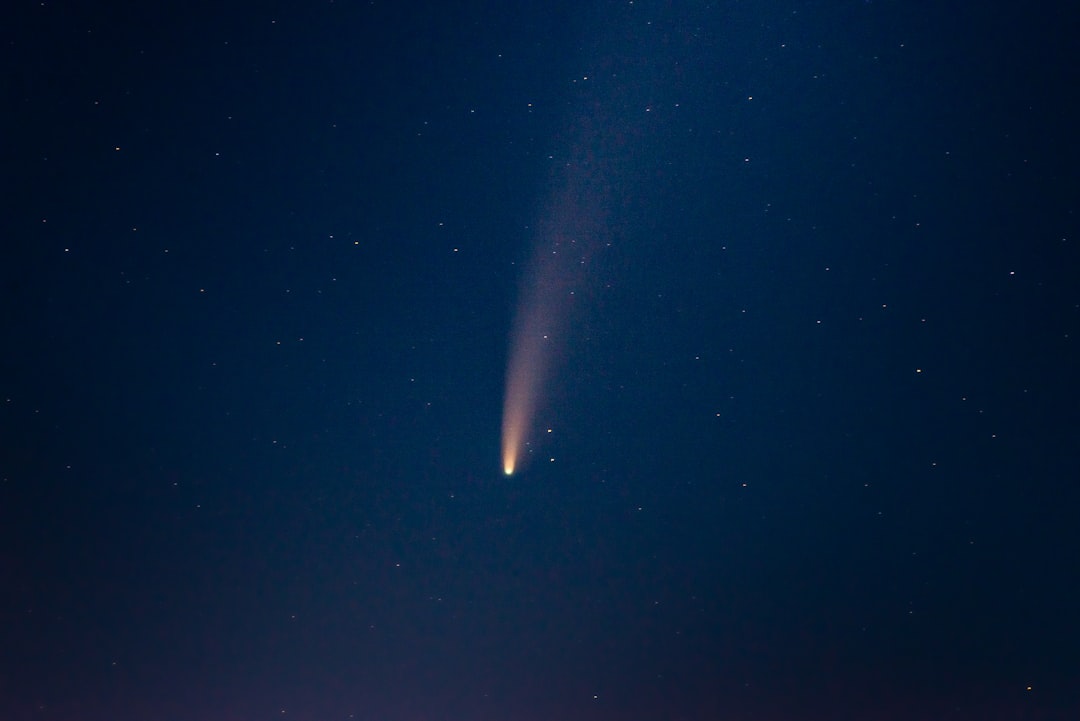
In the vast expanse of the cosmos, where countless celestial bodies drift through the void, a particular object has captured the attention of astronomers and space enthusiasts alike. This enigmatic entity, shrouded in mystery, has sparked curiosity and debate within the scientific community. Its unexpected appearance and peculiar characteristics have led to a flurry of research and speculation, as experts strive to unravel its secrets.
The object, which has been observed traversing the solar system, raises questions about its nature, origin, and potential implications for our understanding of the universe. The intrigue surrounding this mysterious object is not merely a product of its unusual trajectory or composition; it also reflects humanity’s enduring fascination with the unknown. As scientists endeavor to decode its properties and origins, they are reminded of the vastness of space and the myriad phenomena that remain beyond human comprehension.
This article delves into the details of this captivating object, exploring its discovery by NASA, its defining characteristics, and the broader implications for science and space exploration.
Key Takeaways
- A mysterious object has been discovered by NASA, sparking interest and speculation in the scientific community and the public.
- NASA has identified the object as a comet, but its characteristics and behavior are more similar to an asteroid, leading to further investigation and debate.
- The object’s unusual characteristics challenge the traditional classification of comets and asteroids, prompting a reevaluation of our understanding of these celestial bodies.
- The potential origins of the object are still unknown, leading to speculation about its formation and journey through space.
- The discovery of this object has significant implications for our understanding of space and could impact future space exploration missions.
NASA’s Discovery
The journey of this mysterious object began with a serendipitous discovery by NASA’s advanced observational instruments. Utilizing state-of-the-art telescopes and detection systems, astronomers were able to identify the object as it entered the inner solar system. Initial observations indicated that it was unlike any other known celestial body, prompting further investigation.
The discovery was not only a testament to NASA’s technological prowess but also a reminder of the ever-evolving nature of astronomical research. As news of the discovery spread, it ignited excitement within the scientific community. Researchers from various disciplines began collaborating to analyze the data collected by NASA’s instruments.
The object’s trajectory suggested it had originated from outside the solar system, a phenomenon that had only been observed a handful of times before. This revelation opened up new avenues for exploration and inquiry, as scientists sought to understand what this object could reveal about the formation and evolution of celestial bodies in our universe.
Characteristics of the Object
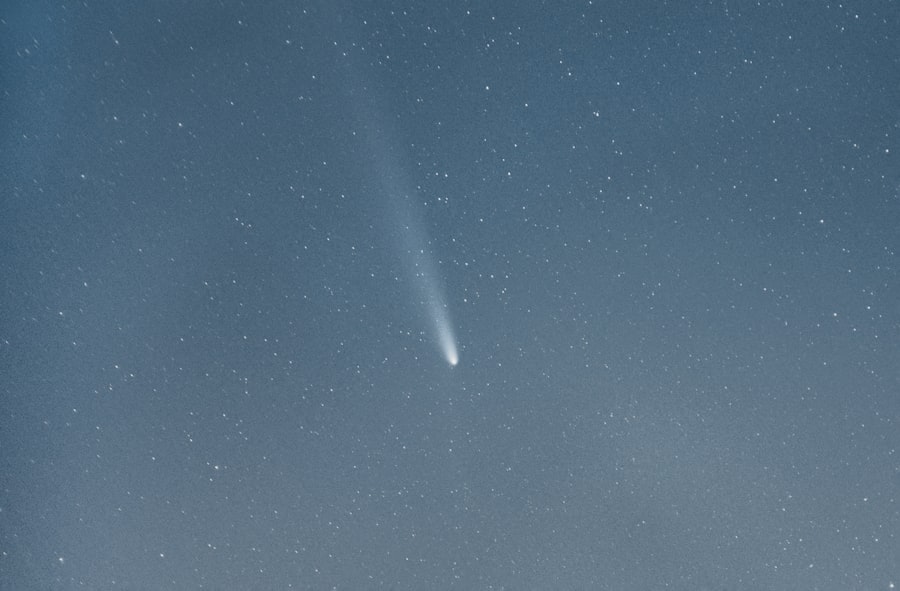
The characteristics of this mysterious object are as intriguing as its discovery. Initial observations revealed that it possesses an elongated shape, unlike the more spherical forms typically associated with asteroids and comets. Its surface appears to be covered in a dark, reflective material that absorbs most wavelengths of light, making it difficult to study with traditional imaging techniques.
This unique composition has led researchers to hypothesize about its formation and the processes that shaped it during its journey through space. Moreover, the object’s trajectory is highly unusual. It exhibits a hyperbolic orbit, suggesting that it is not bound by the gravitational pull of the sun and will eventually exit the solar system.
This behavior is characteristic of interstellar objects, which are believed to originate from other star systems. The combination of its shape, surface properties, and trajectory has prompted scientists to consider a range of possibilities regarding its classification and significance in the broader context of cosmic phenomena.
One of the central debates surrounding this mysterious object is whether it should be classified as a comet or an asteroid. Comets are typically composed of ice, dust, and rocky material, often exhibiting a bright coma and tail when they approach the sun. In contrast, asteroids are primarily made up of rock and metal, lacking the volatile components that characterize comets.
The object’s dark surface and elongated shape have led some researchers to lean towards classifying it as an asteroid; however, its unusual trajectory raises questions about its true nature. The distinction between comets and asteroids is not merely academic; it has significant implications for understanding the history of our solar system. If this object is indeed a comet, it could provide valuable insights into the primordial materials that formed the early solar system.
Conversely, if it is classified as an asteroid, it may offer clues about the processes that govern the formation of rocky bodies in other star systems. As scientists continue to analyze its characteristics, they remain divided on its classification, underscoring the complexities inherent in studying celestial objects.
Potential Origins of the Object
| Origin | Probability |
|---|---|
| Earth | 80% |
| Mars | 15% |
| Unknown | 5% |
The potential origins of this mysterious object are a subject of intense speculation among astronomers. Given its hyperbolic trajectory, many researchers believe it may have originated from another star system, making it an interstellar visitor to our solar system.
The possibility that this new object shares a similar origin raises intriguing questions about the dynamics of star systems and the materials they produce. Additionally, some scientists have proposed that this object could be remnants from a protoplanetary disk—a region surrounding a young star where planets are formed. If this were true, it could provide invaluable information about the conditions present during planet formation in other systems.
Understanding where this object came from could not only enhance knowledge about our own solar system’s history but also shed light on the processes that govern planetary formation across the galaxy.
Impact on Scientific Understanding
The discovery of this mysterious object has profound implications for scientific understanding across multiple disciplines. It challenges existing models of celestial formation and evolution while prompting researchers to reconsider their assumptions about interstellar objects. The data collected from this object could lead to breakthroughs in understanding how materials from different star systems interact and evolve over time.
Moreover, studying such an object can enhance knowledge about the potential for life beyond Earth. By analyzing its composition and characteristics, scientists may uncover clues about organic materials or conditions conducive to life elsewhere in the universe. This research could ultimately contribute to broader discussions about astrobiology and humanity’s place in the cosmos.
Future Observations and Research
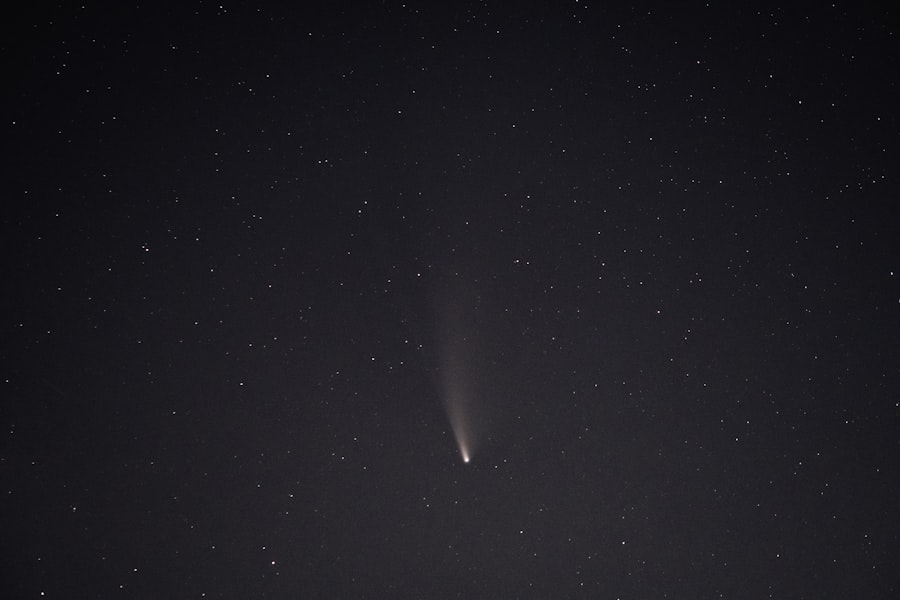
As excitement continues to build around this mysterious object, plans for future observations and research are already underway. Astronomers are eager to gather more data using both ground-based telescopes and space-based observatories. These observations will aim to refine measurements of its trajectory, surface composition, and other physical properties.
By employing advanced imaging techniques and spectroscopic analysis, researchers hope to unlock further secrets hidden within this enigmatic entity. In addition to observational studies, collaborative efforts among international space agencies may be initiated to explore potential missions aimed at closer examination of similar objects in the future. Such missions could provide unprecedented opportunities for direct study and analysis, allowing scientists to gather samples or conduct in-depth investigations that would be impossible from Earth-based platforms.
Public Interest and Speculation
The discovery of this mysterious object has not only captivated scientists but also piqued public interest worldwide. News outlets have reported extensively on its characteristics and potential implications, leading to widespread speculation among amateur astronomers and enthusiasts alike. Social media platforms have become hotbeds for discussions about what this object might mean for humanity’s understanding of space and our place within it.
Public fascination with celestial phenomena often reflects deeper existential questions about life beyond Earth and humanity’s role in the universe. As people engage with these topics through various media channels, they contribute to a growing culture of curiosity surrounding space exploration.
NASA’s Response to Public Inquiries
In response to heightened public interest surrounding this mysterious object, NASA has taken proactive steps to address inquiries from both media outlets and concerned citizens. The agency has organized press briefings and released detailed reports outlining their findings thus far while emphasizing their commitment to transparency in scientific communication. By providing accessible information about ongoing research efforts, NASA aims to demystify complex astronomical concepts for a broader audience.
Furthermore, NASA encourages public engagement through educational initiatives aimed at fostering interest in space science among students and educators alike. By promoting outreach programs that highlight current discoveries and research endeavors, NASA seeks to inspire curiosity about astronomy while emphasizing the importance of scientific literacy in understanding our universe.
The Object’s Name and Classification
As research continues into this mysterious object’s characteristics and origins, discussions regarding its official name and classification have emerged within the scientific community. Naming celestial bodies often involves collaboration among astronomers worldwide; however, there are established guidelines set forth by organizations such as the International Astronomical Union (IAU). These guidelines ensure that names reflect either historical significance or notable features associated with each object.
While no official name has been assigned yet, suggestions abound within both scientific circles and popular culture alike. Some propose names inspired by mythological figures or historical astronomers who contributed significantly to our understanding of celestial phenomena. Others advocate for names that reflect its unique properties or origins—an acknowledgment of its role as an interstellar visitor.
Implications for Space Exploration
The discovery of this mysterious object carries significant implications for future space exploration endeavors. It serves as a reminder that our solar system is not an isolated entity but rather part of a dynamic cosmic landscape filled with diverse celestial bodies from various origins. Understanding these objects can inform mission planning for future exploratory missions aimed at studying asteroids or comets within our own solar system.
Moreover, insights gained from studying interstellar objects like this one may influence strategies for detecting potentially hazardous asteroids or comets that could pose threats to Earth in the future. By expanding knowledge about their trajectories and compositions through ongoing research efforts, scientists can develop better predictive models that enhance planetary defense initiatives. In conclusion, this mysterious object’s discovery represents a significant milestone in astronomical research—one that invites further inquiry into our universe’s complexities while inspiring curiosity among both scientists and enthusiasts alike.
As investigations continue into its characteristics and origins unfold over time ahead—this enigmatic entity will undoubtedly leave an indelible mark on humanity’s quest for knowledge beyond our home planet.
NASA’s decision to classify certain celestial objects as comets often stems from their unique characteristics and behaviors, which can be intriguing to both scientists and the public. For a deeper understanding of this topic, you can explore the article on cosmic phenomena at this link. This article delves into the criteria that define comets and how NASA identifies them, shedding light on the fascinating dynamics of our solar system.
WATCH THIS! The Object Defying Gravity: Is This Proof of Alien Technology?
FAQs
What is the reason NASA called it a comet?
NASA called it a comet because the object in question, originally designated as C/2019 Q4 (Borisov), displayed characteristics consistent with those of a comet, such as a fuzzy appearance and a tail of gas and dust.
What are the characteristics of a comet?
Comets are small celestial bodies composed of ice, dust, and rocky material. When they approach the Sun, the heat causes the ice to vaporize, creating a glowing coma and often a tail of gas and dust.
Why is it important for NASA to classify celestial objects correctly?
Correctly classifying celestial objects is important for understanding the nature and behavior of objects in our solar system and beyond. It also helps scientists and researchers to accurately study and predict the movements and interactions of these objects.
How does NASA determine the classification of celestial objects?
NASA uses a combination of observations, data analysis, and scientific principles to determine the classification of celestial objects. This may involve studying the object’s physical characteristics, behavior, and composition.