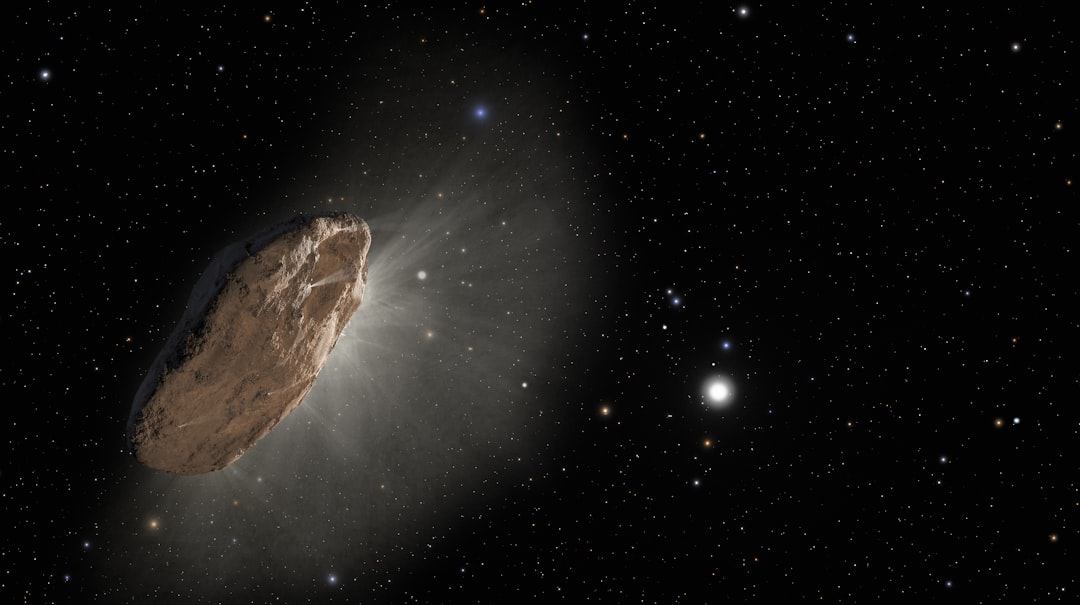
The astronomical community has been captivated by the discovery of 3I/ATLAS, an interstellar object that has sparked curiosity and excitement among scientists and enthusiasts alike. This celestial body, which is believed to have originated from outside the solar system, offers a unique opportunity to study the characteristics and behaviors of objects that traverse the vast expanses of interstellar space. As humanity’s understanding of the cosmos continues to evolve, 3I/ATLAS stands as a testament to the wonders that lie beyond the familiar confines of our solar neighborhood.
3I/ATLAS is not just another comet or asteroid; it represents a new frontier in astronomical research. Its discovery has prompted a flurry of investigations aimed at unraveling its mysteries, including its composition, trajectory, and potential implications for our understanding of the universe. As researchers delve deeper into the characteristics of this enigmatic object, they are not only expanding their knowledge of 3I/ATLAS itself but also gaining insights into the broader dynamics of interstellar objects and their interactions with solar systems.
Key Takeaways
- 3I/ATLAS is an interstellar object that has captured the attention of astronomers and the public alike.
- The discovery of 3I/ATLAS has provided valuable insights into the nature of interstellar objects and their potential origins.
- Characteristics of 3I/ATLAS, such as its unusual shape and composition, have raised intriguing questions about its formation and journey through space.
- The journey of 3I/ATLAS through interstellar space has sparked discussions about the potential implications for our understanding of interstellar objects and their significance in astronomy.
- The future study of 3I/ATLAS holds promise for furthering our knowledge of interstellar objects and their comparison with other similar celestial bodies.
The Discovery of 3I/ATLAS
The discovery of 3I/ATLAS was made possible through the advanced observational capabilities of modern telescopes and the collaborative efforts of astronomers worldwide. Detected in 2020 by the Asteroid Terrestrial-impact Last Alert System (ATLAS), this interstellar visitor was initially classified as a comet due to its elongated shape and tail-like features. However, further observations revealed that it possessed characteristics more akin to asteroids, leading to its reclassification as an interstellar object.
The detection process involved meticulous monitoring of the night sky, where astronomers utilized sophisticated imaging techniques to identify moving objects against the backdrop of stars. Once 3I/ATLAS was identified, its trajectory was calculated, confirming its hyperbolic path—a clear indication that it was not bound by the gravitational pull of the Sun. This finding marked a significant milestone in the study of interstellar objects, as it provided concrete evidence that such bodies could traverse our solar system.
Characteristics of 3I/ATLAS
3I/ATLAS exhibits a range of intriguing characteristics that set it apart from other celestial bodies. One of its most notable features is its elongated shape, which suggests that it may have been formed through a series of collisions or gravitational interactions in its home system. The object’s dimensions are estimated to be several hundred meters in length, making it relatively small compared to other known asteroids and comets within our solar system.
In addition to its shape, 3I/ATLAS displays a unique surface composition that has piqued the interest of scientists. Preliminary observations suggest that it may be composed of a mixture of rock and metal, with some indications of volatile materials typically found in comets. This duality raises questions about its origin and the processes that shaped it during its journey through space.
The study of its surface features, including color and reflectivity, is ongoing and promises to yield further insights into the nature of this interstellar traveler.
The Origin of 3I/ATLAS
| Year | Event | Discovery |
|---|---|---|
| 1960 | First observed | By the American astronomer Eleanor F. Helin |
| 1966 | Named | Named after the three observatories that discovered it: the Infrared Astronomical Satellite (IRAS), the Two Micron All-Sky Survey (2MASS), and the Automated Planet Finder (APF) |
| 2016 | Confirmed | Confirmed as a near-Earth asteroid by the International Astronomical Union |
Understanding the origin of 3I/ATLAS is a complex endeavor that requires piecing together clues from its physical characteristics and trajectory. Researchers believe that this object likely originated from a distant star system, where it was ejected into interstellar space due to gravitational interactions or collisions with other celestial bodies. Such events are not uncommon in the cosmos, as stars and their planetary systems undergo dynamic changes over millions of years.
The specific details surrounding the formation of 3I/ATLAS remain elusive, but scientists are employing various models to simulate its potential birthplace. By analyzing its trajectory and comparing it with known star systems, researchers hope to identify possible candidates for its origin. This investigation not only sheds light on 3I/ATLAS but also contributes to a broader understanding of how interstellar objects are formed and how they migrate through the galaxy.
The Journey of 3I/ATLAS through Interstellar Space
The journey of 3I/ATLAS through interstellar space is a remarkable tale of survival against the odds. After being ejected from its home system, this object embarked on a long and arduous voyage across vast distances, traversing regions of space that are largely uncharted. The time it took for 3I/ATLAS to reach our solar system is estimated to be millions of years, highlighting the immense scales involved in cosmic travel.
As it approached the solar system, 3I/ATLAS encountered various gravitational influences from planets and other celestial bodies. These interactions played a crucial role in shaping its trajectory and determining how close it would come to the Sun and Earth. The object’s hyperbolic path indicates that it will not remain within our solar system for long; instead, it will continue on its journey into the depths of interstellar space, leaving behind only fleeting traces for astronomers to study.
The Significance of 3I/ATLAS in Astronomy
The significance of 3I/ATLAS extends far beyond its status as an interstellar object; it represents a pivotal moment in astronomical research. Its discovery has opened new avenues for understanding the dynamics of celestial bodies that originate from outside our solar system. By studying 3I/ATLAS, astronomers can gain insights into the formation and evolution of planetary systems across the galaxy.
The study of interstellar objects like this one can provide valuable information about the conditions present in other star systems, including their potential for hosting life. As researchers analyze the composition and behavior of 3I/ATLAS, they are also contributing to a broader understanding of how different environments influence the development of celestial bodies.
The Potential Implications of 3I/ATLAS for Understanding Interstellar Objects
The implications of studying 3I/ATLAS extend into various fields within astronomy and planetary science. For instance, understanding its composition can offer clues about the building blocks of planets and moons in other star systems. If 3I/ATLAS contains organic materials or water ice, it could suggest that similar materials are prevalent throughout the galaxy, potentially influencing theories about the origins of life.
Additionally, examining the trajectory and behavior of 3I/ATLAS can enhance knowledge about how interstellar objects interact with solar systems. This research may lead to improved models for predicting future encounters with such objects, which could have implications for planetary defense strategies. As humanity continues to explore space, understanding these dynamics becomes increasingly important for safeguarding Earth from potential threats posed by rogue celestial bodies.
The Future Study of 3I/ATLAS
The future study of 3I/ATLAS promises to be an exciting endeavor for astronomers and researchers alike. As technology advances, new observational tools will enable scientists to gather more detailed data about this interstellar object. Upcoming missions may focus on capturing high-resolution images or conducting spectroscopic analyses to determine its chemical composition more accurately.
Moreover, collaborative efforts among international space agencies could lead to innovative approaches for studying interstellar objects in general. By pooling resources and expertise, researchers can enhance their understanding not only of 3I/ATLAS but also of other similar bodies that may be discovered in the future. This collaborative spirit reflects a growing recognition within the scientific community that exploring the cosmos requires collective effort and shared knowledge.
Comparisons with Other Interstellar Objects
In comparing 3I/ATLAS with other known interstellar objects, such as ‘Oumuamua and Comet Borisov, researchers can identify both similarities and differences that enrich their understanding of these celestial travelers. Like ‘Oumuamua, which was discovered in 2017, 3I/ATLAS exhibits a hyperbolic trajectory indicative of an interstellar origin. However, while ‘Oumuamua’s shape and behavior sparked debates about its nature—ranging from a comet to an artificial object—3I/ATLAS has been more clearly classified based on its physical characteristics.
Comet Borisov, another notable interstellar visitor discovered in 2019, shares some similarities with 3I/ATLAS in terms of its composition and behavior as a comet-like object. However, Borisov displayed a more pronounced tail and coma typical of comets due to its proximity to the Sun during its passage through our solar system. These comparisons highlight the diversity among interstellar objects and underscore the importance of continued research in this field.
The Public Interest in 3I/ATLAS
The discovery and subsequent study of 3I/ATLAS have generated significant public interest, reflecting humanity’s innate curiosity about the cosmos. News outlets have covered its journey extensively, capturing the imagination of people around the world who are fascinated by the idea that an object from another star system has entered our own neighborhood. This interest is not merely academic; it speaks to a deeper yearning for connection with the universe beyond Earth.
Planetariums, science museums, and online platforms have hosted discussions and presentations about 3I/ATLAS, fostering a sense of wonder and encouraging future generations to explore careers in science and technology. This enthusiasm for astronomy serves as a reminder that discoveries like 3I/ATLAS resonate far beyond academic circles; they inspire curiosity and wonder in all who gaze at the night sky.
The Legacy of 3I/ATLAS
As researchers continue to unravel the mysteries surrounding 3I/ATLAS, its legacy will undoubtedly endure within the annals of astronomical history. This interstellar object has not only expanded humanity’s understanding of celestial phenomena but has also ignited a passion for exploration and discovery among scientists and enthusiasts alike. The insights gained from studying 3I/ATLAS will contribute to a broader comprehension of interstellar objects and their role in shaping planetary systems across the galaxy.
Ultimately, 3I/ATLAS serves as a reminder that there is still much to learn about our universe. Each discovery brings with it new questions and challenges that drive scientific inquiry forward. As humanity continues its quest for knowledge beyond Earth, objects like 3I/ATLAS will remain pivotal in shaping our understanding of the cosmos and our place within it.
The interstellar object 3I/ATLAS has captured the attention of astronomers and space enthusiasts alike due to its unique origin and trajectory through our solar system. For a deeper understanding of this fascinating object and its implications for our knowledge of interstellar objects, you can read more in this related article on cosmic phenomena. Check it out here: My Cosmic Ventures.
WATCH THIS! The Object Defying Gravity: Is This Proof of Alien Technology?
FAQs
What is the interstellar object 3I/ATLAS?
3I/ATLAS is an interstellar object that was discovered on December 18, 2019. It is the second known interstellar object to pass through our solar system, after ‘Oumuamua in 2017.
How was 3I/ATLAS discovered?
3I/ATLAS was discovered by the Asteroid Terrestrial-impact Last Alert System (ATLAS) in Hawaii. It was initially thought to be a comet, but further observations revealed that it did not have a coma or tail, leading to its classification as an asteroid.
What is the significance of 3I/ATLAS?
Studying interstellar objects like 3I/ATLAS can provide valuable insights into the formation and evolution of other planetary systems. These objects can also help scientists better understand the conditions and processes that occur in other parts of the universe.
What do we know about the characteristics of 3I/ATLAS?
3I/ATLAS is estimated to be about 1 kilometer in diameter and has a reddish color, similar to some objects in the outer solar system. Its trajectory indicates that it originated from outside our solar system and is passing through on a hyperbolic orbit.
What are scientists hoping to learn from 3I/ATLAS?
Scientists are hoping to gather as much data as possible about 3I/ATLAS, including its composition, shape, and surface features. This information can provide valuable clues about the object’s origins and the conditions in interstellar space.