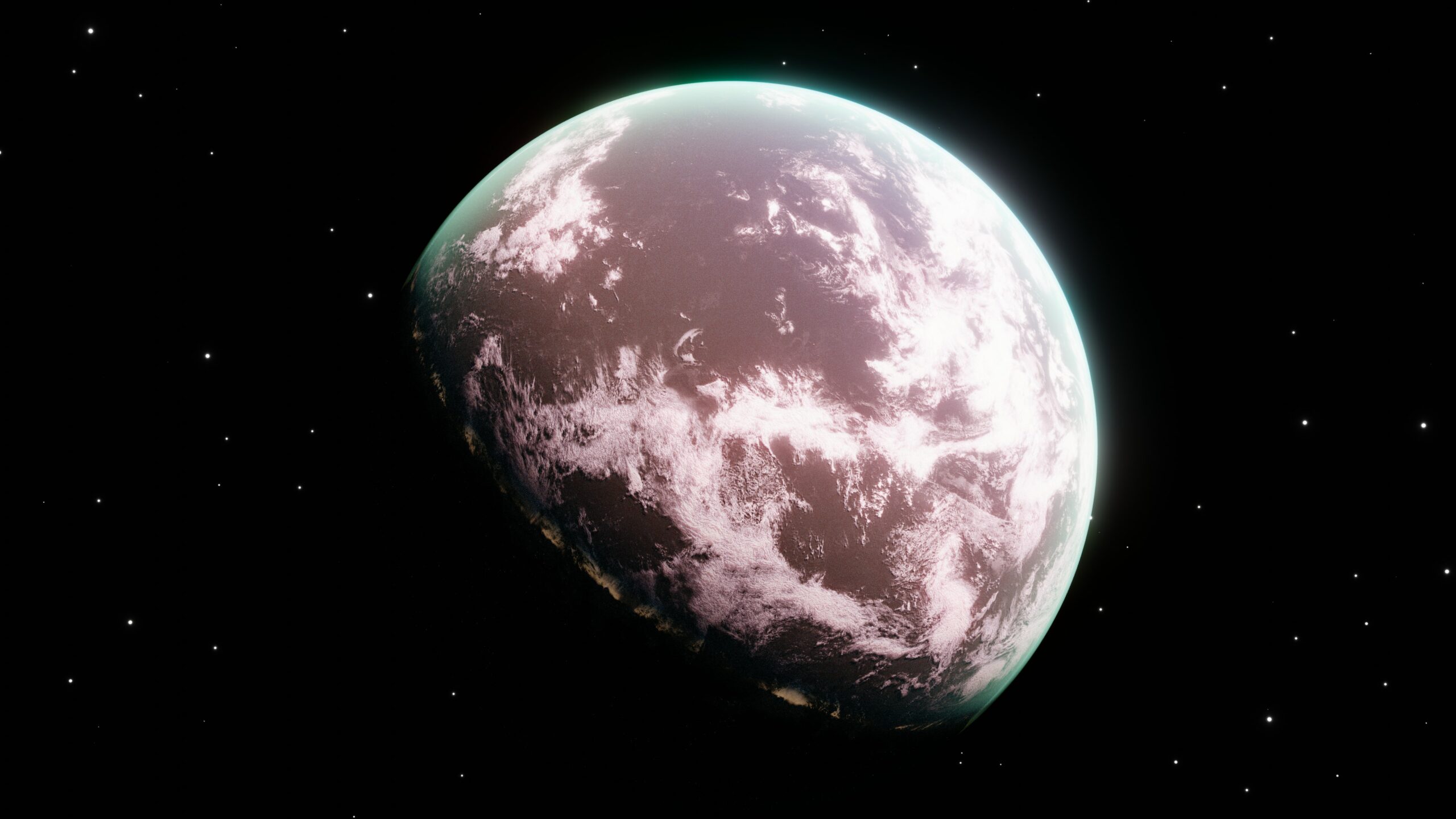
The universe, in its infancy, was a vastly different place than the structured cosmos we observe today. It was a swirling, uniform soup of fundamental particles, a canvas of pure potential. Yet, from this seemingly chaotic and featureless beginning, a breathtakingly intricate tapestry of galaxies and planets began to emerge. This transformation was not a sudden event, but a grand, cosmic ballet, a dance of gravity and matter that continues to shape the universe.
In the immediate aftermath of the Big Bang, the universe was extraordinarily hot and dense, and remarkably uniform. The cosmic microwave background radiation, a faint afterglow of this primordial era, bears witness to this near-perfect homogeneity. However, even at this early stage, there were minuscule, quantum fluctuations in the density of matter. These imperceptible ripples, amplified over eons by the relentless force of gravity, were the invisible architects of everything that was to come.
The Inflationary Epoch and the Amplification of Fluctuations
Immediately following the Big Bang, the universe underwent a period of exponential expansion known as inflation. This rapid stretching stretched these initial quantum fluctuations to macroscopic scales, imprinting upon the nascent universe the slight variations in density that would eventually blossom into galaxies. Imagine a tiny ripple on an infinitely expanding pond; inflation stretched that ripple to become a significant wave. These density variations meant that some regions of space were infinitesimally denser than others.
The Role of Dark Matter: The Invisible Scaffolding
While ordinary matter, the stuff we can see and interact with, played a crucial role in galaxy formation, it was not the sole protagonist. The vast majority of matter in the universe, an enigmatic substance known as dark matter, provided the gravitational scaffolding upon which visible structures could form. Dark matter interacts with ordinary matter primarily through gravity and does not emit, absorb, or reflect light, making it invisible to our telescopes.
The Gravitational Embrace: Baryonic Matter Clumps Together
In the denser regions, the pull of gravity began to assert its dominance. These slightly overdense areas acted as gravitational wells, attracting surrounding baryonic matter – protons, neutrons, and electrons. As more and more ordinary matter fell into these gravitational traps, the primordial gas clouds began to condense. These collapsing clouds were the nurseries of the first stars and, eventually, the building blocks of galaxies. The uniformity of the early universe was thus being systematically dismantled by gravity’s persistent embrace.
The formation of galaxies and planets from matter is a fascinating topic that delves into the intricate processes of the universe. For a deeper understanding of how these celestial structures came to be, you can explore a related article that discusses the role of dark matter and cosmic inflation in shaping the cosmos. To read more about this captivating subject, visit this article.
The Birth of Stars: The Fiery Hearts of Galaxies
Within these condensing gas clouds, the conditions soon became ripe for the ignition of nuclear fusion, the process that powers stars. As the gas and dust coalested, the inward pressure increased, raising the temperature and density at the core of these nascent stellar objects. When the core reached a critical temperature and pressure, hydrogen atoms began to fuse, releasing immense amounts of energy. This marked the birth of the first stars.
Protostellar Formation: The Accretion Disk and Jet Ejection
The formation of a star begins with the gravitational collapse of a molecular cloud. As a region of the cloud becomes sufficiently dense, it starts to collapse under its own gravity. This collapsing material often flattens into a rotating disk, known as an accretion disk, around a central protostar. Material from the disk continues to fall onto the protostar, increasing its mass and temperature. During this phase, powerful jets of gas are often ejected from the poles of the protostar, carrying away angular momentum and helping the star to grow.
The First Stellar Generations: Massive and Short-Lived
The very first stars to form in the universe were likely much more massive than our Sun. They were composed almost entirely of hydrogen and helium, the only elements forged in the Big Bang. Because of their immense mass, these primordial stars burned through their nuclear fuel at an astonishing rate, living incredibly short, albeit spectacular, lives. Their deaths, typically through supernova explosions, were equally dramatic, seeding the surrounding interstellar medium with heavier elements for the first time.
Nucleosynthesis: Forging the Elements of Life
The interiors of stars, and particularly the destructive power of supernovae, are cosmic furnaces where heavier elements are forged. Through a process called nucleosynthesis, lighter elements are fused into heavier ones. Hydrogen fuses into helium, helium into carbon and oxygen, and so on, up to iron. The explosive events of supernovae then create elements heavier than iron, scattering these newly forged elements across vast stretches of space. This enrichment of the interstellar medium with heavier elements was a critical step in the subsequent formation of planets.
The Assembly of Galaxies: Islands of Stars in the Cosmic Ocean

With the formation of stars, the universe began to fill with luminous points of light. However, these stars did not randomly scatter. Gravity continued its work on larger scales, drawing these stellar clusters and the gas and dust surrounding them together to form galaxies. These colossal structures, ranging from vast spiral galaxies to more irregular dwarf galaxies, are the fundamental building blocks of the cosmic landscape.
Hierarchical Structure Formation: Mergers and Accretion
The prevailing model for galaxy formation is hierarchical structure formation. This means that smaller structures form first and then merge together to create larger ones. Dwarf galaxies, for instance, coalesced first, and then, over billions of years, were gravitationally drawn together to form the grand spiral and elliptical galaxies we see today. Galaxies also grow by accreting gas and smaller galaxies from their surroundings.
The Role of Supermassive Black Holes: Galactic Architects
At the heart of most large galaxies lies a supermassive black hole, an object with a gravitational pull so immense that not even light can escape. These behemoths play a significant role in galaxy evolution. As they accrete matter, they can launch powerful jets of plasma that can influence star formation within the galaxy, either by heating the gas and preventing it from collapsing or by triggering bursts of star formation. The co-evolution of supermassive black holes and their host galaxies is a key area of modern astrophysics.
Galactic Evolution: Morphology and Interactions
Galaxies are not static entities; they evolve over time. Their shapes, or morphologies, are influenced by a variety of factors, including their formation history, mergers, and interactions with other galaxies. Spiral galaxies, with their distinct arms, are thought to be formed from the gentle accretion of gas and smaller galaxies. Elliptical galaxies, more rounded and featureless, are often the result of violent mergers between galaxies. These galactic interactions are a common occurrence in the universe, leading to dramatic transformations.
The Genesis of Planets: Dust to Worlds

Once galaxies had formed and the interstellar medium was enriched with heavier elements, the stage was set for the formation of planets. These celestial bodies, ranging in size from small rocky worlds to gas giants, are born within the dusty disks surrounding young stars. This process, known as planet formation, is a gradual but remarkably efficient stellar-disk accretion process.
Protoplanetary Disks: The Birthplaces of Planets
When a star is born, it is typically surrounded by a vast, swirling disk of gas and dust. This protoplanetary disk, also known as a circumstellar disk, is composed of the leftover material from the star’s formation. Within this disk, the seeds of planets begin to form. Temperature gradients within the disk play a crucial role, with rocky and metallic materials condensing closer to the star, while lighter gases and ices accumulate in the cooler outer regions.
Planetesimal Formation: Accretion and Collisions
In the protoplanetary disk, dust grains begin to stick together through electrostatic forces, forming larger clumps. These clumps grow through gentle collisions, gradually increasing in size. As these objects grow to kilometer-sized bodies, they are called planetesimals. Once they reach this size, their own gravity becomes significant enough to attract more material, leading to a runaway accretion process. Collisions are a ubiquitous part of this process, and while some can be destructive, others lead to the successful amalgamation of smaller bodies into larger ones.
The Grand Separation: Rocky Planets and Gas Giants
The composition of planets ultimately depends on their location within the protoplanetary disk. In the inner solar system, closer to the star, temperatures are higher, allowing only refractory materials like rock and metal to condense. This leads to the formation of smaller, rocky planets such as Earth and Mars. In the outer solar system, where temperatures are much colder, volatile materials like water ice and frozen gases can condense. This allows for the formation of much larger planetesimals that can attract a significant amount of gas, leading to the formation of gas giant planets like Jupiter and Saturn.
The Clearing of the Disk: Leftovers and Stability
As planets grow, they gradually clear out their orbits within the protoplanetary disk, either by accreting the remaining material or by gravitationally scattering it away. This process can take millions of years. The gravitational influence of large planets can also sculpt the orbits of smaller bodies, leading to the formation of asteroid belts and Kuiper belts, reservoirs of leftover planetesimals. The stability of planetary systems, once formed, is a testament to the intricate interplay of gravitational forces.
The formation of galaxies and planets is a fascinating topic that delves into the very fabric of the universe. A related article that explores the intricate processes behind the creation of matter and its role in shaping celestial bodies can be found at My Cosmic Ventures. This resource provides valuable insights into how the fundamental elements of matter came together to form the vast structures we observe today, offering a deeper understanding of our cosmic origins.
The Ongoing Cosmic Dance: Evolution and the Future
| Process | Impact |
|---|---|
| Galaxy Formation | Accumulation of matter into massive structures through gravitational attraction |
| Planet Formation | Agglomeration of dust and gas into planetesimals and eventually planets |
| Nebulae | Clouds of gas and dust that serve as the birthplace of stars and planets |
| Supernovae | Explosive deaths of massive stars that disperse heavy elements into space, contributing to the formation of new stars and planets |
The formation of galaxies and planets was not a singular event, but the beginning of a continuous, dynamic process. The universe is in a constant state of flux, with galaxies merging, stars being born and dying, and planetary systems evolving. Understanding this ongoing cosmic dance is key to comprehending our place in the vastness of space and time.
Galactic Collisions and Mergers: A Violent Transformation
Galaxies are not isolated entities. They are constantly interacting through gravitational forces. When galaxies collide, the results can be spectacular and transformative. These mergers can trigger intense bursts of star formation as gas clouds are compressed. They can also lead to the reshaping of galaxies, with spiral galaxies sometimes merging to form larger elliptical galaxies. Our own Milky Way galaxy is on a collision course with the Andromeda galaxy, a cosmic encounter that will occur billions of years from now.
Stellar Evolution and the Life Cycle of Worlds
Stars, like planets, have a life cycle. They are born, they evolve through various stages of fusion, and they eventually die. The fate of a star depends on its mass. Smaller stars like our Sun will eventually swell into red giants and then shed their outer layers to form white dwarfs. More massive stars, however, end their lives in cataclysmic supernova explosions, leaving behind neutron stars or black holes. The remnants of dying stars enrich the interstellar medium with heavier elements, providing the raw materials for future generations of stars and planets.
The Search for Extraterrestrial Life: A Cosmic Imperative
The immense scale of the universe and the sheer number of planets that are likely to exist have fueled the enduring human quest to understand whether life exists beyond Earth. The discovery of exoplanets – planets orbiting stars other than our Sun – has dramatically increased the number of potential abodes for life. Scientists are actively searching for biosignatures in the atmospheres of these exoplanets, hoping to find evidence of biological activity. The ongoing cosmic dance, with its constant creation and evolution, offers a tantalizing prospect for the discovery of life elsewhere. The formation of galaxies and planets, a process that began billions of years ago from seemingly simple beginnings, continues to unfold, shaping the universe in ways we are only just beginning to comprehend.

The Universe Tried to Erase Itself
FAQs
1. What is the process by which matter creates galaxies and planets?
The process by which matter creates galaxies and planets is known as gravitational accretion. This occurs when matter, such as gas and dust, is pulled together by gravity to form larger structures, such as galaxies and planets.
2. How do galaxies form from matter?
Galaxies form from matter through a process called hierarchical clustering. This process involves smaller structures, such as gas clouds and stars, merging together over time to form larger structures, ultimately leading to the formation of galaxies.
3. What role does dark matter play in the creation of galaxies and planets?
Dark matter is believed to play a significant role in the creation of galaxies and planets. It is thought to provide the gravitational framework within which ordinary matter can accumulate and form structures, such as galaxies and planets.
4. How does matter contribute to the formation of planets within a galaxy?
Matter contributes to the formation of planets within a galaxy through the process of planetary accretion. This involves small particles of matter, such as dust and gas, coming together to form larger bodies, eventually leading to the formation of planets.
5. What are some key factors that influence the creation of galaxies and planets from matter?
Some key factors that influence the creation of galaxies and planets from matter include the distribution of matter in the universe, the presence of dark matter, and the interactions between different types of matter, such as gas, dust, and stars.