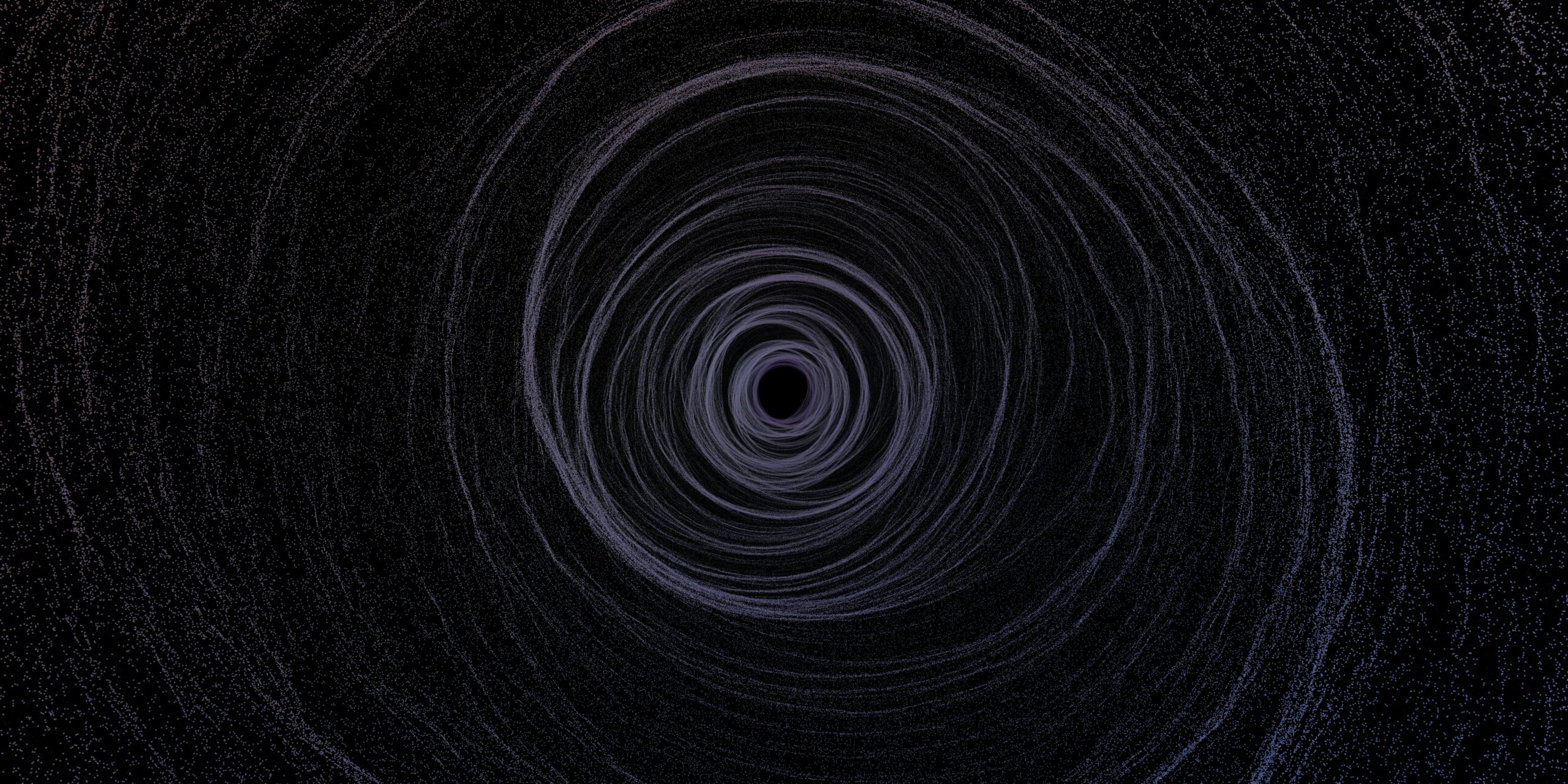
You stand at the precipice of understanding, staring into the abyss of the universe, and confronting two of its most profound mysteries: black holes and quantum mechanics. These seemingly disparate concepts, one born from the elegant curvature of spacetime and the other from the bizarre rules governing the infinitesimally small, collide in a way that challenges our very perception of reality. You’ve heard whispers of their entanglement, of a grand unification that promises to unlock cosmic secrets. This journey into the enigma of black holes and quantum mechanics is not for the faint of heart, but it is a journey you will find yourself compelled to take, driven by an insatiable curiosity.
Your first encounter with black holes is likely rooted in science fiction, tales of cosmic vacuum cleaners devouring stars and warping the fabric of existence. But the reality, as you’ll discover, is far more intricate and awe-inspiring. These aren’t just cosmic voids; they are the ultimate testament to the power of gravity, regions where the rules you’ve come to accept begin to unravel.
What Exactly is a Black Hole?
Imagine the universe as a vast, pliable sheet, and massive objects as marbles resting upon it. These marbles create dips and curves. Now, picture an object so incredibly dense that its dip on this sheet becomes infinitely deep, a point of no return. That, in essence, is a black hole. It’s a region of spacetime where gravity is so strong that nothing—not even light, the fastest thing in the universe—can escape its pull.
Stellar Black Holes: The Remnants of Dying Stars
Your understanding of black holes begins with the dramatic demise of massive stars. When a star many times the mass of our Sun exhausts its nuclear fuel, it can no longer support itself against its own immense gravity. The core implodes in a cataclysmic event known as a supernova, and if the remaining core is massive enough, it collapses into an infinitely dense point called a singularity. This singularity, shrouded by an event horizon, is the heart of a stellar black hole.
Supermassive Black Holes: The Architects of Galaxies
But stellar black holes are not the only players on the cosmic stage. You’ll find supermassive black holes lurking at the centers of most galaxies, including our own Milky Way. These behemoths possess millions, even billions, of solar masses. Their origins are still debated, but they are thought to have grown by accreting vast amounts of gas and dust, and perhaps by merging with other black holes over cosmic timescales. They play a crucial role in galaxy formation and evolution, their powerful gravitational influence shaping the very structure of the cosmic islands we inhabit.
The Event Horizon: The Point of No Return
The most defining characteristic of a black hole, and a concept that will continuously fuel your contemplation, is the event horizon. This isn’t a physical surface you can touch, but rather a boundary in spacetime. Cross this invisible threshold, and there’s no turning back. The gravitational pull becomes so overwhelming that you would need to travel faster than light to escape, an impossibility according to the laws of physics as you currently understand them.
Spaghettification: A Gruesome Fate
What happens if you were to fall into a black hole? The answer is a rather unappealing process called spaghettification. As you approach the event horizon, the gravitational pull on your feet would be far stronger than on your head (assuming you’re falling feet first). This differential pull would stretch you out like a piece of spaghetti, elongating your body until you are effectively torn apart. It’s a stark reminder of the brutal efficiency of extreme gravity.
In recent discussions surrounding the enigmatic nature of black holes and their relationship with quantum mechanics, an intriguing article explores the concept of “Hawking Radiation” and its implications for our understanding of the universe. This phenomenon, proposed by physicist Stephen Hawking, suggests that black holes can emit radiation due to quantum effects near their event horizons, ultimately leading to their potential evaporation over time. For a deeper dive into this fascinating topic, you can read more in the article available at My Cosmic Ventures.
The Quantum Realm: A Universe of Probabilities
Now, shift your focus from the colossal to the infinitesimal. Quantum mechanics paints a picture of the universe that is both mind-bending and surprisingly accurate at describing the fundamental building blocks of reality. Here, certainty dissolves, and probabilities reign supreme.
The Wave-Particle Duality: A Bifurcated Existence
One of the most counter-intuitive concepts you’ll encounter in quantum mechanics is wave-particle duality. At the quantum level, particles like electrons and photons don’t behave solely as discrete particles or as continuous waves. Instead, they exhibit properties of both simultaneously. This means an electron can act like a tiny ball at one moment and like a ripple in a pond the next.
The Double-Slit Experiment: The Cornerstone of Quantum Weirdness
You’ve likely encountered the famous double-slit experiment. Imagine firing particles, like electrons, at a screen with two slits. If they were merely particles, you’d expect to see two distinct lines on a detector screen behind the slits. However, what is observed is an interference pattern, a hallmark of waves passing through both slits simultaneously and interfering with each other. This experiment, repeated with photons and even larger molecules, consistently demonstrates the wave-like nature of quantum entities when unobserved, yet they manifest as particles when their position is detected.
Superposition and Entanglement: The Realm of Possibilities
Quantum mechanics introduces concepts like superposition, where a quantum system can exist in multiple states at once until measured. Think of Schrödinger’s cat, both alive and dead until the box is opened. Even more peculiar is quantum entanglement, where two or more particles become linked in such a way that they share the same fate, regardless of the distance separating them. Measuring the state of one instantly influences the state of the other.
The Role of Observation: Unveiling Reality
The act of observation, or measurement, in quantum mechanics is not a passive act. It actively influences the state of the quantum system, collapsing its superposition into a single definite state. This “observer effect” is a fundamental aspect of quantum theory and raises profound philosophical questions about the nature of reality and our role in shaping it.
The Crossroads: Where Black Holes Meet Quantum Mechanics
You’ve explored the immense gravitational landscapes of black holes and the probabilistic dance of the quantum realm. Now, the true enigma unfolds as you consider their intersection. For at the very heart of a black hole, and at the extreme energies involved in their formation and evolution, the classical descriptions of gravity and the quantum rules of the universe are expected to clash.
Hawking Radiation: A Quantum Leak from the Abyss
Perhaps the most celebrated bridge between black holes and quantum mechanics is Stephen Hawking’s groundbreaking theory of Hawking radiation. He theorized that black holes are not entirely black but emit a faint thermal radiation due to quantum effects near the event horizon.
Virtual Particles and the Event Horizon
This phenomenon can be visualized through virtual particle-antiparticle pairs that constantly pop in and out of existence in the vacuum of spacetime. Near the event horizon, one particle might fall into the black hole while its partner escapes. To an outside observer, it appears as if the black hole is radiating these escaping particles, carrying away energy and mass.
The Information Paradox: A Cosmic Conundrum
However, Hawking radiation introduces a profound problem: the black hole information paradox. According to quantum mechanics, information about the initial state of a system can never be truly lost. But if a black hole evaporates completely through Hawking radiation, what happens to the information of all the matter it has consumed? Does it vanish, violating a fundamental tenet of quantum physics? This paradox remains a central challenge in theoretical physics, with physicists exploring various avenues to resolve it.
The Singularity: A Breakdown of Classical Physics
The singularity at the center of a black hole is where the known laws of physics, both classical gravity and quantum mechanics, break down. Our current theories are incapable of describing what happens at this point of infinite density and curvature. Here, a quantum theory of gravity is desperately needed.
Quantum Gravity: The Holy Grail
The quest for a theory of quantum gravity is the ultimate goal, a framework that can unify the seemingly irreconcilable descriptions of the universe. Theories like string theory and loop quantum gravity are attempts to achieve this unification, suggesting a deeper, more fundamental reality where both gravity and quantum effects are seamlessly integrated.
Unraveling Quantum Gravity: Towards a Unified Understanding

The pursuit of quantum gravity is not merely an academic exercise; it’s an attempt to understand the very fabric of spacetime and the fundamental forces that govern it. It’s about reconciling the large-scale structure of the cosmos with the intimate dance of subatomic particles.
String Theory: Vibrating Strings and Extra Dimensions
You’ll encounter string theory, a prominent candidate for a theory of quantum gravity. It proposes that fundamental particles are not point-like but rather tiny, vibrating strings. The different vibration modes of these strings give rise to different particles, and in this framework, gravity is naturally incorporated. This theory also suggests the existence of extra spatial dimensions that are curled up and imperceptible to us.
The Brane World Scenario: Our Universe as a Membrane
Within the context of string theory, you might hear about brane-world scenarios, where our observable universe is depicted as a “brane” embedded in a higher-dimensional space. This opens up fascinating possibilities about the nature of gravity and its potential to “leak” into these other dimensions.
Loop Quantum Gravity: Quantizing Spacetime Itself
Another significant contender is loop quantum gravity (LQG). Instead of visualizing spacetime as a continuous fabric, LQG suggests that spacetime itself is quantized, made up of discrete fundamental units. Imagine it like a woven fabric, where the threads are fundamental units of space and time. This approach offers a different perspective on how gravity might behave at the Planck scale, the smallest meaningful scale in the universe.
The Black Hole Firewall Paradox: A New Challenge
As physicists delve deeper into the interplay between black holes and quantum mechanics, new paradoxes emerge. The black hole firewall paradox, for instance, suggests that observers crossing the event horizon might encounter a “firewall” of high-energy particles, contradicting the smooth passage predicted by general relativity. Resolving such paradoxes is crucial for developing a consistent theory of quantum gravity.
Recent advancements in our understanding of black holes have sparked intriguing discussions about their connection to quantum mechanics. A fascinating article explores how the principles of quantum theory might help unravel the mysteries surrounding black holes and their behavior at the event horizon. For those interested in delving deeper into this captivating topic, you can read more about it in this related article. This intersection of astrophysics and quantum mechanics continues to challenge our perceptions of the universe, opening up new avenues for research and discovery.
The Future of Cosmic Exploration: Witnessing the Unseen
| Topic | Definition |
|---|---|
| Black Holes | A region of spacetime where gravity is so strong that nothing, not even light, can escape from it. |
| Event Horizon | The boundary surrounding a black hole beyond which events cannot affect an outside observer. |
| Hawking Radiation | The theoretical radiation that is predicted to be emitted by black holes due to quantum effects near the event horizon. |
| Quantum Mechanics | The branch of physics that deals with the behavior of particles at the atomic and subatomic levels. |
| Quantum Entanglement | A phenomenon in quantum mechanics where two or more particles become connected in such a way that the state of one particle cannot be described independently of the state of the others. |
The enigma of black holes and quantum mechanics is not a static puzzle; it’s a dynamic frontier of scientific inquiry. Your journey into this realm is far from over, as new observations and theoretical breakthroughs continue to push the boundaries of human knowledge.
Gravitational Waves: Echoes from Cosmic Collisions
The detection of gravitational waves has been a monumental achievement, offering a direct window into the universe’s most violent events, including the mergers of black holes. These ripples in spacetime, predicted by Einstein and now directly observed, provide unprecedented data for testing theories of gravity and understanding black hole dynamics.
Observing Merging Black Holes: A Symphony of Gravity
Imagine witnessing the cosmic ballet of two black holes spiraling towards each other, their immense gravity warping spacetime. The gravitational waves they emit are like a symphony of gravity, carrying information about their masses, spins, and the very nature of spacetime. Analyzing these signals allows you to probe the extreme conditions within these cosmic behemoths.
The Event Horizon Telescope: Imaging the Unimaginable
The Event Horizon Telescope (EHT) has achieved the seemingly impossible: capturing the first image of a black hole. This global network of radio telescopes has provided us with visual confirmation of these enigmatic objects, allowing you to “see” the shadow of the black hole against the luminous accretion disk surrounding it.
Unveiling the Accretion Disk: Fueling the Abyss
The EHT’s images reveal the swirling gas and dust that feeds black holes, known as the accretion disk. The way this material behaves, its temperature, and its motion provide crucial clues about the physics at play near the event horizon, further bridging the gap between theory and observation.
Your exploration of the enigma of black holes and quantum mechanics is a testament to humanity’s relentless pursuit of understanding. You stand on the shoulders of giants, propelled by a profound curiosity to unravel the deepest secrets of the cosmos. While the answers may still be elusive, the journey itself is one of profound discovery, forever changing your perception of the universe and your place within it.

Physicists Think Reality Might Be 2D
FAQs
What is a black hole?
A black hole is a region in space where the gravitational pull is so strong that nothing, not even light, can escape from it. This occurs when a massive star collapses under its own gravity.
How are black holes related to quantum mechanics?
Black holes are related to quantum mechanics through the study of Hawking radiation, which is a theoretical prediction by physicist Stephen Hawking. According to quantum mechanics, pairs of virtual particles and antiparticles are constantly being created and annihilated near the event horizon of a black hole. If one of the particles falls into the black hole while the other escapes, it can result in the emission of radiation.
What is the information paradox in black holes and quantum mechanics?
The information paradox refers to the conflict between the principles of quantum mechanics and the behavior of black holes. According to quantum mechanics, information cannot be lost, but when something falls into a black hole, it seems to disappear without a trace. This paradox has been a major area of study and debate in theoretical physics.
Can quantum mechanics explain what happens inside a black hole?
Currently, quantum mechanics does not provide a complete explanation of what happens inside a black hole. The extreme conditions within a black hole, including the breakdown of classical physics, make it difficult to apply quantum mechanics in this context. This is a topic of ongoing research and speculation in the field of theoretical physics.
What are some current theories about the relationship between black holes and quantum mechanics?
Some current theories about the relationship between black holes and quantum mechanics include the holographic principle, which suggests that the information about the interior of a black hole is encoded on its boundary, and the firewall hypothesis, which proposes that the event horizon of a black hole is replaced by a firewall of high-energy particles. These theories are still being explored and debated within the scientific community.