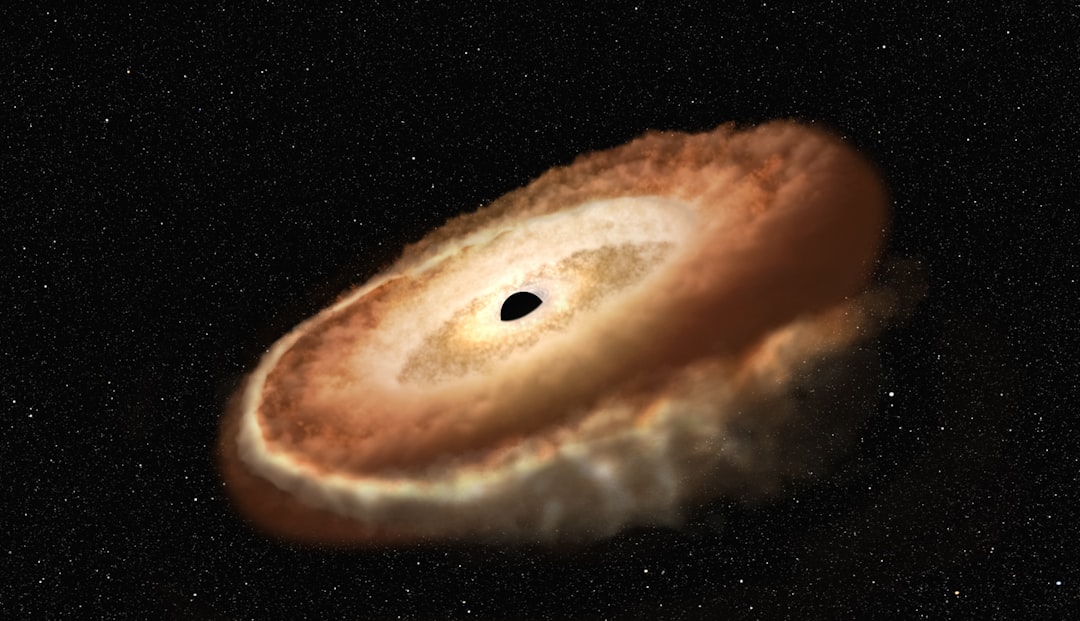
You stand at the precipice of understanding, a place where the familiar laws of the cosmos bend and break. Black holes, those enigmatic cosmic devourers, aren’t merely theoretical curiosities; they are profound manifestations of gravity’s ultimate power, warping the very fabric of spacetime and challenging our deepest intuitions about reality. Prepare to delve into their physics, to explore the profound mysteries they hold, and to question everything you thought you knew about the universe.
You might picture black holes as pristine, perfectly spherical entities, but their origin stories are anything but tidy. They are born from the violent deaths of massive stars, collapsing under their own immense gravity.
Stellar Giants and Their Fiery Demise
Imagine a star significantly more massive than our Sun, burning through its nuclear fuel at an astonishing rate. For eons, the outward pressure from nuclear fusion has counteracted the inward pull of gravity. But as the fuel dwindles, this delicate balance falters.
Fusion’s End Game: Iron and the Collapse
The final stages of a massive star’s life are marked by the creation of iron in its core. Unlike lighter elements, iron fusion doesn’t release energy; it consumes it. This catastrophic shutdown of energy generation leads to an unstoppable gravitational collapse. The star’s core implodes with unimaginable speed, triggering a supernova – a spectacular explosion that can outshine an entire galaxy.
Neutron Stars: The Precursors to Ultimate Density
In many supernova events, the collapsed core is compressed into an incredibly dense object called a neutron star. Here, protons and electrons are squeezed together so tightly that they form neutrons. These objects are astonishingly dense, a teaspoonful of neutron star material weighing billions of tons. However, for the truly massive stars, even the degeneracy pressure of neutrons isn’t enough to halt the collapse.
The Unstoppable Force: Gravitational Singularity
When the mass of the collapsing core exceeds a critical limit, known as the Tolman-Oppenheimer-Volkoff limit, nothing can stop its inexorable fall. Gravity triumphs completely, crushing all matter into an infinitesimally small point of infinite density – the singularity. This is the heart of the black hole, a place where our current understanding of physics breaks down.
The Concept of Infinite Density
You may struggle to conceptualize infinite density, but that’s precisely what the singularity represents according to Einstein’s theory of General Relativity. All the mass of the collapsed star is compressed into a point with zero volume, leading to infinite density and curvature of spacetime. It’s a boundary beyond which our predictable physics ceases to apply.
Where Spacetime Tears
At the singularity, the very fabric of spacetime is thought to be infinitely curved. Imagine stretching a rubber sheet and then poking a hole through it with an infinitely sharp needle; the singularity is that point where the sheet is infinitely warped or torn.
For those interested in the intriguing physics of black holes, a fascinating article can be found at My Cosmic Ventures. This article delves into the latest research on black hole thermodynamics and the information paradox, exploring how these enigmatic cosmic entities challenge our understanding of the laws of physics. It provides insights into the theories proposed by leading physicists and discusses the implications of recent discoveries in the field.
The Event Horizon: The Point of No Return
As you approach a black hole, you’ll encounter a boundary that is perhaps the most defining feature of these cosmic anomalies: the event horizon. It’s a one-way membrane, a cosmic precipice from which escape is utterly impossible.
The Schwarzschild Radius: Defining the Boundary
The size of a black hole’s event horizon is determined by its mass, a relationship described by the Schwarzschild radius. For a non-rotating black hole, this radius is directly proportional to the black hole’s mass. The more massive the black hole, the larger its event horizon.
Mass and the Size of the Abyss
Consider this: a black hole with the mass of our Sun would have an event horizon with a radius of approximately 3 kilometers. A supermassive black hole at the center of a galaxy, with millions or billions of solar masses, would encompass an event horizon spanning millions or even billions of kilometers. This vastness underscores the immense scale these objects can reach.
Velocity of Light as the Ultimate Speed Limit
The event horizon exists because the escape velocity – the speed required to break free from a gravitational pull – exceeds the speed of light at this boundary. Since nothing can travel faster than light, anything that crosses the event horizon is forever trapped within the black hole’s gravitational embrace.
Tidal Forces: The Spaghettification Effect
As you get closer to the event horizon, the gravitational pull on your feet will be significantly stronger than on your head. This differential pull creates immense tidal forces that would stretch you out like spaghetti – a phenomenon aptly nicknamed “spaghettification.”
Stretching and Compression: A Cosmic Torture
Imagine being pulled apart by two opposing forces, each stronger than the last. The tidal forces near a black hole are so extreme that they would elongate your body along the direction of the pull while simultaneously compressing you from the sides. For stellar-mass black holes, this effect would be catastrophic long before you reached the event horizon. For supermassive black holes, the tidal forces are weaker at the horizon itself, meaning you could theoretically cross it intact, only to face the inevitable fate within.
Accelerating Towards the Singularity
Once inside the event horizon, all paths lead inexorably towards the singularity. There are no detours, no escaping. The very geometry of spacetime is so distorted that all future timelines point inward.
Unveiling the Invisible: How We Detect Black Holes

Black holes, by their very nature, do not emit light. This makes them inherently invisible to traditional telescopes. However, their profound gravitational influence on their surroundings allows us to infer their presence and study their properties.
Accretion Disks: A Cosmic Beacon
The most common way we detect black holes is by observing the matter that falls into them. As gas and dust are pulled towards a black hole, they form a swirling, superheated disc known as an accretion disk.
Friction and Extreme Heat
This material spirals inwards, and due to friction and gravitational forces, it heats up to millions of degrees Celsius. This incredibly hot plasma emits intense radiation across the electromagnetic spectrum, particularly in X-rays, which can be detected by specialized telescopes.
Jets of Plasma: Cosmic Beacons of Power
In many cases, a portion of the infalling matter is ejected outwards in powerful jets of plasma traveling at nearly the speed of light. These relativistic jets, often extending for vast distances, are another observable signature of black hole activity.
Gravitational Lensing: Bending Light Around the Void
The immense gravity of black holes also affects the paths of light. When a black hole is positioned between you and a distant light source, its gravity can bend and distort the light, a phenomenon known as gravitational lensing.
Magnification and Distortion of Distant Objects
This bending of light can magnify and distort the images of background stars or galaxies. By analyzing these distortions, astronomers can infer the mass and location of the intervening black hole, even if the black hole itself remains undetected.
Weighing the Universe’s Dark Matter
Gravitational lensing is not exclusive to black holes; it’s a fundamental prediction of General Relativity applicable to any massive object. However, the extreme lensing effects around black holes provide powerful confirmation of their existence and mass.
Stellar Orbits: The Wobble of Stars
Another crucial method for detecting black holes involves observing the motion of stars. If a star is orbiting an unseen, massive object, its orbital path and velocity can reveal the presence and mass of that object.
The Dance of Stars Around an Invisible Companion
By meticulously tracking the orbits of stars, astronomers can identify regions where stars are orbiting at high speeds around a seemingly empty point in space. This “wobble” is a strong indicator of a black hole’s gravitational influence. This is how scientists confirmed the supermassive black hole at the center of our own Milky Way galaxy, Sagittarius A*.
Inferring Mass and Characteristics
The precise nature of the stellar orbits allows astronomers to calculate the mass of the unseen object. If the mass is sufficiently high and concentrated in a small region, and if no other luminous object can explain the orbit, then a black hole is the most likely explanation.
Types of Black Holes: A Cosmic Spectrum
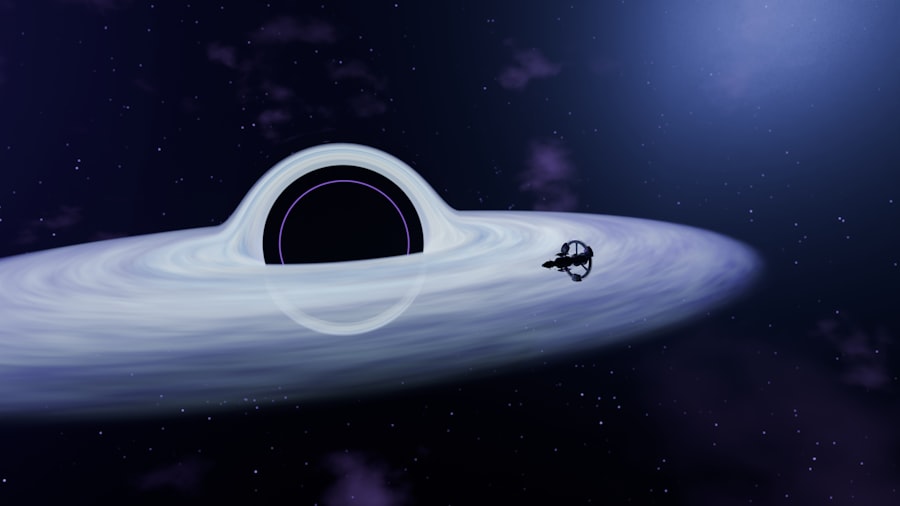
Black holes are not a monolithic entity. They exist across a remarkable spectrum of sizes, each with its own origins and implications for the cosmos.
Stellar-Mass Black Holes: The Remnants of Stars
As we’ve discussed, stellar-mass black holes are direct descendants of massive stars. They are relatively common throughout the universe and typically have masses ranging from a few to several dozen times the mass of our Sun.
Formed from the Death of Giant Stars
These black holes are the endgame for stars that begin with at least 20-25 times the mass of our Sun. Their magnificent supernovae leave behind these compact, incredibly dense objects, scattering heavy elements into the interstellar medium.
Isolated and in Binary Systems
Stellar-mass black holes can exist in isolation, making them harder to detect. However, they are often found in binary systems with other stars. When a star orbits a black hole, it can transfer mass to the black hole, fueling an accretion disk and making its presence known.
Supermassive Black Holes: Galactic Hearts
At the centers of most galaxies, including our own Milky Way, lie supermassive black holes. These behemoths possess masses ranging from millions to billions of times the mass of our Sun. Their formation is still a subject of intense research, but it’s clear they play a pivotal role in galactic evolution.
Growth Through Accretion and Mergers
The prevailing theories suggest that supermassive black holes grow over cosmic time by accreting vast amounts of gas and dust from their surroundings. They also likely grow through the merger of smaller black holes and even entire galaxies. Imagine two galaxies colliding, their central black holes spiraling towards each other until they eventually merge into an even larger cosmic monster.
Shaping Galaxies: A Cosmic Architect
The intense gravitational pull and energetic outflows from supermassive black holes profoundly influence the evolution of their host galaxies. They can regulate star formation by heating or expelling gas, and their jets can sculpt and shape the structure of the galaxy. They are, in essence, cosmic architects.
Intermediate-Mass Black Holes (IMBHs): The Enigmatic Middle Ground
A more recently proposed category, intermediate-mass black holes (IMBHs) bridge the gap between stellar-mass and supermassive black holes, with masses ranging from a few hundred to tens of thousands of solar masses. Their existence and formation are still debated, but they are thought to reside in the centers of some globular clusters and smaller galaxies.
Evidence from Globular Clusters
Observations of some dense stellar clusters suggest the presence of objects with masses that cannot be explained by stellar remnants alone. These observations hint at the existence of IMBHs, which may form through the runaway collision of stars in dense environments.
The Missing Link in Black Hole Evolution?
The discovery and understanding of IMBHs are crucial for bridging the gap in our understanding of how supermassive black holes form. They might be the seeds from which these galactic titans grow.
The study of black holes continues to captivate physicists and astronomers alike, as they unravel the mysteries of these enigmatic cosmic entities. A fascinating article that delves into the latest research on the physics of black holes can be found at this link, where experts discuss the implications of recent discoveries and their impact on our understanding of the universe. As researchers explore the nature of singularities and event horizons, the quest to comprehend these gravitational giants becomes ever more intriguing.
The Science of Spacetime Warping: Einstein’s Legacy
| Aspect | Metric |
|---|---|
| Event Horizon | Radius: 2GM/c^2 |
| Black Hole Mass | Calculated using orbital dynamics of nearby objects |
| Black Hole Temperature | Hawking radiation: T = ħc^3 / 8πGMk |
| Black Hole Entropy | Related to the area of the event horizon: S = A/4 |
| Black Hole Spin | Described by the dimensionless parameter a |
The physics of black holes is inextricably linked to Albert Einstein’s groundbreaking theory of General Relativity. It is within this theoretical framework that we can begin to unravel their profound implications for the nature of gravity and spacetime.
Gravity as the Curvature of Spacetime
Prior to Einstein, gravity was understood as a force pulling objects towards each other. General Relativity revolutionized this concept, proposing that gravity is not a force but rather a manifestation of the curvature of spacetime caused by mass and energy.
The Rubber Sheet Analogy
Imagine spacetime as a stretched rubber sheet. Placing a heavy object, like a bowling ball, on the sheet creates a dip or curve. Objects rolling nearby will follow this curvature, appearing to be attracted to the bowling ball. This analogy, while simplistic, illustrates how mass warps spacetime, influencing the motion of other objects.
Planets and Starlight Following the Curves
In this framework, planets orbit stars not because of a direct pull, but because they are following the curved paths in spacetime created by the star’s mass. Similarly, light, though massless, is affected by gravity because it, too, travels through spacetime and must follow its contours.
Black Holes: Extreme Curvature and the Singularity
Black holes represent the most extreme manifestations of spacetime curvature. At the singularity, this curvature becomes infinite, leading to the breakdown of our current physical laws.
The Ultimate Distortion
The immense mass concentrated in the singularity creates such a profound warp in spacetime that it effectively creates a “hole” from which nothing, not even light, can escape. It’s as if the rubber sheet is torn beyond repair.
The Edge of Predictability
The singularity is the ultimate limit of our predictive power within General Relativity. What happens at the singularity, and what lies beyond it, remains one of the universe’s most profound unanswered questions.
Gravitational Waves: Ripples in the Cosmic Fabric
When massive objects, particularly black holes, undergo violent events like mergers, they create ripples in the fabric of spacetime called gravitational waves. These waves propagate outwards at the speed of light, carrying information about their sources.
Detecting the Echoes of Cosmic Collisions
The direct detection of gravitational waves by observatories like LIGO and Virgo has provided stunning confirmation of Einstein’s theories and opened a new window into observing the universe. We can now “hear” the echoes of black hole mergers, understanding their masses and dynamics in unprecedented detail.
A New Era of Astronomy
The study of gravitational waves is ushering in a new era of multi-messenger astronomy, where we can combine information from both electromagnetic radiation and gravitational waves to gain a more complete understanding of cosmic phenomena, including black holes.
The Mysteries Within and Beyond: Frontiers of Black Hole Research
Despite significant advancements, black holes continue to present profound mysteries, pushing the boundaries of our scientific understanding and inspiring new avenues of research.
The Information Paradox: A Quantum Conundrum
One of the most perplexing problems in black hole physics is the information paradox. According to quantum mechanics, information cannot be destroyed. However, if a black hole evaporates through Hawking radiation (predicted by Stephen Hawking), it appears to carry away the information of what fell into it.
Destruction or Preservation of Information?
Does the information truly disappear into the singularity, violating the fundamental principles of quantum mechanics? Or is it somehow encoded in the Hawking radiation, albeit in an unrecognizable form? This paradox suggests a deep tension between General Relativity and quantum mechanics.
Towards a Theory of Quantum Gravity
Resolving the information paradox is seen as a crucial step towards developing a complete theory of quantum gravity – a unified framework that can describe both the very large (gravity) and the very small (quantum mechanics) realms of the universe.
Wormholes and Other Exotic Possibilities
The extreme warping of spacetime around black holes has led to fascinating theoretical speculations, including the possibility of wormholes. These hypothetical tunnels through spacetime could, in theory, connect different points in the universe or even different universes.
Theoretical Pathways Through Spacetime
While mathematically permissible within the framework of General Relativity, the existence and stability of wormholes remain speculative. They often require exotic matter with negative energy density to remain open, something that has not yet been definitively observed or created.
The Realm of Science Fiction and the Hope of Discovery
Though currently confined to the realm of theoretical physics and science fiction, the exploration of such possibilities highlights the boundless imaginative power of scientific inquiry when confronted with the universe’s most extreme phenomena.
The Unseen Universe: The Role of Dark Matter and Dark Energy
Black holes, particularly supermassive ones, are thought to influence the distribution and evolution of dark matter, the mysterious substance that makes up a significant portion of the universe’s mass. Furthermore, the expansion of the universe, driven by dark energy, creates a cosmic backdrop against which the formation and dynamics of black holes occur.
The Interplay of Cosmic Forces
Understanding the intricate interplay between black holes, dark matter, and dark energy is essential for a comprehensive picture of the universe. How do these fundamental components interact and influence each other on cosmic scales?
The Search for Unification
The quest to understand these cosmic enigmas drives ongoing research, pushing physicists and astronomers to develop new theories, conduct more precise observations, and probe the deepest, most fundamental questions about the nature of reality.
As you contemplate these fundamental concepts, from the crushing weight of gravity to the theoretical tunnels through spacetime, you realize that black holes are not just cosmic curiosities. They are profound laboratories for testing the limits of our physical theories, offering tantalizing glimpses into the fundamental workings of the universe, and forever beckoning us to explore the unknown.

The Universe Never Truly Forgets. Physics Can’t Explain Why.
FAQs
What is a black hole?
A black hole is a region in space where the gravitational pull is so strong that nothing, not even light, can escape from it. This occurs when a massive star collapses under its own gravity.
How are black holes formed?
Black holes are formed when massive stars run out of fuel and collapse under their own gravity. This collapse causes the star to shrink to a very small size, creating a region of space with extremely strong gravitational pull.
What is the event horizon of a black hole?
The event horizon of a black hole is the boundary surrounding the black hole beyond which nothing can escape, not even light. Once an object crosses the event horizon, it is pulled into the black hole and cannot escape.
What happens at the singularity of a black hole?
The singularity of a black hole is a point at the very center where the mass is concentrated. At the singularity, the gravitational pull becomes infinitely strong and the laws of physics as we know them break down.
How do black holes affect time and space?
Black holes have a profound effect on the fabric of space and time. Near a black hole, time slows down and space is severely distorted, leading to phenomena such as gravitational time dilation and gravitational lensing.