You’re about to embark on a journey, a truly mind-bending exploration of the universe, all from the comfort of your screen. Prepare yourself for “Exploring the Cosmos: An Astrophysics Documentary,” a production that promises to pull back the curtain on the most profound mysteries of existence. This isn’t just a film; it’s an invitation to expand your very understanding of reality, to witness the grand ballet of celestial bodies, and to ponder your place within this unimaginably vast expanse. As you settle in, you’ll quickly realize that this documentary is crafted with a passion for the subject, a deep respect for scientific inquiry, and a desire to share the awe-inspiring wonders of astrophysics with you, the viewer.
The filmmakers have assembled a team of leading astrophysicists, astronomers, and cosmologists, each an expert in their respective fields. Their insights, delivered with clarity and infectious enthusiasm, are the backbone of this documentary. You’ll hear from individuals who have dedicated their lives to unraveling the secrets of the universe, from the subatomic dance of particles to the colossal forces that shape galaxies. Their voices will guide you, explaining complex concepts in a way that is both accessible and deeply engaging. You won’t be bogged down by jargon; instead, you’ll be immersed in the beauty and elegance of scientific discovery.
The visual presentation of “Exploring the Cosmos” is nothing short of breathtaking. You’ll be treated to stunning CGI renderings of distant nebulae, swirling galaxies, and the fiery birth and death of stars. These are not mere illustrations; they are meticulously crafted simulations based on real scientific data, bringing to life the phenomena that have long captivated humanity from afar. You’ll witness the raw power of a supernova, the intricate structure of a black hole, and the majestic sweep of spiral arms across the cosmic canvas. The cinematography is designed to evoke a sense of scale and wonder, making you feel both insignificant and intimately connected to the immense universe.
This documentary doesn’t shy away from the big questions. It tackles the fundamental inquiries that have plagued philosophers and scientists for millennia: Where did we come from? Are we alone? What is the ultimate fate of the universe? Through a narrative that weaves together cutting-edge research, historical context, and philosophical reflection, “Exploring the Cosmos” will challenge your assumptions and leave you with a profound appreciation for the ongoing quest for knowledge. It’s a testament to human curiosity and our unyielding desire to understand the cosmos we inhabit.
Your journey begins at the very beginning, at the moment of creation. “Exploring the Cosmos” takes you back to the Big Bang, not as a mere explosion, but as the rapid expansion of space-time itself. The documentary meticulously reconstructs this epoch, using the latest cosmological models and observational evidence. You’ll witness the universe in its infancy, a searingly hot and dense plasma, undergoing fundamental transformations.
The Universe’s First Moments
As you’re guided through the initial fractions of a second, you’ll learn about inflation, a period of exponential growth that smoothed out the universe and set the stage for the structures we see today. The documentary delves into the physics of this era, explaining how quantum fluctuations, amplified by inflation, became the seeds of future galaxies. You’ll be introduced to concepts like baryogenesis, the process that led to the imbalance between matter and antimatter, ensuring our existence.
The Cosmic Microwave Background: A Baby Picture of the Universe
A cornerstone of any exploration of the early universe is the Cosmic Microwave Background (CMB). You’ll be shown breathtaking visualizations of the CMB, the faint afterglow of the Big Bang that permeates the entire sky. The documentary explains how analyzing its subtle temperature variations – the anisotropies – provides crucial information about the universe’s age, composition, and evolution. You’ll gain an understanding of how these tiny temperature differences, when mapped, reveal the imprint of the early universe’s structure.
The Dark Ages and the Dawn of Light
Following the era of recombination, when the universe cooled enough for atoms to form, a period known as the “Dark Ages” ensued. You’ll learn how the universe was devoid of stars and galaxies, filled only with neutral hydrogen and helium gas. Then, the documentary will illuminate the profound shift brought about by the formation of the first stars and galaxies. These luminous beacons emerged, reionizing the universe and marking the end of the cosmic darkness. You’ll explore the physics behind the formation of these primordial stellar behemoths, significantly larger and hotter than the stars we see today.
If you’re fascinated by the mysteries of the universe and want to delve deeper into the subject, you might find the article on astrophysics in this documentary particularly enlightening. It explores various cosmic phenomena, including black holes and dark matter, while providing stunning visuals that enhance the understanding of complex concepts. This documentary serves as an excellent companion piece for anyone looking to expand their knowledge of astrophysics and the vastness of space.
The Stellar Symphony: Birth, Life, and Death of Stars
Stars are the fundamental building blocks of the cosmos, forging the elements that make up everything, including you. “Exploring the Cosmos” orchestrates a dazzling display of stellar evolution, taking you from the dusty nurseries where stars are born to the spectacular finales that scatter the cosmos with the ingredients for new life.
Stellar Nurseries: Where Stars Are Born
You’ll be transported to vast molecular clouds, interstellar repositories of gas and dust, where gravity begins its inexorable work. The documentary details the complex processes of gravitational collapse, the fragmentation of these clouds, and the formation of protostars. You’ll witness the accretion disks that surround these nascent stars, feeding them material and eventually igniting nuclear fusion in their cores, marking their official birth. The visuals here are stunning, showcasing the ethereal beauty of nebulae like Orion and the Eagle.
The Lifeblood of Stars: Nuclear Fusion
At the heart of every star lies nuclear fusion, a process that generates the immense energy that fuels their luminosity. You’ll be guided through the intricate workings of this power source, learning how hydrogen atoms fuse to form helium, releasing tremendous amounts of energy in the process. The documentary explains the different cycles of fusion that occur in stars of varying masses, from the proton-proton chain in Sun-like stars to the CNO cycle in more massive stars. You’ll understand why stars shine and how they maintain a delicate balance between gravity and the outward pressure from fusion.
The Fiery Deaths: Supernovae and Stellar Remnants
The life of a star, no matter how spectacular, eventually comes to an end. “Exploring the Cosmos” doesn’t shy away from the dramatic finales. You’ll witness the explosive deaths of massive stars as supernovae, events that outshine entire galaxies for a brief period. The documentary explains the physics behind these cataclysmic explosions, detailing how they forge and disperse heavy elements, scattering them throughout the interstellar medium, enriching it for future generations of stars and planets. You’ll also learn about the different stellar remnants that can be left behind, depending on the mass of the star: white dwarfs, neutron stars, and the enigmatic black holes.
Cosmic Architecture: Galaxies and Their Galactic Neighborhoods
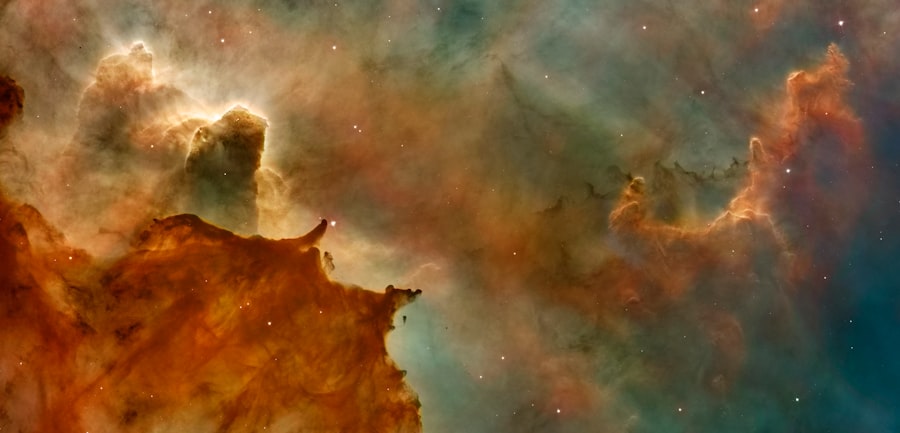
Galaxies are the grand cities of the universe, teeming with billions of stars, gas, dust, and dark matter. “Exploring the Cosmos” takes you on a tour of these colossal structures, revealing their diversity, their formation, and the intricate interplay between them within larger cosmic neighborhoods.
The Variety of Galactic Forms
You’ll be introduced to the stunning diversity of galaxies, from the majestic spirals like our own Milky Way to the elliptical giants and the irregular, often chaotic, dwarf galaxies. The documentary explains the Hubble classification scheme, a system used to categorize galaxies based on their visual appearance. You’ll see how color, shape, and the presence of star-forming regions provide clues to a galaxy’s history and composition. The visual comparison of these different forms is a highlight, showcasing the universe’s boundless creativity.
Galactic Collisions and Mergers: Cosmic Dances of Destruction and Creation
The universe is a dynamic place, and galaxies are not static entities. You’ll learn about the prevalence of galactic collisions and mergers, awe-inspiring events that reshape galaxies over cosmic timescales. The documentary uses stunning simulations to depict these celestial encounters, showing how gravitational forces can distort and tear apart galaxies, triggering bursts of star formation and ultimately leading to the creation of larger, more massive structures. It’s a dance of destruction and creation, a fundamental process in the evolution of the cosmos.
The Milky Way and Our Place Within It
No documentary about galaxies would be complete without a detailed look at our own home, the Milky Way. You’ll embark on a journey to the galactic center, exploring its enigmatic supermassive black hole, Sagittarius A*. The film will illustrate the structure of our galaxy, from its spiral arms to its central bulge and halo. You’ll gain a newfound appreciation for the sheer scale of the Milky Way and the countless stars and planetary systems it contains, including our own solar system.
The Unseen Universe: Dark Matter and Dark Energy
Much of the universe, you’ll discover, is invisible to us. “Exploring the Cosmos” delves into the profound mysteries of dark matter and dark energy, two enigmatic components that dominate the universe’s mass-energy budget and dictate its ultimate fate.
The Enigma of Dark Matter: Holding Galaxies Together
You’ll grapple with the evidence for dark matter, the invisible scaffolding that holds galaxies together. The documentary explains how observations of galactic rotation curves, gravitational lensing, and the large-scale structure of the universe point to the existence of matter that doesn’t interact with light. You’ll learn about the ongoing search for dark matter particles, exploring various experimental approaches aimed at detecting these elusive entities. It’s a story of scientific deduction, where the absence of visible evidence strongly suggests the presence of something unseen.
Dark Energy: The Accelerating Expansion of the Universe
Perhaps the most perplexing discovery in modern cosmology is dark energy, the force driving the accelerating expansion of the universe. “Exploring the Cosmos” will guide you through the observational evidence for this phenomenon, particularly the studies of distant supernovae. You’ll understand how dark energy confronts our existing models of physics and how it suggests that the universe’s expansion is not slowing down, but speeding up, pointing towards a future of increasing emptiness.
The Cosmic Inventory: A Universe Dominated by the Unknown
The documentary will bring together these findings to present a stark picture: ordinary matter, the stuff we can see and interact with, constitutes only about 5% of the universe. The remaining 95% is composed of dark matter (around 25%) and dark energy (around 70%). This realization underscores the vastness of our ignorance and the exciting frontiers of astrophysical research. You’ll be left contemplating the implications of these unseen forces on cosmic evolution and the ultimate destiny of the universe.
If you’re fascinated by the wonders of the universe, you might enjoy exploring a related article that delves deeper into the mysteries of dark matter and its implications for our understanding of astrophysics. This insightful piece complements the themes presented in the recent astrophysics documentary, offering a more comprehensive view of the cosmic phenomena that shape our reality. To read more about this intriguing topic, check out the article on My Cosmic Ventures.
The Search for Life Beyond Earth: Exoplanets and the Possibility of Extraterrestrial Intelligence
| Documentary Title | Release Year | Duration (minutes) | IMDb Rating |
|---|---|---|---|
| Cosmos: A Spacetime Odyssey | 2014 | 557 | 9.3 |
| The Farthest: Voyager in Space | 2017 | 120 | 8.2 |
| Particle Fever | 2013 | 99 | 7.4 |
This documentary wouldn’t be complete without addressing one of humanity’s oldest and most profound questions: Are we alone? “Exploring the Cosmos” turns its gaze towards the vast number of exoplanets being discovered and the ongoing quest to find evidence of life beyond our own pale blue dot.
Exoplanet Discoveries: A Universe Teeming with Worlds
You’ll witness the incredible progress made in exoplanet detection, learning about the various methods astronomers use, such as the transit method and the radial velocity method. The documentary showcases stunning artist’s impressions of these distant worlds, ranging from hot Jupiters to Earth-like planets orbiting in their stars’ habitable zones. You’ll be presented with the sheer number of exoplanets discovered, suggesting that planets are incredibly common throughout the galaxy, a sobering and exciting thought.
The Habitable Zone: The Sweet Spot for Life
The concept of the habitable zone, the region around a star where liquid water could exist on a planet’s surface, will be explained in detail. You’ll learn how astronomers are not only detecting planets but also characterizing their atmospheres for biosignatures – indicators of life. The documentary will highlight the challenges and the immense potential of this line of research, as we inch closer to answering the question of life’s prevalence.
SETI and the Future of Astrobiology
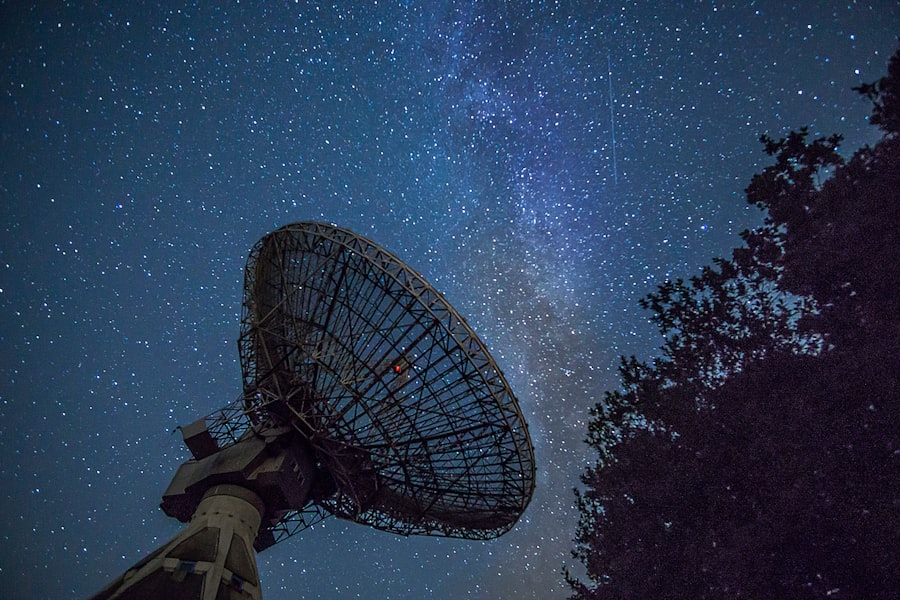
The documentary will also explore the Search for Extraterrestrial Intelligence (SETI) and the methodologies employed in this ambitious endeavor. You’ll learn about radio telescopes listening for artificial signals and the various hypotheses about the nature of potential alien civilizations. The film will conclude by looking towards the future of astrobiology, emphasizing the ongoing collaborations and technological advancements that promise to revolutionize our understanding of life in the universe, a truly hopeful and inspiring prospect for you and for all of humanity.

The Universe Never Truly Forgets. Physics Can’t Explain Why.
FAQs
What is astrophysics?
Astrophysics is a branch of astronomy that deals with the physical properties and processes of celestial bodies and the universe as a whole. It combines principles of physics and astronomy to understand the nature of the universe.
What is an astrophysics documentary?
An astrophysics documentary is a film or video production that explores various aspects of astrophysics, including topics such as the formation of stars and galaxies, the behavior of black holes, the search for extraterrestrial life, and the origins of the universe.
What can I expect to learn from an astrophysics documentary?
Viewers can expect to learn about the latest discoveries and theories in astrophysics, as well as the tools and technologies used by astrophysicists to study the universe. Documentaries may also delve into the history of astrophysics and the contributions of famous scientists in the field.
Where can I watch astrophysics documentaries?
Astrophysics documentaries can be found on various streaming platforms, such as Netflix, Amazon Prime Video, and Hulu. They may also be available for purchase or rental on platforms like iTunes and Google Play. Additionally, some documentaries may air on television channels dedicated to science and nature programming.
Are astrophysics documentaries suitable for all ages?
While many astrophysics documentaries are designed to be educational and accessible to a wide audience, some may contain complex scientific concepts and terminology that could be challenging for younger viewers to understand. Parents and guardians should review the content of a documentary before allowing children to watch it.