You stand on the precipice of understanding, looking up at a canvas speckled with the infinite, a cosmic tapestry woven with forces you can barely comprehend. The universe, a vast and enigmatic entity, beckons you to unravel its secrets, to peel back the layers of mystery and grasp how it all works. This journey won’t be a passive observation; it will be an active exploration, a quest to understand the fundamental principles that govern everything from the smallest subatomic particle to the grandest galaxy. You are not merely a spectator; you are a part of this cosmic dance, and through your curiosity, you can begin to decipher its intricate choreography.
Imagine a moment, not of quiet emergence, but of explosive, unimaginable energy. This is where your understanding of the universe begins: with the Big Bang. It’s the prevailing scientific model that describes the origin of our universe, a singularity from which all space, time, matter, and energy exploded into existence approximately 13.8 billion years ago. This isn’t a bang in the traditional sense, like a firecracker; it’s an expansion of space itself.
The Singularity: A Point of Infinite Density
Before the Big Bang, there was no “before” as you understand it. Time and space, as we experience them, were not yet formed. All the matter and energy destined to fill the cosmos was compressed into an infinitesimally small point of infinite density and temperature – a singularity. This concept is difficult to fully grasp with our current understanding of physics, pushing the boundaries of what we can model. It’s a state where the laws of physics as we know them break down, a testament to the profound mysteries that lie at the very beginning of existence.
The Epoch of Inflation: Rapid Expansion
Immediately after the Big Bang, the universe underwent a period of incredibly rapid expansion known as inflation. In a fraction of a second, the universe grew exponentially, smoothing out initial irregularities and seeding the seeds for the large-scale structures you observe today. Think of it as the universe taking a monumental, rapid breath, stretching out the fabric of reality at an astonishing rate. This rapid expansion is crucial because it explains why the universe appears so uniform on large scales and why certain fundamental constants are what they are.
The Cooling Universe and the Formation of Fundamental Particles
As the universe expanded, it cooled. This cooling allowed energy to condense into matter. Initially, a hot, dense plasma of quarks and gluons dominated. As the temperature continued to drop, these fundamental particles began to combine. First, quarks formed protons and neutrons. Then, as cooling progressed further, electrons were able to bind with atomic nuclei, forming the first neutral atoms, primarily hydrogen and helium. You are, in essence, made of the stardust forged in this primordial cosmic soup.
The Cosmic Microwave Background: Echoes of the Beginning
One of the most compelling pieces of evidence for the Big Bang is the Cosmic Microwave Background (CMB) radiation. This is faint, uniform radiation that permeates the entire universe, originating from a time when the universe was about 380,000 years old and had cooled enough for atoms to form. It’s a snapshot of the very early universe, a relic of its fiery birth. The subtle temperature fluctuations within the CMB are the imprints of the initial conditions that eventually led to the formation of galaxies and clusters of galaxies.
To gain a deeper understanding of the intricate mechanisms that govern the universe, you might find it enlightening to explore the article on cosmic phenomena at My Cosmic Ventures. This resource delves into various aspects of astrophysics, including the formation of galaxies, the behavior of black holes, and the fundamental forces that shape our reality. By examining these topics, readers can enhance their appreciation for the complexity and beauty of the cosmos.
The Dance of Gravity: Shaping the Cosmic Landscape
If the Big Bang provided the raw material, then gravity is the sculptor, the invisible hand that has shaped the universe into the grand cosmic architecture you see. Gravity isn’t just a force that keeps you grounded; it’s a fundamental interaction that dictates the motion of planets, stars, galaxies, and even the large-scale structure of the cosmos. Understanding gravity is paramount to understanding how the universe works.
Einstein’s Revolution: General Relativity
You owe your modern understanding of gravity to Albert Einstein and his theory of General Relativity. He didn’t describe gravity as a force pulling objects together, but rather as a curvature of spacetime caused by mass and energy. Imagine placing a heavy ball on a stretched rubber sheet; it creates a dip, and smaller marbles rolling nearby will curve towards it. This is a simplified analogy for how massive objects warp spacetime, influencing the paths of other objects.
Black Holes: The Ultimate Gravitational Embrace
One of the most fascinating consequences of General Relativity is the existence of black holes. These are regions in spacetime where gravity is so strong that nothing, not even light, can escape. They are formed when massive stars collapse under their own gravity at the end of their lives. Black holes are not just cosmic vacuum cleaners; they play a significant role in galactic evolution, influencing the formation and growth of galaxies by accreting matter and releasing powerful jets of energy.
Dark Matter and Dark Energy: The Universe’s Invisible Dominance
Here’s where things get truly perplexing. While visible matter – the stars, planets, and gas you can observe – makes up only about 5% of the universe, the majority (approximately 27%) is thought to be dark matter. This mysterious substance doesn’t interact with light, making it invisible, but its gravitational influence is undeniable, holding galaxies together. Even more enigmatic is dark energy, comprising about 68% of the universe, which is thought to be responsible for the accelerating expansion of the universe. You are living in a universe dominated by forces and substances you cannot see or directly detect, a humbling reminder of how much you still have to learn.
Gravitational Lensing: A Cosmic Magnifying Glass
The warping of spacetime by massive objects has a predictable effect on light. Light rays bend as they pass near massive objects, a phenomenon called gravitational lensing. This allows astronomers to use massive galaxies and galaxy clusters as natural telescopes, magnifying and distorting the light from more distant objects. Gravitational lensing provides crucial evidence for the existence of dark matter and helps astronomers study the distribution of matter in the universe.
The Quantum Realm: The Foundation of Reality

Step away from the colossal scales of gravity and peer into the unimaginably small, into the realm of quantum mechanics. This is where the fundamental building blocks of the universe reside, operating under rules that defy your everyday intuition. Quantum mechanics governs the behavior of atoms, subatomic particles, and the forces that bind them together.
Particles and Waves: The Duality of Existence
At the quantum level, particles don’t behave like tiny solid balls. Instead, they exhibit wave-particle duality, meaning they can behave as both particles and waves depending on how you observe them. An electron, for instance, can act as a localized point or spread out like a wave. This probabilistic nature is a cornerstone of quantum mechanics and a significant departure from classical physics.
Superposition: Existing in Multiple States
A stunning quantum phenomenon is superposition. A quantum system can exist in multiple states simultaneously until it is measured. Think of a coin spinning in the air; it’s neither heads nor tails until it lands. A quantum particle, however, can be in a superposition of both “heads” and “tails” until an observation forces it to adopt one state. This has profound implications for computation and our understanding of reality itself.
Entanglement: Spooky Action at a Distance
Perhaps the most mind-bending concept is quantum entanglement. When two or more particles become entangled, they are linked in such a way that they share the same fate, regardless of the distance separating them. If you measure a property of one entangled particle, you instantaneously know the corresponding property of the other, even if it’s on the other side of the galaxy. Einstein famously called this “spooky action at a distance.”
The Standard Model of Particle Physics
The Standard Model is your current best description of the fundamental particles and forces that make up the universe (excluding gravity, which is handled by General Relativity). It categorizes 17 fundamental particles: 12 matter particles (fermions) like quarks and leptons (including electrons and neutrinos), and 5 force-carrying particles (bosons) like photons (for electromagnetism), gluons (for the strong nuclear force), and W and Z bosons (for the weak nuclear force). The Higgs boson, responsible for giving particles mass, is also a crucial part of the Standard Model.
The Stellar Journey: Birth, Life, and Death of Stars

Stars are the cosmic furnaces, the alchemists of the universe, forging heavier elements from lighter ones. Their life cycles are epic sagas of nuclear fusion, gravitational collapse, and spectacular finales, profoundly influencing the universe’s evolution.
Nebulae: Stellar Nurseries
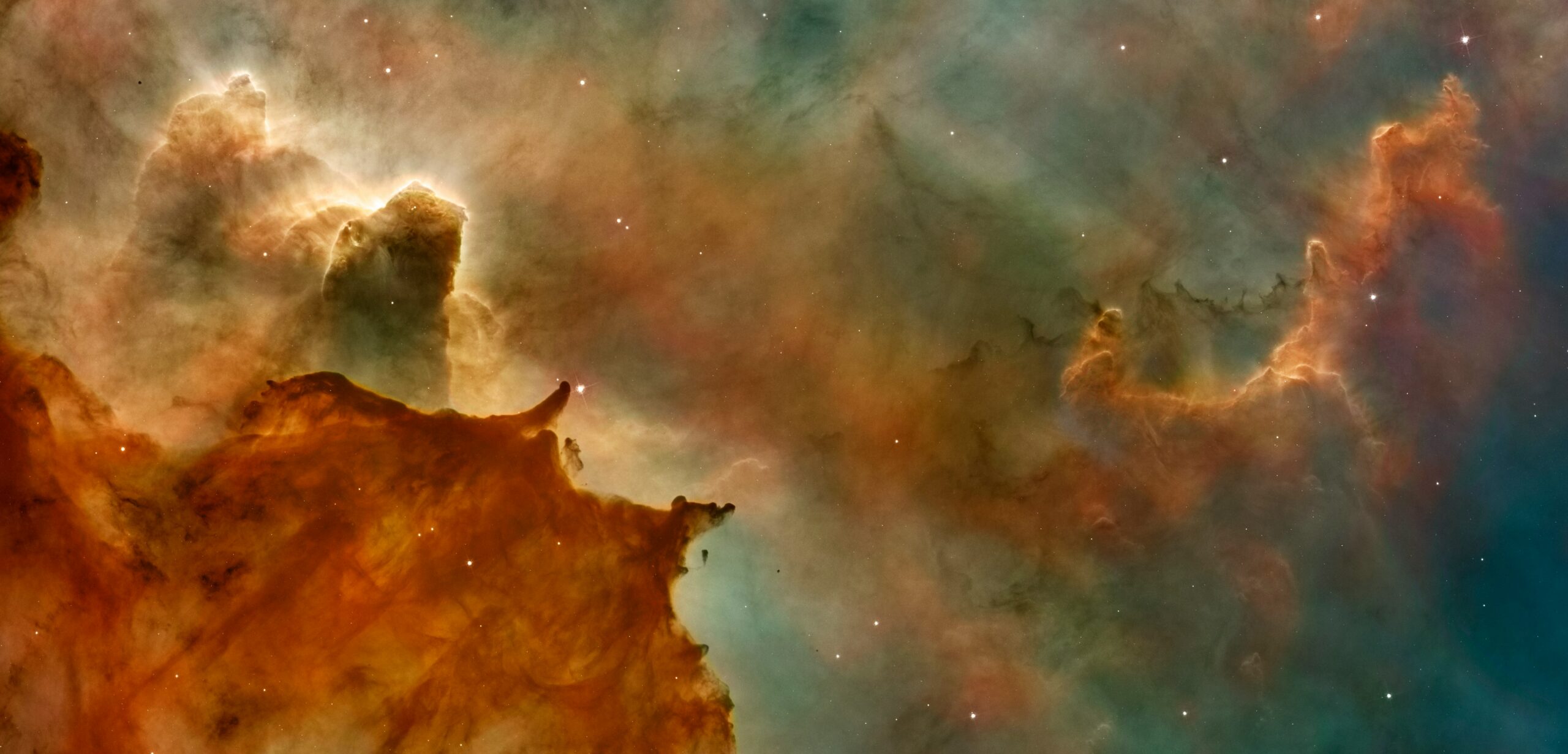
Your journey into the life of a star begins in nebulae, vast interstellar clouds of gas and dust. Through gravitational collapse, denser regions within these nebulae begin to pull in more material, spinning and heating up. You see them as beautifully colored clouds in images, but they are the cradles of nascent stars.
Main Sequence Stars: The Prime of Stellar Life
Once a collapsing cloud becomes hot and dense enough, nuclear fusion ignites in its core. This is the main sequence phase, where stars spend the majority of their lives, steadily fusing hydrogen into helium, releasing immense amounts of energy. Our Sun is currently in its main sequence phase. The mass of a star dictates its lifespan and its ultimate fate; more massive stars burn brighter and faster.
Stellar Evolution: Aging and Transformation
As a star exhausts its hydrogen fuel, it begins to evolve. Less massive stars like our Sun will eventually expand into red giants, shedding their outer layers to form beautiful planetary nebulae, leaving behind a dense white dwarf. More massive stars have far more dramatic ends.
Supernovae: Cosmic Explosions of Creation
The death of massive stars is marked by spectacular explosions called supernovae. These cataclysmic events are so bright they can outshine entire galaxies for a brief period. Supernovae are incredibly important because they are the primary sites where heavy elements – elements heavier than iron – are forged and scattered throughout the universe. You are, quite literally, made of stardust from these stellar explosions.
Neutron Stars and Black Holes: The Remnants of Giants
The remnants of supernovae can be either neutron stars or black holes, depending on the initial mass of the star. Neutron stars are astonishingly dense objects, packing more mass than the Sun into a sphere only about 20 kilometers in diameter. If the stellar core is even more massive, it will collapse to form a black hole, the ultimate prison of gravity.
Understanding how the universe works is a complex endeavor that fascinates scientists and enthusiasts alike. From the intricate dance of celestial bodies to the mysteries of dark matter, each discovery sheds light on our existence. For those interested in diving deeper into these cosmic phenomena, a related article can provide valuable insights. You can explore more about the fundamental principles governing our universe in this detailed exploration.
The Galaxy Architects: Our Cosmic Homes
| Topic | Explanation |
|---|---|
| Gravity | The force that attracts two bodies toward each other. It is responsible for keeping planets in orbit around the sun and for keeping the moon in orbit around Earth. |
| Black Holes | Regions of spacetime where gravity is so strong that nothing, not even light, can escape from it. They are formed when massive stars collapse at the end of their life cycle. |
| Dark Matter | A form of matter that is thought to account for approximately 85% of the matter in the universe. It does not emit, absorb, or reflect light, making it invisible and detectable only through its gravitational effects. |
| Dark Energy | A mysterious force that is causing the expansion of the universe to accelerate. It makes up about 68% of the universe and its nature is not well understood. |
| Quantum Mechanics | A fundamental theory in physics that describes the behavior of particles at the smallest scales. It has led to the development of technologies such as transistors, lasers, and MRI machines. |
Stars don’t exist in isolation; they congregate in vast stellar cities called galaxies. These colossal structures, held together by gravity, are the fundamental building blocks of the universe’s grand architecture.
Types of Galaxies: A Cosmic Zoo
You can broadly classify galaxies into three main types: spiral galaxies, characterized by their elegant spiral arms (like our own Milky Way); elliptical galaxies, which are oval-shaped and contain older stars; and irregular galaxies, which lack a defined shape and are often the result of galactic collisions. Each type tells a different story about galactic formation and evolution.
Galactic Collisions and Mergers: Cosmic Evolution
The universe is a dynamic place, and galaxies are not static. They interact, collide, and merge. These galactic encounters can be violent, triggering bursts of star formation and dramatically reshaping the involved galaxies over billions of years. The Milky Way, for instance, is on a collision course with the Andromeda galaxy, a cosmic dance that will unfold over eons.
Supermassive Black Holes: Galactic Anchors
At the heart of most large galaxies, including our own Milky Way, lies a supermassive black hole, millions to billions of times the mass of our Sun. These behemoths play a crucial role in the evolution of their host galaxies, influencing the rate of star formation and even shaping the distribution of matter within the galaxy.
The Large-Scale Structure of the Universe: Cosmic Web
Beyond individual galaxies, the universe is organized into a vast and intricate structure known as the cosmic web. Galaxies are not randomly distributed but are concentrated in filaments and clusters, separated by enormous voids. This structure is a direct consequence of the initial conditions set by the Big Bang and the subsequent gravitational influence of matter, including dark matter.
Your journey into unraveling the mysteries of the universe is ongoing. Each discovery opens new avenues of inquiry, revealing deeper levels of complexity and beauty. From the explosive birth of the cosmos to the subtle dance of quantum particles and the majestic evolution of stars and galaxies, you are a part of a grand, interconnected tapestry. Continue to ask questions, to explore, and to marvel at the sheer magnificence of it all. The universe is waiting for you to understand.

The Universe Never Truly Forgets. Physics Can’t Explain Why.
FAQs
What is the universe?
The universe is all of space and time and their contents, including planets, stars, galaxies, and all other forms of matter and energy.
How did the universe begin?
The prevailing scientific theory is the Big Bang, which suggests that the universe began as a hot, dense point and has been expanding and cooling ever since.
What is dark matter and dark energy?
Dark matter is a form of matter that does not emit or interact with electromagnetic radiation, but its existence is inferred from gravitational effects on visible matter. Dark energy is a mysterious force that is causing the expansion of the universe to accelerate.
How do galaxies form?
Galaxies are thought to form from the gravitational collapse of clouds of gas and dust, which then condense to form stars and other celestial bodies.
What is the fate of the universe?
The ultimate fate of the universe is still uncertain, but current theories suggest that it may continue to expand indefinitely, eventually leading to a “heat death” where all energy is evenly distributed and no more work can be done.